
Let’s be honest: we’ve all been there. You wake up with the best intentions, ready to crush the day, eat clean, work out, and finish that project. Then somewhere around 3 PM, you find yourself eating chips while scrolling social media, wondering what went wrong. You have hit self-control zero.
Self-control zero isn’t a medical diagnosis. It’s that moment when your willpower reserve hits empty. You know what you should do, but you simply cannot make yourself do it. The good news? This state is temporary, and more importantly, it is fixable.
Understanding why self-control zero happens is the first step to building unshakable self-discipline. This article will show you exactly what causes it, how to spot the warning signs, and most crucially, how to rebuild your self-discipline from the ground up.
Table of Contents
What Exactly Is Self-control Zero?
Self-control zero describes a state where your ability to resist temptation, delay gratification, and take disciplined action has completely run out. It’s not laziness. It’s not a character flaw. It is a depletion of mental energy so profound that your brain switches from “willpower mode” to “autopilot mode.”
Think of self-discipline like a muscle. Every decision you make draws from a limited energy tank. When that tank is empty, you rely on impulses and habits. If your habits are weak, you default to the easiest, most comfortable option. This is when self-control zero takes over.
Concretely, self-control zero looks like this:
- You promise yourself you’ll go to the gym after work, but you sit on the couch instead.
- You planned to write for an hour, but you open YouTube for “just one video” and lose two hours.
- You decided to stop eating sugar, but you justify a cookie because you had a hard day.
These are not failures of character. They are failures of system design and energy management. And once you understand that, you can start fixing it.
Why Self-control Zero Happens: The Real Reasons
Self-control zero doesn’t come out of nowhere. It is the result of several predictable forces. Let’s examine the biggest culprits.
The Willpower Depletion Effect
Psychologists call this ego depletion. Every decision you make uses glucose and cognitive resources. The more decisions you make in a day, the less willpower you have left. By evening, your brain is exhausted. It seeks the path of least resistance.
- Example: You decided what to wear, what to eat for breakfast, which route to drive, which emails to answer, and how to handle a difficult conversation. By dinnertime, your tank is dry. You order pizza even though you planned to cook.
Environmental Triggers
Your environment has a stronger influence on your behavior than your willpower. If the cookies are on your counter, you will eat them. If your phone is within arm’s reach, you will check it. Self-control zero often strikes when your environment is filled with temptations.
- Your phone notification: triggers dopamine.
- The snack jar on your desk: triggers cravings.
- The messy room: triggers procrastination.
Decision Fatigue
Decision fatigue is a close cousin of ego depletion. The more choices you face, the lower your decision quality. By the end of the day, you are more likely to make impulsive or lazy choices. This is why discipline-focused people often simplify their lives.
“If you have to decide every morning whether to work out, you’ll often decide not to. But if it’s already built into your schedule, your brain doesn’t fight it.” — Most self-discipline experts
Lack of Clear Systems
When you rely on willpower alone, you fail. Systems are the antidote. Without a system, your brain must constantly deliberate. Deliberation drains energy. Systems automate good decisions.
Emotional Exhaustion
Stress, anxiety, sadness, or anger all consume energy. When you are emotionally drained, your prefrontal cortex (the part of the brain responsible for self-control) goes offline. You lose the ability to override impulses.
The Science Behind Self-control Zero
You don’t need to be a neuroscientist to understand why self-control zero happens. But a little science helps you take it less personally.
The Role of Dopamine
Dopamine is the neurotransmitter of desire. It drives you to seek rewards. Every time you check your phone, eat sugar, or watch a funny video, your brain gets a small dopamine hit. Over the day, you build a tolerance. You need more to feel satisfied.
When you try to resist temptation, your brain creates a discomfort called dopamine withdrawal. This feels like boredom, anxiety, or restlessness. Most people interpret this as a signal to stop resisting. That is self-control zero in action.
The Prefrontal Cortex and the Amygdala
Your prefrontal cortex (PFC) is the CEO of your brain. It handles planning, focus, and impulse control. Your amygdala is the alarm system, responsible for fear and immediate responses. When you are tired, your PFC gets weaker and your amygdala gets stronger. Stress makes you more reactive and less reflective.
The Habit Loop
Charles Duhigg and James Clear have popularized the habit loop: cue, craving, response, reward. When you are at self-control zero, you are more susceptible to old habit loops because your conscious brain is too tired to intervene.
To rebuild self-discipline, you must design new habit loops that are easy to follow even when your energy is low.
Signs You Are at Self-control Zero
How do you know you have hit self-control zero? Look for these red flags:
- You rationalize bad decisions: “I deserve it,” “Just this once,” “I’ll start fresh tomorrow.”
- You procrastinate on high-priority tasks, even though you know you shouldn’t.
- You feel guilty after giving in, but you repeat the cycle the next day.
- You skip exercise or healthy meals because you feel too tired.
- You snap at small frustrations, showing emotional dysregulation.
- You over-consume media, junk food, or alcohol to numb feelings.
If you recognized more than two of these, you are likely operating on self-control zero several times a week. But recognition is power. Now you can change.
How to Rebuild Self-discipline from Scratch
Rebuilding self-discipline starts not with a massive overhaul, but with small, strategic changes. Here is a step-by-step system to go from self-control zero to consistent self-mastery.
Step 1: Stop Relying on Willpower
Accept this truth: willpower is finite and unreliable. You cannot will yourself into discipline every day. Instead, you must design your environment and schedule so that the right choice is the easiest choice.
Action: Remove temptation from your physical space. Move the cookies to a high cabinet. Hide your phone in another room when working. Use website blockers. Do whatever it takes to reduce friction for good behaviors and increase friction for bad ones.
Step 2: Build Micro-habits
James Clear’s Atomic Habits is one of the most practical resources on this. The core idea: start so small that it feels ridiculous. Want to exercise? Commit to one pushup. Want to read? Commit to one page. Once the habit is established, you naturally expand it.
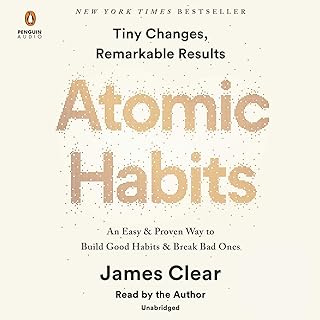
Atomic Habits teaches you to focus on systems over goals, to use habit stacking, and to make good habits inevitable. The book has a 4.8 rating with over 148,000 reviews. It is a foundational text for anyone struggling with self-control zero.
Step 3: Practice Decision Elimination
Make fewer decisions per day. Automate what you can:
- Eat the same healthy breakfast every day.
- Wear a uniform or pre-planned outfits.
- Schedule your workouts at the same time.
- Use a morning routine that requires zero thinking.
The fewer decisions you make, the more energy you save for the important ones.
Step 4: Use the 5-Second Rule
When you feel the urge to procrastinate or give in, count down: 5-4-3-2-1-GO. This interrupts the brain’s hesitation loop and forces action. It is a simple but powerful tool from Mel Robbins.
Step 5: Manage Your Energy, Not Just Your Time
Self-discipline requires energy. If you are sleep-deprived, hungry, or stressed, you will hit self-control zero faster. Prioritize:
- 7–9 hours of sleep.
- Protein-rich meals to stabilize blood sugar.
- Short breaks every 90 minutes to recharge.
- Hydration. Even mild dehydration reduces cognitive function.
Step 6: Create a Stoic Mindset
Stoicism offers timeless wisdom for self-control. The idea is to focus only on what you can control, and to accept discomfort as a teacher. Books like Stoic Self-Discipline: Stoicism’s 33 Ancient Secrets are excellent for building mental toughness.

This book, rated 4.7, offers 33 secrets drawn from ancient Stoic practices. It directly addresses how to build unbreakable self-control and mental toughness, perfect for those stuck in the self-control zero loop.
Step 7: Reframe “Self-control Zero” as a Signal, Not a Failure
When you catch yourself in self-control zero, do not shame yourself. Instead, ask: “What depleted me today? What can I change tomorrow?” Use it as data to improve your system.
Step 8: Use Accountability
Tell someone what you intend to do. Set a deadline. Use a commitment contract. Public accountability makes giving in more costly. You can also join a community or use apps like StickK.
Step 9: Practice Deliberate Discomfort
Build your self-discipline “muscle” by doing one hard thing each day on purpose. Cold showers, a challenging workout, fasting for a few hours, or waking up early. This trains your brain to tolerate discomfort without giving in.
Step 10: Get the Right Resources
There are many excellent books on self-discipline. Here is a comparison of some of the best ones to help you decide where to start.
| Product | Image | Price | Rating | Key Focus | Buy at Amazon |
|---|---|---|---|---|---|
| No Excuses!: The Power of Self-Discipline |  |
$8.66 | 4.7 | Practical excuses-proofing, mindset shift | Buy Now |
| Atomic Habits | |
$0.00 (audible) | 4.8 | Systems, small changes, habit stacking | Buy Now |
| The Mountain Is You: Transforming Self-Sabotage into Self-Mastery |  |
$0.00 (audible) | 4.7 | Emotional blocks, self-sabotage | Buy Now |
| Discipline Equals Freedom: Field Manual |  |
$12.93 | 4.7 | Mental toughness, daily actions, stoic | Buy Now |
| The Power of Self-Discipline: 5-Minute Exercises |  |
$0.00 (audible) | 4.4 | Quick daily exercises, habit building | Buy Now |
| The Science of Self-Discipline |  |
$0.00 (audible) | 4.5 | Neuroscience, willpower, mental toughness | Buy Now |
Each of these books offers a unique angle. If you want a classic, no-nonsense approach, No Excuses! by Brian Tracy is a powerhouse. If you’re more into habit psychology, go for Atomic Habits. If you feel stuck in self-sabotage, The Mountain Is You is transformative.
How to Maintain Your New Self-discipline
Once you start building self-discipline, the next challenge is keeping it. Here are advanced strategies to sustain progress and avoid relapsing into self-control zero.
- Review and reflect weekly. Ask: What drained my willpower? What helped?
- Keep a progress journal. Tracking builds awareness.
- Celebrate small wins. Dopamine from progress reinforces good habits.
- Rest deliberately. Self-discipline is a marathon. Schedule recovery days.
- Upgrade your environment continually. As you grow, your environment must follow.
FAQ About Self-control Zero and Self-discipline
Can self-control zero be permanent?
No. Self-control zero is a temporary state. With the right strategies, you can rebuild your discipline and make it stronger than ever. It may take weeks to months, but permanent change is absolutely possible.
How long does it take to rebuild self-discipline?
The famous 66-day average for habit formation applies here. However, you will see improvements in just a few days if you remove temptations and use micro-habits. Full mastery may take three to six months of consistent practice.
Is self-control zero the same as laziness?
Not at all. Laziness is a lack of motivation. Self-control zero is a lack of energy for self-regulation. You might be highly motivated to change but simply run out of willpower. That is a system problem, not a character flaw.
Can diet affect self-control zero?
Absolutely. Low blood sugar, dehydration, and poor nutrition all lower willpower. A diet rich in protein, healthy fats, and complex carbohydrates helps maintain stable energy levels and better self-control.
What is the best book for fixing self-control zero?
While many are excellent, Atomic Habits by James Clear is the most accessible and actionable for most people. Its focus on systems over willpower directly addresses the root cause of self-control zero.
Final Thoughts: You Are Not Broken
Self-control zero feels like failure. It is not. It is a signal that your current approach is not sustainable. The good news is that self-discipline can be rebuilt like a muscle. Every small decision, every environment tweak, every micro-habit adds up.
Start today. Pick one tiny change. Remove one temptation. Read one chapter from one of the recommended books. You have the power to go from self-control zero to self-mastery. And you don’t have to do it alone.
If you are ready to break the cycle of self-sabotage, start with The Mountain Is You. It will show you how to transform your inner obstacles into fuel for growth.
Now go take the first step. The life you want is waiting on the other side of discipline.