
Let’s be honest. You already know you could be a better student. You know you should put the phone down, get to bed earlier, and start that assignment before the night before it’s due. But knowing isn’t doing. That gap between knowing and doing is exactly where self discipline for students lives or dies.
Every top-performing student you admire didn’t get there because they were born smarter. They got there because they built the habit of choosing long‑term gain over short‑term pleasure. And the great news is that self‑discipline is a skill you can train, like a muscle. This article will give you a powerful self discipline for students essay outline you can use to write a persuasive paper, and even more importantly, to transform your own study habits.
If you want the science and the system, pick up The Science of Self-Discipline (free with an Audible trial, rated 4.5 stars). It breaks down the willpower mechanics that work for students.

Before we jump into the outline, let’s settle on what we’re actually talking about. Self‑discipline isn’t punishment. It isn’t being a robot. It’s the ability to do what you said you would do, even when you don’t feel like doing it. For students, that means studying when Netflix is calling, saying no to the party the night before a test, and sticking to a plan even when it’s boring.
Table of Contents
Why Self‑Discipline Matters More Than IQ for Students
Researchers have repeatedly found that self‑discipline predicts academic performance better than IQ. In one famous study by Duckworth and Seligman (2005), self‑discipline was twice as powerful as intelligence in determining high school students’ grades. That’s a huge finding.
Think about it. A student with average intelligence but strong self‑discipline will outpace a gifted student who can’t focus. Why? Because discipline turns intention into consistent action. It’s the engine behind every study session, every finished assignment, every extra problem set.
If you’re writing a self discipline for students essay, this is your core argument: discipline is the hidden driver of grades and focus. Build your thesis around that.
How Self‑Discipline Boosts Focus (The Brain Science)
Your brain has a limited supply of willpower each day. Every time you resist a distraction, you use a little bit of that fuel. But here’s the trick: self‑discipline reduces the need for willpower by automating good habits. When a behavior becomes automatic, it costs almost no mental energy.
Atomic Habits by James Clear (rated 4.8 stars, with over 148,000 reviews) explains this perfectly. Small, disciplined actions compound into massive results. For students, that means making studying a habit, not a chore.

So when you write your essay, you can argue that self‑discipline creates a focused mind because it eliminates decision fatigue. You stop deciding whether to study; you just do it.
The Perfect Self Discipline for Students Essay Outline
Here is a persuasive, ready‑to‑use outline you can follow. Each section includes a clear point, supporting evidence, and a transition.
Introduction: The Gap Between Potential and Performance
Open with a relatable scenario. Every student knows the feeling of staring at a blank page, knowing they should write, but choosing to scroll instead. That’s the gap. State your thesis clearly:
“Self‑discipline is the single most important skill a student can develop because it directly improves grades by building focus, consistency, and resilience.”
Mention that this essay will prove the link using real studies and practical strategies.
Body Paragraph 1: Self‑Discipline Outpaces Natural Talent
Cite the Duckworth and Seligman study. Explain that intelligence matters, but discipline matters more. Use examples: the “gifted” student who coasts and fails, versus the “average” student who outworks everyone. This is your strongest argument.
Body Paragraph 2: How Self‑Discipline Creates Laser Focus
Explain the science of habit formation. Reference James Clear’s four laws of behavior change. Show how disciplined students remove distractions and build routines. Use bullet points for clarity:
- Cue: set a specific study time daily.
- Craving: focus on the feeling of progress.
- Response: do the work, even for five minutes.
- Reward: celebrate small wins.
This paragraph proves that focus isn’t magic; it’s a product of discipline.
Body Paragraph 3: Self‑Discipline Builds Resilience to Failure
Students who lack discipline give up after one bad grade. Disciplined students treat failure as feedback. They adjust their methods and keep going. This grit is what separates successful students from frustrated ones.
You can bring in Discipline Equals Freedom by Jocko Willink (4.7 stars). His manifesto is perfect for students who need a kick in the pants. The title says it all: discipline equals freedom. The more disciplined you are, the more control you have over your results.

Body Paragraph 4: Practical Steps to Build Self‑Discipline
Now move from theory to action. Give the reader a simple plan. Use numbered steps:
- Commit to one small daily habit – e.g., study for 25 minutes using the Pomodoro technique.
- Track your streaks – use a habit tracker to see progress.
- Remove one distraction – delete social media apps for the first hour of your day.
- Reward yourself – after a productive study session, do something you enjoy.
Each point reinforces the idea that discipline is built, not born.
Conclusion: Restate the Thesis and Call to Action
Summarize the main arguments: self‑discipline beats talent, creates focus, fosters resilience, and is trainable. End with a challenge: “Start today. Pick one small habit, and commit to it for a week. Your grades and your focus will follow.”
Real Tools for Building Self‑Discipline (Comparison Table)
The best way to accelerate your discipline journey is to learn from the experts. Below are the top books for students, compared by key features. Every book listed here has a proven record.
| Book | Price | Rating | Key Focus | Buy at Amazon |
|---|---|---|---|---|
|
Free with trial | 4.8 | Habit formation, small changes | Buy at Amazon |
 |
$8.66 | 4.7 | Practical self‑discipline, goal setting | Buy at Amazon |
|
$12.93 | 4.7 | Mental toughness, military‑style motivation | Buy at Amazon |
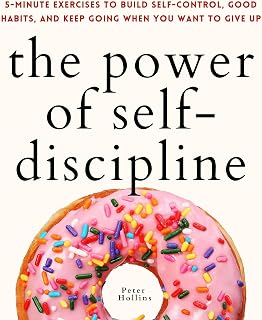 |
Free with trial | 4.4 | 5‑minute exercises, habit building | Buy at Amazon |
 |
$12.99 | 4.8 | Digital distraction, dopamine control | Buy at Amazon |
 |
Free with trial | 4.7 | Self‑sabotage, emotional mastery | Buy at Amazon |
 |
$5.88 | 4.7 | Stoic approach, self‑control | Buy at Amazon |
Pick the one that speaks to you. If you want quick daily exercises, go with The Power of Self‑Discipline. If you need a mindset overhaul, No Excuses or Discipline Equals Freedom will light a fire under you.
How to Write Your Self Discipline for Students Essay (Quick Tips)
If you’re actually writing this essay for class, here’s how to make it stand out.
- Use personal anecdotes sparingly. A short story about your own struggle with discipline makes the essay relatable, but don’t overdo it.
- Cite a study. The Duckworth & Seligman paper is perfect. Mention it by name.
- Address counterarguments. Some might say discipline is boring or rigid. Point out that discipline actually frees you from stress and last‑minute panic.
- End with a strong call to action. Challenge your reader to start one small disciplined habit today.
Frequently Asked Questions About Self‑Discipline for Students
What is the best way to improve self‑discipline for studying?
Start with one small habit. Study for just 10 minutes every day at the same time. Use the Pomodoro technique. Track your progress. Over time, increase the duration.
Can self‑discipline be learned, or is it natural?
It is absolutely learned. Your brain’s prefrontal cortex can be trained like any muscle. Consistent practice builds willpower and automatic routines.
How does self‑discipline affect grades?
It improves grades by increasing the quantity and quality of study time. Disciplined students procrastinate less, review material more often, and perform better on exams.
What are the best books on self‑discipline for students?
Atomic Habits, No Excuses!, Discipline Equals Freedom, and The Power of Self‑Discipline are top picks. Each offers a different angle.
How long does it take to build self‑discipline?
Most research suggests it takes about 66 days for a new habit to become automatic. But you’ll see improvements in focus and grades within two weeks.
Your Next Step: Write the Essay, Then Live It
This self discipline for students essay outline gives you everything you need to write a persuasive, A‑worthy paper. But the real exam is life. The grade you earn in the classroom of self‑discipline will compound into every area of your future.
Don’t wait for motivation. Pick one book from the table above. Read it. Apply one idea today. That’s discipline in action. And that’s how you build the focus and grades you deserve.
Now go write that essay. And then go make it real.