
Let’s be honest. You started that new workout plan, diet, or side project with fire in your belly. Two weeks later, the fire is a flicker. Motivation ghosted you. And you feel like a failure.
Here’s the truth most people never hear: motivation is a liar disguised as a friend. It shows up when you least need it and vanishes the moment you have to do the hard thing. That’s why relying on motivation is a losing strategy.
What actually works is a no-fluff framework built on self discipline 3 golden rules. These rules don’t care how you feel. They don’t require a pep talk. They just work. And if you stick with them, you’ll become the kind of person who follows through even when every cell in your body wants to quit.
Let’s dive straight into the self discipline 3 golden rules that will change how you show up every single day.

Table of Contents
Why the Self Discipline 3 Golden Rules Matter More Than Willpower
Willpower is like a smartphone battery. It starts at 100% in the morning and drains with every decision you make. By 8 p.m., you’re running on fumes. That’s why most people cave to junk food, skip their workout, or binge Netflix instead of working on their passion project.
The self discipline 3 golden rules bypass the battery problem. They turn self-discipline into a system, not a feeling. You don’t need to muster energy. You just need to follow the rules.
Think of it like flying a plane. You don’t rely on the pilot’s mood to keep the aircraft in the air. You rely on checklists, autopilot, and fail-safes. The 3 golden rules are your pilot checks for life.
Here they are.
Golden Rule 1: Design Your Environment for Success
You will never out-discipline a bad environment. That’s not a motivational quote. It's neuroscience. Your brain is lazy by design. It will choose the easiest path every time. So if your phone is next to your bed, you’ll scroll. If cookies are on the counter, you’ll eat them.
The first of the self discipline 3 golden rules is to stop fighting your environment and start shaping it.
How to apply this rule:
- Remove friction from good habits. Lay out your gym clothes the night before. Put your water bottle on your desk. Keep a notepad on your nightstand for morning thoughts.
- Add friction to bad habits. Keep junk food out of the house. Use app blockers for social media. Put your TV remote in a drawer.
- Build visual cues. Post a sticky note on your mirror that says, “What’s the one thing I need to do today?” Place your book on your pillow so you see it before bed.
This isn’t about willpower. It’s about architecture. And it’s the foundation of consistent action.
“The most effective way to change your habits is to change your environment.” – James Clear
Speaking of James Clear, his book Atomic Habits is a masterclass in environment design. It’s free on Audible with a trial and has a 4.8 rating for good reason.
Golden Rule 2: Commit to Micro-Actions (The 5-Minute Rule)
Big goals are scary. They trigger your brain’s fear response, which leads to procrastination. The second of the self discipline 3 golden rules kills procrastination by making the first step ridiculously small.
You want to write a book? Commit to writing for five minutes. Want to get fit? Do one pushup. Want to start a business? Send one email.
The 5-minute rule works because it bypasses the resistance you feel before starting. Once you start, momentum takes over, and five minutes often turns into thirty.
The science behind it: Your brain’s prefrontal cortex (the part responsible for self-control) gets overwhelmed by the thought of a huge task. But a tiny task? That’s easy to say yes to. After you begin, dopamine kicks in and reinforces the behavior.
Real example: Sarah was stuck on her online course for months. She applied the 5-minute rule: open the laptop and write one bullet point. Within a week, she built a habit and finished the course in two months.
The 5-minute rule is simple, but it’s powerful because it turns the impossible into the inevitable.
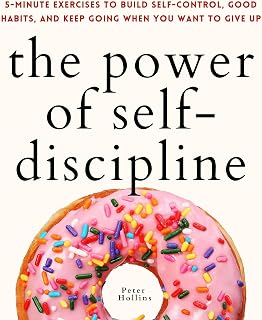
If you need more structure around micro-habits, check out The Power of Self-Discipline: 5-Minute Exercises to Build Self-Control, Good Habits, and Keep Going When You Want to Give Up. It’s a practical workbook that directly supports this rule.
Golden Rule 3: Practice Deliberate Recovery and Forgiveness
This might sound soft. It’s not. The third of the self discipline 3 golden rules is the one most people skip, and it’s why they burn out.
Discipline isn’t a straight line. You will miss a day. You will eat the cookie. You will skip the workout. What separates successful people from everyone else is how they respond to that slip.
Two parts to this rule:
- Plan rest stops. Your body and mind need recovery to maintain peak performance. Schedule breaks, sleep 7–8 hours, and take one full day off per week from your disciplined routine. Pushing nonstop is not self-discipline; it’s self-sabotage.
- Forgive forward. When you mess up, don’t spiral into shame. Shame drains your energy and makes you more likely to quit. Acknowledge the mistake, learn one thing from it, and immediately get back on track. The goal is progress, not perfection.
Expert insight: Dr. Kelly McGonigal, a Stanford psychologist, found that people who practice self-compassion after a setback actually have more willpower afterward. Guilt kills motivation; forgiveness fuels it.
This rule is the safety net. It keeps you from throwing in the towel when things get messy. And they will get messy.
Putting the Self Discipline 3 Golden Rules Into Daily Practice
You now have the framework. But knowing is not the same as doing. Here’s a step-by-step plan to integrate the self discipline 3 golden rules into your life starting today.
Step 1: Audit Your Environment
Walk through your home, office, and phone. Identify one high-friction spot for every positive habit you want to build. Remove one temptation that keeps tripping you up. Do this today.
Step 2: Pick One Micro-Action
Choose the smallest possible version of your goal. Write it down. Schedule it for the same time each day. Set a timer for five minutes if needed.
Step 3: Plan Your Reboot
Write down exactly what you will do when you skip a day. For example: “If I miss my workout, I will do one pushup and then go back to my normal routine tomorrow. No guilt, no excuses.”
That’s it. The framework is simple, but it’s not easy because you have to actually do the work. However, following these rules removes the guesswork.
Why Most People Fail at Self-Discipline (And How the 3 Golden Rules Fix That)
Motivational speakers love telling you to “just do it.” But if you could just do it, you wouldn’t be reading this. The problem isn’t laziness. It’s a flawed approach.
Common mistakes:
- Relying on willpower alone.
- Setting huge, unrealistic goals.
- Not forgiving themselves after a slip.
- Keeping temptations close.
The self discipline 3 golden rules directly address each failure point:
| Failure Point | How This Framework Fixes It |
|---|---|
| Willpower drain | Environment does the heavy lifting |
| Overwhelm | Micro-actions make starting easy |
| Guilt spiral | Forgiveness keeps you moving forward |
| Temptation | Friction stops bad habits |
When you stop fighting your biology and start working with it, discipline becomes a natural byproduct of your system.
The Role of Identity in Self-Discipline
The self discipline 3 golden rules work on the surface. But to make them stick long-term, you need to shift your identity.
Instead of saying “I want to exercise,” say “I am a person who exercises.” Instead of “I’m trying to read more,” say “I am a reader.” This small shift changes your behavior because your brain wants to stay consistent with your self-image.
One book that nails this concept is Discipline Equals Freedom by Jocko Willink. It’s a raw, no-excuses field manual that will change how you see yourself. With a 4.7 rating and over 8,800 reviews, it’s a battle-tested resource.
Comparison of Top Self-Discipline Books to Support the 3 Golden Rules
Here are five powerful books that align with the self discipline 3 golden rules. Use them to deepen your practice.
| Product | Best For | Price | Rating | Buy at Amazon |
|---|---|---|---|---|
|
Foundational principles of self-discipline | $8.66 | 4.7 | Buy |
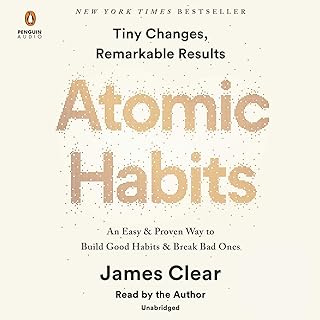 |
Building systems and environment design | Free (Audible) | 4.8 | Buy |
 |
Mental toughness and identity shift | $12.93 | 4.7 | Buy |
 |
Practical self-control techniques | $16.83 | 4.6 | Buy |
 |
Starting small and building discipline | $6.95 | 4.7 | Buy |
All five resources reinforce the self discipline 3 golden rules in different ways. Pick one that matches where you are right now.
Advanced Tips to Master the Self Discipline 3 Golden Rules
Once you’ve got the basics down, level up with these strategies.
Stack Your Habits
Pair a new micro-action with an existing habit. Example: while you brew your morning coffee, spend five minutes journaling or planning your day. This uses your brain’s existing wiring to make the new behavior automatic.
Use Accountability
Tell a friend or join an online community that expects you to show up. Knowing someone will ask “did you do it?” raises the stakes. You’ll think twice before skipping when someone is watching.
Track, Don’t Judge
Keep a simple log: check a box or mark an X each day you follow your micro-action. Don’t assign meaning to streaks. The act of tracking alone boosts consistency.
Remember The 3 Golden Rules During Hard Times
When you feel like quitting, ask yourself:
- Have I designed my environment for this goal?
- What is the smallest action I can take right now?
- How can I forgive myself and move forward?
These questions anchor you back to the framework.
Frequently Asked Questions About the Self Discipline 3 Golden Rules
What are the self discipline 3 golden rules?
The three rules are: 1) Design your environment for success, 2) Commit to micro-actions (5-minute rule), and 3) Practice deliberate recovery and forgiveness. They form a no-fluff framework that keeps you consistent even when motivation disappears.
Can the 3 golden rules work for someone with zero self-discipline?
Absolutely. The rules are designed specifically for people who struggle with willpower. They don’t require strength; they require a system. Start with the smallest possible step and build from there.
How long does it take to see results with these rules?
Most people notice a shift in the first week. The real transformation happens after 30 days when the new behaviors become automatic. The key is consistency, not intensity.
Do I need to follow all three rules at once?
It’s best to implement them together because they support each other. But if you’re overwhelmed, start with environment design. It gives you the biggest return on effort.
What if I keep breaking rule 3 (forgiveness)?
That’s normal. Practice self-compassion even for failing to forgive. Remember, discipline is a muscle. It gets stronger every time you choose to get back up.
Your Next Move: Pick One Rule and Start Today
You now have the self discipline 3 golden rules in your hands. Not as theory, but as a practical toolkit. The only question left is: are you going to use it?
Here’s a challenge. For the next 24 hours, implement just the first rule. Clean up your environment. Remove one distraction. Add one cue for a good habit. That’s it.
Tomorrow, add the 5-minute rule. The day after, practice forgiving yourself for something small.
By the end of the week, you’ll experience what it feels like to stay consistent without needing motivation.
The self discipline 3 golden rules aren’t a quick fix. They’re a way of living. And the best part: anyone can learn them. Including you.
Now go shape your environment, take one micro-action, and forgive yourself if you stumble. That’s the path to unshakeable consistency.