
Let’s be honest: you already know what you should be doing. You should stop scrolling at midnight. You should hit the gym before the excuses pile up. You should finish that project instead of reorganising your sock drawer.
So why don’t you?
The gap between knowing and doing isn’t a lack of motivation. It’s a lack of how to self discipline the right way. Most people treat self-discipline like a raw muscle — they try to brute-force it with sheer willpower. That works for about a week, then the muscle cramps and they binge-watch an entire series.
Real self-discipline isn’t about fighting yourself every single day. It’s about understanding your triggers, taming your distractions, and building systems that make progress feel inevitable. That’s exactly what this guide is built for.
We’re going to dig deep into the psychology, the practical tactics, and the little shifts that turn “I’ll start tomorrow” into “I already started today.” No fluff, no empty promises — just a field manual for taking control of your life.

Table of Contents
Why Your Willpower Keeps Crashing (And It’s Not Your Fault)
If you’ve tried to develop self-discipline before and failed, you’re not weak. You’re just fighting the wrong enemy.
Your brain is wired to seek immediate rewards. That’s not a character flaw — it’s survival wiring from thousands of years ago. Back then, grabbing the berry right in front of you was smart. Saving grain for winter could get you killed if the tribe moved.
Fast-forward to today: you have a smartphone in your pocket that delivers a dopamine hit every few seconds. Your brain still thinks that notification might contain life-saving information. Spoiler: it’s just a cat video.
The real problem is your triggers. Every habit starts with a cue. The buzz of your phone. The sight of the cookie jar. The feeling of boredom three minutes into a task. If you don’t identify and fix those triggers, you’ll always be fighting an uphill battle.
Common Trigger Categories
- Environmental triggers: The TV remote in plain sight, the work desk facing the bed, the notification badge on your apps
- Emotional triggers: Anxiety, boredom, loneliness, fatigue — the feelings that make you reach for a quick escape
- Social triggers: Friends inviting you out, colleagues starting small talk, family pressure to “relax”
- Internal triggers: Uncomfortable thoughts, perfectionism (“If I can’t do it perfectly, I won’t start”), procrastination loops
To master how to self discipline, you must first map out your personal trigger landscape. Spend one day just noticing without judging. Write down every moment you felt tempted to ditch your plan. That list is your treasure map.
Step 1: Fix Your Triggers (The Detective Work)
You can’t fight an enemy you haven’t named. Here’s how to systematically dismantle the triggers that derail your discipline.
Identify the Cue-Routine-Reward Loop
Charles Duhigg’s habit loop is the gold standard. Every habit has three parts:
- Cue: The trigger that starts the behaviour
- Routine: The behaviour itself (what you want to change)
- Reward: The benefit you get (dopamine, relief, connection)
For example: you reach for your phone (routine) when you hit a difficult part of work (cue) because you get a tiny hit of social validation (reward). The fix isn’t to stop reaching for the phone by willpower — it’s to change the cue or replace the routine.
Practical exercise: For one week, every time you catch yourself procrastinating, jot down the following:
What happened right before? (time, place, feeling)
What did I do?
What did I get out of it? (distraction, relief, entertainment)
After seven days, patterns will jump out. Your 3 p.m. slump. Your post-lunch snack scroll. Your “I’ll start after this episode” trap.
Eliminate the Cue Where Possible
Sometimes the smartest move is to remove the trigger entirely.
- Unfollow accounts that make you compare yourself
- Keep your phone in another room during deep work
- Don’t buy the snacks you’ll binge at midnight
- Use website blockers during your focus hours
This isn’t about being weak — it’s about being strategic. The most disciplined person in the world still struggles if a cookie is sitting on their desk all day. So don’t keep cookies on your desk.
Reframe the Reward
Often the reward we think we want isn’t the one we actually need. If you check social media when you’re stressed, you’re not seeking information — you’re seeking calm. Replace the routine with a healthier reward: a two-minute breathing exercise, a walk around the block, a quick stretch.
The cue stays the same (stress). The reward stays the same (relief). Only the routine changes. That’s the secret to sustainable change.
Step 2: Tame Distractions Before They Tame You
Even with perfect triggers, the world will throw distractions at you. Emails, notifications, colleagues, family, that one fly that keeps buzzing around your head. You need a system, not just willpower.
The Distraction Audit
Be ruthless for 48 hours. Write down every single interruption that steals your focus. Categories:
- Digital (notifications, email, social media, news)
- Physical (people walking in, noise, clutter)
- Mental (worrying about other tasks, planning the weekend)
Be honest. Most people are shocked at how much time “quick checks” take. A 30-second glance at Twitter can turn into 15 minutes of doomscrolling.
Create “Focus Fortresses”
You can’t expect to focus if your environment is designed for distraction. Set up dedicated zones:
- Work zone: Clean desk, only one browser tab, phone face-down or in another room
- Deep work zone: No notifications, no people, pre-set timer (Pomodoro is great)
- Wind-down zone: No screens, comfortable seating, books or journal nearby
Make it harder to do the wrong thing and easier to do the right thing. If your gym bag is packed by the door, you’re more likely to go. If your running shoes are in the trunk, you’ll talk yourself out of it.
Use the “Two-Minute Rule” for Disruptions
When something small pops up (a text, a new email), decide immediately: can I handle this in two minutes or less? If yes, do it now so it stops nagging your brain. If no, schedule it for later and get back to what matters.
This stops you from breaking flow for tiny tasks that could have waited.
Step 3: Make Progress Daily (Without Burning Out)
This is where most people fail. They charge into a new discipline routine at full speed, survive three days, then crash. The key to how to self discipline is consistency over intensity.
The Minimum Viable Discipline
Ask yourself: what is the smallest version of this habit that I can do every single day without fail?
- Instead of “work out for one hour,” start with “put on gym clothes and do one push-up”
- Instead of “write 2000 words,” start with “write one sentence”
- Instead of “meditate for 20 minutes,” start with “sit quietly for one breath”
It sounds laughably easy. That’s the point. Once you show up, it’s easier to do a little more. But even if you only do the minimum, you still win. You didn’t break the streak.
Track Your Streak
James Clear, author of Atomic Habits, talks about the power of habit tracking. Seeing a chain of X’s on a calendar is addictive in a good way. You won’t want to break it.
Use a simple calendar, a habit tracker app, or even a journal. Mark every day you stick to your discipline. When you miss a day — and you will — don’t break twice. Get back on track immediately.
The 5-Minute Rescue
On days when you have zero motivation, commit to just five minutes of the task. Set a timer. Do it for five minutes. Then you are free to stop.
Guess what happens in nine out of ten cases? Once you start, you keep going. The hardest part is the first step. The 5-minute rule bypasses that resistance.
How to Self Discipline Your Mindset
Discipline isn’t just about actions — it’s about your inner dialogue. The voice that says “I’ll do it tomorrow” or “I don’t feel like it” is loud. You need to train a counter-voice.
Separate Identity From Behavior
You are not a procrastinator. You are a person who sometimes procrastinates. When you label yourself (“I’m lazy,” “I have no self-control”), you lock in the behavior. Instead, say: “That wasn’t my best moment. Let me choose differently now.”
Identity-based habits are powerful. Tell yourself: “I am the kind of person who keeps promises to myself.” Then act accordingly.
Prepare for the Resistance
Steven Pressfield calls it “The Resistance” — that force that pushes back whenever you try to do meaningful work. It’s normal. It’s not a sign you should stop. It’s a sign you’re on the right track.
Write down your most common excuses. Then write a counter-argument for each.
| Excuse | Counter |
|---|---|
| “I’m too tired.” | “I will do just five minutes, then I can rest.” |
| “I don’t have time.” | “I can skip one episode of Netflix.” |
| “I’ll start Monday.” | “Starting today with one small step is easier.” |
| “It’s not perfect.” | “Done is better than perfect.” |
Practice Self-Compassion (Yes, Really)
The toughest people on the planet — Navy SEALs, Olympic athletes — use self-compassion. Beating yourself up after a slip-up drains energy and makes you more likely to quit. Instead, acknowledge the slip, learn from it, and move on.
Ask: “What can I do differently next time?” Not: “What’s wrong with me?”
A Deep Dive into the Best Books on Self-Discipline
To master how to self discipline, learning from the best minds in the field accelerates your progress. Here are some of the highest-rated, most practical books available. Each one offers a unique angle.
No Excuses!: The Power of Self-Discipline by Brian Tracy ($8.66, rating 4.7). A no-nonsense classic that covers health, finances, relationships, and time management. Tracy gives you 21 practical ways to strengthen your discipline muscle. Perfect if you need a kick in the pants.
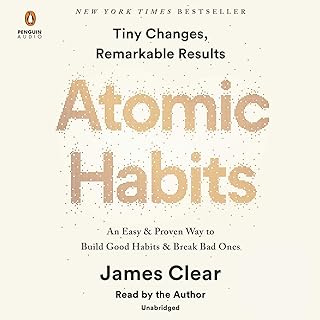
Atomic Habits by James Clear (price varies, rating 4.8). The modern bible of habit change. Clear shows you how tiny 1% improvements compound into massive results. If you read only one book on self-discipline, make it this one.

Discipline Is Destiny: The Power of Self-Control by Ryan Holiday ($5.88, rating 4.7). From the Stoic virtues series. Holiday profiles historical figures who embodied self-control and those who lacked it. Inspiring and humbling — a great read for anyone who wants to understand the deeper philosophy behind discipline.

The Power of Discipline: How to Use Self Control and Mental Toughness to Achieve Your Goals ($16.83, rating 4.6). A practical workbook-style book that gives you exercises to build willpower. Great for those who want to move from theory to action.

The Mountain Is You by Brianna Wiest (price varies, rating 4.7). Focuses on self-sabotage — why we stand in our own way and how to transform that into self-mastery. More emotional and psychological than the others, but deeply insightful.
Comparison Table: Top Self-Discipline Books
| Product | Price | Rating | Key Focus | Buy at Amazon |
|---|---|---|---|---|
|
$8.66 | 4.7 | 21 practical strategies for all areas of life | Buy on Amazon |
|
$0.00 (audible) | 4.8 | 1% habits, compounding systems | Buy on Amazon |
|
$5.88 | 4.7 | Stoic philosophy, historical examples | Buy on Amazon |
|
$16.83 | 4.6 | Mental toughness exercises | Buy on Amazon |
|
$0.00 (audible) | 4.7 | Self-sabotage, inner work | Buy on Amazon |
Each of these books can deepen your understanding of how to self discipline. Choose based on what resonates. Tracy for direct tactics, Clear for systems, Holiday for inspiration, and Wiest for emotional breakthroughs.
Your 30-Day Self-Discipline Action Plan
Theory is useless without application. Here is a step-by-step plan you can start today.
Week 1: Map and Reduce Triggers
- List your top three triggers (time, place, emotion)
- Remove or modify the cues (e.g., change your phone settings, rearrange your desk)
- Replace the unhealthy routine with a healthier one that delivers the same reward
Week 2: Build a Habit Stack
Attach your new discipline habit to an existing routine. For example:
After I pour my morning coffee, I will meditate for 60 seconds.
After I brush my teeth at night, I will write down tomorrow’s top three tasks.
Start with just one stack. Once it feels automatic (usually 2–3 weeks), add another.
Week 3: Tame Digital Distractions
- Turn off all non-critical notifications
- Schedule specific times to check email and social media (e.g., 10am, 2pm, 5pm)
- Use a focus app like Forest or Freedom during deep work
Week 4: Practice the “Willpower Reset”
Your willpower is finite but renewable. Use these resets:
- Sleep: 7–9 hours is non-negotiable for top performance
- Nutrition: Steady blood sugar = steady focus. Avoid sugar spikes.
- Movement: A 10-minute walk can replenish mental energy
- Breaks: The Pomodoro method (25 min work, 5 min break) prevents burnout
After 30 days, review what worked. Double down on those strategies. Drop what didn’t. Self-discipline is a lifelong practice, not a destination.
FAQ: How to Self Discipline
Here are the most common questions people ask about building self-discipline.
What is the best way to start when I have zero willpower?
Start smaller than you think you need. Do one push-up. Write one sentence. Meditate for one breath. The goal is to show up every day, not to do a lot at once. The momentum will carry you.
How do I stop procrastinating?
Procrastination is usually about avoidance of discomfort (fear, boredom, uncertainty). Identify what you’re avoiding. Then use the five-minute rule or the two-minute rule to break the inertia. Often just starting removes the resistance.
Can self-discipline be learned, or are some people just born with it?
Absolutely learned. Willpower is like a muscle — it gets stronger with consistent use. Genetics play a small role, but environment, habits, and mindset are far more important. Anyone can learn how to self discipline with the right system.
What if I fail after a week?
Failing is part of the process. The key is how you respond. Instead of giving up, ask: “What can I adjust?” Maybe you tried to do too much at once. Scale back, learn the lesson, and restart. One slip doesn’t erase your progress.
How long does it take to build a discipline habit?
Research suggests it takes 18 to 254 days, with an average of 66 days for a new habit to become automatic. Don’t get discouraged by early struggles. Consistency over time is what rewires your brain.
Final Words: Progress, Not Perfection
Learning how to self discipline is not about becoming a robot. It’s about becoming the person who follows through. The person who starts the project, finishes the workout, and keeps promises to themselves.
You don’t need to be perfect. You just need to be a little better today than you were yesterday. And then do it again tomorrow.
Pick one trigger to fix. Tame one distraction. Take one small step. That’s all it takes to start the momentum. The rest will follow.
Now stop reading — and go make progress.