
If you have ever asked yourself, “What is a self discipline, really?” you are not alone. Self discipline is the secret sauce behind every big achievement, yet most people misunderstand it.
They think it means being harsh with yourself, never having fun, or waking up at 4 AM to run in the rain. Nope.
Self discipline is simply the ability to choose what you want most over what you want now. It is the bridge between your goals and your results. And the good news? It is a skill you can build, not a gift you are born with.
This guide will give you a crystal clear answer to what self discipline is, why it matters, and exactly how to develop it in a way that actually sticks.
Table of Contents
What Exactly Is a Self Discipline?
At its core, self discipline is the practice of aligning your actions with your values and long term goals, even when you don’t feel like it.
It is not about punishment. It is about freedom. When you have self discipline, you break free from the tyranny of impulse and short term gratification. You become the captain of your own ship.
Self discipline and willpower are related but not identical. Willpower is the momentary energy you use to resist a temptation. Self discipline is the consistent habit of making the right choice regardless of how you feel.
Think of willpower as a muscle that tires out. Self discipline is the lifestyle that keeps that muscle strong.
Why Most People Struggle With Self Discipline
Before you can build self discipline, you need to understand why it crumbles. Here are the main culprits:
- Lack of clarity: You cannot stick to a goal that is vague. “Get fit” is not a plan. “Exercise for 30 minutes, 4 times a week” is.
- Overreliance on motivation: Motivation is a spark. Discipline is the fuel that keeps the fire burning. Waiting to feel motivated is a trap.
- Environment design failure: Your surroundings shape your behavior. If the cookie jar is on the counter, your discipline will lose every time.
- Instant gratification bias: The brain is wired to prefer a small reward now over a bigger reward later. This is why procrastination wins so often.
Recognizing these barriers is the first step to overcoming them.
The Science Behind Self Discipline
Research shows that self discipline draws on the prefrontal cortex, the part of the brain responsible for decision making and impulse control. This region works like a battery. It drains with use and recharges with rest.
Studies on willpower depletion (often called ego depletion) suggest that resisting temptation repeatedly without breaks can lower your capacity to resist the next one. However, newer research indicates that this depletion effect can be overcome by building strong habits.
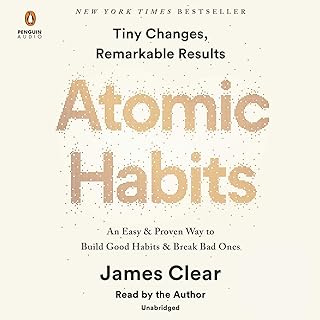
When you turn a desired behavior into a habit, you bypass the need for willpower. The action becomes automatic. That is why Atomic Habits by James Clear is such a game changer. James Clear explains how tiny changes lead to remarkable results by focusing on systems instead of goals.
Another crucial concept is the habit loop: cue, craving, response, reward. To build self discipline, you can intentionally design your cues and rewards to make good habits easier and bad habits harder.
How to Build Self Discipline That Actually Lasts
Building self discipline is not about a one time epiphany. It is about daily practice. Here is a step by step framework.
1. Start Small and Stack Wins
Do not try to overhaul your entire life in a week. Pick one small behavior and do it every day. Make it so easy you cannot say no.
For example, meditate for two minutes. Do one pushup. Write one sentence. The goal is to build momentum and prove to yourself that you follow through.
2. Use Implementation Intentions
Instead of saying “I will exercise more”, say “I will exercise for 20 minutes at 7 AM in my living room.” This simple shift makes the behavior concrete. Studies show implementation intentions double your chances of following through.
3. Optimize Your Environment
Make good habits easy and bad habits hard. If you want to eat healthier, keep fruits on the counter and junk food out of the house. If you want to read more, put a book on your pillow. Design your environment for success.
4. Practice the 10 Minute Rule
When you are tempted to skip a task, tell yourself you will do it for just 10 minutes. After 10 minutes, you can stop if you want. Usually, you will keep going. This technique overcomes the initial resistance and activates momentum.
5. Track Your Progress
What gets measured gets managed. Keep a simple log of your habit streaks. Use a calendar and mark an X on each day you complete your action. Seeing a chain of X’s is motivating. Don’t break the chain.
6. Forgive Yourself When You Slip
Nobody is perfect. If you miss a day, do not binge on guilt. Acknowledge the slip, learn from it, and get back on track tomorrow. Self compassion actually strengthens discipline because it reduces shame and helps you bounce back faster.
Top Books on Self Discipline
Reading about self discipline from leading experts is one of the fastest ways to internalize its principles. Below are some of the best books available right now, along with their prices and ratings.

No Excuses!: The Power of Self-Discipline by Brian Tracy is a classic. Tracy breaks down how self discipline applies to every area of your life — career, money, health, relationships. Priced at $8.66 with a 4.7 rating and over 3800 reviews, it’s a steal.

Discipline Is Destiny: The Power of Self-Control by Ryan Holiday is part of The Stoic Virtues Series. Holiday draws on ancient wisdom to show how self control leads to greatness. At $5.88 and a 4.7 rating, it’s a compact powerhouse.

The Power of Discipline: How to Use Self Control and Mental Toughness to Achieve Your Goals is a highly rated practical manual (4.6 stars, over 11,000 reviews). It focuses on mental toughness and practical techniques. Priced at $16.83.

The Psychology of Self-Discipline: Twenty-Four Proven Strategies to Rewire Your Brain for Consistent Action is a newer release (4.6 rating). It offers research backed strategies to train your brain for lasting discipline. $17.99.

The Mountain Is You: Transforming Self-Sabotage into Self-Mastery by Brianna Wiest is a modern favorite (4.7 rating, free on Audible with trial). It tackles the internal barriers that keep you stuck.

Discipline Equals Freedom: Field Manual Mk1-MOD1 by Jocko Willink is raw, direct, and powerful. It’s a no excuses guide to building mental toughness. $12.93, 4.7 rating, 8,800 reviews.
Comparison Table of Top Self Discipline Books
| Product | Price | Rating | Buy at Amazon |
|---|---|---|---|
| No Excuses! |
$8.66 | 4.7 | Buy Now |
| Discipline Is Destiny |
$5.88 | 4.7 | Buy Now |
| The Power of Discipline |
$16.83 | 4.6 | Buy Now |
| The Psychology of Self-Discipline |
$17.99 | 4.6 | Buy Now |
| The Mountain Is You |
$0.00 (Audible) | 4.7 | Buy Now |
| Discipline Equals Freedom |
$12.93 | 4.7 | Buy Now |
Each of these books offers unique insights. If you want an all in one classic, start with No Excuses!. For stoic philosophy, grab Discipline Is Destiny. And if you need to understand your own self sabotage, The Mountain Is You is a must read.
Daily Habits to Strengthen Self Discipline
Self discipline is not built in a day. It is built in the small choices you make every morning, afternoon, and evening. Here are habits that compound:
- Make your bed every morning. It is a small win that sets a disciplined tone for the day. Admiral William H. McRaven’s book Make Your Bed explains why this simple act matters.
- Practice the 80/20 rule on your to do list. Focus on the 20% of tasks that give 80% of the results. Discipline is about prioritization.
- Eat the frog. Do your hardest task first thing in the morning. Your willpower is at its peak, and the rest of the day feels lighter.
- Set a daily “no distraction” block of 60 to 90 minutes. Turn off notifications, close your door, and focus completely. This strengthens your concentration muscle.
- Review your day every evening. Ask: What did I do well? What can I improve? This reflection builds self awareness, a key component of self discipline.
Common Myths About Self Discipline
Many people avoid building self discipline because they believe these myths. Let’s bust them.
Myth 1: Self discipline means being rigid and unhappy.
Truth: Discipline actually leads to more freedom and less stress. When you have routines, you waste less energy deciding what to do. You save willpower for what matters.
Myth 2: You have to be born with it.
Truth: Self discipline is a skill, not a gene. Anyone can learn it with practice. The more you exercise it, the stronger it gets.
Myth 3: It’s about deprivation and saying no to everything.
Truth: It is about saying yes to the things that truly matter. You are not depriving yourself of joy. You are choosing a bigger joy over a smaller one.
Myth 4: Once you slip, you’ve failed forever.
Truth: One slip does not erase your progress. The disciplined person gets back on track immediately. Perfection is not the goal. Consistency is.
How Self Discipline Transforms Your Life
When you master self discipline, everything changes. Here is how it impacts key areas.
Health: You stick to your workout plan. You eat nutritious food even when junk is tempting. You sleep enough. Over time, your energy and body transform.
Finances: You spend less on impulse buys. You save and invest consistently. You pay off debt. Financial freedom becomes possible.
Career: You finish projects on time. You learn new skills even when it is hard. You become reliable. Promotions and opportunities follow.
Relationships: You listen more patiently. You keep your promises. You manage your emotions better. Trust deepens.
Self belief: Every time you keep a commitment to yourself, you build self respect. You start to believe you can achieve anything. That belief drives further success.
FAQ: Your Questions About Self Discipline Answered
1. Is self discipline the same as self control?
Not exactly. Self control is the ability to resist impulses in the moment. Self discipline is the broader ability to consistently act in alignment with your goals. Think of self control as a battle, self discipline as a lifestyle.
2. How long does it take to build self discipline?
There is no magic number. Most research suggests that forming a new habit takes anywhere from 18 to 254 days, with an average of 66 days. The key is to start small and be consistent. You will see improvements in weeks, but mastery takes months or years.
3. Can self discipline be overdone?
Yes. Over discipline can lead to burnout, anxiety, and a joyless life. The goal is not to be a robot but to have enough discipline to pursue your goals while still enjoying life. Balance is crucial.
4. What is the best book on self discipline for beginners?
No Excuses!: The Power of Self-Discipline by Brian Tracy is widely considered the best starting point. It is straightforward, practical, and covers all major life areas. You can grab it on Amazon for $8.66.
5. How can I improve my self discipline when I have no motivation?
Start with the smallest possible action. Do not wait for motivation. Act first. Motivation often follows action, not the other way around. Also, redesign your environment to reduce friction for good habits.
6. Is self discipline genetic?
Genetics play a small role in traits like impulsivity, but self discipline is mostly learned. Your upbringing, habits, and mindset matter far more. Anyone can strengthen it with deliberate practice.
7. What is a self discipline example in daily life?
Waking up when your alarm goes off instead of hitting snooze is self discipline. Choosing water over soda is self discipline. Writing for 30 minutes even when you would rather watch Netflix is self discipline. It is the small, consistent choices.
8. How do I stay disciplined when I feel overwhelmed?
Break the task down into tiny steps. Focus on just the next step. Also, give yourself permission to rest. Discipline does not mean grinding nonstop. It means knowing when to push and when to recover.
9. Can self discipline be learned later in life?
Absolutely. People have transformed their lives in their 40s, 50s, and beyond. The brain remains plastic throughout life. You can teach an old dog new tricks. It just takes commitment.
10. What is the difference between discipline and punishment?
Discipline is about training and growth. Punishment is about retribution. Self discipline is a positive act of self respect. You are not punishing yourself; you are investing in your future self.
Final Thoughts: Your Self Discipline Journey Starts Now
What is a self discipline? It is not a mysterious gift reserved for the elite. It is a learnable, buildable skill that any person can develop. It is the quiet power behind every successful entrepreneur, athlete, artist, and parent.
You do not need to be perfect. You just need to start. Pick one small habit today. Do it tomorrow. Then the next day. Watch how that small act of self discipline sends ripples through your entire life.
Remember the words of Jocko Willink: Discipline equals freedom. The more disciplined you become, the more freedom you have to create the life you want.
So start now. Your future self is counting on you.