
Let’s be honest. You know what you should be doing. You have the list. You have the ambition. You even have that flash of motivation when you first sit down. Then ten minutes later you’re watching a video about how to make the perfect cappuccino, and you don’t even drink coffee.
That gap between intention and action is where procrastination lives. And it thrives when there’s no structure.
Self discipline work is not about forcing yourself to grind 24/7. It is about building a focus routine so solid that procrastination doesn’t stand a chance—no matter what shift of the day you’re in. Whether you’re an early bird, a night owl, or someone who works in unpredictable blocks, the same principles apply.
Let’s dive into how you can build that routine, backed by real strategies from top books on the topic.
Table of Contents
Why Procrastination Is Not a Character Flaw
Procrastination is a symptom, not your identity. Your brain is wired to avoid discomfort. When a task feels hard, boring, or uncertain, your brain looks for a quick hit of dopamine. That’s why you reach for your phone or open the fridge.
The fix isn’t more willpower. It’s strategic self discipline work that removes the friction between you and the task.
“I will keep moving forward, one small step at a time.” — That’s the mindset of discipline as a daily practice, not a heroic act.
What is a Focus Routine, Really?
A focus routine is a repeatable set of actions that prepares your mind for deep work. It answers three questions:
- When do I work best?
- What triggers my procrastination?
- What environment shuts it down?
Most people try to fix their lack of focus with motivation alone. But motivation is a wave—it comes and goes. Self discipline work is the boat you build to ride that wave even when it’s flat.
Let’s build your boat.
The Anatomy of a Focus Routine
Your routine will change depending on the time of day. But every great routine has these three parts:
1. The Pre-Shift Ritual
Before you start working, have a 5–10 minute transition. No phone. No email. Just a clear signal to your brain: “We are now in work mode.”
Examples:
- Close all browser tabs except the one you need.
- Do a quick breathing exercise (box breathing works).
- Write down your three most important tasks for this shift.
2. The Deep Work Block
This is the core of your self discipline work. Block off 60–90 minutes of uninterrupted time. No notifications. No checking messages.
Use a timer. If you’re just starting, try 25 minutes (Pomodoro) and build up.
3. The Recovery Slot
After deep work, take a real break. Walk, stretch, get a glass of water. Do not scroll social media. Real recovery resets your attention.
This three-part cycle is the foundation. But the devil is in the details—especially when procrastination strikes mid-shift.
How to Beat Procrastination at Every Shift
Here’s the challenge: procrastination doesn’t respect a neat schedule. It hits hardest at the times you’re most vulnerable. Let’s walk through three common shifts and exactly how to defend yourself using self discipline work.
Morning Shift: The Temptation to Delay
You wake up fresh. You plan to start early. Then you check your phone, and suddenly it’s 9:45 and you’re still in bed.
Fix: Create a non-negotiable morning anchor. For example, make your bed immediately. Admiral William McRaven famously said, “If you make your bed, you will have accomplished the first task of the day.” That small wins sets the tone.

The book Make Your Bed: Little Things That Can Change Your Life…And Maybe the World is a brilliant reminder that discipline starts with tiny actions. ($6.95, 4.7 stars)
Action step: Set a fixed wake-up time. Put your phone in another room overnight. Then do one small physical task before any screen time.
Afternoon Shift: The Slump
It’s 2 PM. Your energy is low. Your willpower has already been used up. This is where most people give in.
Fix: Use a low-effort activity that still moves the needle. Instead of tackling your hardest task, do a simple one. Review your notes, answer a few emails, or clean your desk.
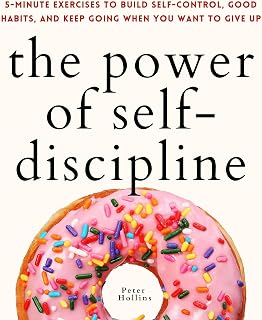
But here’s the secret: The Power of Self-Discipline: 5-Minute Exercises to Build Self-Control, Good Habits, and Keep Going When You Want to Give Up is perfect for these moments. This book (rated 4.4, available on Audible at $0.00 if you’re a subscriber) gives you micro-exercises that take exactly five minutes. During your afternoon slump, do one of those exercises and watch your momentum return.
Action step: Set a timer for 5 minutes and do one tiny, productive thing. Often that’s all you need to break the slump.
Evening/Night Shift: The Dopamine Trap
You’re tired, but you still have work to do. Your phone buzzes. Netflix is calling. You’re the most vulnerable here.
Fix: Your evening routine must include a digital detox. Do not rely on willpower to resist notifications. Use an app blocker or physically put your phone in a drawer.
This is where Digital Self-Discipline: Break Free from Dopamine’s Snare, Overcome Digital Addictions & Reclaim Your Drive becomes your best friend. It’s a practical guide (4.8 stars, $12.99) that shows you exactly how to retrain your brain to stop craving the dopamine loop of social media and notifications.

Action step: Set a “digital sunset” time—at least 1 hour before you plan to sleep. No screens. Use that time for reading (like the book above) or journalling.
Comparison Table: Best Books for Self Discipline Work
Below are some of the top-rated resources that can help you build a rock-solid focus routine. Each one focuses on a different aspect of self discipline work—from quick exercises to deep psychological rewiring.
| Product | Price | Rating | Focus Area | Buy at Amazon |
|---|---|---|---|---|
| The Power of Self-Discipline (5-Minute Exercises) | $0.00 (Audible) | 4.4/5 | Quick daily exercises to build self-control | |
| Digital Self-Discipline | $12.99 | 4.8/5 | Breaking digital addictions and dopamine loops | |
| The Psychology of Self-Discipline | $17.99 | 4.6/5 | 24 proven strategies to rewire your brain for consistent action |  |
| The Mountain Is You | $0.00 (Audible) | 4.7/5 | Transforming self-sabotage into self-mastery |  |
| No Excuses!: The Power of Self-Discipline | $8.66 | 4.7/5 | Brian Tracy’s classic on self-discipline for all areas of life |  |
How to Build Your Own Focus Routine (Step-by-Step)
You don’t need to follow someone else’s routine exactly. You need a routine that fits your life. Here’s how to design yours using self discipline work as a framework.
Step 1: Audit Your Procrastination Triggers
For one week, track when you procrastinate and why. Write down:
- The time of day
- The task you avoided
- What you did instead (social media, browsing, etc.)
Step 2: Find Your Peak Performance Window
Are you a morning person? Or do you hit your stride after 10 PM? Work on your hardest tasks during your peak window. Do shallow work (email, admin) during your low energy times.
Step 3: Use the 2-Minute Rule
If a task takes less than two minutes, do it immediately. This is a golden rule from Atomic Habits (4.8 stars, available on Audible). It eliminates the mental friction that leads to procrastination.

Step 4: Create Accountability
Tell a friend or coach what you plan to accomplish in your next shift. Or use a public progress tracker. Knowing someone might check on you drastically increases follow-through.
Step 5: Review and Adjust Weekly
Every Sunday, spend 10 minutes reviewing what worked and what didn’t. Tweak your routine. Self discipline work is a dynamic process, not a rigid rule.
Expert Insights: What the Research Says
Researchers like Roy Baumeister have shown that willpower is like a muscle—it gets fatigued with use. That’s why relying on sheer will at the end of a long day is a losing battle.
Instead, build habits. Habits don’t drain willpower because they run on autopilot. The books we’ve listed above all converge on this point: discipline is a system, not a personality trait.
For a deeper dive into ancient wisdom, check out Discipline Is Destiny: The Power of Self-Control (The Stoic Virtues Series). It’s a modern take on Stoic principles (4.7 stars, $5.88) and shows how great leaders throughout history used self discipline work to achieve the extraordinary.

And if you want a daily reminder, 365 Days With Self-Discipline offers one powerful thought per day to keep you on track (4.5 stars, free on Audible).

A Quick Humorous Story (Because We All Need One)
I once spent an entire afternoon researching “how to stop procrastinating” instead of actually working on my project. I had a spreadsheet, three course outlines, and a new notebook. I felt productive, but I hadn’t done the work. Sound familiar?
That’s when I realized that self discipline work isn’t about planning to plan. It’s about starting, even when it’s ugly. The perfect routine doesn’t exist. The one you actually follow does.
So here’s your permission: stop researching and start doing. Even if you only do 5 minutes of focused work, you’ve already beaten procrastination for that shift.
FAQ: Self Discipline Work and Focus Routines
Q1: How long does it take to build a focus routine?
It varies. Some people feel the difference in three days. Most need about 66 days to form a strong habit (based on research by Phillippa Lally). The key is consistency, not intensity.
Q2: Can I use apps to help with self discipline work?
Yes, but be careful. Apps like Forest, Freedom, or Focusmate can be useful, but they are tools, not solutions. The real work is internal. Digital Self-Discipline (mentioned above) goes deep into this.
Q3: What if I keep failing at my routine?
Failure is data, not defeat. Look at what went wrong: Was the task too big? Was the time wrong? Adjust and try again. The most disciplined people fail—they just fail forward.
Q4: Do I need to read all these books to be disciplined?
Absolutely not. Pick one that resonates with your biggest challenge. If you struggle with digital distractions, start with Digital Self-Discipline. If you need quick daily exercises, go with The Power of Self-Discipline. Then apply what you learn.
Q5: How do I handle unexpected interruptions?
Use the “checkpoint” method. When interrupted, note where you left off, handle the interruption quickly, then return. Do not check email or social media during your deep work block, even for a second.
Final Take: Your Shift Starts Now
Procrastination is a habit. And like any habit, it can be replaced. Self discipline work is not about suffering through boring tasks. It’s about building a life where you can trust yourself to do what matters, even when no one is watching.
Start today. Pick one micro-routine from this article. Do it for your next shift. Then stack another one tomorrow.
You’ve got this. And if you need a guide, the books we’ve linked are waiting—like a trusted coach, ready to help you beat procrastination at every shift.