
So you want to talk about self discipline Spanish style. Maybe you’re learning the language, writing a bilingual blog, or just trying to sound more natural when you tell your amigos, “Necesito más autodisciplina.” The good news: the translation is straightforward. The better news: using it like a native speaker takes a little nuance.
In this guide, we’ll give you the most accurate translation of self discipline in Spanish, show you how to drop it into everyday conversations without sounding like a textbook, and point you to the best resources (books, audio, exercises) to build real self discipline. Along the way, you’ll also discover why mastering this concept in any language can change your life.
Table of Contents
The Most Accurate Translation of Self Discipline in Spanish
The direct, dictionary‑approved translation of self discipline Spanish is autodisciplina. It’s a feminine noun, and it’s the word you’ll find in most formal contexts, academic writing, and self‑help books.
- Autodisciplina = self‑discipline (control over one’s own impulses, actions, and habits)
But Spanish speakers don’t always use the compound word. In everyday conversation, you’re just as likely to hear phrases like:
- disciplina personal (personal discipline)
- autocontrol (self‑control)
- fuerza de voluntad (willpower)
- dominio propio (self‑mastery)
Each has a slightly different shade of meaning. Disciplina personal is perhaps the closest synonym to autodisciplina, and it’s often used interchangeably. Autocontrol leans more toward emotional regulation, while fuerza de voluntad is about resisting temptation in the moment.
| English Term | Best Spanish Translation | Context |
|---|---|---|
| Self‑discipline | Autodisciplina | Formal, books, personal development |
| Self‑discipline | Disciplina personal | Everyday speech, habits |
| Self‑control | Autocontrol | Emotions, impulses |
| Willpower | Fuerza de voluntad | Resisting short‑term urges |
| Self‑mastery | Dominio propio | Deep, stoic self‑governance |
So when you search for self discipline Spanish, remember you have options. The best choice depends on what you’re trying to say.
How to Use Self Discipline Spanish Naturally in Sentences
Reading translations is one thing. Speaking like a real person is another. Let’s look at self discipline Spanish in action across different scenarios.
Talking About Your Own Goals
- Necesito más autodisciplina para estudiar todos los días. (I need more self‑discipline to study every day.)
- Mi disciplina personal ha mejorado mucho este año. (My personal discipline has improved a lot this year.)
- La autodisciplina es la clave para alcanzar cualquier meta. (Self‑discipline is the key to achieving any goal.)
Giving Advice or Encouragement
- La autodisciplina se construye con pequeños hábitos diarios. (Self‑discipline is built with small daily habits.)
- Si quieres progresar, trabaja en tu disciplina personal. (If you want to progress, work on your personal discipline.)
- El autocontrol te ayudará a evitar distracciones. (Self‑control will help you avoid distractions.)
In a Professional or Academic Setting
- El curso se enfoca en el desarrollo de la autodisciplina. (The course focuses on the development of self‑discipline.)
- La falta de disciplina personal es uno de los mayores obstáculos en el trabajo remoto. (Lack of personal discipline is one of the biggest obstacles in remote work.)
Notice how autodisciplina is used in more formal or instructional sentences, while disciplina personal feels friendlier and more conversational.
A Quick Humor Break
Ever heard someone say “Voy a empezar la dieta el lunes” (I’m going to start the diet on Monday)? That’s a classic self‑discipline fail. In Spanish, you might joke: “Mi autodisciplina se fue de vacaciones.” (My self‑discipline went on vacation.) It works because everyone knows the struggle.
Common Mistakes to Avoid When Using Self Discipline Spanish
Even advanced learners stumble here. Watch out for these pitfalls.
1. Using “disciplina” alone when you mean self‑discipline
Disciplina can mean discipline in the sense of a field of study, punishment, or orderliness. If you say “Tengo buena disciplina,” it might sound like you’re saying you follow rules well, not necessarily that you practice self‑discipline. To be clear, use autodisciplina or disciplina personal.
2. Forgetting that “autodisciplina” is feminine
All nouns in Spanish have gender. Autodisciplina is feminine, so adjectives and articles must match: la autodisciplina, una gran autodisciplina. Saying “el autodisciplina” is a dead giveaway of an English speaker.
3. Over‑translating idioms
English has phrases like “self‑discipline is the bridge between goals and accomplishment.” In Spanish, you wouldn’t say “la autodisciplina es el puente entre metas y logros” unless you’re writing a motivational speech. It’s correct, but a native might simply say “sin autodisciplina, no llegas a ninguna parte” (without self‑discipline, you don’t get anywhere).
4. Assuming “autocontrol” is always the right choice
Autocontrol is great for emotional regulation, but it doesn’t cover the long‑term habit‑building aspect of self‑discipline. If you say “Tengo autocontrol para no comer dulces,” it’s fine, but if you want to talk about studying every day for a year, use autodisciplina.
Why Self Discipline Matters for Personal Growth (and Books to Help)
Self‑discipline isn’t just a word. It’s the engine behind every significant achievement. Whether you’re learning Spanish, getting fit, or building a business, self discipline Spanish (or English, or any language) is the fuel.
According to research, self‑discipline predicts academic success better than IQ. It also correlates with better health, stronger relationships, and higher income. That’s why books on self‑discipline are perennially popular.
Here are some top books that can help you build unbreakable self‑discipline. Many are available in Spanish editions, so you can practice your language skills while you read.

No Excuses!: The Power of Self-Discipline by Brian Tracy – A classic. Priced at $8.66, with a 4.7‑star rating. Tracy lays out 21 ways to achieve more by mastering yourself. Great for anyone who needs a kick in the pants.
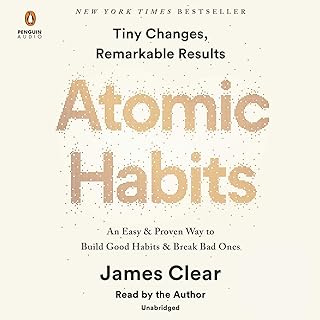
Atomic Habits by James Clear – The #1 habit‑building book on the planet. 4.8 stars, free on Audible (with trial). Clear’s framework of tiny changes has helped millions. The Spanish version is Hábitos Atómicos – perfect for practicing self discipline Spanish.

Discipline Equals Freedom by Jocko Willink – A no‑nonsense field manual from a former Navy SEAL. Hardcore, practical, and priced at $12.93. If you want a mindset shift, start here.
You can find these and many more in the comparison table below. For now, know that reading about self discipline Spanish in your target language is a two‑for‑one: you improve your discipline and your Spanish simultaneously.
Comparison of Top Self‑Discipline Books (Including Spanish Editions)
A picture is worth a thousand words. Here’s a comparison of popular self‑discipline books that either have Spanish versions or are excellent in English. All links go to Amazon.
| Book | Price | Rating | Buy at Amazon |
|---|---|---|---|
| No Excuses!: The Power of Self-Discipline |
$8.66 | 4.7 | Buy Now |
| Atomic Habits |
Free (audible trial) | 4.8 | Buy Now |
| Discipline Equals Freedom |
$12.93 | 4.7 | Buy Now |
 The Power of Self-Discipline: 5‑Minute Exercises The Power of Self-Discipline: 5‑Minute Exercises |
Free (audible trial) | 4.4 | Buy Now |
 The Four Agreements The Four Agreements |
$7.05 | 4.7 | Buy Now |
 Mindful Self-Discipline Mindful Self-Discipline |
Free (audible trial) | 4.7 | Buy Now |
 Digital Self-Discipline Digital Self-Discipline |
$12.99 | 4.8 | Buy Now |
 Stoic Self-Discipline Stoic Self-Discipline |
$19.99 | 4.7 | Buy Now |
 The Mountain Is You The Mountain Is You |
Free (audible trial) | 4.7 | Buy Now |
Note: Many of these are available in Spanish under different titles. For example, Atomic Habits becomes Hábitos Atómicos, and The Four Agreements is Los cuatro acuerdos – a fantastic read for practicing self discipline Spanish vocabulary.
Practical Tips to Build Self Discipline in Your Daily Life
Theory is great, but action wins. Here are five practical steps to strengthen your autodisciplina, whether you’re an English speaker learning Spanish or a native Spanish speaker looking to level up.
1. Start with “Two‑Minute Rules”
In Spanish, you could call this la regla de los dos minutos. Commit to doing a small, positive action for just 120 seconds. Voy a meditar dos minutos. Voy a escribir una frase en mi diario. After two minutes, you can stop – but usually, you’ll keep going.
2. Use the “Disciplina Personal” Mantra
When you feel like skipping a workout or checking your phone, whisper to yourself: “La disciplina personal es mi libertad.” (Personal discipline is my freedom.) It sounds cheesy, but repetition rewires the brain.
3. Remove Temptations (Reduce Friction)
If you want to eat healthier, don’t keep junk food in the house. If you want to study Spanish, delete distracting apps from your phone. “Fuera de la vista, fuera de la mente” (out of sight, out of mind). This is a core principle in self discipline Spanish conversations.
4. Track Your Progress
Keep a simple log: Hoy ejercité mi autodisciplina al decir no a una galleta extra. Seeing your wins on paper builds momentum. You can even use a habit tracker app – many have Spanish language options.
5. Learn from the Stoics
The book Stoic Self‑Discipline (above) is packed with ancient wisdom. One key idea: “No es lo que te sucede, sino cómo reaccionas lo que importa.” (It’s not what happens to you, but how you react that matters.) Practicing that kind of mental toughness is the essence of self‑discipline.
Frequently Asked Questions About Self Discipline Spanish
Here are the most common questions people have when translating and using self discipline Spanish.
1. What is the most common way to say self‑discipline in Spanish?
The most common is autodisciplina, especially in writing and formal speech. In casual conversation, disciplina personal is equally popular.
2. Is “self‑discipline” the same as “self‑control” in Spanish?
Not exactly. Autocontrol is more about controlling emotions and impulses in the moment. Autodisciplina includes long‑term habit formation and consistent action.
3. Can I use “disciplina” alone to mean self‑discipline?
Technically, but it’s ambiguous. Disciplina can mean a subject (e.g., la disciplina de la psicología) or punishment. For clarity, always use autodisciplina or disciplina personal when you mean self‑discipline.
4. How do you say “I need more self‑discipline” in Spanish?
Necesito más autodisciplina. Or Necesito más disciplina personal. Both are correct.
5. Are there any famous Spanish‑language books on self‑discipline?
Yes. Los cuatro acuerdos by Don Miguel Ruiz is a phenomenal book on personal freedom (available in English as The Four Agreements). It’s not strictly about self‑discipline, but it teaches principles that foster it. Also, Hábitos Atómicos (Spanish edition of Atomic Habits) is extremely popular.
6. Does the word “autodisciplina” exist in all Spanish‑speaking countries?
Yes, it’s standard across Spain and Latin America. You might hear local variations like autodisciplina in Mexico, Argentina, Spain, etc. The verb form autodisciplinarse (to self‑discipline) is less common but understood.
7. What’s a funny way to say “I have no self‑discipline” in Spanish?
Mi autodisciplina está en huelga. (My self‑discipline is on strike.) Or Tengo la fuerza de voluntad de una dona. (I have the willpower of a donut.)
Now, let’s wrap this up with a powerful truth: whether you say autodisciplina or disciplina personal, the principle is universal. The Spanish language gives you a beautiful set of tools to express this concept with precision. Use them. And while you’re at it, grab one of the books we listed – they’ll help you build the discipline you need to master the language and your life.
Recuerda: la autodisciplina no es un destino, es un camino. (Remember: self‑discipline is not a destination, it’s a path.)