
You wake up on January 1st full of fire. You have big goals, a fresh planner, and a belief that this year will be different. But by February, that fire flickers. The gym bag gathers dust. The side project collects cobwebs. Sound familiar?
The problem isn’t your ambition. It’s the gap between wanting and doing. That gap is bridged by one skill: self discipline. And the most effective way to build it isn’t a quick fix or a two-week bootcamp. It’s a self discipline 365 days challenge.
This isn’t about becoming a robot who never eats cake. It’s about training your brain to show up even when you don’t feel like it. It’s about beating procrastination at its own game. And at the end of those 365 days, you won’t just have new habits. You’ll have a deep sense of pride in the person you’ve become.
Let’s break down exactly how to run this challenge, what to expect each month, and the best resources to keep you on track.
Table of Contents
Why 365 Days? The Science of Lasting Change
Most people think self discipline is a personality trait you’re born with. Research shows it’s a skill you can strengthen, like a muscle. And muscles grow through consistent, progressive overload.
A 365-day timeframe matters because:
- Habit formation takes time. The famous “21 days to form a habit” is a myth. Studies from University College London found it takes 66 days on average, and complex habits can take over 250 days.
- Life happens. You’ll get sick, travel, feel stressed, or lose motivation. A full year gives you enough runway to fail and recover without giving up entirely.
- Identity shifts slowly. True discipline comes when you stop saying “I’m trying to be disciplined” and start saying “I am a disciplined person.” That identity takes months to cement.
When you commit to self discipline 365 days, you give yourself permission to stumble and still win.
Setting Up Your Self Discipline 365 Days Challenge
Before you start, you need a clear framework. Vagueness is the enemy of consistency.
Define Your 1–3 Core Areas
You can’t focus on everything at once. Pick a few key areas where discipline will create the biggest ripple effect:
- Health: Exercise, sleep, nutrition
- Work: Deep work hours, project completion, skill building
- Finance: Budgeting, saving, side hustles
- Mindset: Reading, journaling, meditation
- Relationships: Quality time, listening, boundaries
Write down your primary goal for each area. For example: “Exercise for 30 minutes, five days a week” or “Write 500 words every morning.”
Choose Your Tracking Method
What gets measured gets done. Use a simple tracker:
- A physical calendar with X’s (Jerry Seinfeld’s “don’t break the chain” method)
- A habit app like Streaks or Habitica
- A notebook where you rate your day’s discipline 1–10
Tracking keeps you honest and gives you visual proof of progress. Over 365 days, those little X’s turn into a beautiful, unbroken line.
Create Your Environment for Success
Discipline is easier when your surroundings do half the work:
- Put the phone in another room during focus time
- Prep your gym clothes the night before
- Remove junk food from your kitchen
- Block distracting websites
James Clear’s Atomic Habits calls this “designing your environment.” It’s one of the most effective strategies for lasting self control. If you haven’t read it yet, grab the audiobook (free with a trial) or the paperback. It’s rated 4.8 stars for a reason.
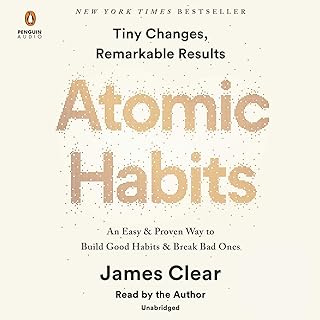
Atomic Habits teaches you how to build good habits and break bad ones using tiny changes. It’s the perfect companion for your year of discipline.
Month-by-Month Roadmap for Self Discipline 365 Days
Every year is different, but most people go through predictable phases. Here’s a month-by-month breakdown to help you stay on track.
Months 1–3: The Foundation Phase
This is where you build the scaffolding.
Goal: Show up every day, even if it’s just five minutes.
What to do:
- Start with micro habits. Can’t exercise 30 minutes? Do 2 minutes of pushups.
- Forgive yourself when you miss a day, but never miss two.
- Read one chapter from a discipline book each week.
Recommended reading for this phase:
- No Excuses!: The Power of Self-Discipline by Brian Tracy (4.7 stars, $8.66). This book gives you a no-nonsense kick in the pants.
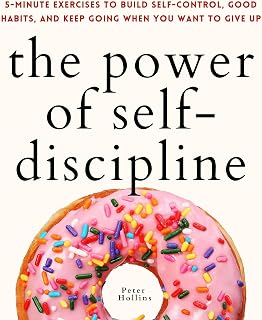
- The Power of Self-Discipline: 5-Minute Exercises – short daily exercises to build willpower. Rated 4.4 stars.
Common struggles: Motivation hits a wall around week three. Push through by reminding yourself of your “why.”
Months 4–6: The Building Phase
Now you have momentum. It’s time to stack habits and increase intensity.
Goal: Combine two habits (e.g., exercise + listen to a discipline audiobook).
What to do:
- Add a new habit every 2–3 weeks.
- Practice saying “no” to temptations. Use the 72-hour rule: wait 72 hours before any impulse purchase.
- Review your tracker weekly. Celebrate streaks.
Key insight: This is where you’ll face real tests. A vacation, a holiday, or a stressful project will try to derail you. Prepare by having a “minimal acceptable day” plan (e.g., do just one pushup and read one page). Even a tiny win keeps the chain unbroken.
Months 7–9: The Slump Phase
Around month seven, the novelty has faded. You might feel bored. This is normal.
Goal: Redefine your purpose and find deeper meaning.
What to do:
- Reconnect with your “why.” Write down how your life has changed since Day 1.
- Try a new approach: swap running for swimming, or replace morning journaling with an evening reflection.
- Use a mentor or accountability partner. If you don’t have one, read a book like Discipline Equals Freedom by Jocko Willink. His raw, military-style motivation can reignite your fire.

Price: $12.93 | Rating: 4.7
Months 10–12: The Mastery Phase
You’re no longer fighting for discipline. It’s becoming automatic.
Goal: Systematize everything you’ve learned so it runs on autopilot.
What to do:
- Write a personal “discipline manual” – your rules, routines, and reminders.
- Teach someone else. Explaining your methods to a friend reinforces them in your mind.
- Set new stretch goals. Maybe now you can handle a 6 AM workout or a 10-hour work sprint.
Pride moment: Look back at your tracker. Each X is a promise you kept to yourself. That builds self-worth like nothing else.
How to Beat Procrastination During Your Self Discipline 365 Days Challenge
Procrastination is not laziness. It’s emotional avoidance. You avoid the hard task because it feels uncomfortable. Here’s how to beat it daily.
The 5-Second Rule
When you feel the urge to delay, count backward: 5-4-3-2-1-GO. Then physically move. This technique, popularized by Mel Robbins, interrupts the habit loop and forces action before your brain can talk you out of it.
The Pomodoro Technique
Set a timer for 25 minutes of focused work, then take a 5-minute break. Repeat. This makes any huge task feel approachable. Use it for everything from studying to cleaning the garage.
Break the Digital Dopamine Cycle
Modern phones are designed to hijack your attention. Every notification pings your dopamine receptors, making discipline harder.
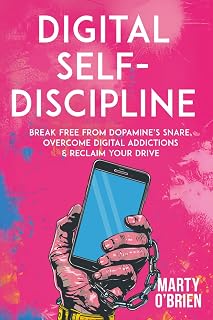
Digital Self-Discipline: Break Free from Dopamine’s Snare (4.8 stars, $12.99) offers concrete strategies to reclaim your focus. It’s a must-read for anyone who struggles with phone addiction.
The Two-Minute Rule
If a task takes less than two minutes, do it immediately. This kills small procrastination before it snowballs.
Feel Proud: Measuring and Celebrating Your Growth
Pride isn’t about comparison. It’s about seeing your own progress. After 365 days of self discipline, you’ll have concrete evidence of your growth.
How to Track Wins Beyond the Calendar
- Weekly reflection: Write one sentence about what went well and one thing to improve.
- Monthly review: Ask yourself, “Did I keep my standards or lower them?”
- Quarterly deep dive: Look at your original goals. Are you closer? How have you changed?
Celebrate Without Sabotage
Use rewards that reinforce your identity, not ones that break it. For example:
- Treat yourself to a massage instead of a cheat meal.
- Buy a new book on self-mastery.
- Write a letter to your future self.
When you reach Day 365, do something symbolic: cook a special dinner, hike a mountain, or host a small gathering. You earned it.
Top Resources to Support Your Self Discipline 365 Days Journey
These books and guides will give you daily wisdom, practical exercises, and deep insights. Below is a comparison of the most impactful ones.
Comparison Table: Best Self-Discipline Books for a 365-Day Challenge
| Product | Price | Rating | Key Focus | Buy at Amazon |
|---|---|---|---|---|
|
$0.00 (free with trial) | 4.8 | Habit stacking, environment design | Buy Now |
 |
$8.66 | 4.7 | Practical mindset, personal responsibility | Buy Now |
|
$12.93 | 4.7 | Hardcore motivation, field manual style | Buy Now |
 |
$0.00 (free with trial) | 4.4 | Short daily exercises | Buy Now |
 |
$0.00 (free with trial) | 4.5 | Daily thoughts for a full year | Buy Now |
Each of these resources serves a different need. Atomic Habits gives you the system. No Excuses! gives you the fire. Discipline Equals Freedom is a daily kick in the pants. 5-Minute Exercises is perfect for busy days. And 365 Days With Self-Discipline offers a thought for every single day of your challenge.
If you want a single book that directly aligns with the self discipline 365 days theme, start with 365 Days With Self-Discipline. It’s designed exactly for this journey.
Frequently Asked Questions About Self Discipline 365 Days
Q: What if I fail on Day 10? Should I start over?
No. Don’t reset the counter. Just get back on track the next day. The goal is not a perfect streak; it’s a consistent trend. Missing one day doesn’t erase the progress you’ve made.
Q: Can I work on multiple goals at once?
Yes, but limit yourself to 2–3 areas. Trying to overhaul every part of your life at once leads to burnout. Focus on the habits that have the biggest impact, like exercise, sleep, and deep work.
Q: How do I stay motivated after months of same routine?
Motivation fades. That’s why discipline is built on systems, not feelings. When motivation dips, rely on your environment, your tracker, and your commitment. Also, mix things up: change your workout, update your playlist, or read a new book.
Q: What if my life circumstances change (new job, move, illness)?
Adapt your challenge without stopping. If you can’t exercise 30 minutes, do 5. If you can’t do 5, stretch for 2. The key is never to let a day go by without at least one micro-action related to your goal.
Q: Is this challenge suitable for beginners?
Absolutely. In fact, beginners often benefit the most because they have the most room to grow. Start with tiny habits and build up slowly. The year gives you enough time to progress at your own pace.
Q: How can this book Note to Self: The Discipline of Preaching to Yourself help?
It’s a Christian-based guide that focuses on internal self-talk. If your discipline struggles come from negative inner dialogue, this book (4.6 stars, $14.99) offers biblical strategies to silence excuses and speak truth to yourself.
Q: What’s the difference between self discipline and self control?
Self control is the ability to resist temptation in the moment. Self discipline is the larger skill of consistently acting in line with your values, even when no temptation is present. The year-long challenge builds both, but discipline is the foundation.
Q: How do I deal with digital addiction?
Our phones are the biggest obstacles to discipline. The book Digital Self-Discipline (4.8 stars, $12.99) has practical steps. Also try app blockers, grayscale mode, and no-phone zones in your home.
Your Day 1 Starts Now
You don’t need a special date. You don’t need to wait for New Year’s. The best time to start your self discipline 365 days challenge is today.
Take five minutes right now:
- Write down your number one goal for the next year.
- Pick one micro habit you’ll do tomorrow.
- Choose one resource from the comparison table above.
That’s it. You’re already further ahead than most people.
The next time you look at your calendar, you’ll see a few X’s. Then a row. Then a month. And one day you’ll flip back and see an entire year of showing up for yourself. That’s when you’ll realize the real prize isn’t the goal you reached. It’s the person you became.
You can do this. Start today.