
You know the feeling. You set a goal, feel fired up for three days, and then… nothing. Your gym clothes gather dust. That course stays unopened. Your alarm gets snoozed seven times.
Here’s the truth most people don’t want to hear: motivation is a liar. It shows up when it’s easy and vanishes when you need it most. Real change doesn’t come from waiting for a surge of willpower. It comes from a system.
Welcome to your Self Discipline 30 Days challenge. This isn’t a fluffy inspiration piece. It’s a battle-tested, day-by-day plan to wire self-discipline into your nervous system. No motivation required.

You’ll build consistency the same way you build muscle: with small, repeated reps. By the end of 30 days, you won’t feel like doing the work. You’ll just do it anyway. That’s the definition of self-discipline.
Table of Contents
Why Waiting for Motivation Is a Trap
Motivation is a feeling. Feelings change. They’re influenced by sleep, hormones, weather, mood, and that one annoying comment on social media.
Self-discipline is a skill. You can learn it, practice it, and sharpen it over time. The problem is that most people never train it intentionally. They wake up one day expecting to be disciplined, like it’s a personality trait they missed out on.
It’s not. It’s a habit of action.
This self discipline 30 days plan flips the script. Instead of asking “do I feel like doing this?” you ask “what does my system say I do now?” The action comes first. The feeling follows.
The Science Behind Self Discipline 30 Days
Your brain is wired to conserve energy. It prefers the familiar path, even if that path leads nowhere good. That’s why breaking bad habits feels so hard.
But neuroplasticity means your brain can change. Every time you resist a temptation or follow through on a commitment, you strengthen the neural pathways for discipline.
Studies show that consistent small actions—done daily—create lasting behavioral change. A 30-day window is long enough to rewire initial patterns, but short enough to feel achievable.
“The secret to getting ahead is getting started. The secret to getting started is breaking your complex overwhelming tasks into small manageable tasks, and then starting on the first one.” – Mark Twain
That’s exactly what we’re doing. Each day builds on the last, until discipline becomes automatic.

Your Self Discipline 30 Days Plan: Week by Week
This plan is divided into four phases. Each week targets a different layer of self-discipline. Do not skip days. If you miss one, start over from Day 1. Consistency matters more than perfection.
Week 1: The Foundation (Days 1–7)
The goal of this week is simple: prove to yourself that you can show up. We’re starting small. No grand transformations.
Day 1 – Make Your Bed
Sounds ridiculous, right? But Admiral William McRaven wrote an entire book about it: Make Your Bed: Little Things That Can Change Your Life…And Maybe the World. Price $6.95, rating 4.7. The ritual of making your bed gives you a quick win before 7 AM. It triggers momentum.
Day 2 – No Phone for the First 30 Minutes
Your brain is addicted to dopamine hits from notifications. Break the loop. Keep your phone in another room until you’ve eaten breakfast or done a morning stretch.
Day 3 – The 5-Minute Rule
Pick one task you’ve been procrastinating. Commit to doing it for just five minutes. That’s it. After five minutes, you’re allowed to stop. But you won’t. Because starting is the hardest part.
Day 4 – One Hour of Deep Work
Block an hour on your calendar. No phone, no social media, no email. Just one focused task. Use a timer. This is the meat of self-discipline.
Day 5 – Cold Shower
Don’t roll your eyes. Cold showers train your prefrontal cortex to override discomfort. Start with 30 seconds of cold at the end of a warm shower. Increase by 10 seconds each day.
Day 6 – No Processed Sugar
Sugar spikes and crashes your energy and willpower. Go 24 hours without any refined sugar. Notice how your cravings talk to you. Notice that you can say no.
Day 7 – Reflect and Reset
Write down three things you learned this week. What was hardest? What was easier than expected? This reflection builds self-awareness.
Week 2: Resistance Training (Days 8–14)
Now we turn up the heat. You’ve proven you can start. This week, we attack comfort zones.
Day 8 – Digital Fasting
Turn off all non-essential notifications. Delete social media apps from your phone for 24 hours. Notice the urge to check. Sit with it.
Day 9 – The One-Minute Meditation
Sit still, close your eyes, and focus on your breath for exactly one minute. When your mind wanders, bring it back. This is self-discipline for your attention.
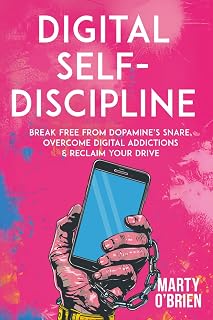
Digital Self-Discipline (price $12.99, rating 4.8) is a fantastic resource if you struggle with phone addiction. It explains exactly how dopamine hijacks your focus and gives practical steps to reclaim your drive.
Day 10 – Say No Once
Identify one request or invitation you would normally say yes to out of guilt. Politely decline. Protecting your time is a core discipline.
Day 11 – Exercise When You Don’t Want To
You don’t need a full workout. Do 10 pushups, 10 squats, and a 30-second plank. The goal is to move your body even when your brain screams “later.”
Day 12 – Practice Gratitude Pre-Commitment
Before you go to bed, write down one thing you’re grateful for. This strengthens emotional regulation, which directly supports self-discipline.
Day 13 – Single-Tasking
Pick a two-hour block where you do only one thing. No multitasking. If you’re reading, read. If you’re writing, write. No switching tabs.
Day 14 – Review Your Weak Spots
Look at your week. Where did you slip? Did you grab your phone out of habit? Did you skip the cold shower? Write down the triggers. Plan how to avoid them next week.
Week 3: Deep Work and Focus (Days 15–21)
You’ve built the foundation and tested your resistance. Now we go deep. This week is about sustained concentration and eliminating distractions.
Day 15 – The 90-Minute Block
Schedule a 90-minute uninterrupted block for your most important work. No breaks. No phone. Just you and the task.
Day 16 – Eat the Frog First
Mark Twain popularized the idea: Do your hardest task first thing in the morning. Before you check email. Before you scroll. Just get it done.
Day 17 – Create a Distraction List
Keep a notepad beside you. Every time a distracting thought pops up (“I should check the mail,” “I need to reply to Sarah”), write it down. Don’t act on it. This frees your mind.
Day 18 – Accountability Partner Check-In
Text someone who’s also working on self-discipline. Share your wins and struggles for the week. Social accountability is powerful.
Day 19 – The Two-Minute Rule for Cleaning
If a task takes less than two minutes, do it immediately. Wipe the counter, fold that shirt, reply to that short email. It builds momentum and reduces mental load.
Day 20 – Read 10 Pages of a Discipline Book
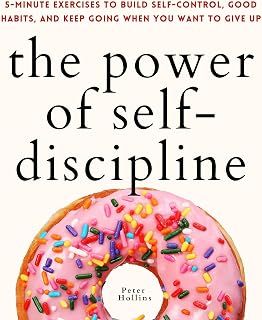
Pick any book from the list. For example, The Power of Self-Discipline: 5-Minute Exercises to Build Self-Control, Good Habits, and Keep Going When You Want to Give Up (price $0.00 on Audible, rating 4.4) offers quick daily exercises.
Day 21 – Visualize the Future You
Spend five minutes writing about who you’ll be after 30 days of consistent discipline. How do you feel? What habits are automatic? This builds identity-based change.
Week 4: Integration and Longevity (Days 22–30)
You’ve made it three weeks. Your brain is starting to accept discipline as normal. This final week locks it in.
Day 22 – Abstinence Challenge
Pick one vice—social media, junk food, TV, caffeine—and abstain for 48 hours. Observe your cravings without judgment.
Day 23 – Set a Monthly Goal
Write down one specific goal for the next 30 days after this challenge. Make it measurable. Example: “I will exercise 5 days per week” or “I will read 2 books.”
Day 24 – Create a Morning Routine
Design a non-negotiable morning routine. It should take no more than 15 minutes. Include a physical action, a mental action, and a spiritual action (e.g., stretch, read, meditate).
Day 25 – Evening Power-Down
Turn off all screens 60 minutes before bed. Read a physical book. Journal. This improves sleep quality and willpower recovery.
Day 26 – Delayed Gratification Drill
When you want something (a snack, a show, a purchase), wait 10 minutes. Use those 10 minutes to do something productive. Then decide if you still want it.
Day 27 – One Act of Courage
Do something that scares or discomforts you a little. Speak up in a meeting. Apply for that role. Ask for a better deal. Discipline extends to courage.
Day 28 – Write Your Own Contract
Write a one-page “Self-Discipline Contract” for the next month. Include your rules, your non-negotiables, and what you’ll do if you break them. Sign it.
Day 29 – Review Your Entire 30 Days
Go back through your journal. Look at Day 1 compared to today. Note the changes in your mindset, energy, and consistency. This is powerful reinforcement.
Day 30 – Celebrate and Set the Next Challenge
You did it. 30 days of self-discipline without relying on motivation. Reward yourself with something meaningful—a new book, a long walk, a quality meal. Then set your next 30-day challenge.
Top Books to Supercharge Your Self Discipline 30 Days
The best way to deepen your practice is to learn from those who walked the path before you. Below is a comparison of the most powerful books on self-discipline currently available.
 |
 |
 |
 |
 |
|---|---|---|---|---|
| Atomic Habits | No Excuses! | Discipline Equals Freedom | The Mountain Is You | The Power of Discipline |
| Price: $0.00 (Audible) | Price: $8.66 | Price: $12.93 | Price: $0.00 (Audible) | Price: $16.83 |
| Rating: 4.8 | Rating: 4.7 | Rating: 4.7 | Rating: 4.7 | Rating: 4.6 |
| Focuses on systems and tiny habits. Best overall for building consistency. | Straight-talking, no-BS approach. Great for motivation and mindset. | Military-style manual with direct action steps. Perfect for tough days. | Focuses on overcoming self-sabotage and emotional blocks. | Short, practical strategies for self-control and mental toughness. |
| Buy at Amazon | Buy at Amazon | Buy at Amazon | Buy at Amazon | Buy at Amazon |
For more depth, also check out:
- The Four Agreements: A Practical Guide to Personal Freedom – Price $7.05, rating 4.7. Teaches four principles for inner freedom, a foundation for self-discipline.
- Stoic Self-Discipline: Stoicism’s 33 Ancient Secrets to Building Unbreakable Self-Control and Mental Toughness – Price $19.99, rating 4.7. Ancient wisdom meets modern action.
- The Science of Self-Discipline: The Willpower, Mental Toughness, and Self-Control to Resist Temptation – Price $0.00 (Audible), rating 4.5. Backed by research, practical tactics.
- Mindful Self-Discipline: Living with Purpose and Achieving Your Goals in a World of Distractions – Price $0.00, rating 4.7. Combines mindfulness with discipline.
- Self Discipline: 30 Days to Self Discipline: 30 Days to Greatness, Volume 2 – Price $0.00, rating 4.3. Direct companion to this very article.
- Digital Self-Discipline: Break Free from Dopamine’s Snare – Price $12.99, rating 4.8. Essential for modern distractions.
- Discipline Is Destiny: The Power of Self-Control (The Stoic Virtues Series) – Price $5.88, rating 4.7. Focus on self-control as destiny.
- The Psychology of Self-Discipline: Twenty-Four Proven Strategies to Rewire Your Brain for Consistent Action – Price $17.99, rating 4.6. Neuroscience-based strategies.
- 365 Days With Self-Discipline: 365 Life-Altering Thoughts on Self-Control, Mental Resilience, and Success – Price $0.00, rating 4.5. Daily inspiration for the long haul.
- Mastering Self Discipline: The Key To Achieving Anything – Price $0.00. Quick primer for beginners.
- Yes to You, No to Them: The Discipline of Saying No and the Freedom that Follows – Price $18.63, rating 5 (2 reviews). Focus on boundary setting.
Common Questions About Self Discipline 30 Days
How do I stay motivated if I have no motivation?
You don’t need motivation. Use the 5-Minute Rule from Week 1. Commit to just five minutes of the task. Momentum builds from action, not feeling.
What if I fail on Day 10?
Start over from Day 1. No shame. Each reset strengthens your discipline muscle. The number of days doesn’t matter as much as the number of attempts.
Can I do this plan while working full-time?
Absolutely. Each day’s action takes between 5 and 60 minutes. You can adapt the timing to your schedule. The key is consistency, not intensity.
Why 30 days? Is it scientifically proven?
Yes. Research on habit formation shows that 30 days is often enough to see neural pathway changes. It’s short enough to stay motivated, long enough to see results.
How do I keep discipline after 30 days?
Use the last week’s “Contract” and “Monthly Goal” to extend the challenge. Continue the rituals you found most effective. Read a discipline book each month.
What is the #1 mistake people make when trying to build self-discipline?
Trying to change everything at once. Start with one habit, master it, then add more. Overwhelm kills consistency.
I keep falling back into old habits after a few days. What’s wrong?
Nothing. It’s normal. The brain resists change. Focus on getting back on track immediately rather than waiting for a “fresh start.”
Frequently Asked Questions (Schema)
Your Next Step Starts Now
You’ve read the plan. You’ve seen the science. You know which books will support you. Now the only thing left is action.
Print out the 30-day calendar. Put it on your wall. Tell one person you’re doing this. Then wake up tomorrow and make your bed.
Self-discipline isn’t a gift you’re born with. It’s a skill you build, one day at a time. Self discipline 30 days is your blueprint. Use it. And when you finish, you won’t recognize the person you’ve become.
The life you want is waiting on the other side of consistency. Go get it.