
Imagine this: You’re lying in Savasana, trying to stay still, but your mind is already halfway through tomorrow’s to-do list. Your leg itches. You think about that bag of chips in the pantry. The battle for control isn’t just on the mat—it’s in every moment you choose to stay focused instead of giving in.
That’s where self control yoga comes in. It’s not about twisting yourself into a pretzel. It’s about training your nervous system, sharpening your attention, and building the kind of discipline that spills into your work, your habits, and your relationships. This article will show you exactly how to use breath, balance, and focus to strengthen your self-discipline—with real techniques, practical routines, and research-backed insights.
We’ll also share some of the best books on self-discipline to help you go deeper. Let’s roll out the mat.
Table of Contents
What Is Self Control Yoga?
Self control yoga is a purposeful practice that combines traditional yoga postures, breathing exercises, and mental focus to cultivate self-discipline. Unlike a generic flow class where you just follow along, this approach treats every pose as a lesson in willpower.
You hold a shaky Tree Pose a little longer. You breathe through the urge to scratch your nose. You resist the impulse to check your phone mid-session. Over time, these micro-moments of resistance rewire your brain for better control in daily life.
The beauty? You don’t need to be bendy or strong. You just need to show up and practice the art of staying present.
The Breath Connection: How Pranayama Builds Self-Discipline
Your breath is the remote control for your nervous system. When you’re stressed or tempted, your breathing quickens. When you’re calm and in control, it slows down. Pranayama (yogic breathing) gives you direct access to that switch.
Ujjayi Breath (Victorious Breath)
Ujjayi is the foundational breath practice for self control yoga. You constrict the back of your throat slightly and breathe through your nose, creating a soft ocean sound.
- How it builds discipline: It forces you to maintain a steady rhythm. If your mind wanders, the breath breaks. You have to consciously bring it back.
- Try this: Inhale for 4 counts, exhale for 4 counts. Repeat for 5 minutes daily.
Nadi Shodhana (Alternate Nostril Breathing)
This technique balances the left and right hemispheres of your brain. It’s excellent for calming anxiety and sharpening focus.
- Why it works: It requires careful attention—closing one nostril, timing the inhales and exhales. That precision trains you to be methodical and patient.
- Quick session: Close your right nostril with your thumb, inhale left for 4 counts. Close left, hold, exhale right for 4. Repeat for 3–5 rounds.
“When you master your breath, you master your mind.” – Anonymous yoga teacher (but seriously, it’s true)
If you’re serious about deepening your understanding of self-discipline, check out The Power of Discipline: How to Use Self Control and Mental Toughness to Achieve Your Goals – it’s packed with practical exercises that complement your yoga practice.

Balance Poses That Train Your Focus
Balance is the ultimate metaphor for self control yoga. You can’t force it. You have to coax it. Your body sways, you correct, you breathe. Each wobble is a chance to strengthen your mental resilience.
Tree Pose (Vrikshasana)
Stand on one foot, place the other foot on your inner thigh or calf (not on the knee), and bring your hands to heart center.
- Discipline lesson: Your mind will scream “Put your foot down!” The discipline is keeping your focus on a single point (drishti) and breathing steadily.
- Pro tip: If you fall, laugh, shake it off, and try again. That’s self-discipline in action.
Eagle Pose (Garudasana)
Wrap one leg around the other and hook the opposite arm underneath. This pose is notoriously unstable.
- Why it works: It demands total concentration. One thought about your email inbox, and you topple. It’s a full-body meditation on the present moment.
- Hold time: Start with 20 seconds per side. Aim for 45 seconds as you improve.
Warrior III (Virabhadrasana III)
Balance on one leg while leaning your torso forward, arms extended, like a human T.
- How it builds discipline: This pose is physically exhausting. The urge to drop is strong. You learn to override that urge with intention.
- Bonus: It strengthens your core and legs, giving you the stamina to stay disciplined longer.
To get a deeper understanding of how mental toughness works, read The Mountain Is You: Transforming Self-Sabotage into Self-Mastery – it’s a masterclass in breaking self-defeating patterns.

The Mental Game: Using Yoga to Strengthen Willpower
Self-discipline isn’t about being a drill sergeant. It’s about training the mind to stay on course despite distractions. Yoga offers several mental tools.
Drishti (Focused Gaze)
In each pose, you choose a non-moving point to stare at. This trains your attention.
- How to use it: Pick a spot on the wall or floor. Commit to keeping your eyes there for the entire pose. When your eyes wander, gently bring them back. This is a rep for your willpower.
Mantra Meditation
Repeating a word or phrase (e.g., “I am disciplined”) can anchor your mind during challenging poses.
- Why it works: It gives your brain a clear task, reducing the mental chatter that leads to giving up.
- Try this: In a long hold like Plank Pose, silently repeat “strength, focus, breathe” with each inhale and exhale.
The 3-Breath Rule
When you feel like quitting a pose, commit to just three more deep breaths. After that, you can decide.
- The discipline payoff: You’ll often find the urge to stop passes after those three breaths. This pattern translates directly to real-life temptations (like that snooze button or that extra cookie).
“Discipline is just choosing between what you want now and what you want most.” – Often attributed to Abraham Lincoln, but even if he didn't say it, it’s golden.
Practical Routine: A 10-Minute Self Control Yoga Sequence
Here’s a simple flow you can do at home or office. Do it daily for 30 days and watch your self-discipline skyrocket.
-
Mountain Pose (Tadasana) – Stand tall, feet hip-width apart. Close your eyes. Take 5 Ujjayi breaths. This sets the intention.
-
Tree Pose (Vrikshasana) – 30 seconds each side. Use a drishti point. If you wobble, breathe, don’t give up.
-
Warrior II (Virabhadrasana II) – Hold for 30 seconds each side. Focus on the back leg straightening and front knee bent. Notice when your mind wants to check out.
-
Eagle Pose (Garudasana) – 20 seconds each side. Laugh if you fall. That’s the spirit.
-
Plank Pose – Hold for 45 seconds. Silently count your breaths. When you feel like dropping, use the 3-breath rule.
-
Child’s Pose (Balasana) – 1 minute. Let go of any frustration. This is the discipline of rest.
-
Seated Meditation – 2 minutes. Sit cross-legged, hands on knees. Focus on your natural breath. Each time you catch your mind drifting, note it without judgment and return. That’s the core of self control yoga.
Common Challenges and How to Overcome Them
Even with the best intentions, you’ll hit roadblocks. Here’s how to handle them.
| Challenge | Solution |
|---|---|
| “I can’t balance – I’m too clumsy.” | Use a wall or chair for support. Balance is a skill, not a gift. Practice daily for 2 minutes. |
| “My mind won’t stop racing.” | Accept it. Label thoughts “planning” or “worrying” and let them float away. The discipline is the returning. |
| “I get bored holding poses.” | Make it a game. Hold until you feel a mild shake. That shake is your edge – stay there 5 more seconds. |
| “I skip days.” | Commitment to 5 minutes is better than skipping. Lower the barrier: roll out your mat, do one pose. Often that’s enough to continue. |
For daily motivation, grab a copy of 365 Days With Self-Discipline: 365 Life-Altering Thoughts on Self-Control, Mental Resilience, and Success – it’s the perfect companion to your morning yoga.

Books to Deepen Your Self-Discipline Practice
Reading about discipline while practicing yoga is like cross-training for your willpower. Here are five highly-rated books that complement self control yoga.
| Product | Price | Rating | Buy at Amazon |
|---|---|---|---|
 |
$0.00 (audiobook) | 4.8 | Buy on Amazon |
 |
$12.93 | 4.7 | Buy on Amazon |
 |
$16.83 | 4.6 | Buy on Amazon |
|
$0.00 (audible) | 4.7 | Buy on Amazon |
 |
$7.05 | 4.7 | Buy on Amazon |
These books offer actionable strategies that pair perfectly with your yoga practice. Atomic Habits by James Clear teaches you how to build tiny habits that stick—just like your daily 10-minute yoga routine. Discipline Equals Freedom by Jocko Willink is a raw, no-excuses manual that will push you harder on the mat and off it.
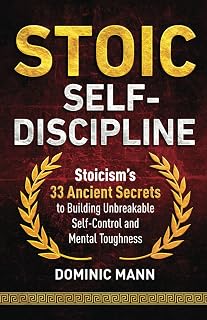
If you want a battle-tested stoic approach, Stoic Self-Discipline: Stoicism’s 33 Ancient Secrets is a fantastic read.
Self Control Yoga vs. Other Methods
How does self control yoga stack up against other discipline-building approaches? Here’s a quick comparison.
| Method | Focus | Best For | Drawback |
|---|---|---|---|
| Self Control Yoga | Breath, balance, mindfulness | People who want a holistic mind-body approach | Requires daily practice and patience |
| Cold Showers | Shock therapy, discomfort tolerance | Building mental toughness fast | Can be unpleasant; not for everyone |
| Goal Journaling | Planning, reflection | Clarifying priorities and tracking progress | Doesn’t train the body; can become mental-only |
| Habit Stacking | Behavioral pairing | Automating routines | Requires consistency, not discipline per se |
| Meditation Alone | Focus, equanimity | Calming the mind | Lacks physical challenge that builds grit |
Yoga combines the best of all worlds: it challenges your body, calms your mind, and teaches you to respond rather than react. That’s why self control yoga is uniquely effective.
Final Thoughts
Self control yoga isn’t a magic pill. It’s a practice—a daily conversation between your breath, your body, and your will. Some days you’ll hold Tree Pose for a full minute with ease. Other days you’ll fall three times. That’s fine. The discipline is in the returning, again and again.
Start with one breath today. Then one pose tomorrow. Soon you’ll notice that the focus you cultivated on the mat follows you into your work, your conversations, your decisions. You’ll stop reacting and start choosing.
And when you need an extra boost, pick up a copy of No Excuses!: The Power of Self-Discipline by Brian Tracy. He’ll remind you that the only thing standing between you and your goals is the discipline to keep going.
Now go ahead. Inhale. Exhale. Choose control.
Frequently Asked Questions
What is self control yoga?
Self control yoga is a focused practice that uses breathwork, balance poses, and mental concentration to build self-discipline. It trains you to resist impulses and stay calm under pressure.
Can yoga really improve self-discipline?
Yes. Studies show that regular yoga practice increases self-awareness and emotional regulation. The repetitive act of holding uncomfortable poses while breathing calmly rewires your brain for better impulse control.
How often should I practice self control yoga?
Daily is ideal, even if it’s only 5 minutes. Consistency beats intensity. A short daily practice builds discipline faster than a long session once a week.
Do I need prior yoga experience?
Not at all. Most poses have modifications for beginners. The key is intention, not flexibility. Start with basic poses and breathwork.
What if I fail to stay consistent?
Failure is part of the process. Each time you get back on the mat, you’re strengthening your discipline muscle. Read Mindful Self-Discipline for strategies to stay on track.

Can I combine self control yoga with other practices?
Absolutely. It pairs well with journaling, cold showers, and habit tracking. Many people find that yoga enhances their meditation practice and vice versa.
Is there scientific evidence behind this?
Research suggests that mindfulness practices like yoga increase gray matter in areas of the brain associated with attention and emotional regulation. The self-discipline you build on the mat transfers to everyday challenges.
Ready to take the next step? Grab a copy of The Psychology of Self-Discipline to dive deeper.
