
Let’s be honest. Self-discipline sounds like a punishment, doesn’t it? Images of cold showers, early alarms, and a life of boring rules pop into your head. But here’s the truth: self-discipline is actually the shortcut to freedom. It’s the bridge between where you are and where you want to be.
The problem is that most people try to force discipline using raw willpower. That never works. Willpower is a finite resource, like a phone battery that drains by noon. The real trick lies in using methods of self discipline that are smart, sustainable, and built on psychology, not grit.
In this guide, we will break down proven strategies that actually stick. You’ll learn why most attempts fail, which books can rewire your mindset, and how to turn discipline from a chore into a habit you barely notice.

Table of Contents
What Are the Most Effective Methods of Self Discipline?
The best methods don’t rely on heroic effort. They rely on systems, environment design, and small consistent actions. Let me explain.
If you try to wake up at 5 a.m. tomorrow when you’ve been sleeping until 8, you will fail. That’s not a lack of character. That’s a lack of a proper method. The most effective methods of self discipline work with your brain, not against it.
Here are the core categories that research and real-world success stories point to:
- Habit stacking – Attach a new habit to an existing one.
- Environment design – Make good choices easy and bad choices hard.
- The 5-second rule – Count down from 5 to 1 and act before your brain talks you out of it.
- Temptation bundling – Pair something you need to do with something you want to do.
- Accountability – Tell someone your goal, or better, pay them if you fail.
These aren’t just theories. They are backed by books like Atomic Habits by James Clear and The Power of Discipline by Rian R. Stone. Let’s dive into each method in detail.
Habit Stacking: The Easiest Way to Build Discipline
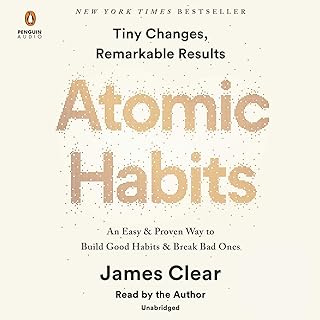
Habit stacking was popularized by James Clear in his book Atomic Habits, which has a 4.8 rating and is the most recommended book on building better habits. The idea is simple: you take an existing habit and “stack” a new one on top of it.
For example:
- After I pour my morning coffee, I will write one sentence in my journal.
- After I brush my teeth, I will do 10 push-ups.
This works because your brain already has a strong neural pathway for the first habit. You’re just adding a small loop. Over time, the new behavior becomes automatic.
Why this is one of the best methods of self discipline: It requires very little willpower. You’re not deciding to do something hard; you’re just following a sequence you already know.
Environment Design: Make Discipline Your Default
If you want to be disciplined, stop relying on motivation. Instead, change your environment. This is one of the most powerful methods of self discipline because it makes the right thing easier and the wrong thing harder.
Ask yourself:
- Do you want to eat healthier? Keep junk food out of the house. Put fruit on the counter.
- Do you want to exercise more? Lay your workout clothes next to your bed.
- Do you want to focus? Put your phone in another room.
The environment is a silent master. If your kitchen is stocked with cookies, you will eat cookies. If your desk is cluttered, you will procrastinate. Design your space so discipline becomes effortless.
Brian Tracy’s book No Excuses!: The Power of Self-Discipline (4.7 rating) dedicates a whole chapter to this principle. He argues that discipline isn’t about being strong; it’s about being smart.
The 5-Second Rule: A Simple Trick to Beat Procrastination
Mel Robbins popularized this method, but it works beautifully as a standalone method of self discipline. The idea is absurdly simple: when you feel the urge to do something but your brain starts to hesitate, count backwards: 5, 4, 3, 2, 1. Then move.
The countdown interrupts your hesitation loop. Before your amygdala can hijack you with fear, you’ve already acted.
Try it right now. Think of one small task you’ve been putting off. Count down. Go. See? It works. This technique is perfect for people who struggle with inertia.
Temptation Bundling: Trick Your Brain
Temptation bundling is the art of linking a behavior you need to do with a behavior you want to do. It turns discipline into a treat.
Examples:
- Only listen to your favorite podcast while running.
- Only watch Netflix while folding laundry.
- Only drink your expensive coffee while writing your report.
This method leverages the dopamine from the enjoyable activity to pull you through the hard one. Over time, you start craving the productive activity because your brain associates it with pleasure.
Accountability and Commitment Devices
Sometimes pure willpower isn’t enough. You need external pressure. That’s where accountability comes in.
Accountability partners: Tell a friend your goal. Ask them to check in on you. The fear of letting someone down can be stronger than the urge to quit.
Commitment devices: Pre-commit to something. For example, put money on the line. If you don’t hit your goal, you lose $50. Services like StickK let you do this. The pain of losing money often outweighs the pain of doing the work.
Ryan Holiday’s book Discipline Is Destiny (4.7 rating) explores how the Stoics used commitment to stick to their values. They understood that discipline is not a one-time decision; it’s a daily practice with built-in consequences.
The Science of Self Discipline: What Research Says
If you want to go deeper, the book The Science of Self-Discipline by Peter Hollins (4.5 rating) breaks down the neuroscience. Here’s the key takeaway: willpower is like a muscle. It gets tired if overused, but you can strengthen it with small, regular exercises.
One powerful finding is that ego depletion is real. After making decisions all day, your self-control reserve runs low. That’s why you crave junk food at night. The solution? Reduce decisions. Automate what you can. Create routines so you don’t have to think.
The Power of Self-Discipline: 5-Minute Exercises to Build Self-Control (4.4 rating) offers micro-exercises to train your willpower without burnout.
Mindset Shifts That Make Discipline Stick
Discipline isn’t just about actions. It’s about identity. If you say “I’m trying to be disciplined,” you’ll struggle. If you say “I am a disciplined person,” your behavior follows your beliefs.
This is the central idea in The Mountain Is You by Brianna Wiest (4.7 rating). She explains that self-sabotage is the real enemy. To build discipline, you must first understand why you resist your own success.
Another mindset shift comes from The Four Agreements by Don Miguel Ruiz (4.7 rating). One agreement is “Always do your best.” Not some superhuman version of your best, but your best in this moment. When you accept that your discipline will fluctuate, you stop the shame spiral that usually leads to quitting.
Top Books on Self Discipline: A Comparison Table
To help you choose the best resource, here is a comparison of some of the highest-rated books on methods of self discipline.
| Product | Rating | Price | Image | Buy at Amazon |
|---|---|---|---|---|
| No Excuses!: The Power of Self-Discipline by Brian Tracy | 4.7 | $8.66 | |
Buy Now |
| Atomic Habits by James Clear | 4.8 | $0.00 (audiobook) | |
Buy Now |
| Discipline Is Destiny by Ryan Holiday | 4.7 | $5.88 |  |
Buy Now |
| The Power of Discipline by Rian R. Stone | 4.6 | $16.83 |  |
Buy Now |
| Digital Self-Discipline by Peter Hollins | 4.8 | $12.99 |  |
Buy Now |
| The Psychology of Self-Discipline by Trent J. S. | 4.6 | $17.99 |  |
Buy Now |
All of these books provide actionable methods of self discipline that go beyond theory. Pick the one that resonates most with your personality.
Digital Self Discipline: Reclaim Your Focus
In today’s world, distraction is the biggest enemy of discipline. Notifications, social media, and endless content are designed to hijack your attention. The book Digital Self-Discipline (4.8 rating) offers specific strategies to break free from dopamine loops.
Some tactics include:
- Time blocking for deep work, with zero interruptions.
- Phone grayscale mode to reduce the appeal of scrolling.
- Scheduled breaks to check email or social media, not as a reflex.
If you spend a lot of time online, digital self-discipline is a critical method to master. Without it, other methods of self discipline will be undermined by constant distraction.
Stoic Self Discipline: Ancient Wisdom for Modern Problems
Stoicism provides a rock-solid foundation for self-discipline. The philosophy teaches that you can’t control external events, only your responses. That’s the core of discipline.
The book Stoic Self-Discipline (4.7 rating) outlines 33 ancient secrets, including:
- Premeditatio malorum – Visualize obstacles in advance so they don’t surprise you.
- Amor fati – Love your fate, even the hard parts.
- Voluntary discomfort – Practice being uncomfortable (cold showers, fasting) to build resilience.
Ryan Holiday’s Discipline Is Destiny also draws heavily on Stoicism. Pairing these books gives you a timeless toolkit.
30 Days to Self Discipline: A Practical Challenge
If you want a structured start, consider the 30-day approach. The book Self Discipline: 30 Days to Self Discipline (4.3 rating) provides a day-by-day plan.
The idea is to focus on one small discipline each day:
- Day 1: Make your bed.
- Day 2: Walk for 10 minutes.
- Day 3: Write down your top three priorities.
- …
By day 30, you have a series of micro-habits that build momentum. This method works because it lowers the barrier to entry. You’re not trying to change everything overnight.
How to Combine Methods for Maximum Results
No single method works for everyone. The secret is to combine multiple methods of self discipline that reinforce each other.
For example:
- Use habit stacking to start a meditation practice (after coffee, meditate for 2 minutes).
- Design your environment so your meditation cushion is out and your phone is hidden.
- Add an accountability partner to check if you did it.
- Use the 5-second rule to get started when you feel resistance.
This layering effect creates a system where discipline becomes almost automatic. You stop relying on motivation and start relying on structure.
The Role of Mindful Self Discipline
Discipline doesn’t have to be rigid. Mindful Self-Discipline (4.7 rating) teaches that you can be both disciplined and compassionate with yourself. The key is to:
- Observe your impulses without acting on them.
- Pause before reacting.
- Align your actions with your deeper purpose.
Mindfulness helps you catch the moment before you break discipline. Instead of mindlessly eating a cookie, you notice the craving and choose a different response.
Real World Example: The Power of Micro Wins
Let’s take a concrete example. Sarah wants to write a book. She tries to write for two hours every morning, but she burns out after a week. Then she switches to one of the simplest methods of self discipline: the two-minute rule.
She commits to writing just two minutes per day. That’s it. After two minutes, she can stop. Usually, she keeps going for 20 minutes because the hardest part was starting. After a month, she has written 10,000 words.
That’s the principle behind Atomic Habits and The Power of Self-Discipline: 5-Minute Exercises. Small actions compound into big results.
Frequently Asked Questions About Methods of Self Discipline
What is the best method of self discipline?
There is no single best method; the right one depends on your personality and situation. However, habit stacking and environment design are two of the most universally effective methods. They require minimal willpower and produce consistent results.
How do I build self discipline quickly?
Quick wins come from starting small. Pick one habit you want to build and make it ridiculously easy. For example, if you want to exercise, commit to one push-up per day. The speed comes from consistency, not intensity.
Can self discipline be learned?
Absolutely. Self-discipline is a skill, not a fixed trait. You can train it like a muscle. Start with tiny challenges, gradually increase difficulty, and use the methods outlined in this article. Books like The Science of Self-Discipline explain the neurological basis.
Why do I fail at discipline?
Most people fail because they rely on willpower alone. Without a system or method, discipline crumbles when motivation dips. Common pitfalls include trying to change too much at once and not designing the environment for success.
Are there books specifically on methods of self discipline?
Yes, many. Some of the best include No Excuses!, Atomic Habits, and Discipline Is Destiny. Each offers unique methods. The table above gives a side-by-side comparison.
How long does it take to become disciplined?
It varies, but research suggests it takes about 66 days on average for a new habit to become automatic. However, you can see improvements in your self-control within a few weeks if you practice consistently.
Your Next Step Toward Self Mastery
You now have a toolbox of proven methods of self discipline. The question is: what will you do with it?
Start with one method. Just one. Pick something so small it feels almost silly. Maybe it’s making your bed every morning, or writing one sentence in a journal, or doing one push-up. Commit to it for seven days. Then add another method.
Over time, these tiny acts of discipline will compound into a life where you have more control, less stress, and greater freedom. Discipline is not the enemy. It’s the path to becoming the person you want to be.
And if you want a daily reminder and deeper insights, grab a copy of 365 Days With Self-Discipline (4.5 rating) or Discipline Equals Freedom by Jocko Willink (4.7 rating). Both are excellent companions on the journey.
Remember: you don’t need to be perfect. You just need to start.