
You know the feeling. You set a goal, swear you’ll stick with it, and three days later you’re reaching for the cookie jar or scrolling your phone instead of working. How to have better self discipline isn’t about being born with superhuman willpower. It’s about setting up your environment, your mind, and your habits so that discipline becomes the path of least resistance.
In this deep dive, we’ll show you how to fix three core areas that tank your self-control: planning, triggers, and temptations. By the end, you’ll have a pro‑level system to build unbreakable self‑discipline that sticks. Ready? Let’s start with the book that kicked off the modern self‑discipline revolution.

Table of Contents
The Planning Problem: Why Your Best Intentions Crumble
Most people think self‑discipline is about raw willpower. But research shows that poor planning is the real culprit. You can’t out‑willpower a bad plan. If your goal is “eat healthier” but you keep junk food in the house, you’re asking your brain to fight a losing battle.
How to Have Better Self Discipline Starts with a Bulletproof Plan
The first step is to stop using vague intentions and start using implementation intentions. Instead of “I’ll exercise more,” say “I will go for a 20‑minute run at 7:00 AM in my running shoes by the door.” This technique from Atomic Habits forces your brain to recognize the cue and make the action automatic.

James Clear’s masterpiece, available free on Audible, shows that atomic habits – tiny 1% improvements – compound into massive change. The book’s core message aligns perfectly with fixing your planning: design the environment, not just the goal.
The Power of the First Decision
Admiral William H. McRaven’s Make Your Bed teaches another planning principle. Your first disciplined act of the day sets the tone. Make your bed every morning – it’s a small victory that reinforces your identity as a disciplined person.

Planning like a pro means:
- Choose one keystone habit to anchor your day.
- Schedule difficult tasks during your peak energy hours.
- Remove all friction from the desired behavior (e.g., lay out gym clothes the night before).
Triggers: The Hidden Force Behind Your Weak Moments
Even the best plan fails if you ignore the triggers that spark bad behavior. Every decision begins with a cue. Want to stop eating sugar? It’s not enough to say “no” – you must identify what triggers the craving: stress, boredom, seeing a candy bowl.
How to Decode Your Personal Triggers
The Science of Self-Discipline dives into the biology of temptation. Your brain’s reward system releases dopamine when it anticipates pleasure. The key is to short‑circuit that anticipation.

Common triggers and how to fix them:
| Trigger | The Fix |
|---|---|
| Boredom | Schedule a 5‑minute micro‑task immediately after the urge appears. |
| Stress | Use a breathing exercise (box breathing: inhale 4s, hold 4s, exhale 4s, hold 4s). |
| Social pressure | Practice refusal scripts – “I’m staying in tonight to focus on my goals.” |
| Environment | Move temptations out of sight. One experiment showed that office workers ate 25% fewer chocolates when the candy jar was placed six feet away. |
The Role of Environment in Self‑Discipline
The Power of Discipline argues that your environment designs your behavior. If you want to stop checking your phone, put it in another room. If you want to write more, keep your notebook open on the desk.

Pro tip: Use a trigger audit log for 3 days. Every time you give in to a bad habit, write down the time, place, and emotion. Patterns will emerge. That’s your trigger fingerprint. Fix that, and how to have better self discipline becomes much easier.
Temptations: The Battle You Can’t Win with Willpower Alone
Temptations are like weeds – cut them off at the surface and they grow back stronger. You need to design the battlefield. The best way to resist a temptation is to make sure you never have to face it head‑on.
Digital Temptations Are the New Frontier
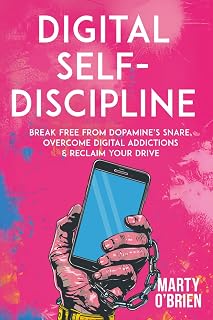
Digital Self-Discipline is a must‑read for anyone who struggles with screen addiction. Dopamine loops are powerful, but you can rewire them.
Tactics to reclaim your drive:
- Use app blockers during your deep work hours.
- Turn off all non‑essential notifications (99% of them are designed to hijack your attention).
- Schedule “scrolling time” instead of letting it steal random moments.
The Mental Toughness Approach
Discipline Equals Freedom by Jocko Willink is a field manual for grit. Willink argues that discipline isn’t deprivation – it’s freedom from the slavery of impulse. You control your choices, or your choices control you.

Want to build mental toughness? Do the hardest thing first every day. That could be a cold shower, a difficult conversation, or a 30‑minute workout. Your brain learns that discomfort is temporary and you can handle it.
Use Long‑Term Visualization
The Mountain Is You explains that self‑sabotage happens when your short‑term comfort outweighs your long‑term vision. Visualizing your future self – the one who already achieved the goal – helps bridge that gap.

How to Have Better Self Discipline: The Complete System
Now let’s put it all together. Here’s a step‑by‑step system you can implement today.
Step 1: Fix Your Planning
- Write down one goal and the specific actions you’ll take.
- Create a habit scorecard – list your current habits and mark each as + (good), – (bad), or = (neutral).
- Stack new habits onto existing ones (“After I brush my teeth, I will meditate for 2 minutes”).
Step 2: Hack Your Triggers
- Use the if‑then method: “If I feel the urge to check social media, then I will stand up and stretch for 30 seconds.”
- Redesign your environment to make good habits easy and bad habits hard.
- Keep track of your triggers in a journal for one week.
Step 3: Destroy Temptations
- Implement a temptation bundling strategy: combine a pleasurable activity with a necessary one (listen to your favorite podcast only while exercising).
- Use the 10‑minute rule – when a craving hits, wait 10 minutes. The urge often passes.
- Reward yourself after resisting temptation (but not with the temptation itself!).
Step 4: Build Consistency
365 Days With Self-Discipline offers a daily dose of mental resilience. Read one thought each morning to reinforce your discipline mindset.

Consistency beats intensity. A 1% improvement every day leads to a 37‑fold improvement in one year.
Best Books to Master Self‑Discipline (Comparison Table)
We’ve mentioned several powerful books. Here’s a quick comparison to help you choose your next read.
| Product | Price | Rating | Key Focus | Buy at Amazon |
|---|---|---|---|---|
|
$0.00 (Audible) | 4.8 | Habit stacking, small changes | Buy on Amazon |
 |
$8.66 | 4.7 | Mindset, productivity | Buy on Amazon |
|
$6.95 | 4.7 | Keystone habits, daily discipline | Buy on Amazon |
 |
$5.88 | 4.7 | Stoic self‑control | Buy on Amazon |
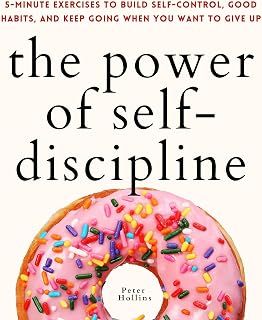 |
$0.00 (Audible) | 4.4 | 5‑minute exercises | Buy on Amazon |
|
$0.00 (Audible) | 4.5 | Willpower, biology of temptation | Buy on Amazon |
How to Have Better Self Discipline: Advanced Strategies
Use the “Two‑Minute Rule”
If a task takes less than two minutes, do it immediately. This eliminates the hesitation that drains your willpower reserves. Over time, you build a reputation with yourself as someone who takes action.
Practice Pre‑commitment
Lock yourself into good choices before temptation strikes. Give a friend $100 and tell them to donate it to a cause you hate if you skip your workout. The pain of losing the money is stronger than the pain of exercise.
Apply Stoic Self‑Discipline
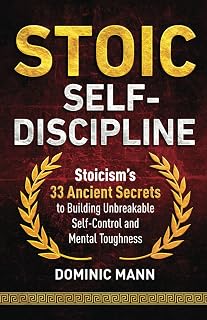
Stoic Self-Discipline distills ancient wisdom into modern tactics. The Stoics practiced voluntary discomfort – sleeping on a hard floor, fasting – to build resilience. You can simulate this by taking cold showers or skipping one meal per week.
The Art of Saying No
Yes to You, No to Them is all about learning the discipline of refusal. Saying no to distractions, unproductive meetings, and even well‑meaning friends who tempt you off course is a superpower.

Three words to master: “No, thank you” – delivered with a smile and zero guilt.
Mindfulness and Self‑Discipline
Mindful Self-Discipline teaches you to observe your urges without acting on them. It’s the ultimate hack for temptation. When you feel a craving, simply notice it and watch it float away like a cloud.

The Inner Work: Why You Sabotage Yourself
Sometimes the problem isn’t a weak plan or a tempting trigger – it’s self‑sabotage. The Four Agreements by Don Miguel Ruiz offers four principles to break free from self‑defeating patterns.

The Four Agreements:
- Be impeccable with your word.
- Don’t take anything personally.
- Don’t make assumptions.
- Always do your best.
When you apply these, you stop the mental stories that justify poor discipline.
How to Have Better Self Discipline After a Slip‑Up
Everyone falls off the wagon. What matters is the recovery time. The best way to build resilience is to get back on track immediately. Don’t let one bad meal spiral into a week of junk food. Don’t let one missed workout become a month of laziness.
Note to Self by Joe Thorn is about preaching to yourself – reminding yourself of your values and identity. You are someone who values discipline, even if you had a weak moment.

The 10‑1 Rule: For every 10 minutes of self‑criticism, spend 1 minute on a constructive action. Then act.
FAQ: How to Have Better Self Discipline
What is the fastest way to improve self‑discipline?
Start with one small habit and master it. Make your bed every morning for 21 days. That single win creates momentum. Then add a second habit. Speed comes from accumulation, not intensity.
How do I stop procrastinating once and for all?
Use the 5‑second rule from Mel Robbins: count down 5‑4‑3‑2‑1 and physically move before your brain can talk you out of it. Also, break tasks into micro‑steps. “Write one sentence” is easier than “write a report.”
Can self‑discipline be trained like a muscle?
Absolutely. Every time you resist a small temptation (like skipping a snack), you strengthen your willpower battery. But it’s limited – so conserve it by removing unnecessary decisions (e.g., wear a uniform, meal prep).
What role does sleep play in self‑discipline?
Huge. Sleep deprivation lowers your prefrontal cortex activity, the part of the brain responsible for impulse control. Aim for 7–9 hours to keep your discipline reserves full.
How do I stay disciplined when I’m unmotivated?
Motivation is fleeting; systems are reliable. When you don’t feel like doing the work, rely on your pre‑planned triggers and schedules. The discipline muscle kicks in when motivation fades.
Is it better to focus on willpower or habit formation?
Habit formation wins every time. Willpower is a limited resource; habits are automatic. Spend your energy designing systems that make disciplined choices the default.
Your Next Step
You now know the blueprint: fix your planning, manage your triggers, and design your temptations out of existence. The resources we’ve shared – from Atomic Habits to Discipline Is Destiny – are proven tools used by millions.
Pick one book from the comparison table and start reading today. Apply one tactic from the system above. Small steps repeated daily lead to a life of unshakable self‑discipline. You’ve got this.
Now go make your bed, plan your morning, and own your day. How to have better self discipline isn’t a mystery anymore – it’s a system waiting for you to execute.