
You’ve tried the New Year’s resolutions. You’ve downloaded the habit tracker, bought the journal, and promised yourself that this time it will stick. Then February rolls around, and that spark feels like a distant memory. Why do most people crash before they hit the 30‑day mark? Because 365 days of self discipline isn’t about raw willpower – it’s about building a system that works with your brain, not against it.
In this guide, you’ll get a complete framework for making self‑discipline last the whole year. We’ll cover the psychology behind long‑term consistency, the tools that top performers rely on, and a month‑by‑month plan you can actually follow. No hype, no shortcuts – just a proven path to turning discipline into your default setting.

Table of Contents
Why Most “365‑Day” Plans Fail (And How Yours Won’t)
The biggest mistake people make is treating 365 days of self discipline as a single, giant goal. You don’t wake up on January 1 and suddenly become a monk. Real discipline is built through small, repeatable actions that compound over time.
Think about it this way: If you tried to bench press 300 pounds on day one, you’d fail. But if you started with the bar and added five pounds every session, you’d get there. The same principle applies to self‑control. Your system must be designed for progressive overload – but on your habits, not your muscles.
Another common killer is the “all‑or‑nothing” mindset. Miss one day and you feel like a failure, so you quit entirely. A sustainable system must include forgiveness mechanisms. You need a way to get back on track without guilt.
The Core Components of a Year‑long Self‑Discipline System
Before we dive into the monthly blueprint, let’s establish the foundational pillars that will hold your entire year together.
1. Identity‑Based Habits
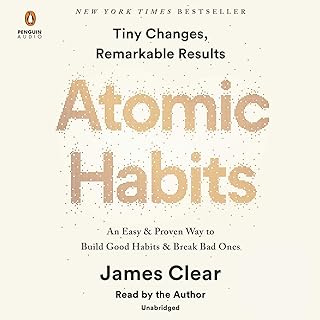
In his book Atomic Habits: An Easy & Proven Way to Build Good Habits & Break Bad Ones, James Clear explains that lasting change comes from shifting your identity. Instead of saying “I want to run every day,” say “I am a runner.” The actions follow the belief. 365 days of self discipline becomes effortless when you no longer see it as a chore – you see it as proof of who you are.
2. The Minimum Viable Habit
When motivation is low, your system must have a “floor” you can always hit. This is the smallest version of the habit you can do without resistance. For example:
- Want to read daily? Commit to one page.
- Want to exercise? Commit to one push‑up.
- Want to meditate? Commit to one breath.
If you do more, great. But the minimum keeps you consistent even on your worst days. Over 365 days, those small wins become an unbreakable streak.
3. Environmental Design
Willpower is like a phone battery – it drains with use. Instead of relying on it, design your environment to make good choices the path of least resistance. If you want to eat healthier, keep junk food out of the house. If you want to write more, put your laptop on your desk with a blank document already open. 365 days of self discipline is easier when your surroundings do the heavy lifting.
4. Accountability and Tracking
What gets measured gets managed. Use a simple calendar or a journal to track your daily commitment. The visual cue of a chain of X’s (or green dots) is incredibly motivating. You won’t want to break the streak.
Books That Will Supercharge Your Journey
To deepen your understanding, here are some of the best resources on self‑discipline. Each book offers a unique angle – from Stoic philosophy to practical psychology.
| Product | Price | Rating | Key Focus |
|---|---|---|---|
| Atomic Habits |
$0.00 (audible) | 4.8 | Small habit systems, identity change |
| No Excuses! |
$8.66 | 4.7 | Practical willpower, goal execution |
 Discipline Is Destiny Discipline Is Destiny |
$5.88 | 4.7 | Stoic virtue, self‑control |
 The Mountain Is You The Mountain Is You |
$0.00 (audible) | 4.7 | Overcoming self‑sabotage |
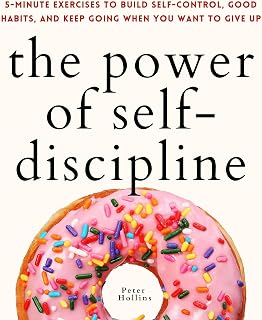 The Power of Self‑Discipline The Power of Self‑Discipline |
$0.00 (audible) | 4.4 | 5‑minute exercises, quick wins |
 Digital Self‑Discipline Digital Self‑Discipline |
$12.99 | 4.8 | Breaking tech addiction, dopamine control |
These books aren’t just theory – they give you actionable strategies you can layer into your own 365 days of self discipline system. Choose one or two to focus on per quarter.
The 12‑Month Blueprint for Sustainable Self‑Discipline
Here’s a month‑by‑month guide that helps you progressively build discipline without burnout. Adjust the timeline to fit your life – the order matters more than the speed.
Month 1: Foundation – One Non‑Negotiable Habit
- Pick one habit that aligns with your core value (health, learning, or finance).
- Set a minimum viable target (e.g., 5 minutes of exercise, 10 pages of reading).
- Track it daily. Only expand after 30 consecutive days.
Month 2: Add a Second Habit
- Choose a new habit that supports the first one (e.g., if you started walking, add stretching).
- Keep the first habit at its minimum. You’re building a stack of routines.
- Use habit stacking: “After I [existing habit], I will [new habit].”
Month 3: Tame the Digital Environment
- This month focus on digital self‑discipline. Reduce phone notifications, schedule “distraction blocks,” and use app blockers.
- Read Digital Self‑Discipline: Break Free from Dopamine’s Snare, Overcome Digital Addictions & Reclaim Your Drive for specific techniques.
Month 4: Build Accountability
- Tell a friend or join an online community. Share your daily progress.
- Use a “discipline partner” who holds you to your minimums.
- If you slip, call them before you spiral.
Month 5: Early Morning Routine
- Wake up 30 minutes earlier to complete your most important habit first.
- No phone for the first 15 minutes. Use that time for stillness, visualization, or journaling.
Month 6: Mid‑Year Review
- Reflect on what’s working and what isn’t. Journal honestly.
- Adjust your habit minimums if needed – maybe increase or change them.
- Celebrate your progress. You’ve completed 180 days! That’s half a year of 365 days of self discipline.
Month 7: Introduce Fasting (for Mind or Body)
- Try time‑restricted eating or a “content fast” (no social media for 24 hours).
- These temporary restrictions strengthen your “discipline muscle” in new ways.
Month 8: Temperance – Say No More Often
- Practice the art of saying no to low‑value invitations, events, and requests.
- Read Yes to You, No to Them: The Discipline of Saying No and the Freedom that Follows to master this skill.
Month 9: Embrace Discomfort
- Cold showers, early runs, or difficult conversations – do one uncomfortable thing every day.
- Discomfort builds mental toughness, which supports all other discipline.
Month 10: Resilience Training
- When you hit a plateau or miss a day, practice the “two‑day rule.” Never miss two days in a row.
- Focus on getting back on track immediately. Self‑compassion, not self‑criticism.
Month 11: Gratitude and Reflection
- Discipline without purpose burns out. Write down why you started.
- Express gratitude for your progress. Acknowledge the person you’re becoming.
Month 12: System Optimization
- Review your entire year. What worked? What would you change?
- Prepare your system for year two. By now, 365 days of self discipline is no longer a goal it’s your lifestyle.
How to Stay Consistent (Even When You Don’t Feel Like It)
Motivation is a liar. It shows up when you don’t need it and vanishes when you do. That’s why your system must rely on routines, not feelings. Here are five science‑backed tactics to keep you moving.
1. The 5‑Second Rule – When you feel resistance, count down 5‑4‑3‑2‑1 and move. It interrupts your hesitation loop. Mel Robbins made this famous, and it works.
2. Implementation Intentions – Use the formula: “I will [behaviour] at [time] in [location].” It makes the action automatic.
3. Temptation Bundling – Pair a necessary chore (like folding laundry) with a pleasure (listening to a favourite podcast). Your brain associates discipline with reward.
4. Progress Visualisation – Instead of imagining the end result, visualise the process – lacing up your shoes, opening the book, taking the first step.
5. The “Don’t Break the Chain” Method – Mark an X on your calendar every day you complete your minimum habit. The visual chain becomes addictive. You won’t want to break it.
Overcoming the Top 5 Obstacles in a Year‑Long System
Obstacle 1: Loss of Motivation
When the novelty wears off (usually around week 3), your discipline will be tested. The solution is to lower the bar temporarily. Do five minutes instead of thirty. The key is to stay in motion, even at a crawl.
Obstacle 2: External Disruptions
Travel, illness, and family emergencies happen. A sustainable system includes a “zero‑day” protocol. If you’re sick, your minimum could be simply drinking enough water. But do something to keep the identity alive.
Obstacle 3: Perfectionism
Perfectionism is the enemy of consistency. You will miss days. Accept it. The magic is in the return, not in never falling. Use the two‑day rule to bounce back.
Obstacle 4: Boredom
Months 3 to 6 often feel boring because the habit becomes routine. That’s a good sign – it means discipline is no longer a battle. Spice things up by adding a new skill within the same domain. For example, if you run, try a new route or sign up for a 5K.
Obstacle 5: Self‑Sabotage
Deep down, you might fear success. Subconscious beliefs like “I don’t deserve this” or “success will make me lonely” can derail your efforts. This is the core theme of The Mountain Is You: Transforming Self‑Sabotage into Self‑Mastery. Read it during month 9 to confront these inner barriers.
The Role of Stoic Philosophy in 365 Days of Self Discipline
Stoicism offers timeless wisdom for self‑control. The Stoics believed that discipline is not about suppressing desires but aligning your actions with your values. Books like Discipline Is Destiny: The Power of Self‑Control (The Stoic Virtues Series) and Stoic Self‑Discipline: Stoicism’s 33 Ancient Secrets to Building Unbreakable Self‑Control and Mental Toughness are excellent companions on this journey.
Key Stoic practices for your year:
- Premeditatio Malorum – Visualise the worst‑case scenario to reduce fear and prepare for challenges.
- The View from Above – Zoom out and see your struggles in the context of the whole cosmos. It builds perspective.
- Memento Mori – Remember that you will die. It strips away trivial distractions and focuses your discipline on what truly matters.
Sample Weekly Schedule for a Disciplined Year
| Day | Morning (First 30 min) | Mid‑day Check | Evening 15 min |
|---|---|---|---|
| Monday | 5‑min meditation + drink water | No phone during lunch | Journal 3 wins |
| Tuesday | Read 10 pages of a discipline book | Walk 5 min after work | Plan tomorrow’s one habit |
| Wednesday | Write 50 words (any topic) | Stretch break | Gratitude list |
| Thursday | Repeat Monday | No snacks after 8 pm | Reflect on week’s pattern |
| Friday | Cold shower (30 sec) | Declutter desk | Social media fast after 7 pm |
| Saturday | Review weekly habit streak | Do one hard thing (e.g., call a friend you’ve avoided) | Week ahead planning |
| Sunday | Full rest or flexible minimal habit | Evaluate and adjust for next week | Read or listen to an audiobook |
This is just a template. Modify it to fit your goals. The key is consistency – not perfection.
How to Handle Plateaus and Slumps
Around month 7 or 8, you might feel like you’re just going through the motions. That’s normal. Here’s how to break through:
- Change the variable – If you’ve been reading 10 pages a day, switch to 20 minutes of listening to a podcast. The same habit, different format.
- Raise the minimum – Maybe your minimum habit is too easy now. Increase it slightly to create a new challenge.
- Add a “streak reset” – After 100 consecutive days, take a planned “active rest” day where you do half your normal routine. It refreshes your mental energy.
- Double down on your “why” – Revisit your reasons. Write them on a sticky note. Discipline without purpose is drudgery.
Measuring Your Progress Over 365 Days
Tracking isn’t just about habits – it’s about growth. Use these metrics to measure the true impact of 365 days of self discipline:
- Consistency score – Percentage of days you hit your minimum habit. Aim for 80% or higher. (Life happens, so 80% is excellent.)
- Willpower energy – Rate your energy level each day (1‑10). You’ll notice that discipline creates energy, rather than draining it.
- Goal completion rate – How many larger goals (e.g., finish a course, lose 10 lbs, write a book) did you achieve? Discipline should produce tangible results.

This book, The Power of Discipline, offers a step‑by‑step framework to turn your efforts into achievement. Use it as a mid‑year read to re‑energise your system.
Frequently Asked Questions
Q: Can 365 days of self discipline really change my life?
A: Yes, if you focus on small consistent actions. Over a year, these compound into massive transformation. The key is to start with one habit and expand slowly.
Q: What if I fail on day 23?
A: Failure only becomes final if you stop. Use the “two‑day rule” – never miss two days in a row. Get back on track immediately and forgive yourself.
Q: How many habits should I focus on at once?
A: No more than two per quarter. Trying to change everything at once overwhelms your willpower. Stack habits gradually.
Q: Do I need to wake up at 5 AM to be disciplined?
A: No. Early mornings help many people, but discipline is about doing what you commit to, regardless of the time. Find your own peak rhythm.
Q: What’s the most important book on self‑discipline?
A: Atomic Habits is the most practical, but No Excuses! by Brian Tracy is excellent for mindset. Both complement your 365 days of self discipline journey.
Final Word: Your Year Starts Today
You don’t need to wait for an ideal Monday or a new moon. The system I’ve outlined works best when you start right now. Pick one tiny habit, protect it with your life, and build from there. Over 365 days, that small seed will grow into a tower of self‑mastery.
Remember: discipline is not punishment – it’s the path to freedom. The more you practice it, the more control you have over your time, your energy, and your future. The mountain is you, but you are also the climber. Equip yourself with the right tools, trust the process, and watch what happens when you commit to 365 days of self discipline.
You’ve got this. Now take the first step.