
You already know what to do. The problem isn't knowledge. It's that tiny gap between knowing and doing. That gap is exactly where you learn how to exercise self discipline in a way that sticks.
Most people think self-discipline is about raw willpower and heroic suffering. It's not. It's about training yourself to show up for the small things, over and over, until those small things become automatic. Then consistency takes over and you barely have to think about it. That's the real game.
This guide will show you exactly how to exercise self discipline using practical, science-backed methods. You'll learn why small actions matter more than big leaps, how to build momentum, and which books and systems can accelerate your progress. Let's dive in.

Table of Contents
What Does It Mean to Exercise Self Discipline?
To exercise self discipline means to consciously choose a better long-term outcome over an immediate temptation. It's not a personality trait you're born with. It's a skill you build through repeated practice.
Think of it like going to the gym. The first time you lift a weight, it feels awkward and heavy. But with consistent reps, that weight gets easier. Your muscles grow. The same thing happens with your self-control muscle. Every time you resist a distraction or follow through on a commitment, you're exercising self discipline and strengthening that muscle.
The mistake most people make is trying to tackle too much too fast. They decide to "get disciplined" and suddenly overhaul their entire life. That approach almost always fails. Real self-discipline starts with tiny, almost laughably small actions. Then it compounds.
Why Small Actions Are the Foundation of Unstoppable Consistency
The biggest lie about self-discipline is that you need a massive dose of motivation to start. You don't. You need a small, repeatable action that you can do even on your worst day.
James Clear, author of Atomic Habits: An Easy & Proven Way to Build Good Habits & Break Bad Ones (rated 4.8 out of 5, available as a free audiobook), calls this the "two-minute rule." Scale down any habit until it takes less than two minutes. Want to exercise self discipline to read more? Read one page. Want to build a running habit? Put on your shoes and step outside. That's it.
Here's why this works:
- Low resistance. It’s hard to talk yourself out of something that takes two minutes.
- Momentum. Once you start, you often keep going beyond the minimum.
- Identity shift. Each small win reinforces the belief that you are a disciplined person.
Over time, these tiny actions compound into unstoppable consistency. You're no longer "trying" to be disciplined. You are disciplined. It's who you are now.
How to Exercise Self Discipline: A Step-by-Step Method
Let's get practical. Here's a proven framework you can start using today.
1. Define Your "Why" in Painful Detail
Discipline without a reason is just suffering. You need a compelling, emotionally charged reason to exercise self discipline when things get hard.
Write down what you want and why you want it. Be brutally specific. Don't write "I want to be healthier." Write "I want to have enough energy to play with my kids without getting winded." Tie your discipline to something that matters deeply to you.
2. Start with One Micro-Habit
Choose a single small action that aligns with your big goal. Commit to doing it every day for at least 30 days.
For example, if your goal is financial discipline, start with tracking every dollar you spend for one week. That's it. No budget changes yet. Just awareness.

Admiral William H. McRaven's book Make Your Bed (rated 4.7, $6.95) drives home this point beautifully. He argues that if you want to change the world, start by making your bed. That small act of discipline sets the tone for the rest of your day. It's a small victory that triggers more victories.
3. Design Your Environment for Success
Your environment shapes your behavior more than willpower ever will. If you want to exercise self discipline to stop scrolling on your phone, put it in another room. If you want to drink more water, place a glass bottle on your desk.
Remove friction from good habits and add friction to bad ones.
4. Use the 5-Second Rule
Mel Robbins popularized this technique. When you feel the urge to procrastinate, count backward from 5 to 1 and then physically move. This bypasses your brain's tendency to overthink.
It works because it interrupts hesitation. The moment you start moving, your brain switches from "should I?" to "I'm doing it."
5. Track Your Consistency
What gets measured gets managed. Keep a simple streak tracker. It can be a calendar where you mark an X for every day you complete your micro-habit. The visual progress becomes addictive.

Ryan Holiday's Discipline Is Destiny (rated 4.7, $5.88) explores how the ancient Stoics used self-control to achieve greatness. They understood that discipline isn't about punishment. It's about aligning your actions with your highest values. Track your progress every day to stay aligned.
Common Obstacles to Exercising Self Discipline (And How to Overcome Them)
Even with a solid plan, you will hit roadblocks. Here are the most common ones and how to handle them.
Lack of Motivation
Motivation is unreliable. It comes and goes like the weather. When you need to exercise self discipline but feel zero motivation, fall back on your minimum viable action. One push-up. One sentence written. One minute of meditation.
Action creates motivation, not the other way around.
Decision Fatigue
Every decision you make depletes a small amount of mental energy. By the end of the day, your willpower reserves are empty. That's why you reach for junk food or skip your workout.
Solution: automate as many decisions as possible. Plan your meals the night before. Lay out your workout clothes. Make your most important habit happen early in the day when your willpower is fresh.
Perfectionism
"I'll start on Monday." "I messed up once, so I ruined my streak." Sound familiar? Perfectionism is the enemy of consistency.
Learn to forgive yourself quickly. If you miss a day, don't miss two. The key to exercise self discipline over the long term is not being perfect. It's being consistent with your bounce-back.
The Role of Self-Talk in Building Discipline
The way you talk to yourself shapes your behavior. If you tell yourself "I'm so lazy," you'll act accordingly. If you tell yourself "I am the kind of person who follows through," you'll find it easier to exercise self discipline.

In Note to Self (rated 4.6, $14.99), Joe Thorn emphasizes the power of preaching truth to yourself. Replace negative self-talk with affirming, action-oriented statements. Instead of "I can't do this," say "I'm building the muscle of discipline, and every rep gets easier."
You don't need to be a cheerleader. But you do need to be your own coach.
How to Build Mental Toughness Alongside Self-Discipline
Self-discipline and mental toughness go hand in hand. One is about consistent action. The other is about pushing through discomfort.

The Power of Discipline (rated 4.6, $16.83) breaks down how to combine self-control with mental toughness to crush your goals. It's not about being hard on yourself. It's about building resilience so that setbacks don't derail you.
Try this: when you feel like quitting, remind yourself that the discomfort is the training ground. Every moment you resist the urge to quit, you get stronger. Welcome the friction. It means you're growing.
The Science Behind Self-Discipline (Why It's Trainable)
Neuroscience shows that self-discipline is like a muscle. It responds to training. The prefrontal cortex, the part of your brain responsible for decision-making and impulse control, can be strengthened through practice.

The Science of Self-Discipline (rated 4.5, free audiobook) offers a deep dive into the biology of willpower. It explains why glucose levels affect your discipline, how to schedule your toughest tasks for peak mental energy, and why meditation literally grows your prefrontal cortex.
Knowledge is power, but only if you use it. The more you understand how your brain works, the easier it is to exercise self discipline in a way that works with your biology, not against it.
7 Best Books to Exercise Self Discipline (Deep Dive Recommendations)
If you're serious about building unstoppable consistency, these books will give you the framework and inspiration you need. Below is a comparison of the top resources, including price, rating, and a quick why-you-need-it.
| Product | Rating | Price | Key Focus | Buy Now |
|---|---|---|---|---|
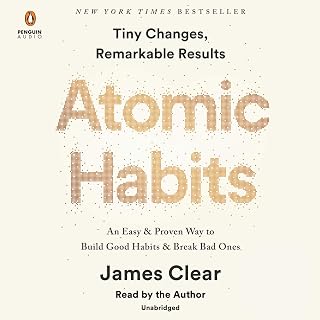 |
4.8 | $0.00 (free audiobook) | Habit building, tiny changes, systems | Buy on Amazon |
 |
4.7 | $8.66 | Practical self-discipline for all areas of life | Buy on Amazon |
 |
4.7 | $12.93 | Mental toughness, military mindset | Buy on Amazon |
|
4.7 | $6.95 | Small actions, daily discipline, leadership | Buy on Amazon |
 |
4.7 | $0.00 (free) | Self-sabotage, emotional mastery | Buy on Amazon |
Quick Picks
- Best overall for habit building: Atomic Habits – James Clear. The foundation for anyone new to self-discipline.
- Best for a no-nonsense kick in the pants: No Excuses! by Brian Tracy.
- Best for Stoic mindset: Discipline Is Destiny by Ryan Holiday (not in table but highly recommended).
- Best for tackling self-sabotage: The Mountain Is You by Brianna Wiest (free audiobook).
How to Stay Consistent When Life Gets Chaotic
Life will throw curveballs. You'll get sick. You'll have a terrible day at work. You'll feel like all your progress has vanished. That's normal.
Here's how to exercise self discipline even when everything falls apart:
- Never break the chain. Even if you do only 10% of your habit, do it. Don't let the streak die.
- Scale back, don't quit. If you normally work out for 30 minutes, do 5. If you normally meditate for 10 minutes, do 1. The point is to stay in the game.
- Focus on identity, not outcome. Instead of "I want to lose 10 pounds," say "I am someone who moves my body every day." Identity-based habits survive chaos because they're part of who you are.

The Psychology of Self-Discipline (rated 4.6, $17.99) offers 24 specific strategies to rewire your brain for consistency. One of its key insights: don't rely on motivation. Build systems that make discipline the path of least resistance.
The Compound Effect of Small Disciplines
Let's do some math. If you improve just 1% every day, after one year you'll be 37 times better. That's the compound effect in action.
But you can't get that result by doing big things occasionally. You get it by consistently exercising self discipline on the small things.
- Read 10 pages a day? That's about 12 books a year.
- Save $5 a day? That's over $1,800 a year (before interest).
- Do one push-up every morning? In a year, you'll have done 365 push-ups, plus the extra ones you did once you got started.
The small actions are the only actions that ever led to big results. Stop waiting for the perfect plan. Start with the smallest possible action.
Frequently Asked Questions About Exercising Self Discipline
What is the best way to exercise self discipline?
Start with one micro-habit, make it easy, and track it daily. Focus on consistency over intensity. Use the two-minute rule and build from there. The best way is the way that actually gets you to act.
How long does it take to build self-discipline?
Studies suggest it takes anywhere from 18 to 254 days to form a new habit, with an average of 66 days. But you won't feel "disciplined" overnight. Give yourself at least 30 days of consistent micro-actions before judging your progress.
Can self-discipline be learned or is it genetic?
It's learned. Neuroplasticity proves that your brain can rewire itself through repeated behavior. Self-discipline is a skill you can train, not a fixed trait.
Why do I lack self-discipline?
You likely lack a compelling reason, a clear plan, or proper environment design. Most people also try to do too much at once. Simplify, reduce friction, and reconnect with your why.
What is the number one killer of self-discipline?
Perfectionism. The belief that you must do it perfectly or not at all. Let go of perfect. Aim for "good enough" and keep moving.
How do I stop procrastinating and start exercising self discipline?
Use the 5-second rule. Count 5-4-3-2-1 and take one small action. Also, remove distractions from your environment. Procrastination is often a symptom of overwhelm. Break the task into a tiny piece.
Are there any apps that help with self-discipline?
Yes, but don't rely on apps alone. Apps like Habitica, Streaks, or Forest can help with tracking, but the real work is internal. Use them as tools, not crutches.
What books should I read to improve self-discipline?
Start with Atomic Habits by James Clear. Then read No Excuses! by Brian Tracy and Discipline Equals Freedom by Jocko Willink. For deeper psychology, try The Power of Self-Discipline or The Psychology of Self-Discipline. All are linked above.
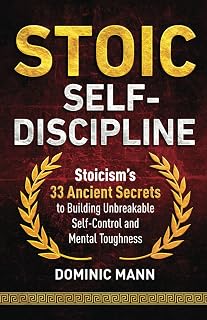
For a Stoic approach, check out Stoic Self-Discipline (rated 4.7, $19.99). It reveals 33 ancient secrets that are surprisingly practical for modern life.
Your First Step to Exercise Self Discipline Starts Now
You've read this far. That's good. But reading alone won't change anything. You have to take action.
Here's your challenge: in the next 30 seconds, decide ONE small action you will take today to exercise self discipline. It could be making your bed. Drinking a glass of water when you wake up. Writing one sentence in a journal. Dropping to the floor for a single push-up.
Don't overthink it. Pick the smallest thing you can do right now. Then do it.
Then come back tomorrow and do it again. And again. That's how you turn small actions into unstoppable consistency. That's how you build a disciplined life.
The world rewards consistent action. Your future self is watching. Make them proud.
As Jocko Willink says in Discipline Equals Freedom (rated 4.7, $12.93): "There is no bad weather. There is only bad clothing." There are no bad days. Only days where you choose to be disciplined or not. Choose discipline. Every time.