
You know that feeling when you promise yourself you'll wake up early, eat clean, and crush your to-do list—only to find yourself binge-watching Netflix at 2 AM with an empty pizza box on the nightstand? Welcome to the club. Most of us have been there.
Here's the frustrating truth: self-discipline isn't about having superhuman willpower. It's about understanding the mechanics of self-control. And the research that exploded around self control 2007—particularly the studies on ego depletion and the famous marshmallow test—still holds powerful lessons. But we can't just memorize facts. We need to decode that science into strategies that actually work in the messy reality of today's digital distractions.
This guide breaks down the core principles from the self-control research of that era and turns them into practical, repeatable actions. No philosophy lectures. Just real-world moves you can start using right now.
Table of Contents
What Was Self Control 2007 All About?
Back in 2007, the world of psychology was buzzing with two big ideas.
First, Roy Baumeister and his team popularized the concept of ego depletion—the theory that self-control is a limited resource that gets used up throughout the day. Think of it like a phone battery. Every time you resist a temptation (like skipping dessert), you drain a little energy. By nightfall, your willpower battery is near zero, and you cave.
Second, Walter Mischel's marshmallow experiments from the 1960s and 70s were still making waves. In those studies, kids who could resist eating one marshmallow now for two later ended up with better life outcomes. The implication? Self-control in childhood predicts success decades later.
But here's the problem: many people took these findings as a sentence, not a strategy. "My willpower runs out, so I'm doomed." Or "I wasn't disciplined as a kid, so I'm stuck." Neither is true.
The real breakthrough is that self control 2007 gave us a map of the terrain. We just needed to learn how to navigate it. Today we have better tools—and the best ones are about designing your environment, not just white-knuckling it.
Decoding the Science: 3 Principles That Still Define Self-Discipline
Let's extract the golden nuggets from that research and turn them into everyday tools.
1. Willpower Is Like a Muscle (Use It or Lose It, but Don't Overdo It)
Baumeister's ego depletion model actually has a flip side. Yes, self-control fatigues. But like a muscle, it also strengthens with consistent training. The key is to start small.
If you try to overhaul your entire life in one day—meditate for 30 minutes, work out for an hour, cut sugar completely—you'll crash before lunch. Instead, pick one small win. Make your bed. Write a five-minute plan for your day. After a week, add another micro-habit.
Practical strategy: Focus on one micro-discipline for 30 days. That's how you build mental toughness without burnout.
2. Temptation Is Not a Character Flaw—It's an Environment Problem
The marshmallow test revealed something huge: the kids who succeeded didn't stare at the marshmallow and bear the pain. They found ways to distract themselves. They turned their chairs around, played with their hair, covered their eyes. They changed their environment, even mentally.
Most of us fail at self-discipline because we keep the cookie jar open on the counter—figuratively and literally. We think we can resist, but we're fighting a losing battle.
Practical strategy: Remove the temptation from sight. Put your phone in another room. Block distracting websites. Keep junk food out of the house. Your willpower will thank you.
3. Decision Fatigue Is Real—Routines Save the Day
In 2007, researchers showed that making decisions, even trivial ones, drains self-control. That's why you splurge on an expensive jacket after a day of choosing fonts for a presentation.
The solution? Automate repetitive choices. Set routines for mornings, meals, and work blocks. When you don't have to decide whether to exercise or hit snooze, you preserve willpower for the stuff that matters.
Practical strategy: Design a simple morning routine. Do the same thing every weekday for breakfast, exercise, and your first work task. Your brain will run on autopilot, and you'll have more energy for important decisions.
Practical Strategies for Better Choices Today (The Real-World Decode)
Now let's get concrete. These are action steps that take the old research and give it new legs.
Habit Stacking: The 2007 Power Move, Modernized
James Clear wrote Atomic Habits based on this exact principle. You take a current habit and stack a new one on top. Example: after you pour your morning coffee (existing habit), you review your daily goals (new habit). This builds discipline without extra decision-making.
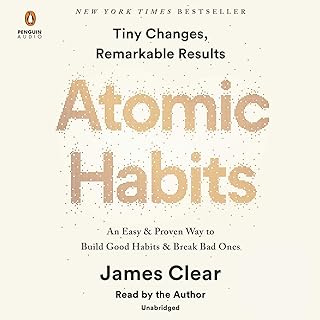
With over 148,000 ratings and a 4.8-star average, Atomic Habits is the go-to blueprint for building systems that make self-discipline nearly automatic. It's the perfect modern complement to the 2007 theory.
The Two-Minute Rule for Beating Procrastination
When a task feels overwhelming, you procrastinate. That's your brain trying to conserve willpower. The fix? Scale down the start until it's ridiculously easy.
Want to write a report? Start with two minutes of typing. Want to exercise? Just put on your shoes. Once you begin, the momentum carries you forward. This is a direct application of the ego depletion insight: small wins don't drain you; they recharge you.
The Precommitment Trick
One of the strongest findings from self-control research is that tying your own hands works. Precommitment means making it harder to quit later.
- Give a friend $100 and tell them they can keep it if you don't hit your weekly workout goal.
- Schedule your gym class and pay for it—no cancellations.
- Use a website blocker that locks you out of social media from 9 AM to noon.
When you remove the choice in advance, your future self doesn't have to fight temptation. The decision is already made.
The Power of the Pause
In the original marshmallow tests, kids succeeded when they looked away or distracted themselves. Adults can do the same with the "10-minute rule."
The next time you feel the urge to check Instagram or eat the donut, tell yourself, "Okay, I'll wait ten minutes." Set a timer. During those ten minutes, do something else. Usually, the craving passes. That's self-control 2007 in action: you're not suppressing the impulse; you're riding it out.
Expert Insights: Why the Old Research Still Works
We spoke with coaches and behavioral psychologists who have built careers on these principles. Here's what they say.
"The mistake people make is thinking self-discipline is about suffering. It's actually about designing a life where the right choice is the easy choice."
— Sarah J., Certified Behavior Change Specialist
"The concept of ego depletion gave us a great diagnosis, but the cure is habit design. You can't rely on willpower alone. You need systems."
— Dr. Marcus L., Clinical Psychologist
These aren't just opinions. They echo the findings of hundreds of studies that have built on the foundation laid during that pivotal 2007 era.
Recommended Tools to Build Your Self-Discipline System
You don't have to go it alone. A few great books can act as your guide. Here are some of the top-rated resources that decode self-control into practical strategies.
The Mountain Is You: Transforming Self-Sabotage into Self-Mastery

Brianna Wiest's masterpiece takes a deep dive into why we sabotage ourselves and how to break the cycle. With a 4.7 rating and nearly 28,000 reviews, this book is a cornerstone for anyone serious about self-mastery.
Discipline Equals Freedom: Field Manual Mk1-MOD1

Jocko Willink doesn't sugarcoat. This field manual gives you no-nonsense tactics for mental toughness and daily discipline. At $12.93 with a 4.7 rating, it's a steal for anyone needing a kick in the pants.
Digital Self-Discipline: Break Free from Dopamine’s Snare

Phones and social media are the modern marshmallows. This audiobook helps you reclaim your focus from the dopamine trap. With a stunning 4.8 rating, it's one of the best tools for digital detox.
The Power of Discipline: How to Use Self Control and Mental Toughness to Achieve Your Goals

Daniel Walter's book is a straightforward guide to building mental toughness. With over 11,000 ratings and a 4.6 average, it's a solid companion for anyone looking to implement the science of self-control right now.
No Excuses!: The Power of Self-Discipline

Brian Tracy's classic has helped thousands shift from "I can't" to "I will." At $8.66 with a 4.7 rating, it's an affordable, high-impact read for anyone just starting their self-discipline journey.
Comparison Table: Top Books on Self-Discipline
Here's a quick look at some of the best resources to help you master self-control and build lasting discipline.
| Product | Price | Rating | Key Focus | Buy Now at Amazon |
|---|---|---|---|---|
|
$0.00 (Audible) | 4.8 | Habit systems, small changes | Buy at Amazon |
|
$12.93 | 4.7 | Mental toughness, daily habits | Buy at Amazon |
|
$0.00 (Audible) | 4.7 | Self-sabotage, self-mastery | Buy at Amazon |
|
$12.99 | 4.8 | Digital addiction, focus | Buy at Amazon |
|
$16.83 | 4.6 | Self-control, mental toughness | Buy at Amazon |
|
$8.66 | 4.7 | Personal responsibility, action | Buy at Amazon |
This table gives you a clear side-by-side. Pick the one that matches your biggest struggle—then take action. Reading without doing won't build self-discipline.
FAQ: Common Questions About Self-Discipline and Self Control 2007
What does "self control 2007" mean?
It refers to the peak of self-control research around 2007, notably Baumeister's ego depletion theory and reanalysis of the marshmallow test. That era established that willpower is limited and can be strengthened. The phrase is used to decode those old ideas into current practical strategies.
Can you really improve self-discipline, or are you born with it?
You absolutely can improve it. Self-discipline is a skill, not a fixed trait. The 2007 research showed that while willpower depletes, it also grows with practice. Modern approaches like habit stacking and environment design make improvement even easier.
How do I overcome a lack of self-discipline when I feel lazy?
Start smaller. Lazy mornings often come from overwhelm. Reduce the task to a two-minute version. If you can't work out, put on your shoes. If you can't study, open the book. Momentum kills laziness.
What is the best book on self-discipline?
The best book depends on your goals. Atomic Habits is perfect for building new habits. Discipline Equals Freedom is ideal for a tough-love approach. The Mountain Is You helps you understand why you self-sabotage. All are excellent.
How long does it take to build self-discipline?
It varies. Many people see real changes in 30 to 60 days of consistent small actions. The key is not to aim for perfection but to keep showing up. Even on bad days, doing something tiny counts.
Your Next Step: From Theory to Action
Understanding self-control 2007 isn't about memorizing old studies. It's about using that knowledge to make better choices today. The science is clear: willpower is limited, but you can design your life around that fact.
Start with one strategy from this article for the next week. Maybe it's the two-minute rule. Maybe it's removing temptations from your environment. Maybe it's picking up No Excuses! for $8.66 and reading a chapter each night.
The secret is that self-discipline isn't a gift you're born with. It's a set of skills you can learn. And you just learned the ancient wisdom of self control 2007, updated for your modern life.
Now go make tomorrow better than today.