
Let’s be real. You’re running on fumes, your calendar looks like a game of Tetris gone wrong, and the last thing you have energy for is another “grind harder” pep talk. But here’s the truth bomb: you don’t need more motivation. You need a smarter way to build self-discipline when your tank is empty.
Learning how to get better at self discipline when you’re exhausted isn’t about becoming a robot. It’s about using tiny, strategic moves that work with your drained brain, not against it. This isn’t theory — it’s a step-by-step approach designed for real humans with real lives. And yes, you can start even while sprawled on the couch.
Table of Contents
Why Traditional Self-Discipline Advice Fails the Tired, Busy, Overbooked Person
Most self-discipline advice assumes you have a full battery. “Wake up at 5 AM!” “Meditate for an hour!” “Repeat affirmations until your soul glows!” Great, if you’re already a Zen master. For the rest of us, that advice feels like being handed a dumbbell when you can barely lift your phone.
The problem isn’t that you’re weak. It’s that willpower is a limited resource, and you’ve already spent yours on meetings, kids, traffic, and deciding what to eat for dinner. So how do you build discipline when your willpower account is overdrawn? You stop relying on willpower altogether.

This article is your blueprint. No fluff, no shame, just practical steps that fit into your chaotic reality. Ready? Let's dive into the exact method that works when you have zero energy left.
Step 1: Stop Fighting Fatigue – Work with Your Energy Curve
The first step to how to get better at self discipline is admitting that discipline looks different at 7 PM than at 7 AM. Trying to force high-output discipline when you’re exhausted is like trying to sprint uphill with a broken leg.
Instead, map your energy curve. Ask yourself:
- When am I most focused during the day?
- When do I hit my afternoon slump?
- What small tasks can I do when I’m half-dead?
Discipline isn't about doing everything perfectly — it's about doing the right thing at the right time. For example, schedule your hardest task (the one that requires real self-control) during your peak energy window. Save low-energy tasks like clearing emails or folding laundry for your slump zone.
This simple shift alone will reduce the amount of willpower you need, making it much easier to stay consistent.
Step 2: Master the Two-Minute Rule (Yes, It’s That Easy)
When you’re tired, the biggest enemy is the starting friction. Your brain screams “That’s too much effort!” and you default to scrolling. The fix? Never start with more than two minutes.
Want to work out? Put on your shoes and do one push-up. Want to write? Open a document and type one sentence. Want to read a self-discipline book? Read one page.
“Habits are the compound interest of self-improvement.” – James Clear
James Clear’s  is a masterclass in this approach. The two-minute rule makes discipline feel laughably easy, which is exactly what you need when you’re overbooked. Once you start, momentum often carries you past two minutes. And even if it doesn’t, you still won.
Pro tip: For tasks that require deeper focus, use the “5-Minute Start.” Tell yourself you’ll do it for only five minutes. Usually, you’ll keep going. But if you still want to quit after five, give yourself permission to stop. That’s still a win.
Step 3: Design Your Environment for Automatic Discipline
Willpower is for emergencies. For everyday discipline, let your environment do the work. Change your surroundings so that the disciplined choice is the easiest choice.
- Put your phone in another room while working.
- Keep healthy snacks visible, junk food hidden.
- Lay out your workout clothes the night before.
- Unsubscribe from distracting newsletters.

In The Power of Discipline: How to Use Self Control and Mental Toughness to Achieve Your Goals, the author emphasizes that discipline is a skill you build by reducing friction. When you’re exhausted, you won’t have the energy to resist temptation. So remove the temptation before you need to resist it.
Quick checklist for environment design:
- Remove distractions: Turn off notifications, close unnecessary tabs.
- Add friction to bad habits: Log out of social media apps, keep credit cards in a difficult spot.
- Reduce friction for good habits: Keep a water bottle on your desk, pre-pack your gym bag.
Step 4: Pre-Decide Everything (The Power of Implementation Intentions)
One of the biggest drains on self-discipline is decision fatigue. Every choice you make during the day — from what to wear to what to eat — chips away at your willpower reserves. The solution? Pre-decide your actions using if-then plans.
An implementation intention looks like this:
“If it’s 8 AM, then I will start my deep work session.”
“If I feel the urge to check my phone, then I will do five deep breaths first.”
This technique has been shown to double the likelihood of following through. It works because it offloads the decision-making to a pre-written script. When you’re tired, your brain follows the script automatically.

In The Mountain Is You: Transforming Self-Sabotage into Self-Mastery, the author explains that most self-sabotage comes from not having a clear plan for moments of weakness. Pre-deciding removes the guesswork.
Step 5: Use the “Give Up” Rule (Yes, You Can Quit – But Only After 5 Minutes)
Wait, did I just say you can quit? Yes. But with a catch. The “Give Up” Rule says: You are allowed to stop a task, but only after you’ve given it five minutes of focused effort.
This rule plays a beautiful trick on your brain. When you start, the hardest part is already behind you. After five minutes, your momentum often keeps you going. And if it doesn’t, you can stop without guilt because you did your due diligence.
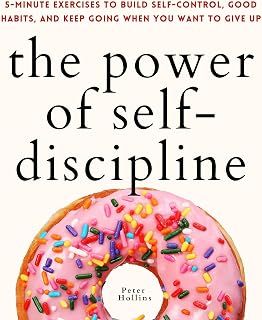
This book, The Power of Self-Discipline: 5-Minute Exercises, is built exactly around this concept. Each exercise takes five minutes, perfect for your busiest days.
Remember: Consistency beats intensity. Doing five minutes of discipline every day is infinitely better than a two-hour marathon once a month.
Step 6: Build a Non-Negotiable Core Routine (The Magic of 10 Minutes)
When everything is chaotic, you need a non-negotiable core routine that you do every single day, no matter what. This routine should take no more than 10 minutes and should include the most important thing for your growth.
Examples:
- Mental: Read one page of a self-discipline book.
- Physical: Do 10 push-ups.
- Emotional: Write down one thing you’re grateful for.

Admiral William H. McRaven’s Make Your Bed: Little Things That Can Change Your Life…And Maybe the World shows how a simple daily discipline — making your bed — creates a ripple effect of control and order in your life.
Why it works: That 10-minute win gives you a psychological anchor. You proved to yourself that you could do something, even on a terrible day. That feeling of accomplishment fuels your next action.
Step 7: Leverage Accountability and Self-Compassion (Yes, Both)
We often think discipline is a solo sport. It’s not. When you’re tired and busy, accountability is your cheat code.
- Tell a friend you’ll text them after you finish your task.
- Use an app that tracks your streaks.
- Join a small group with the same goals.
But here’s the twist: You also need self-compassion. Research shows that people who treat themselves kindly after a slip-up are more likely to get back on track than those who beat themselves up. Discipline isn’t about perfection; it’s about returning to the path every time you fall.

Don Miguel Ruiz’s The Four Agreements offers a powerful framework for personal freedom that includes “Always do your best” — not the best, just your best for that moment.
Step 8: Track Progress and Reflect (5-Minute Habit)
When you’re overbooked, you might think tracking is a waste of time. It’s actually a time-saver. Because what gets measured gets managed.
Spend five minutes at the end of each day to:
- Write what you accomplished.
- Note what drained your discipline.
- Plan one small improvement for tomorrow.

The book 365 Days With Self-Discipline provides daily prompts to help you build this reflective muscle. Over time, you’ll spot patterns and adjust.
Pro tip: Keep a simple notebook or use a habit tracker app. The act of ticking a box releases a tiny dopamine hit that reinforces the behavior.
Step 9: Recharge Your Willpower (Sleep, Nutrition, and Digital Hygiene)
You can’t get better at self discipline if your brain is running on empty. Literally. Willpower is biologically expensive. Without adequate sleep, nutrition, and mental breaks, your ability to control impulses plummets.
- Sleep: 7–9 hours is non-negotiable for discipline.
- Nutrition: Stable blood sugar reduces cravings and mood swings.
- Digital hygiene: Constant notifications deplete your focus.
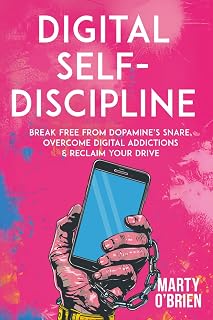
Digital Self-Discipline: Break Free from Dopamine’s Snare offers practical steps to reclaim your attention from the device that drains your willpower the most.
Try this: Schedule “do not disturb” blocks. Your brain needs uninterrupted time to restore self-control.
Step 10: Review and Adjust – The Continuous Improvement Mindset
The last step in how to get better at self discipline is to realize it’s a lifelong practice, not a destination. Your energy levels, schedule, and priorities will change. Your approach must change too.
- Weekly review: What worked? What didn’t?
- Monthly reset: Adjust your core routine.
- Quarterly audit: Are your goals still relevant?

Jocko Willink’s Discipline Equals Freedom is a raw, no-excuses field manual that embodies this ethos. He says, “Discipline is the path to freedom.” The more you practice, the more freedom you create from your own weaknesses.
Recommended Resources – Comparison Table
Here are some of the best books on self-discipline, perfect for your journey. Click the images to check them out on Amazon.
| Product | Image | Price | Rating | Key Focus | Buy at Amazon |
|---|---|---|---|---|---|
| Atomic Habits: An Easy & Proven Way to Build Good Habits & Break Bad Ones | |
$0.00 (audible) | 4.8 | Small habits, identity change, systems | Buy Now |
| The Power of Self-Discipline: 5-Minute Exercises | |
$0.00 (audible) | 4.4 | Quick exercises, low-energy discipline | Buy Now |
| The Mountain Is You: Transforming Self-Sabotage into Self-Mastery | |
$0.00 (audible) | 4.7 | Overcoming self-sabotage, mindset shift | Buy Now |
| Discipline Equals Freedom: Field Manual Mk1-MOD1 | |
$12.93 | 4.7 | No-excuses mindset, military-style | Buy Now |
Each book complements this step-by-step approach. Pick the one that resonates most with your current struggle.
Frequently Asked Questions About Building Self-Discipline When Exhausted
Q1: Can I really build self-discipline if I have no willpower left?
Absolutely. The key is to stop relying on willpower. Instead, use environment design, tiny habits, and pre-decisions. The steps in this article are specifically designed for low-energy situations. Start with the two-minute rule and build from there.
Q2: How long does it take to see results from these steps?
Most people notice a difference within 3–5 days of consistent practice. Real change — like turning discipline into an automatic habit — takes about 30–60 days, depending on your consistency. Remember, every micro-win counts.
Q3: What if I mess up and skip a day? Should I start over?
No. One slip does not ruin your progress. The most important thing is to get back on track immediately. Self-compassion is part of the process. Forgive yourself and continue the next day.
Q4: Is it better to focus on one habit or multiple habits at once?
When you’re tired and overbooked, focus on one habit at a time. Trying to change everything at once leads to overwhelm and failure. Pick the one thing that will have the biggest impact, master it, then add another.
Q5: Do I need to read all the books mentioned here to succeed?
Not at all. These books are resources to deepen your understanding, but the step-by-step approach in this article works on its own. Start with the free techniques, and if you want more, pick one book that speaks to you.
Q6: How do I stay disciplined when my schedule changes constantly?
Build a flexible core routine that can be completed in under 10 minutes, regardless of location. Also, practice “if-then” plans for common schedule changes. For example: “If I have a late meeting, then I will do my core routine during my lunch break.”
Q7: What is the most important step for someone who is extremely overbooked?
Step 1: Acknowledge your energy reality. You cannot pour from an empty cup. Drop the guilt and focus on tiny, sustainable actions. The rest will follow.
Your Next Step (Start Now, Not Tomorrow)
You now have a complete, practical, step-by-step approach to how to get better at self discipline even when you’re tired, busy, and overbooked. The only missing piece is action.
Pick one step from this list — just one — and do it today. Maybe it’s the two-minute rule for your most avoided task. Maybe it’s setting up a distraction-free workspace. Maybe it’s reading one page from a recommended book.
Small, consistent actions are the secret sauce. Real discipline is built in the trenches of ordinary, exhausting days. And you are fully capable of that.
You’ve got this. Now go make your bed, do your two minutes, and prove to yourself that discipline isn’t about being a superhero — it’s about showing up anyway.