
Most people believe self-discipline is something you either have or you don’t. That is a lie that keeps you stuck. The truth? Training self discipline is exactly like training a muscle. You do not walk into a gym and bench press 300 pounds on day one. You start small, repeat the movement, and gradually increase the load. Self-discipline works the same way.
When you treat self-discipline as a skill, everything changes. You stop blaming yourself for “not having enough willpower.” You stop feeling guilty about yesterday’s slip. Instead, you pick up the mental barbell, do one more rep, and trust that tomorrow you can do a little more. This article will show you exactly how to train self-discipline using repeatable exercises that actually work. No gimmicks, no fake shortcuts. Just practical, science-backed methods you can start today.
Table of Contents
Why Training Self Discipline Is More Powerful Than Relying on Willpower
Willpower is a limited resource. Research shows it depletes over the course of a day. But training self discipline as a skill builds what you might call “mental stamina.” You are not relying on a burst of motivation. You are building a system that operates even when you feel tired, distracted, or unmotivated.
Think of it like learning to play the piano. The first time you sit down, your fingers feel clumsy. After a week of practice, scales start to flow. After a year, you can play entire songs without thinking. The same principle applies to self-control. The more you practice small acts of discipline, the more automatic they become.
The fastest way to build this skill is to repeat specific exercises that challenge your comfort zone in a controlled way. You do not need to overhaul your entire life overnight. You just need to commit to one or two drills each day.
The 7 Best Exercises for Training Self Discipline
These exercises are simple, but they are not easy. That is the point. Each one forces your brain to override instant gratification and choose long-term benefit. Do them daily, and watch your self-discipline grow.
1. The 5‑Minute Rule
When you feel resistance to starting a task, tell yourself you will do it for only five minutes. After five minutes, you can stop. Most of the time, you will keep going. This works because the hardest part is the start. By limiting the commitment, you bypass the brain’s fear of effort.
How to practice: Choose one thing you have been procrastinating on. Set a timer for five minutes. Work on it with full focus. When the timer rings, decide if you want to continue. Repeat this exercise every day for a week.
2. Cold Shower Exposure
Cold showers are a classic discipline drill for good reason. They train you to do something uncomfortable on purpose. Your first instinct is to turn the water warm, but you override that urge. Each cold shower is a tiny victory over your comfort zone.
How to practice: End your normal shower with 30 seconds of cold water. Each week, add 15 seconds. Do not negotiate. Just do it. This builds mental toughness that carries over into every other area of life.
3. The “Don’t Break the Chain” Method
This classic technique from Jerry Seinfeld uses visual tracking to reinforce consistency. Every day you complete your discipline task, you mark an X on a calendar. The chain of X’s grows, and you become unwilling to break it.
How to practice: Choose one habit you want to ingrain. It could be reading ten pages, meditating for three minutes, or writing 200 words. Each day, if you do it, mark an X. Your goal is to never miss two days in a row.
4. Delayed Gratification Practice
Much of self-discipline is about saying no to short‑term pleasure for long‑term gain. You can train this skill by intentionally delaying small desires. For example, if you want a snack, wait ten minutes before eating it. If you want to check social media, wait five minutes.
How to practice: Every time a craving arises, set a timer for a short delay. During that time, do something else. This builds the pause between impulse and action, which is exactly where willpower lives.
5. Habit Stacking with a Twist
James Clear popularized habit stacking: “After I [current habit], I will [new habit].” For training self discipline, you pair a pleasurable habit with a disciplined one. For instance: “After I brush my teeth, I will do ten push‑ups.” The pleasure of brushing makes the hard task easier to start.
How to practice: Identify a habit you already do automatically (like making coffee). Attach a tiny discipline action to it (like doing five deep breaths). Stack them for 21 days.
6. The “No” Rehearsal
Your brain learns from mental contrast. By visualizing yourself saying no to temptation, you actually strengthen your resistance. This is called “implementation intention.” You imagine a specific trigger and practice your response.
How to practice: Write down three common temptations (e.g., checking phone during work, eating dessert after dinner). For each one, write exactly what you will say or do instead. Rehearse that response in your mind for two minutes daily.
7. Daily Commitment Statement
Every morning, write or say aloud, “Today I will train my self discipline by [action].” This sets an explicit intention. It converts a vague hope into a concrete promise. Studies show that stating your intention publicly increases follow‑through.
How to practice: Keep a small notebook by your bed. Each morning, write one discipline commitment. At night, check whether you did it. No judgment, just data.
How to Build a Training Self Discipline Routine
The exercises above are powerful, but they work best when organized into a simple daily routine. Here is a template you can adapt:
| Time of Day | Exercise | Duration |
|---|---|---|
| Morning | Daily commitment statement | 2 minutes |
| Mid‑morning | 5‑minute rule (start a task) | 5 minutes |
| Afternoon | Delayed gratification (wait 10 min for a treat) | 10 minutes |
| Evening | Cold shower exposure | 30 seconds + |
| Before bed | Review your “Don’t Break the Chain” calendar | 1 minute |
Do this routine for 30 days. You will notice a measurable difference in your ability to resist distractions, push through discomfort, and follow through on commitments.
Real Books That Help You Train Self Discipline
Reading about discipline is not the same as doing the work, but quality resources can accelerate your progress. Here are five outstanding books that align with the “skill‑based” approach. Each one offers exercises, frameworks, or daily prompts.
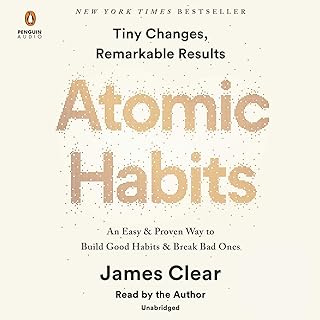
Atomic Habits by James Clear – This book is the gold standard for habit formation. Clear’s four‑step model (cue, craving, response, reward) gives you a system for building good habits and breaking bad ones. It is filled with repeatable exercises like habit stacking and the two‑minute rule. The audio version is free with an Audible trial. Rated 4.8 out of 5.

The Power of Discipline by Raimon Samsó – A practical guide that treats self‑discipline as a trainable skill. It offers 5‑minute exercises to build self‑control, good habits, and persistence. Perfect for anyone who wants concrete drills rather than theory. Priced at $16.83, rated 4.6.

No Excuses! The Power of Self‑Discipline by Brian Tracy – A classic that covers 21 ways to achieve success through self‑discipline. Tracy’s direct, no‑nonsense style fits perfectly with the “treat it like a skill” mindset. Each chapter ends with action exercises. Rated 4.7, available for $8.66.

Discipline Equals Freedom by Jocko Willink – A field manual of mental and physical training. Willink’s raw, tactical approach gives you daily “orders” to follow. The book is built for repetition: you can open any page and find a drill to run. Hardcover $12.93, rated 4.7.

The Mountain Is You by Brianna Wiest – This book helps you transform self‑sabotage into self‑mastery. It is less about rigid drills and more about understanding why you resist discipline. Still, the journaling prompts and exercises make it a powerful companion for training self control. Audio free with trial, rated 4.7.
Comparison Table: Top Resources for Training Self Discipline
| Product | Image | Price | Rating | Key Focus | Buy at Amazon |
|---|---|---|---|---|---|
| Atomic Habits | |
$0.00 (audible) | 4.8 | Habit systems & small changes | Buy Now |
| The Power of Discipline | |
$16.83 | 4.6 | 5‑minute exercises & self‑control | Buy Now |
| No Excuses! | |
$8.66 | 4.7 | 21 strategies & action steps | Buy Now |
| Discipline Equals Freedom | |
$12.93 | 4.7 | Field manual for daily drills | Buy Now |
| The Mountain Is You | |
$0.00 (audible) | 4.7 | Self‑sabotage to self‑mastery | Buy Now |
Why Repetition Is the Secret Ingredient in Training Self Discipline
Most people search for a magic bullet. They want one technique that will make them disciplined forever. But training self discipline is not about finding the one perfect exercise. It is about doing a simple exercise over and over until it becomes second nature.
Repetition changes your brain. Each time you resist a temptation, your prefrontal cortex (the CEO of your brain) strengthens its connection to your emotional centers. Over time, the neural pathway for “pause and choose” gets thicker and faster. That is why Jocko Willink’s Discipline Equals Freedom is built like a field manual: you repeat the same drills daily until they are automatic.
The same principle applies to reading. If you read one page of No Excuses! every morning, you reinforce a disciplined identity. You are not just learning; you are practicing.
Common Questions About Training Self Discipline
What is the fastest way to train self discipline?
The fastest method is to start with the 5‑minute rule and cold showers. Both produce immediate discomfort, which is what your brain needs to adapt. Combine them with a daily commitment statement. Within two weeks, you will see progress.
How long does it take to build self discipline with exercises?
You will notice small improvements in about 10 days. Significant change usually takes 30 to 60 days of consistent practice. After 90 days, the behavior often becomes automatic. But remember: you never “finish” training. You maintain the skill like a professional athlete maintains their body.
Can training self discipline help with procrastination?
Absolutely. The 5‑minute rule directly targets procrastination by lowering the barrier to entry. Habit stacking also helps by attaching a discipline action to something you already do. Over time, your brain associates starting with relief rather than dread.
What is the best book for training self discipline?
It depends on your learning style. If you love frameworks, start with Atomic Habits . If you want raw motivation and drill‑style instructions, choose Discipline Equals Freedom . For a deep psychological understanding, pick up The Mountain Is You .
Do I need to do all seven exercises?
No. Pick one or two that resonate with you and do them for 30 days. Adding more too quickly can overwhelm you. The goal is consistency, not volume.
Your Next Step: Start Today
Training self discipline is not about perfection. It is about showing up, even when you fail. Every missed workout, every skipped cold shower, is data. You adjust, you repeat, you get better.
Choose one exercise from the list. Set a five‑minute timer. Do it. Tomorrow, do it again. After a week, add a second exercise. In a month, you will look back and realize you have built something real. A skill. A habit of self‑control. A life that responds to your commands, not your cravings.
The only person who can train your discipline is you. And you already have everything you need to start.
Frequently Asked Questions
What is training self discipline?
Training self discipline means deliberately practicing small acts of self‑control and delayed gratification, treating them like physical exercises. It is the process of strengthening your ability to choose long‑term rewards over short‑term pleasures through repetition and gradual progression.
Can anyone learn self discipline?
Yes. Self‑discipline is not an inborn trait. Everyone can improve it with consistent practice. The brain is plastic, meaning it rewires itself based on repeated behaviors. Even people with a history of poor self‑control can build mental toughness.
What are the best exercises for training self discipline?
The most effective exercises include the 5‑minute rule, cold showers, the “don’t break the chain” calendar, delayed gratification drills, habit stacking, “no” rehearsals, and daily commitment statements. Start with one and add others as you progress.
How often should I practice?
Daily is ideal. Even five minutes a day produces better results than an hour once a week. Consistency is more important than duration.
Do I need to buy books to train self discipline?
Books are helpful but not necessary. You can start with zero cost using the exercises above. However, high‑quality resources like Atomic Habits, No Excuses!, and The Power of Self‑Discipline provide structure and accountability.
What if I fail to stick with the exercises?
Failure is part of training. Miss a day? Mark it and continue the next day. The key is to never let one slip become a spiral. Review what went wrong, adjust your approach, and start again. Every rep counts.