
You know the feeling. You set a goal, feel motivated for a week, then slowly the spark fades and you’re back on the couch scrolling. The difference between where you are and where you want to be is often just one thing: self discipline. It’s not a personality trait you’re born with. It’s a skill you build, one small decision at a time.
Learning how to have more self discipline is the single most powerful leverage point in your life. It affects your finances, health, relationships, and career. The good news? You don’t need to overhaul your entire personality overnight. You just need seven practical moves that strengthen your follow-through muscle.
We’ve dug through the best resources and real-world research to give you a clear path. Along the way, we’ll point you to some of the most powerful books on the subject—including the legendary  by Brian Tracy, which we’ll reference throughout. Let’s get started.
Table of Contents
1. Make It Painful to Fail (and Fun to Win)
Human beings are wired to avoid pain and seek pleasure. You can use this hardwiring to your advantage instead of fighting it. The fastest way to boost your self discipline is to attach a real consequence to skipping your goal and a genuine reward for following through.
How to do it:
- Set up an accountability partner you report to every day. If you miss your target, you donate $20 to a cause you hate.
- Create a reward system that you only get after completing the task (a coffee, 30 minutes of guilt-free gaming, etc.).
- Use a habit tracker where marking an X feels satisfying—James Clear calls this “the streak” in his book
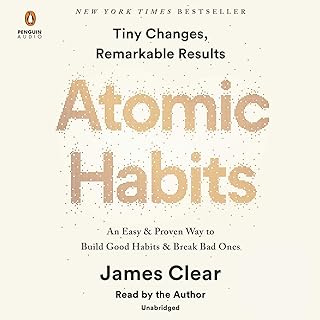 . The visual progress is its own reward.
When the cost of quitting is higher than the cost of doing the work, your brain will choose the work. That’s how you train yourself how to have more self discipline without relying on sheer willpower.
2. Stack Your Habits with Purpose
You already have automatic routines—brushing your teeth, making coffee, checking your phone. Why not attach a new discipline to one of these existing triggers? This is called habit stacking, and it’s a core strategy from Atomic Habits.
The formula: After [current habit], I will [new habit].
- After I pour my morning coffee, I will write one paragraph for my book.
- After I brush my teeth at night, I will do five minutes of stretching.
- After I sit on the couch to watch TV, I will first do 10 push-ups.
By linking the new behavior to something you already do without thinking, you remove the mental friction of deciding. Your brain says, “Time for coffee, which means time to write.” That automation is the secret to lasting self discipline.
Pro tip: Keep the new habit extremely small at first. One paragraph. Five minutes. One push-up. Success breeds more success, and the momentum will pull you forward.
3. Practice the 5-Second Rule
Mel Robbins made this famous, and it works because it hijacks your brain’s hesitation loop. When you feel the urge to procrastinate, you have a five-second window to act before your brain talks you out of it.
The move: The moment you think, “I should start working out,” count down: 5-4-3-2-1 and physically move. Stand up. Open the app. Put on your shoes.
Counting distracts your amygdala, the part that wants to keep you safe and comfortable. By the time you reach one, you’ve already broken through the resistance. This isn't just a gimmick—it’s a neurological hack that hundreds of thousands of people use to build self-discipline. And if you want a field manual full of these tactical moves, grab  by Jocko Willink. It’s pure, no-excuses fuel.
4. Design Your Environment for Victory
Willpower is a limited resource. The most disciplined people don’t rely on willpower—they rely on environments that make the right choice easy and the wrong choice hard.
Questions to ask yourself:
- If you want to eat healthier, is the junk food in your pantry within arm’s reach? Move it to the back or don’t buy it.
- If you want to read more, is your phone on your nightstand? Put it in another room.
- If you want to exercise in the morning, are your gym clothes laid out the night before?
Admiral William H. McRaven wrote about the profound impact of making your bed every morning in his book  . That one small disciplined act triggers a chain of good decisions throughout the day. Your environment is the starting point.
Action step: Spend 10 minutes today redesigning one space in your home to support the habit you want to build. That small investment pays off in daily self-discipline.
5. Use Precommitment and Ulysses Pacts
Sometimes your future self is an idiot. You know this. Tonight you’ll swear you’ll wake up early, but tomorrow morning you’ll hit snooze like a zombie. The solution is to precommit—bind your future self to a course of action now, before the excuses begin.
Examples of precommitment:
- Sign up for a gym class that charges you if you cancel.
- Delete social media apps (or use app blockers) during focused work hours.
- Put your alarm clock across the room so you have to get up physically to turn it off.
In 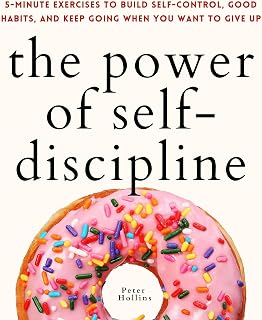 , the author calls this “removing choice” as a self-discipline accelerator. When you eliminate the option to quit, your brain stops having the argument. It just does.
6. Build Mental Toughness with Stoic Practices
Stoicism isn’t about suppressing emotions. It’s about training your mind to endure discomfort and stay focused on what you can control. That’s pure self-discipline fuel.
Daily stoic exercise: every morning, mentally rehearse potential obstacles for the day. “It might rain on my run. The internet might go down during my work session. I might feel tired.” By visualizing them, you strip away their power. Then, when they happen, you’ve already prepared your response.
Ryan Holiday’s book  is a masterclass in this mindset. He shows how figures like Marcus Aurelius and James Stockdale used self-control to achieve extraordinary things. Another heavy hitter is
  , which digs into why you self-sabotage and how to break the cycle.
Practice voluntary discomfort. Take a cold shower once a week. Skip a meal on purpose. Walk in the rain without an umbrella. These small acts amplify your self-discipline because they prove to your brain that you’re stronger than your impulses.
7. Track, Reflect, and Reward
No system works if you don’t measure it. Tracking your progress creates accountability and reveals patterns that would otherwise stay hidden. A simple paper calendar where you mark each day you hit your target is incredibly powerful.
What to track:
- The number of days you followed through
- How you felt before and after the action
- What circumstances led to success or failure
 offers a daily dose of thought-provoking material to keep you engaged for a full year. It makes reflection a habit.
Reflect weekly: Every Sunday, ask yourself two questions:
- What did I do this week that built my self-discipline?
- Where did I let my discipline slip, and what can I do differently next week?
Then reward yourself, not with junk food or mindless scrolling, but with something that aligns with your larger vision—a hike, a good book, time with a friend.
Recommended Reading: Top Self-Discipline Books
We’ve already mentioned several excellent resources. Here’s a comparison table to help you choose the right book for your current stage:
| Book | Price | Rating | Key Focus | Buy at Amazon |
|---|---|---|---|---|
|
$8.66 | 4.7 | Comprehensive self-discipline for success in all areas | Buy Now |
|
$0.00 (audible) | 4.8 | Habit formation and small changes | Buy Now |
|
$12.93 | 4.7 | Hardcore mindset and daily discipline | Buy Now |
|
$0.00 (audible) | 4.7 | Overcoming self-sabotage | Buy Now |
|
$6.95 | 4.7 | Starting small builds massive discipline | Buy Now |
|
$5.88 | 4.7 | Stoic framework for self-control | Buy Now |
All of these books are highly rated by readers who have used them to transform their self-discipline. Start with the one that resonates most with your current struggle.
FAQ: Everything Else You Need to Know About Self Discipline
Why do I have zero self-discipline?
You likely haven’t trained it like a muscle. Self-discipline is built through repeated small acts, not through sudden willpower. Start with one micro-habit and stack from there.
How long does it take to build self-discipline?
Most research suggests it takes 66 to 254 days to form a new habit, but you’ll feel improvements within a week of consistent practice. Focus on daily wins, not the timeline.
Can self-discipline be learned later in life?
Absolutely. The brain is plastic until the day you die. Adults in their 40s and 50s regularly transform their discipline through the very strategies listed in this article.
What’s the difference between self-discipline and willpower?
Willpower is a short-term burst of mental energy. Self-discipline is the system you design to make willpower unnecessary. It’s the difference between white-knuckling and ritualizing.
How to have more self discipline when I’m tired?
Tiredness reduces willpower. That’s when your environment and precommitments matter most. Automate the right choices before fatigue sets in. Keep junk food out of the house. Sleep in your workout clothes. Make quitting harder than doing.
Is self-discipline the same as self-control?
They are closely related but not identical. Self-control is resisting temptation in the moment. Self-discipline is proactively pursuing a long-term goal with consistent action. Both matter, but self-discipline is the broader framework.
Your Next Move
You now know the seven practical moves to strengthen your follow-through. But knowledge without action is just entertainment. Pick one move—just one—and apply it for 24 hours.
- Use the 5-Second Rule when you feel like skipping your workout.
- Stack a tiny habit onto your morning coffee.
- Precommit by telling a friend you’ll send them proof of your work.
The goal is not perfection. The goal is progress. Every time you follow through, you send a signal to your brain that says, “I am the kind of person who keeps their word to themselves.” That identity shift is the foundation of lasting self-discipline.
And if you want a daily companion on this journey, keep on your nightstand. Read a chapter each morning. It’s like having a personal trainer for your will.
You already have everything you need to change. The only thing left is to start.