
Let’s be honest. Motivation is a flaky friend. One day it shows up with fireworks, ready to conquer the world. The next day it ghosts you, leaving you on the couch scrolling through your phone, wondering where all that energy went.
You’re not lazy. You’re not broken. You’re just relying on something that was never designed to last. Motivation is an emotion, not a strategy. If you want to know how to work on self discipline when that initial spark dies out, you need systems. Real, repeatable, boring-but-brilliant systems that don’t care how you feel.
In this guide, we’ll tear down the myths, build a practical framework, and show you exactly how to keep going when every fiber of your being wants to quit. We’ll also look at some of the best books on the subject—because sometimes the right words at the right time can change everything.
Table of Contents
Why Motivation Always Fades (And Why That’s Actually Fine)
Motivation is a chemical reaction, not a character trait. Your brain releases dopamine when you imagine a new goal. It feels amazing. For a day or two, you’re unstoppable.
But dopamine levels drop. That’s biology, not a moral failure. The spark fades because your brain stops seeing the goal as a novel, exciting thing. It becomes familiar, and familiar doesn’t trigger the same rush.
So if you’ve been chasing motivation like a sugar high, you’ve been setting yourself up for failure. The real answer to how to work on self discipline is to stop waiting for a feeling and start building routines that run on autopilot.
Think of self-discipline like a muscle. Motivation is the cheerleader on the sideline. The muscle does the work. And muscles grow through consistent, sometimes uncomfortable, repetition.
The Core Problem: You’re Trying to “Power Through” Without a System
Most people approach self-discipline like a sprint. They wake up one Monday morning, declare war on their bad habits, and try to white-knuckle their way through the day.
That works for about a week. Then life happens. You get tired. You get busy. You get stressed. And your willpower reserves are empty.
Willpower is a finite resource. Psychologist Roy Baumeister famously showed that exercising self-control in one area depletes your ability to do it in another. So if you spend all morning fighting the urge to check social media, you’ll have nothing left for the afternoon workout.
The solution isn’t more willpower. It’s less reliance on willpower. It’s building a system that makes the right choice the easy choice.
Let’s dive into the five pillars of a system that sticks.
Pillar 1: Design Your Environment for Success
Your environment is the silent architect of your behavior. Every object in your field of vision is a subtle cue for action.
If your phone is on your desk, your brain will itch to check it. If the cookies are on the counter, your hand will reach for them. This isn’t weakness. It’s design.
How to work on self discipline starts with changing what surrounds you.
- Remove temptation. Keep your phone in another room while you work. Don’t buy junk food. Make bad habits physically inconvenient.
- Add friction to things you want to avoid. Uninstall social media apps. Block distracting websites. Put your TV remote in a drawer.
- Reduce friction for good habits. Lay out your workout clothes the night before. Keep a water bottle on your desk. Prep healthy meals in advance.
Your environment should do the heavy lifting so your willpower doesn’t have to.
Pillar 2: Use the “Two-Minute Rule” to Stop Procrastination
The hardest part of any task is the beginning. That’s because your brain overestimates the effort required. It sees “write a 2000-word article” and screams danger.
The fix is the two-minute rule from James Clear’s 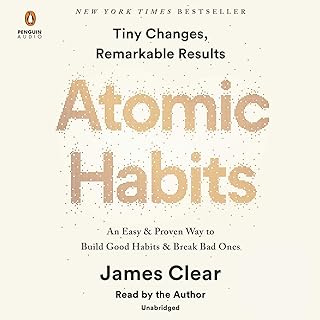 Atomic Habits (rated 4.8 stars, available for $0.00 on Audible). The rule is simple: any habit can be started in less than two minutes.
- Want to read more? Read one page.
- Want to meditate? Sit and take three breaths.
- Want to exercise? Put on your shoes.
Once you start, momentum takes over. The hardest part is the first two minutes. After that, continuing feels natural.
Pro tip: Combine this with the “eat the frog” technique. Do your most dreaded task first thing in the morning, when your willpower reserves are highest. Even just starting for two minutes will make a huge difference.
Pillar 3: Build Accountability Into Your Day
Accountability is the secret weapon of people who’ve mastered how to work on self discipline. When you know someone will ask about your progress, you’re far more likely to follow through.
You don’t need a coach or a partner if you don’t have one. You can create accountability for yourself.
- Use a habit tracker. Marking a check on a calendar provides a small dopamine hit and creates a visual chain you won’t want to break.
- Tell a friend what you plan to do. Send them a screenshot of your completed workout. Ask them to call you out if you slack.
- Join an online community. Facebook groups, Reddit threads, or Discord servers focused on self-discipline can provide the push you need.
For a deeper dive into using mental toughness to stay on track, check out  The Power of Discipline by R.K. (rated 4.6). It’s packed with actionable strategies for building self-control.
Pillar 4: Pre-Commit to Your Decisions
One of the most effective ways to work on self discipline is to make decisions ahead of time, when you’re not in the heat of temptation.
This is called pre-commitment. You decide what you will do, when you will do it, and what will happen if you don’t.
For example:
- Schedule your workouts on your calendar. Treat them like important meetings.
- Set an alarm for when you will stop working and start winding down.
- Decide in advance that you will not check your phone until after lunch.
When the moment of temptation arrives, your brain has already made the choice. It’s not a debate. It’s a done deal.
This technique is central to Ryan Holiday’s  Discipline Is Destiny: The Power of Self-Control (rated 4.7, $5.88). Holiday draws from Stoic philosophy to show how pre-commitment and self-mastery lead to freedom.
Pillar 5: Forgive Yourself and Get Back On Track
Perfectionism is the enemy of self-discipline. One slip-up can trigger the “what-the-hell effect.” You miss one workout, feel guilty, and then binge-eat a pizza because you’ve already failed.
The truth is, failure is part of the process. The key is to get back on track immediately. Not tomorrow. Not next week. Right now.
- Forgive yourself. Say out loud: “I made a mistake. That doesn’t define me. I’ll do better next time.”
- Return to your system. Don’t try to make up for lost time. Just do the next right action.
- Review what went wrong. Was the environment set up for failure? Was the task too big? Adjust your system, not your character.
This compassionate but firm approach is explored beautifully in  The Mountain Is You by Brianna Wiest (rated 4.7, $0.00 on Audible). It’s a guide to transforming self-sabotage into self-mastery.
Why You Need a Book That Reinforces These Principles
Reading about self-discipline is a form of pre-commitment. Every time you pick up a book like  No Excuses!: The Power of Self-Discipline by Brian Tracy (rated 4.7, $8.66), you’re programming your brain with success patterns.
Tracy’s book is a classic. It covers everything from time management to goal-setting to overcoming fear. It’s direct, no-nonsense, and exactly what you need when motivation is nowhere to be found.
Another fantastic resource is  365 Days With Self-Discipline by Martin Meadows (rated 4.5, $0.00 on Audible). This daily reader gives you a short, powerful thought each day to keep you focused.
How to Rethink Your Relationship with Self-Control
Many people think self-discipline means being harsh, rigid, and punishing. That’s a recipe for burnout.
Real self-discipline is alignment. It’s doing what you said you would do because you value the long-term result more than the short-term comfort.
It’s not about fighting yourself. It’s about designing a life where the fight isn’t necessary.
If you struggle with digital distractions, 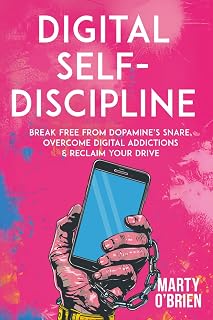 Digital Self-Discipline (rated 4.8, $12.99) is a must-read. It provides practical steps to break free from dopamine loops and reclaim your focus.
Action Plan: 7 Days to a Sticking System
Let’s make this practical. Here’s a one-week plan to work on self discipline when motivation is low.
Day 1: Audit your environment. Walk through your home and note every distraction. Remove or hide them.
Day 2: Identify your most important habit. Choose one habit that will make the biggest difference. Commit to doing it for two minutes.
Day 3: Set up a habit tracker. Use a calendar, app, or notebook. Make the chain visible.
Day 4: Pre-commit to your schedule. Write down exactly when and where you will perform your chosen habit tomorrow.
Day 5: Do it even if you don’t feel like it. Just start. Two minutes. That’s all.
Day 6: Find an accountability partner. Text a friend and tell them your goal for tomorrow.
Day 7: Reflect and adjust. What worked? What didn’t? Tweak your system and repeat.
Comparison Table: Best Books on Self-Discipline
| Product | Image | Price | Rating | Buy at Amazon |
|---|---|---|---|---|
| No Excuses!: The Power of Self-Discipline | |
$8.66 | 4.7 | Buy at Amazon |
| Atomic Habits | |
$0.00 | 4.8 | Buy at Amazon |
| Make Your Bed |  |
$6.95 | 4.7 | Buy at Amazon |
| Discipline Is Destiny |  |
$5.88 | 4.7 | Buy at Amazon |
| The Science of Self-Discipline |  |
$0.00 | 4.5 | Buy at Amazon |
| The Power of Discipline | |
$16.83 | 4.6 | Buy at Amazon |
| The Mountain Is You |  |
$0.00 | 4.7 | Buy at Amazon |
| Digital Self-Discipline |  |
$12.99 | 4.8 | Buy at Amazon |
FAQ: How to Work on Self Discipline (Common Questions)
Why does my self-discipline disappear after a few weeks?
It doesn’t disappear. You just depleted your willpower without rebuilding it. Self-discipline is like a battery: it drains throughout the day. You need systems (environment, habits, accountability) to recharge or bypass the drain.
Is self-discipline the same as willpower?
No. Willpower is the conscious effort to resist temptation. Self-discipline is the long-term practice of aligning your actions with your goals, often through routines and environmental design. Willpower fades; self-discipline can be built.
How long does it take to build self-discipline?
There’s no magic number, but most people see real improvement within 30 days of consistent practice. The key is starting small and never missing twice. The book Self Discipline: 30 Days to Self Discipline (rated 4.3, $0.00 on Audible) is designed exactly for this.
What if I keep failing despite using these systems?
Failure is data, not defeat. Look closely at what went wrong. Was your environment triggering you? Was the goal too ambitious? Adjust one variable at a time. The  Stoic Self-Discipline (rated 4.7, $19.99) provides 33 ancient strategies for exactly these moments.
Can self-discipline help with procrastination?
Absolutely. Procrastination is often a symptom of lacking a system, not laziness. When you have a pre-committed schedule and a two-minute rule, the barrier to starting becomes almost zero.
Final Thought: Discipline Is the Doorway to Freedom
Here’s the paradox most people miss. They think self-discipline is about restriction. But people who master it—from elite athletes to top executives—know it’s the opposite. Discipline gives you freedom.
Freedom from the guilt of procrastination. Freedom from the chaos of a scattered life. Freedom to pursue what truly matters without being derailed by every impulse.
So the next time you ask how to work on self discipline, remember: you’re not trying to become a robot. You’re trying to become the person who keeps their promises to themselves. And that person builds systems, not hopes.
Start today. Pick one tiny change. Make it automatic. Then watch your life transform one system at a time.
If you want a daily companion to keep you on track, grab  365 Days With Self-Discipline—a daily dose of wisdom to keep your fire burning even when motivation fades.
You’ve got this.