
Meal prepping is one of the most effective ways to save money on food, but only if you understand your cost per serving. Without this number, bulk shopping can actually increase waste and spending. This article gives you a repeatable framework to calculate and lower your meal prep cost per serving while keeping your pantry stocked and your budget intact.
Whether you're a seasoned meal prepper or just starting, the key is to combine smart shopping with tracking tools that hold you accountable. For example, using a Wooden Money Saving Box can turn your weekly meal prep savings into a visible challenge. Pair that with a 100 Envelopes Money Saving Challenge binder, and you’ll watch your grocery savings pile up fast.
Table of Contents
The True Cost of Meal Prep – Why Per Serving Matters
A common mistake is comparing the total grocery bill before and after meal prepping. But total cost doesn’t tell you if you’re actually saving per meal. The real metric is cost per serving.
- A $10 bag of quinoa that lasts 20 servings costs $0.50 per serving.
- A $3 box of processed pasta that lasts 4 servings costs $0.75 per serving.
By focusing on per‑serving cost, you can identify which ingredients give you the most bang for your buck. This is where high‑value bulk strategies shine – think rice, oats, frozen vegetables, and legumes.
The Simple Framework to Lower Grocery Spending
Use this 4‑step framework every time you plan a meal prep week.
1. Plan Around Per‑Serving Budgets
Set a target cost per serving – for example, $1.50 per meal. Then list every ingredient with its serving cost.
| Ingredient | Package Price | Servings | Cost per Serving |
|---|---|---|---|
| Brown rice (5 lb) | $4.00 | 40 | $0.10 |
| Canned black beans | $1.20 | 3.5 | $0.34 |
| Frozen spinach | $2.50 | 10 | $0.25 |
Bold tip: Always write your per‑serving numbers down. This habit alone can cut your grocery bill by 20%.
2. Buy in Bulk – But Only What You’ll Use
Bulk shopping saves money only if you consume everything before it spoils. Focus on non‑perishable staples:
- Oats, lentils, rice, pasta
- Spices (buy from bulk bins)
- Canned tomatoes, coconut milk
- Frozen fruits and vegetables
For perishables, buy in weekly portions. Freeze extras like chopped onions or grated cheese.
3. Cook Base Recipes That Freeze Well
Instead of cooking 7 different meals, make 2–3 base recipes that you can portion and freeze. Examples:
- Chili (lentil or beef) – $1.20/serving
- Stir‑fry with rice – $1.50/serving
- Overnight oats (bulk jar) – $0.80/serving
Each recipe should use overlapping ingredients to reduce waste. For instance, buy a big bag of carrots and use them in soup, stir‑fry, and as snacks.
4. Track Your Savings Weekly
Set aside the money you saved from meal prepping compared to eating out or buying convenience foods. Use a savings tracker to stay motivated. The 100 Envelopes Money Saving Challenge binder (just $8.99, rated 4.7 stars) is perfect for this. Drop in the difference each week – for example, if your meal prep saved $20, put that cash in the next envelope.
Tools to Amplify Your Savings
Meal prep isn’t just about food – it’s about building a system that keeps you on track. Here are three affordable tools that reinforce the habit.
Wooden Money Saving Box – Visual Motivation

This reusable cash vault ($16.99, rating 4.6) lets you track savings goals up to $10,000. After each meal prep day, deposit the amount you saved. The dry‑erase pen and tracker make it easy to adjust your goals.
100 Envelopes Money Saving Challenge Binder – Step by Step

At just $8.99 with a 4.7 rating, this binder is a steal. It comes with 100 pre‑numbered envelopes and a challenge guide. You can label each envelope with a meal prep saving goal – for example, envelope #1 = $1 saved, envelope #50 = $50 saved. By the end, you’ll have $5,050.
Budget Binder with Zipper Envelopes – Track Everything
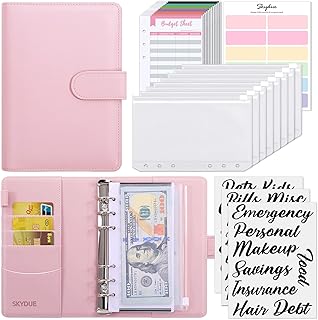
For $8.98 (4.7 stars), this binder includes cash envelopes and expense sheets. Use it to track your grocery budget per week and compare it against your meal prep cost per serving.
Real‑World Example: $1.20 Per Serving
Let’s run through a sample week using the framework. You prepare 14 lunches and dinners.
Ingredients bought:
- 5 lb brown rice – $4 (40 servings → $0.10/serving)
- 4 cans black beans – $4.80 (14 servings → $0.34/serving)
- 2 lb frozen mixed vegetables – $3 (14 servings → $0.21/serving)
- 1 jar salsa – $2.50 (7 servings → $0.36/serving)
- Spices (cumin, chili powder) – $0.50 per batch
Total for 14 servings: $4 + $4.80 + $3 + $2.50 + $0.50 = $14.80
Cost per serving: $1.06 – far below the $8 you’d pay for a fast‑food lunch.
Weekly savings: 14 meals × $7 saved (vs. $8 takeout) = $98 saved per week. Drop that into your savings challenge binder.
FAQ
How do I calculate cost per serving for homemade meals?
Divide the total recipe cost by the number of servings. Include every ingredient, even spices, amortized. Use a simple spreadsheet or a budgeting app.
Can I really save $5,000 a year with meal prep?
Yes. If you save $5 per meal and eat 10 prepped meals per week, that’s $50/week or $2,600/year. The 100 Envelopes Challenge helps you reach $5,050 in savings by combining meal prep savings with other cutbacks.
What if I don’t have time to prep every week?
Batch cook twice a month. Freeze individual portions. Choose recipes that take 30 minutes for 6 servings, like sheet pan chicken with vegetables.
Are there any tools that help me stick to a grocery budget?
Absolutely. The Wooden Money Saving Box and the SKYDUE Budget Binder are top‑rated, low‑cost options that make saving tangible.
Start Lowering Your Per‑Serving Cost Today
Meal prep cost per serving is the single most powerful number to track if you want to lower grocery spending. Combine it with a bulk‑first mindset and a simple savings challenge like the Wooden Money Saving Box or the 100 Envelopes Money Saving Challenge, and you’ll see your bank account grow.
Start this week: plan three meals, calculate their per‑serving cost, and deposit the difference from eating out into your savings challenge. Your future self – and your wallet – will thank you.