
Every time you toss an empty jar, a worn T‑shirt, or a broken wooden pallet, you’re throwing away potential savings. Upcycling—transforming waste into something functional—is one of the simplest ways to slash household expenses while reducing your environmental footprint. Instead of buying new storage, decor, or tools, you can create them from items you already have. This is the heart of the DIY, Repair & Upcycling philosophy: spend less by doing more yourself.
In this guide, you’ll discover practical upcycling ideas that turn common household “trash” into valuable items. You’ll also learn how to track your savings using tools like the Wooden Money Saving Box to stay motivated and see your progress. Let’s turn waste into wealth—one creative project at a time.
Table of Contents
Why Upcycling Saves You Real Money
Upcycling cuts costs in three ways:
- You avoid buying new products for storage, organization, or decor.
- You reduce waste, saving on trash bags and disposal fees.
- You create custom items that match your needs perfectly—no retail markup.
For example, a simple glass jar can become a pantry organizer, a soap dispenser, or a gift container. A wooden pallet can become a coffee table, a garden planter, or a wall shelf. The materials are free—only your time and a little creativity are needed.
Five Transformative Upcycling Projects for Your Home
1. Glass Jars → Storage & Dispensers
Mason jars, pasta sauce jars, and pickle jars are versatile upcycling gold.
- Pantry Storage: Clean jars and use them for dry goods (rice, beans, spices). Add labels for a uniform look. Save $5–$15 versus buying new glass containers.
- Soap Dispenser: Attach a pump from an old soap bottle to a jar. Instant rustic bathroom decor.
- Herb Garden: Fill jars with soil and seeds. Place on a windowsill for fresh herbs—save $3–$5 per plant vs. store‑bought.
Pro Tip: Use a drill with a glass bit to add holes for twine or hanging hooks.
2. Old Clothes → Reusable Cleaning Rags & Bags
Worn‑out cotton shirts, towels, and jeans don’t belong in the landfill.
- Cleaning Rags: Cut fabric into squares. Save $10–$20 on paper towels and disposable wipes.
- Reusable Tote Bags: Sew the bottom of a T‑shirt closed and cut the sleeves to create a grocery bag. No sewing machine? Use fabric glue.
- Denim Organizer: Turn an old pair of jeans into a hanging pocket organizer for tools or craft supplies.
Cost Savings: A set of quality microfiber cloths costs around $15–$25. Making your own rags from old clothes costs $0.
3. Wooden Pallets → Furniture & Planters
Pallets are often free (check hardware stores, construction sites, or Craigslist). They’re sturdy and perfect for upcycling.
- Pallet Coffee Table: Sand and stack two pallets, add casters, and top with a glass sheet. Save $100–$300 vs. a store‑bought table.
- Vertical Garden: Lean a pallet against a wall, staple landscape fabric, fill with soil, and plant succulents or herbs.
- Shoe Rack: Remove a few slats to create slots. Paint or stain to match your decor.
Important: Use only heat‑treated pallets (stamped “HT”); avoid chemically treated ones for indoor projects.
4. Wine Corks → Trivets & Wall Art
Don’t throw away natural corks. They are heat‑resistant and easy to work with.
- Trivet: Glue corks together side‑by‑side in a square or circle. Save $10–$20 on a trivet that looks designer.
- Bulletin Board: Arrange corks in a frame to make a mini memo board for your kitchen or office.
- Drawer Knobs: Attach a screw‑eye to each cork, then screw into a dresser or cabinet.
Estimated Savings: A hand‑made cork trivet costs pennies compared to $15+ retail versions.
5. Plastic Bottles & Containers → Garden Tools
Empty detergent bottles, milk jugs, and soda bottles make excellent gardening aids.
- Watering Can: Poke holes in the cap of a detergent bottle. Save $8–$12 vs. a store‑brand watering can.
- Seed Starters: Cut soda bottles in half, fill the bottom with soil, and place the top as a mini greenhouse.
- Drip Irrigation: Poke small holes in a milk jug, bury it next to a plant, and fill with water for slow release.
Bonus: Use larger containers to make bird feeders or hanging planters.
Track Your Upcycling Savings with a Physical Challenge Box
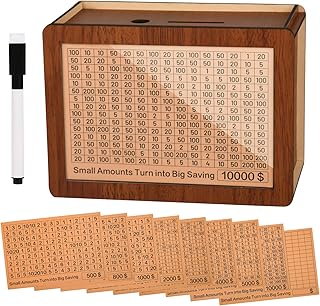
Turning waste into useful items saves money, but it’s easy to forget just how much you’ve kept in your wallet. One powerful way to stay motivated is to put your savings into a dedicated money saving box. Every time you complete an upcycling project, deposit the amount you would have spent buying the item.
The Wooden Money Saving Box (Target $10,000 Savings Challenge) is perfect for this. It features a reusable design with a progress tracker, dry‑erase pen, and rubber bands to secure your cash. Priced at $16.99 (Rating 4.6), it lets you set a goal (say, $1,000 or $5,000) and watch your upcycling savings grow.

How to use it with upcycling:
- After each project, calculate the retail value of the item you created.
- Place that amount of cash into your savings box.
- Mark your progress on the tracker. Seeing the numbers rise reinforces your savings habit.
For a simpler approach, try the 100 Envelopes Money Saving Challenge Binder. At $8.99 (Rating 4.7), it guides you to save $5,050 over time—perfect for a larger upcycling‑funded goal like a new tool or home improvement.

How Much Can You Save? A Cost‑Comparison Table
| Upcycling Project | Cost of Materials (If Any) | Retail Equivalent | Savings per Project |
|---|---|---|---|
| Jar pantry storage | $0 (free jar) | $10–$20 for new containers | $10–$20 |
| Old T‑shirt rags | $0 | $15 for microfiber cloths | $15 |
| Pallet coffee table | $5 for sandpaper & casters | $150–$300 | $145–$295 |
| Cork trivet | $2 for glue | $15 | $13 |
| Plastic bottle watering can | $0 | $10 | $10 |
Total potential savings from five projects: $193–$353 with zero retail investment.
Pair Upcycling with a Savings Challenge for Maximum Impact
The best way to ensure you actually save money is to combine your upcycling efforts with a structured savings system. The 10000 Kakeibo Wooden Money Saving Challenge Box (Priced $7.99, Rating 4.4) is a traditional Japanese-style savings box that supports 10 different target amounts. Use it to save the exact money you kept from not buying new items.
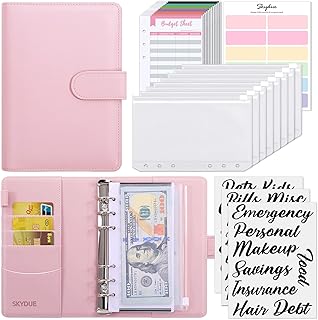
Similarly, the SKYDUE Budget Binder ($8.98, Rating 4.7) includes zipper envelopes and expense sheets—ideal for organizing your upcycling project costs and tracking where the savings go.
By combining creative upcycling with a visual savings tracker, you turn a one‑time “waste” item into a lasting financial win.
Frequently Asked Questions About Upcycling for Savings
Q: Is upcycling really free?
A: Often yes—especially for glass jars, plastic bottles, and old clothes. For larger projects like pallet furniture, you may need to buy sandpaper, casters, or paint, but the total cost is far less than buying a new equivalent.
Q: How do I know if an item is safe to upcycle?
A: For food containers, wash thoroughly; avoid using plastic containers that held chemicals for food storage. For wood pallets, look for “HT” (heat‑treated) stamps and avoid “MB” (methyl bromide) pallets.
Q: Can upcycling really replace buying household items?
A: Absolutely. With a little creativity, you can replace storage containers, cleaning tools, decor, garden supplies, and even small furniture. Start with one project, and you’ll see how quickly the savings add up.
Q: What if I don’t have time for complex projects?
A: Start small. Turn a cereal box into a drawer organizer, or use a wine cork as a keychain float. Even a 5‑minute project saves a dollar or two. Consistency is key.
Q: How do I track my savings from upcycling?
A: Use a physical money box like the Wooden Money Saving Box or the 100 Envelope Challenge Binder. Deposit the amount you would have spent, and watch your savings grow.
Your Next Step: Choose One Trash Item and Transform It
Upcycling isn’t just a hobby—it’s a money‑saving strategy that lets you live better for less. Start with a single glass jar or an old T‑shirt. Turn it into something useful, then put the money you saved into a Wooden Money Saving Box or a 100 Envelope Challenge Binder. Over a year, those small wins add up to hundreds of dollars—all from items you once called “waste.”
Ready to save more? Combine these upcycling ideas with a budget binder like the SKYDUE Budget Binder ($8.98, Rating 4.7) to track every dollar you keep. Your wallet—and the planet—will thank you.