
Have you ever set a goal, felt excited for a week, then watched yourself slowly drift back to the couch? You are not lazy. You are not broken. You are simply missing one thing: the power of self discipline. The difference between the life you want and the life you settle for is almost always a handful of moments where you choose action over comfort. And the good news is that self discipline is not a fixed trait. It is a skill you can build, one habit at a time.
The power of self discipline is the engine behind every major achievement. It is what turns the person who dreams of writing a book into the author who finishes a manuscript. It is what separates the entrepreneur who launches from the one who keeps planning. But most people struggle because they try to rely on willpower alone. Willpower is a finite resource. What you need instead is a habit system that makes disciplined choices automatic. This article will show you exactly how to build that system, stop making excuses, and start building real momentum toward your goals.
Table of Contents
What Is the Power of Self Discipline Really?
Self discipline is the ability to control your impulses, emotions, and behaviors in the service of a larger goal. But it is more than just saying no to distractions. The power of self discipline lies in its ability to free you. When you have discipline, you do not have to negotiate with yourself every morning about whether to work out or check your phone. The decision is already made.
Think of self discipline as a muscle. If you never use it, it atrophies. If you train it daily, it grows stronger. Every small act of discipline, from making your bed to sticking to a work schedule, strengthens your self control. Over time, these small acts compound into a life of purpose and achievement.
Brian Tracy, in his classic book No Excuses!: The Power of Self-Discipline, argues that self discipline is the master key to success. He writes that without it, no amount of talent or intelligence will get you where you want to go. And he is right. But the secret is that you do not need to be perfect. You just need a system that works when motivation fades.
The Excuse Trap: Why We Sabotage Ourselves
We all know the voice of the excuse maker. It sounds reasonable. It says, “I’ll start tomorrow,” or “I’m too tired,” or “One cookie won’t hurt.” The power of self discipline begins when you stop listening to that voice and start acting anyway.
Excuses are a form of self sabotage. They protect you from the discomfort of effort and the fear of failure. But every time you give in to an excuse, you reinforce a pattern that keeps you stuck. The good news is that you can break that pattern by creating an environment where good habits are easier than the alternatives.
Brianna Wiest, author of The Mountain Is You: Transforming Self-Sabotage into Self-Mastery, explains that self sabotage often stems from a subconscious belief that you do not deserve success. Recognizing those beliefs is the first step to replacing them with self discipline. When you catch yourself making an excuse, pause. Ask: “Is this true, or is this fear talking?” Nine times out of ten, it is fear.
The Science of Self Discipline and Habit Formation
How Willpower Works
Willpower is a limited resource. Psychologists call it ego depletion. When you resist a temptation, you use up mental energy. That is why after a long day of decision making, you are more likely to reach for junk food or skip the gym. But here is the trick: habits bypass willpower. When a behavior becomes automatic, you no longer have to choose it. It just happens.
The Habit Loop
James Clear, in his bestseller Atomic Habits: An Easy & Proven Way to Build Good Habits & Break Bad Ones, breaks down the habit loop: cue, craving, response, reward. To build a habit that sticks, you need to make it obvious (cue), attractive (craving), easy (response), and satisfying (reward). The power of self discipline comes from designing your environment so that the right habits are the path of least resistance.
The Role of Mental Toughness
Mental toughness is the ability to persist even when things get hard. It is not about ignoring pain; it is about moving forward despite it. In his book The Science of Self-Discipline: The Willpower, Mental Toughness, and Self-Control to Resist Temptation and Achieve Your Goals, author Peter Hollins explains that self discipline is a trainable skill rooted in your biology. By practicing small acts of defiance against your comfort zone, you expand your capacity for action.
How to Build a Habit System That Sticks
You do not need to become a monk. You need a system that works for your real life. Here is a step by step approach.
Step 1: Define Your Non Negotiables
Decide what matters most. Pick one or two habits that will have the biggest impact. Trying to change everything at once is a recipe for burnout. Start small. If you want to exercise more, commit to five minutes a day. If you want to write a book, write 100 words a day. The power of self discipline grows when you honor small promises.
Step 2: Stack Your Habits
Use an existing routine as a trigger. After you brush your teeth, meditate for one minute. After you sit down with coffee, write your top three priorities. This is called habit stacking, and it makes the new behavior automatic.
Step 3: Design Your Environment
Make good habits easy and bad habits hard. Want to eat healthier? Put fruit on the counter and junk food in the back of the cupboard. Want to read more? Keep a book on your nightstand and your phone in another room. Environment design is one of the most underrated tools for self discipline.
Step 4: Track Your Progress
What gets measured gets done. Use a checklist, an app, or a calendar where you mark each day you follow through. The visual evidence of consistency builds momentum and reinforces your identity as a disciplined person. Admiral William H. McRaven, in his book Make Your Bed: Little Things That Can Change Your Life…And Maybe the World, emphasizes that starting the day by making your bed gives you a small win that sets the tone for accomplishment. That small act reinforces your self discipline.
Step 5: Prepare for Slips
Perfection is not the goal. You will miss a day. The key is to get right back on track. Do not let one failure snowball into a week of giving up. Forgive yourself, learn what went wrong, and adjust your system. The power of self discipline is not about never failing; it is about choosing to keep going.
Top Books to Master Self Discipline
To deepen your understanding and give you daily fuel, here are some of the best resources available. These books are not just theory; they contain practical frameworks that thousands of readers have used to transform their lives.
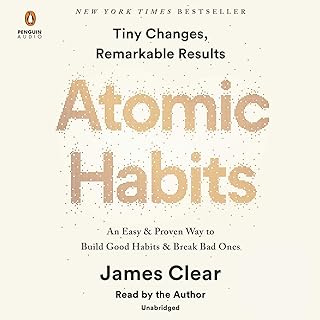
Atomic Habits by James Clear is the gold standard for habit change. With over 148,000 ratings and a 4.8 star rating, this book shows you how tiny changes lead to remarkable results. It is a must read if you want to build a system that runs on autopilot.

No Excuses!: The Power of Self-Discipline by Brian Tracy is a straight talking manual. Tracy covers personal discipline, business discipline, and financial discipline. At $8.66, it is one of the most affordable investments you can make in yourself.

Discipline Is Destiny: The Power of Self-Control by Ryan Holiday is part of his Stoic Virtues Series. Holiday uses historical figures to show how self control leads to a life of purpose and freedom. It is a powerful read for anyone who wants to link discipline to their deeper why.

The Mountain Is You by Brianna Wiest is ideal if you struggle with self sabotage. It helps you uncover the emotional patterns that hold you back and gives you strategies to climb past them. This book is like having a compassionate but tough coach in your corner.

The Power of Discipline: How to Use Self Control and Mental Toughness to Achieve Your Goals is a focused guide on combining discipline with practical mental toughness exercises. It has a 4.6 rating and over 11,000 reviews.
Comparison Table: Best Self Discipline Books
| Product | Price | Rating | Key Focus | Buy at Amazon |
|---|---|---|---|---|
|
$0.00 (Audible included) | 4.8 | Habit formation, small changes | Buy Now |
|
$8.66 | 4.7 | Broad discipline (personal, business, financial) | Buy Now |
|
$5.88 | 4.7 | Stoic philosophy, self control | Buy Now |
|
$0.00 (Audible included) | 4.7 | Self sabotage, emotional patterns | Buy Now |
|
$16.83 | 4.6 | Mental toughness, practical exercises | Buy Now |
Practical Exercises for Daily Momentum
Reading about self discipline is not enough. You need to practice it. Here are three exercises you can start today.
The 5 Minute Rule
When you want to skip a task, commit to doing it for just five minutes. After five minutes, you are allowed to stop. Almost always, you will keep going. The hardest part is starting, and this trick bypasses the resistance.
The Two List Strategy
At the start of each week, write down two lists: what you will do, and what you will NOT do. For example, “I will exercise four times this week” and “I will not scroll social media before 10 AM.” The power of self discipline is as much about saying no as it is about saying yes.
The Evening Review
Spend two minutes before bed asking: “What did I do today that moved me toward my goals? What could I have done better?” Do not judge yourself harshly. Just note it. This small habit keeps you accountable and builds self awareness.
Overcoming Common Challenges
Digital Distractions
We live in an age of constant interruption. Every buzz and notification is designed to steal your attention. The solution is not willpower; it is removal. Turn off notifications for everything except calls and texts. Use website blockers during deep work. Set a specific time for checking email and social media.
In his book Digital Self-Discipline: Break Free from Dopamine’s Snare, Overcome Digital Addictions & Reclaim Your Drive, author Nathan D. Miller provides a blueprint for breaking free from screen addiction. Rated 4.8, this book helps you understand the dopamine trap and how to escape it. You can find it for $12.99.
Procrastination
Procrastination is not a time management problem. It is an emotion management problem. You procrastinate because the task feels uncomfortable. The fix is to focus on the next small step. Instead of thinking “I have to write a chapter,” think “I have to open the document and write one sentence.” Once you start, momentum carries you.
Lack of Consistency
Consistency is built by making the behavior so easy you can do it even on your worst days. If you struggle to work out, do one pushup. If you struggle to meditate, breathe deeply for ten seconds. The power of self discipline is not about intensity; it is about frequency.
The Power of Self Discipline Is Your Superpower
At the end of the day, self discipline is a choice you make moment by moment. It is the choice to honor your future self over your present craving. It is the choice to do the hard work now so that your life becomes easier later. And the beautiful truth is that once you experience the results, you will never want to go back.
The books listed above are tools. But the real work is yours. Start today. Walk away from the excuse maker and into the life you deserve. The power of self discipline is already inside you. All you have to do is activate it.
Frequently Asked Questions About the Power of Self Discipline
What is the difference between self discipline and willpower?
Willpower is the temporary strength you use to resist a temptation in the moment. Self discipline is a lasting trait built through consistent habits. Think of willpower as a sprint and self discipline as a marathon. The power of self discipline lasts because it becomes part of your identity.
Can self discipline be learned?
Absolutely. Self discipline is like a muscle. You can strengthen it with practice. Start with tiny, manageable tasks and gradually increase the difficulty. Every time you follow through, you build neural pathways that make disciplined behavior easier.
How long does it take to build a new habit?
Research by James Clear suggests that habit formation can take anywhere from 18 to 254 days, with an average of 66 days. The key is consistency, not perfection. Focus on showing up every day, even if the effort is small.
What should I do after I break a streak?
Forgive yourself immediately. A single slip does not erase your progress. The danger is not the slip; it is the guilt that leads to a complete collapse. Get back on track the next day. Remind yourself why you started. The power of self discipline is measured by your ability to recover.
Are there any quick wins to boost self discipline today?
Yes. Start by making your bed. It is a small win that sets a productive tone for the day. Then, eliminate one distraction: turn off your phone notifications. Finally, commit to doing your hardest task first thing in the morning when your willpower is high.