
If you've ever started a new routine with fire in your belly only to fizzle out by day five, you know that motivation alone won't cut it. Real change demands something more reliable, something you can count on when your initial enthusiasm evaporates. That something is self-discipline.
The power of self discipline Peter Hollins explores in this book isn't about punishment or rigid control. It's about building a life where your actions align with your goals without constant internal battles. Hollins breaks down why some people seem to breeze through difficult tasks while others struggle, and more importantly, how you can become the first type of person.
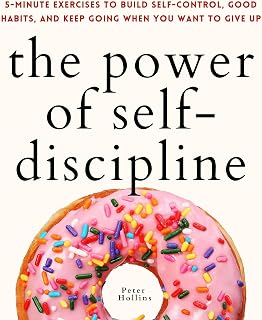
This deep dive will unpack the core lessons from Peter Hollins on consistency, habit formation, and mindset shifts. We'll look at the science behind the strategies, real-world applications, and additional books that complement these ideas.
Table of Contents
What Is "The Power of Self Discipline" by Peter Hollins?
Peter Hollins is a bestselling author known for distilling psychological research into actionable advice. His book The Power of Self-Discipline: 5-Minute Exercises to Build Self-Control, Good Habits, and Keep Going When You Want to Give Up is a practical guide that doesn't waste time on theory you can't use.
The core premise is simple: self-discipline is a trainable skill, not a fixed trait. You can strengthen it like a muscle through specific exercises and mindset adjustments. Hollins focuses on three pillars that support lasting self-discipline:
- Consistency – showing up even when you don't feel like it
- Habits – automating good decisions so willpower isn't always required
- Mindset – rewiring your internal narrative to support discipline instead of resistance
The book offers 5-minute exercises designed to fit into even the busiest schedule. That's the genius of it – it meets you where you are and builds up from there.
The Pillar of Consistency: Why Small Actions Beat Grand Gestures
Most people overestimate what they can do in a week and underestimate what they can do in a year. Consistency is the secret sauce that turns ordinary efforts into extraordinary results.
Hollins argues that the power of self discipline Peter Hollins teaches is largely about mastering the art of showing up. Not with fanfare, not with perfect form, but simply showing up.
The Compound Effect of Daily Discipline
Think about brushing your teeth. You don't expect to see immediate results from a single brushing, but over a lifetime, that tiny habit saves you thousands in dental bills and pain. Self-discipline works the same way.
When you commit to a 5-minute exercise every day, you're not just building a skill. You're building an identity as someone who follows through. That identity then fuels more disciplined actions.
How to Build Consistency Without Burnout
Hollins recommends starting absurdly small. Five minutes of focused work, one push-up, or reading one page. The goal isn't the output – it's the act of showing up. Once the habit is locked in, you can gradually increase the intensity.
Here's a practical approach:
- Pick a tiny action that takes less than two minutes
- Attach it to an existing habit (e.g., after your morning coffee)
- Track your streak – even a simple X on a calendar works wonders
- Forgive yourself for missed days – but never miss two in a row
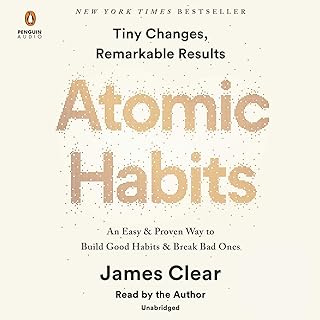
James Clear's Atomic Habits (4.8 stars, 148,600+ reviews) complements Hollins' approach beautifully. It dives deeper into habit stacking and environment design.
The Pillar of Habits: Automating Self-Control
Willpower is a finite resource. Every decision you make depletes it a little. That's why relying on willpower alone is a losing strategy. Habits, on the other hand, run on autopilot. They don't drain your mental energy.
Hollins emphasizes that self-discipline isn't about resisting temptation all day long. It's about setting up systems so that the right choices become the easy choices.
The Habit Loop: Cue, Craving, Response, Reward
Understanding how habits work is crucial. Every habit follows this four-step loop:
| Step | Description | Example |
|---|---|---|
| Cue | A trigger that initiates the behavior | Notification sound on your phone |
| Craving | The motivation or desire for the reward | Wanting to feel connected or entertained |
| Response | The actual habit you perform | Checking social media |
| Reward | The satisfaction you get | Dopamine hit from a like or comment |
To build good habits, you need to make the cue obvious, the craving attractive, the response easy, and the reward satisfying. To break bad habits, reverse those factors.
Practical Habit-Building Exercises from Hollins
The book provides specific 5-minute exercises. One example: The 5-Minute Cleanup – set a timer and tidy one area of your home or workspace for exactly five minutes. No more. This trains your brain to associate action with a clear endpoint, reducing resistance.
Another exercise is The Daily Discipline Review – spend five minutes at the end of each day asking: "What did I do today that moved me toward my goals? What could I improve tomorrow?" This builds self-awareness and accountability.
The Pillar of Mindset: Rewiring Your Inner Voice
Even the best habits and consistency will fail if your mindset works against you. Hollins dedicates significant attention to the mental game of self-discipline.
Why Your Brain Resists Discipline
Your brain is wired for immediate pleasure and energy conservation. That's why scrolling social media feels easier than writing a report. It's not laziness – it's biology. The limbic system (emotional brain) often overpowers the prefrontal cortex (rational brain).
The power of self discipline Peter Hollins teaches includes specific techniques to quiet the limbic system and engage the rational brain when it matters most.
The "Pre-Suasion" Technique
Hollins suggests preparing your environment and mind before you need willpower. For example:
- Prime your environment – lay out your workout clothes the night before
- Set implementation intentions – "I will exercise at 7 AM in my living room for 10 minutes"
- Use if-then plans – "If I feel like skipping my workout, then I will do just one push-up"
These strategies shift decision-making from "Do I feel like it?" to "It's already decided."
Reframing Discomfort as Growth
One of the most powerful mindset shifts is learning to enjoy discomfort. Every time you push through resistance, you're strengthening your self-discipline muscle. Hollins encourages readers to reframe discomfort as evidence of growth, not something to avoid.
Try this: when you feel the urge to procrastinate, pause and say to yourself, "This feeling means I'm about to grow." Over time, you'll associate discomfort with progress instead of pain.
Additional Books That Deepen the Lessons
While Hollins' book is excellent, combining it with other resources can accelerate your progress. Here are several top-rated books on the same topic, directly from the Amazon data you provided.

Discipline Is Destiny: The Power of Self-Control by Ryan Holiday (4.7 stars) explores Stoic philosophy applied to modern life. It's a great companion for the mindset pillar.

The Mountain Is You by Brianna Wiest (4.7 stars, 27,900+ reviews) tackles self-sabotage head-on. If Hollins' exercises feel difficult because deeper issues are in the way, this book helps clear the path.

Discipline Equals Freedom by Jocko Willink (4.7 stars, 8,800+ reviews) is a no-excuses field manual. It pairs well with Hollins' scientific approach because it provides raw, motivational fuel.
Comparison Table: Top Self-Discipline Books
| Book | Price | Rating | Key Focus | Buy at Amazon |
|---|---|---|---|---|
| The Power of Self-Discipline (Hollins) | $0.00 (free with Audible) | 4.4 | 5-minute exercises, habits, mindset | |
| Atomic Habits (Clear) | $0.00 | 4.8 | Habit stacking, environment design | |
| No Excuses! (Tracy) | $8.66 | 4.7 | Willpower, time management |  |
| Discipline Is Destiny (Holiday) | $5.88 | 4.7 | Stoic self-control | |
| The Mountain Is You (Wiest) | $0.00 | 4.7 | Overcoming self-sabotage | |
| Digital Self-Discipline | $12.99 | 4.8 | Breaking digital addictions |  |
How to Apply the Power of Self Discipline Peter Hollins in Real Life
Reading is useless without application. Here's a step-by-step plan based on the book's principles.
Step 1: Identify One Keystone Habit
A keystone habit is a routine that triggers positive changes in other areas of your life. For most people, exercise, sleep, or morning routines work best. Choose one and commit to five minutes daily.
Step 2: Use the 5-Minute Rule
Whenever you resist a task, tell yourself you'll do it for just five minutes. After five minutes, you're free to stop. Most of the time, you'll keep going because starting is the hardest part.
Step 3: Practice the "Discipline Muscle" Daily
Hollins recommends small acts of discipline every day. For example:
- Make your bed immediately after waking
- Take a cold shower for 30 seconds
- Do 10 squats before every meal
- Read one page of a book instead of scrolling
These small wins build momentum and reshape your self-image.
Step 4: Journal About Your Mindset
Spend five minutes each evening writing about a moment you felt resistant and how you handled it. Did you give in or push through? What could you do differently tomorrow? This builds self-awareness, the foundation of self-control.
Step 5: Create an Accountability System
Tell a friend your daily commitment. Even better, use a habit tracker app. The mere act of recording a behavior increases your likelihood of following through.
Frequently Asked Questions
Is self-discipline the same as willpower?
No. Willpower is a limited resource that you draw on to resist temptation in the moment. Self-discipline is a broader skill that includes willpower but also involves building habits, setting up systems, and cultivating a mindset that reduces the need for constant resistance.
Can anyone develop self-discipline?
Absolutely. Research shows that self-discipline is learned, not innate. It's like a muscle – it gets stronger with consistent training. Peter Hollins' book provides the exact exercises to build that muscle gradually.
How long does it take to build a self-discipline habit?
The popular "21 days to form a habit" is a myth. According to a University College London study, it takes anywhere from 18 to 254 days depending on the complexity of the habit and the individual. Focus on consistency, not speed.
What if I fail repeatedly?
Failure is part of the process. The key is to never miss twice. If you skip a day, get back on track the next day. Guilt and shame are counterproductive. Treat failures as data – what triggered the slip? Adjust your approach.
Do I need to read multiple books on self-discipline?
Not necessarily, but combining perspectives can help. Read Peter Hollins for practical exercises, James Clear for habit systems, and Ryan Holiday for mindset philosophy. Each reinforces the other.
Where can I buy "The Power of Self-Discipline" by Peter Hollins?
You can find it on Amazon. It's often available for free with an Audible trial. Click here to check the current price.
Final Thoughts: Your Discipline, Your Future
The power of self discipline Peter Hollins describes isn't some mystical force reserved for elite performers. It's a practical, learnable set of skills that anyone can develop with daily practice.
Start small. Do your five minutes. Show up when you don't want to. Eventually, the person who shows up becomes the person who succeeds.
Remember: discipline is not about being perfect. It's about being consistent. And consistency, over time, produces results that feel almost magical.
Ready to build your discipline muscle? Grab a copy of The Power of Self-Discipline from Amazon, set your timer for five minutes, and take the first step today.