
Let me tell you about a man named Mark. He woke up every Monday morning filled with energy. He planned to run five miles, eat kale, and read 20 pages of a business book. By Tuesday afternoon, his running shoes sat untouched. The kale wilted. The book gathered dust.
Mark’s story is your story. It’s my story. It’s the story of every person who ever believed that motivation would carry them to the finish line. It didn’t. And it never will.
That’s why this story for self discipline matters. It proves that habits—not motivation—are the real engine of lasting change. If you have ever started strong and fizzled out, this tale will show you the way forward.
Table of Contents
The Short Tale: Mark’s Wake-Up Call
Mark was a graphic designer in his early thirties. He felt stuck in a rut. His energy was low, his focus scattered, and his bank account reflected his lack of discipline. One Sunday night, he watched a motivational video that pumped him up. He scribbled down ten huge goals.
He woke up at 5 a.m. the next day. He ran three miles, meditated for 10 minutes, and planned his entire week. He felt unstoppable.
By day three, the alarm felt heavier. By day five, he hit snooze. Within two weeks, he had abandoned every new habit.
Sound familiar?
Mark felt ashamed. He told himself he lacked willpower. But the real issue was his approach: he had relied on a fleeting emotional high instead of building a system.
Then he stumbled upon a simple idea from James Clear’s Atomic Habits: “You do not rise to the level of your goals. You fall to the level of your systems.”
That quote changed everything.
Mark stopped trying to be motivated. Instead, he focused on small, repeatable actions. He committed to just one push‑up each morning. One page of reading. Five minutes of meditation. The goals were so tiny they felt silly. But they were easy enough to do on his worst day.
Within three months, Mark had transformed. The one push‑up led to a full workout. The one page led to finishing twelve books. The five minutes grew to twenty. His income doubled because he showed up consistently.
Mark’s story for self discipline proves that habits win over motivation every single time. Let’s break down why that’s true and how you can apply it today.
Why Motivation Fails You (Science Behind the Struggle)
Motivation is like a firework: bright, loud, and gone in seconds. It depends on emotion, which fluctuates wildly. You cannot control when you’ll feel pumped, but you can control your actions.
Studies in behavioral psychology show that willpower is a limited resource. When you rely on motivation, you drain that resource fast. The more decisions you make, the more your self‑control depletes. That’s why you can eat healthy all day then binge on chips at 10 p.m.
Habits bypass willpower entirely. They become automatic responses to cues. You don’t need to feel like brushing your teeth. You just do it.
The book The Science of Self‑Discipline (available on Amazon) explains that discipline is a skill, not a personality trait. You can train it like a muscle, but only through consistent practice—not motivational peaks.
How to Build Habits That Beat Motivation: The Blueprint
Here are the core principles illustrated in Mark’s tale, backed by the best books on self‑discipline.
1. Start Smaller Than You Think Possible
The biggest mistake Mark made was aiming too high, too fast. Success comes from ridiculously small habits. One push‑up. One sentence. One minute of deep breathing.
The Power of Discipline: How to Use Self Control and Mental Toughness to Achieve Your Goals (rated 4.6, $16.83) emphasizes that discipline is built through micro‑actions. The author, Daniel Walter, argues that you should reduce your commitment until there is zero friction.

2. Anchor New Habits to Existing Ones
Mark attached his new habit to his morning coffee: “After I pour my coffee, I will do one push‑up.” This is called habit stacking. It uses an existing cue to trigger a new behavior.
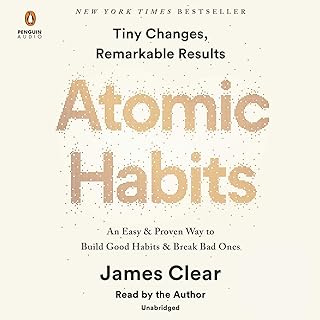
Atomic Habits (rated 4.8, free with Audible) is the gold standard for this method. James Clear provides dozens of practical frameworks for stacking and designing your environment for success.
3. Focus on Identity, Not Outcomes
Motivation says “I want to lose 20 pounds.” Identity says “I am the kind of person who exercises every day.” When Mark shifted his self‑image, the actions followed naturally.
The Mountain Is You: Transforming Self‑Sabotage into Self‑Mastery (rated 4.7, free with Kindle Unlimited) dives deep into overcoming the inner resistance that keeps you stuck. It’s a powerful read for anyone whose motivation vanishes after a few days.

The Best Self‑Discipline Books to Reinforce Your Habits
You don’t have to figure this out alone. The following books have helped thousands build unshakable discipline. Each one is a tool you can use right now.
| Book | Price | Rating | Picture | Buy at Amazon |
|---|---|---|---|---|
| Atomic Habits | $0.00 (Audible) | 4.8 | |
Buy Now |
| The Power of Discipline | $16.83 | 4.6 | |
Buy Now |
| No Excuses! The Power of Self‑Discipline | $8.66 | 4.7 |  |
Buy Now |
| The Mountain Is You | $0.00 (Kindle Unlimited) | 4.7 | |
Buy Now |
More Powerhouses for Your Discipline Library
- Discipline Is Destiny by Ryan Holiday ($5.88, 4.7) — Stoic wisdom for mastering self‑control. Buy now.
- Digital Self‑Discipline ($12.99, 4.8) — Break free from screen addiction and reclaim your focus. Buy now.
- 365 Days With Self‑Discipline (free on Audible, 4.5) — Daily thoughts to keep you on track. Buy now.
- The Power of Self‑Discipline: 5‑Minute Exercises (free with Kindle Unlimited, 4.4) — Quick exercises to build self‑control. Buy now.
Practical Exercises from the Books That Changed Mark’s Life
Mark didn’t just read; he applied. Here are three exercises he used, drawn from the books above.
The 5‑Minute Rule (from The Power of Self‑Discipline)
When you don’t feel like doing a task, commit to just five minutes. Usually, you’ll keep going after the timer rings. This tricks your brain into starting.
The “No Excuses” Morning Routine (from Brian Tracy’s book)
Every morning, write down your top three priorities for the day. Then do the hardest one first. Tracy calls this “eating the frog.” It builds momentum before excuses creep in.
The Two‑Minute Habit (from Atomic Habits)
Scale your habit down until it takes less than two minutes. “Read before bed” becomes “read one sentence.” “Run three miles” becomes “put on running shoes.” Once you start, it’s easier to continue.
Digital Self‑Discipline: The Modern Challenge
One reason Mark failed initially was his smartphone. Every notification stole his focus. He needed a story for self discipline that addressed digital distractions.
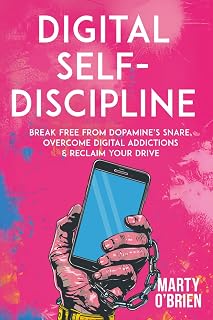
That’s where Digital Self‑Discipline comes in. This book (rated 4.8, $12.99) offers a practical plan to break free from dopamine traps. It teaches you to turn off push notifications, schedule “distraction blocks,” and reclaim your attention.
If you’re constantly distracted, this book is your reset button.
The Stoic Edge: Ancient Wisdom for Modern Discipline
The Stoics understood that discipline is the foundation of a good life. Discipline Is Destiny by Ryan Holiday (rated 4.7, $5.88) explores how self‑control leads to freedom. Another standout is Stoic Self‑Discipline (rated 4.7, $19.99), which gives you 33 ancient secrets to build unbreakable mental toughness.
These books remind us that the greatest opponent is our own mind. The story for self discipline that Mark experienced mirrors Stoic teachings: focus only on what you can control—your actions—and let the results take care of themselves.
FAQ: Your Questions About Self‑Discipline and Habits
What is the best story for self discipline that shows how habits beat motivation?
Mark’s story above is a perfect example. Another classic is the tale of the “compound effect” in Darren Hardy’s The Compound Effect, where small daily choices lead to massive results over time.
How do habits beat motivation in the long run?
Habits are automatic. They don’t require emotional energy. Motivation is a feeling; habits are a system. When the feeling disappears, the system keeps you going.
Which self‑discipline book should a beginner start with?
Start with Atomic Habits. It’s easy to read, highly rated, and gives you immediate actionable steps. Pair it with No Excuses! for a motivational kick.
Can self‑discipline be learned if I’ve always been lazy?
Absolutely. Self‑discipline is a skill, not a fixed trait. Use the 5‑minute rule and habit stacking to build it gradually. Every expert started somewhere.
How long does it take for a new habit to feel automatic?
Research suggests 18 to 254 days, with an average of 66 days. The key is consistency, not perfection.
Conclusion: Your Turn to Write Your Own Story
Mark’s transformation didn’t happen overnight. It came from one small decision repeated daily. His story for self discipline is not unique—it’s available to anyone willing to trade motivation for a system.
You don’t need to feel ready. You don’t need a perfect plan. You just need to start with one push‑up, one page, one minute.
Pick one of the books above, apply one exercise, and commit to doing it for the next seven days. That’s all it takes to tip the scales from motivation to habit.
The firework of motivation will fade. But a habit, once built, burns steadily forever. Which story will you write for yourself?