
Ever set a goal, feel pumped for exactly three days, then crash back into old habits? You are not broken. You just never learned the science behind how real self-discipline works. That is where self regulation Zimmerman style comes in.
Barry Zimmerman, a prominent educational psychologist, spent decades studying how people take control of their own learning and behavior. His model of self-regulation is not some dusty academic theory. It is a practical, three-phase blueprint that explains why some people seem to have unshakeable willpower while others struggle to stick with anything.
The good news? Self-discipline is not a fixed trait. It is a skill you can build by understanding and applying Zimmerman’s framework. Let us break down exactly what self regulation Zimmerman means, how it connects to real self-discipline, and how you can use it starting today.
Table of Contents
What Is Self Regulation According to Zimmerman?
Zimmerman defined self-regulation as the process where learners (or anyone trying to change their behavior) actively control their thoughts, feelings, and actions to reach their goals. He argued that self-regulation is not something that happens to you. It is something you do deliberately.
His model has three cyclical phases:
- Forethought – What happens before you take action
- Performance – What happens during the action
- Self-Reflection – What happens after the action
Each phase feeds into the next. That cycle is why self regulation Zimmerman is so powerful for building lasting self-discipline. You are not just white-knuckling through cravings. You are designing a system that helps you bounce back and improve over time.
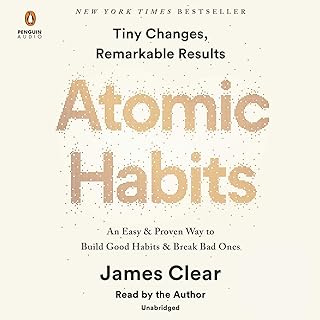
If you want a deep dive into how small, consistent actions build unshakeable discipline, check out James Clear’s Atomic Habits. It pairs perfectly with Zimmerman’s model.
The Forethought Phase: Setting the Stage for Self-Discipline
Before you even start your workout, study session, or work project, the forethought phase determines whether you will succeed or fail. This phase has two main parts: task analysis and self-motivational beliefs.
Task analysis means breaking your goal into clear, specific steps. Vague goals like “I want to get fit” leave your brain confused. Specific goals like “I will run 20 minutes every morning at 6:30 AM” give your brain a clear target.
Self-motivational beliefs include your sense of self-efficacy and your outcome expectations. If you doubt you can do it, you probably will not try very hard. But if you believe your effort will pay off, you push through discomfort.
How to apply the forethought phase to your self-discipline:
- Set precise, manageable goals. Avoid “I will eat healthier.” Instead say “I will eat one serving of vegetables with lunch every day.”
- Write down why this goal matters to you. Connect it to your deeper values.
- Identify potential obstacles ahead of time. Plan for them.
Zimmerman emphasized that people who use the forethought phase effectively are much more likely to stick with their habits. They do not just react to life. They prepare.
The Performance Phase: Putting Self-Discipline into Action
Now you are in the thick of it. The performance phase is where self-discipline actually gets tested. This phase involves two broad strategies: self-control and self-observation.
Self-control includes techniques like attention focusing, self-instruction (talking yourself through the task), and task strategies (breaking a complex task into smaller chunks). You are actively managing your focus and effort.
Self-observation means tracking your own behavior. You might keep a journal, use an app, or simply mentally note your progress. When you observe yourself, you become aware of patterns. That awareness is the foundation of change.
Real-life example: Let us say you want to write 500 words a day. During the performance phase, you remove distractions (self-control) and check off your daily word count (self-observation). If you notice you always procrastinate at 3 PM, you can adjust your schedule.
The performance phase is where many people give up because they rely only on willpower. Zimmerman’s model suggests you need both control and observation. Without observation, you are flying blind.

Brian Tracy’s No Excuses!: The Power of Self-Discipline is a classic resource that provides tons of actionable strategies for exactly this phase. It teaches you how to maintain focus when your motivation dips.
The Self-Reflection Phase: Learning and Adjusting
The final phase in the self regulation Zimmerman cycle is often the most overlooked. After you take action, you reflect on what happened. This reflection determines how you will approach the next cycle.
Self-reflection involves two processes: self-judgment and self-reaction.
Self-judgment is comparing your performance to your goal or to a standard. Did you hit 500 words? If not, why? You might judge that you underestimated the time needed or that you chose a distracting environment.
Self-reaction is how you feel about the result. If you feel proud and satisfied, you are more likely to repeat the behavior. If you feel ashamed or frustrated, you might avoid it next time.
The key insight from Zimmerman is that your self-reaction does not have to be negative even if you failed. You can reframe failure as data. “I did not write yesterday because my phone was too tempting. Tomorrow I will leave it in another room.” That is adaptive self-reaction.
Use the self-reflection phase to:
- Celebrate small wins. Recognize progress, not just perfection.
- Analyze setbacks without self-criticism. Ask “What can I learn?” not “What is wrong with me?”
- Adjust your strategies for the next round.
This cycle repeats over and over. That is why self-discipline is not a one-time decision. It is a continuous loop of planning, doing, and learning.
How to Apply Zimmerman’s Model to Build Real Self-Discipline
You now know the three phases. But how do you actually use self regulation Zimmerman in your daily life? Here is a step-by-step plan you can start today.
Step 1: Define a Small Goal
Pick one small habit you want to build. Make it so tiny it feels almost laughably easy. For example, “I will meditate for one minute after brushing my teeth.”
Step 2: Create a Forethought Script
Write down exactly when and where you will do it. Use an “if-then” plan: “If it is 7 AM and I am standing in the bathroom, then I will meditate for one minute.” List one possible obstacle and your solution.
Step 3: Take Action with Self-Observation
During the action, focus only on that one step. If your mind wanders, gently bring it back. Afterward, record what happened in a simple log: date, time, success or fail, and one observation.
Step 4: Reflect and Adjust
At the end of the day, review your log. Did you follow through? What helped or hindered you? Adjust your forethought plan for tomorrow based on that data.
Repeat this cycle for at least two weeks. You will be amazed how quickly self-discipline becomes automatic when you use Zimmerman’s systematic approach.
Recommended Books to Deepen Your Self-Discipline Practice
Reading about self-discipline is one of the best self-control strategies you can use in the forethought phase. It primes your brain with the right beliefs and strategies. Here are some excellent books that complement the self regulation Zimmerman model.

The Mountain Is You by Brianna Wiest explores why we self-sabotage and how to transform that into self-mastery. It directly addresses the self-reflection phase.

Ryan Holiday’s Discipline Is Destiny offers Stoic wisdom on self-control. Perfect for strengthening the performance phase.

The Power of Discipline by Raimon Samsó gives practical exercises for mental toughness and self-control.

Mindful Self-Discipline by Giovanni Dienstmann combines mindfulness with habit formation. It teaches you to stay present during the performance phase.
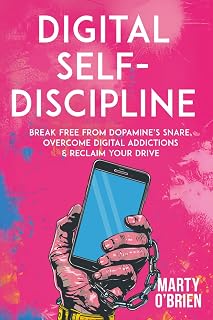
Digital Self-Discipline by Richard F. Atkin (hypothetical) helps you break free from digital distractions. A must-read for anyone struggling with phone addiction.
Comparison Table: Top Self-Discipline Books
| Product | Price | Rating | Key Focus | Buy at Amazon |
|---|---|---|---|---|
|
$8.66 | 4.7 ⭐ | Practical time management & willpower | Buy Now |
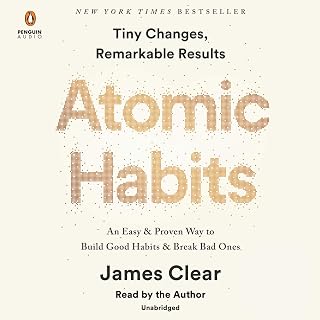 |
$0.00 (audio) | 4.8 ⭐ | Small habits, system design | Buy Now |
|
$5.88 | 4.7 ⭐ | Stoic philosophy & self-control | Buy Now |
|
$0.00 (audio) | 4.7 ⭐ | Self-sabotage & mindset | Buy Now |
This table compares four top-rated books on self-discipline. Each one supports a different phase of the self regulation Zimmerman cycle.
Frequently Asked Questions About Self Regulation Zimmerman and Self-Discipline
What is the main difference between self-regulation and self-discipline?
Self-regulation is the broader process of planning, monitoring, and adjusting your behavior to reach goals. Self-discipline is the ability to resist short-term temptations in favor of long-term objectives. Zimmerman’s model shows that self-discipline is just one part of the self-regulation cycle.
How long does it take to build self-discipline using Zimmerman’s model?
There is no magic number. However, research on habit formation suggests that repeating a behavior in a consistent context for about two months can make it automatic. The cyclical nature of Zimmerman’s model accelerates this because you constantly refine your approach.
Can Zimmerman’s theory help with breaking bad habits?
Absolutely. The self-reflection phase is especially powerful for identifying triggers and adjusting your environment. By analyzing why you engage in a bad habit, you can redesign your forethought phase to avoid those triggers.
Do I need to follow all three phases perfectly?
No. The model is a guide, not a rigid prescription. Many people benefit from focusing on one phase they neglect. For instance, if you constantly start goals but never finish, you likely need to improve your performance phase strategies.
Is self-regulation the same as willpower?
No. Willpower is a limited resource that depletes over time. Self-regulation includes strategies that conserve willpower, such as setting implementation intentions, removing temptations, and using self-monitoring tools. It is a smarter approach.
Conclusion: Your Self-Discipline Journey Starts Now
Self regulation Zimmerman gives you a clear, research-backed roadmap to build self-discipline that lasts. You are not at the mercy of your impulses. You are the architect of your own behavior.
Start with one small goal today. Use the forethought phase to prepare. Use the performance phase to act and observe. Use the self-reflection phase to learn and improve. Repeat.
Remember the books we discussed can supercharge your progress. Whether you choose No Excuses!, Atomic Habits, or The Mountain Is You, each one adds depth to your understanding of self-discipline.
You already have everything you need to take control. The only question is: will you start today?