
Picture this: your eight year old is mid-meltdown because the blue cup is dirty. You offer the green cup. That only makes things worse. You feel your own patience slipping. You want to help, but every tactic you try seems to backfire.
You are not alone. Parenting an eight year old through big feelings is exhausting. The good news? This age is a sweet spot for building self regulation. With the right approach, you can help your child develop calm, patience, and emotional control. And you can do it without turning every day into a battle of wills.
Let’s look at what self regulation really means for an eight year old, why power struggles make things worse, and exactly how to build emotional control in a way that works for your whole family.
Table of Contents
What Is Self Regulation for an 8 Year Old?
Self regulation is the ability to manage thoughts, emotions, and behaviors in the face of challenges. For an eight year old, this means pausing before reacting, handling disappointment, and bouncing back from frustration. It is not about being perfect or never losing it. It is about learning to hit the brakes when emotions run high.
Developmental experts agree that around age eight, children’s brains are primed for growth in impulse control and problem solving. The prefrontal cortex (the brain’s CEO) is still under construction, but it is getting stronger every day. This is the perfect time to teach strategies that stick.
Why 8 Year Olds Struggle with Emotional Control
Eight year olds are caught between big emotions and still developing logic. They want independence but lack the skills to manage the frustration that comes with it. Common triggers include:
- Changes in routine
- Feeling misunderstood
- Overstimulation
- Loss of control
- Fatigue or hunger
Understanding that these meltdowns are not defiance helps you respond with empathy instead of punishment. It also opens the door to teaching real self regulation skills.
The Problem with Power Struggles
When you try to force calm with commands or consequences, you often get the opposite result. Power struggles trigger your child’s fight or flight response. Their brain shuts down learning and goes straight to survival mode. Nothing productive happens.
Constant power struggles also teach your child that relationships are about control, not connection. They learn to resist rather than cooperate. Over time, this can damage trust and make emotional control even harder.
A Better Approach: Connection Before Correction
The most effective way to build self regulation in an eight year old is to stay connected while setting clear limits. You are not giving in. You are showing up as a calm leader. Your child needs to feel safe before they can learn to calm down.
Here are the core strategies that work:
1. Model Calm Yourself (Even When It Is Hard)
Children learn emotional regulation by watching you. If you yell when frustrated, they will too. If you take a deep breath and say “I need a moment to calm down,” they learn a powerful skill.
This does not mean you have to be perfect. It means you practice what you preach. When you mess up, apologize and try again. That models repair and resilience.
Practical Steps to Model Self Regulation
- Use a calm voice even when you are angry.
- Name your own feelings: “I am feeling frustrated right now, so I am going to take three deep breaths.”
- Pause before responding to misbehavior.
- Show that emotions are okay, but actions have limits.
2. Create a “Calm Down” Toolkit Together
Help your child choose coping strategies that actually work for them. Some kids need movement, others need quiet. Build a toolkit together so they have go to options when emotions spike.
Calm Down Ideas for 8 Year Olds
- Deep breathing (try the “hot cocoa” breath: breathe in as if smelling hot cocoa, blow out as if cooling it)
- Progressive muscle relaxation
- Drawing or coloring
- Squeezing a stress ball
- Running to the end of the hall and back
- Listening to a favorite song
- Reading a calming book
Store these ideas on a simple card or a “calm down” jar your child created. When a meltdown starts, gently remind them to choose a tool. Do not force it. Offer the option.
3. Teach Emotional Language
Eight year olds often lack the words to express what they feel. When they cannot name it, they act it out. Teaching emotional vocabulary gives them a way to communicate instead of explode.
Feelings Words to Teach
| Basic Feelings | More Specific Feelings |
|---|---|
| Happy | Excited, proud, grateful |
| Sad | Disappointed, lonely, hurt |
| Angry | Frustrated, annoyed, jealous |
| Scared | Worried, nervous, confused |
| Calm | Peaceful, safe, relaxed |
Practice by labeling feelings during calm moments. “I noticed you felt frustrated when the game didn’t go your way. That makes sense.” Over time, your child will start using those words on their own.
4. Use Routines and Predictability
Structure reduces anxiety. When an eight year old knows what to expect, their brain is calmer. They do not have to fight for control because control is built into the day.
Routines That Support Self Regulation
- Morning routine with visual checklist
- After school snack and decompress time
- Consistent homework schedule
- Evening wind down with no screens
- Regular sleep and meal times
Predictability does not mean rigidity. Leave room for flexibility. But having a general flow helps kids feel safe and in control.
5. Solve Problems Together, Not for Them
When your child struggles with emotional control, resist the urge to fix it yourself. Instead, invite them into problem solving. This builds the very self regulation skill they need.
Step by Step Problem Solving
- Identify the problem together. “It seems hard for you to stop playing video games when it is time for dinner.”
- Brainstorm solutions without judgment. Let your child suggest ideas, even silly ones.
- Pick one to try for a few days.
- Check back and adjust if needed.
This process teaches planning, flexibility, and self reflection. Plus, your child is more likely to follow a plan they helped create.
6. Use Natural Consequences Instead of Punishment
Natural consequences teach responsibility without shame. If your child forgets their jacket, they get cold on the way to the car. You can say “I told you so,” or you can say “I am sorry you are cold. Next time, you know what to do.”
Punishments often focus on making a child feel bad. Natural consequences focus on learning. For an eight year old, the lesson is clearer when they experience the outcome of their choices.
Examples of Natural vs Punitive Consequences
| Situation | Natural Consequence | Punitive Consequence |
|---|---|---|
| Hits sibling during play | Play ends for both children for a few minutes | Loses screen time for a week |
| Does not put bike away | Bike gets moved to the garage, harder to access | Yelling and grounding |
| Refuses to eat dinner | May feel hungry before breakfast | Sent to bed without dessert |
Natural consequences are not always possible (safety first), but when they work, they teach self regulation without power struggles.
7. Teach the “Pause Button”
Impulse control is one of the hardest skills for an eight year old. Teach them to imagine a pause button in their brain. When they feel a strong urge (to hit, yell, grab), they can press pause and take a breath.
Practice the Pause Button
- Role play a scenario where your child is about to react.
- Say “Let’s press pause. What happens next?”
- Gradually, they will internalize the pause.
- Use a physical signal like tapping the back of their hand to remind them.
8. Validate Emotions Without Dismissing Behavior
This is the magic phrase: “I see you are angry. It is okay to be angry. It is not okay to hit.” You honor the feeling while still setting a limit. Your child feels heard without getting the green light to act out.
What Validation Sounds Like
- “You really wanted that toy. It is disappointing when someone else gets it.”
- “I can tell you are frustrated that it is time to leave the park.”
- “It is so hard when things do not go your way. I get that.”
After validation, guide toward a solution. “We cannot stay, but we can come back tomorrow. What can we do right now to help you feel better?”
9. Build Self Discipline Through Small Wins
Self discipline is a muscle, for both kids and parents. The more your child practices small acts of control, the stronger that muscle gets. For an eight year old, these small wins might be:
- Putting away their toys before asking
- Waiting their turn without complaint
- Doing homework before screen time
- Saving a treat for later
Praise the effort, not the result. “You really wanted to grab that cookie, but you waited until after lunch. That took self discipline!”
Books to Help Parents Build Their Own Self Discipline
Parenting an eight year old requires immense patience and self discipline. The more you strengthen your own skills, the easier it is to teach your child. The following books offer practical tools for building self control and mental toughness. They are excellent resources for any parent looking to model the discipline they want to see.

No Excuses!: The Power of Self-Discipline by Brian Tracy is a classic. It breaks down how self discipline leads to success in every area of life. For parents, it offers a roadmap to stop making excuses and start showing up with consistency. The price is $8.66 and it has a 4.7 star rating.
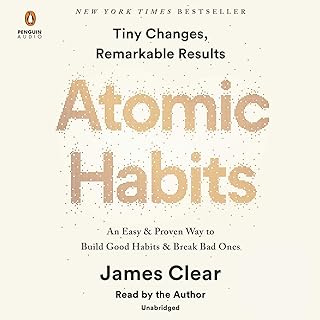
Atomic Habits by James Clear is a phenomenon for a reason. It teaches you how to build tiny habits that compound into massive change. If you want to create calm morning routines or break the habit of yelling, this book is your playbook. It is available on audio for free with a trial, and it holds a 4.8 star rating.
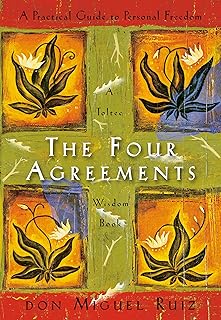
The Four Agreements by Don Miguel Ruiz offers a simple code for personal freedom. For parents, the agreements (be impeccable with your word, don’t take anything personally, don’t make assumptions, always do your best) can transform how you respond to your child’s meltdowns. It costs $7.05 and has a 4.7 rating.
Comparison Table: Top Books for Self Discipline
| Book | Price | Rating | Best For | Buy at Amazon |
|---|---|---|---|---|
|
$8.66 | 4.7 | Overcoming excuses, building willpower | Buy at Amazon |
|
$0.00 (audio) | 4.8 | Habit formation, small changes | Buy at Amazon |
|
$7.05 | 4.7 | Emotional freedom, parental mindset | Buy at Amazon |
These books are tools for you, the parent. The more you cultivate your own self discipline, the easier it becomes to stay calm and teach your child the same skills.
10. Use Play to Build Emotional Control
Eight year olds learn best through play. Games that require turn taking, waiting, and handling loss are perfect for building patience and impulse control.
Games That Teach Self Regulation
- Board games like Candy Land, Sorry, or chess
- Card games like Go Fish or Uno
- Physical games like Simon Says or Red Light, Green Light
- Role playing where you practice saying “no” to a friend
Frame losing as practice for handling disappointment. Celebrate good sportsmanship more than winning.
11. Limit Screen Time to Protect Self Regulation
Screens overstimulate the brain and reduce patience. When an eight year old spends a lot of time on fast paced games or videos, their ability to sit with boredom or frustration drops. Real life feels slow and hard by comparison.
Screen Time Guidelines for 8 Year Olds
- No more than 1-2 hours of recreational screen time per day
- No screens at least 1 hour before bed
- Use screen time as a reward, not a right
- Co view whenever possible to talk about what they are watching
Breaking screen habits is hard. But the payoff in emotional control is huge. You can use a tool like Digital Self-Discipline to help your own screen habits. That book costs $12.99 and has a 4.8 rating.
12. Be Patient with Progress
Self regulation is not built in a week. It is a skill that develops over months and years. Your eight year old will have good days and bad days. So will you.
When you fall back into a power struggle, forgive yourself and start again. The goal is not perfection. The goal is progress. Celebrate small victories: the time your child took a deep breath instead of screaming, the time you stayed calm during a meltdown.
FAQ: Self Regulation 8 Year Old
Q: What are signs of poor self regulation in an 8 year old?
A: Frequent meltdowns, difficulty transitioning between activities, trouble waiting or sharing, impulsive behavior, emotional outbursts over small frustrations. These are common and usually improve with coaching.
Q: Can self regulation be taught?
A: Absolutely. The brain is still developing. With consistent strategies like modeling, routines, and emotional coaching, children learn to manage their emotions better over time.
Q: How do I handle a meltdown in the moment?
A: Stay calm. Get down to their level. Validate the feeling. “I see you are really angry.” Offer a calm down tool. Wait. Do not lecture until they are calm. After the storm, you can problem solve.
Q: Should I use time outs for self regulation issues?
A: Time outs can be helpful if they are used as a chance to reset rather than punishment. Call it a “calm down space” and let the child choose to go there. Never use it as a threat.
Q: When should I seek professional help?
A: If your child’s emotional outbursts are frequent, intense, or causing harm to themselves or others, consider speaking with a pediatrician, child psychologist, or occupational therapist. Early support makes a big difference.
Q: How can I improve my own self regulation as a parent?
A: Start with small daily practices. Take three deep breaths before responding to stress. Read books like The Power of Self-Discipline or Mindful Self-Discipline. Prioritize sleep, exercise, and time for yourself.
Final Thoughts
Building self regulation in an eight year old is not about quick fixes. It is about creating a home environment where emotions are safe, limits are clear, and connection comes first. You do not have to be perfect. You just have to be present and willing to learn alongside your child.
Every time you stay calm during a storm, you are teaching your child that they too can find calm. Every time you set a loving limit, you are teaching them that boundaries are not punishments but protection. That is how self regulation grows. That is how discipline becomes freedom.
Parenting is hard. But with these tools, you can shift from power struggles to partnership. And that makes all the difference.
For more resources on building self discipline as a parent, check out Discipline Equals Freedom by Jocko Willink or The Power of Discipline by Daniel Walter. Both are excellent for strengthening your own mental toughness so you can show up as the calm leader your eight year old needs.