
You already know the feeling. You set a goal, feel a surge of motivation, and swear this time will be different. Then, three weeks later, you’re back on the couch scrolling through your phone, wondering where your drive went.
The problem isn’t you. It’s your approach. Most people treat self-discipline like a battle of sheer willpower. They grit their teeth, white-knuckle through cravings, and hope for the best. But here’s the truth: willpower is a finite resource that depletes over time. Real self discipline skills are not about fighting temptation harder. They’re about making the right thing easier to do.
In this guide, you’ll learn seven practical habits that transform self-discipline from a struggle into a natural part of your day. No hype. No guilt trips. Just real, research-backed methods that work.
Table of Contents
What Are Self Discipline Skills? (And Why You Already Have What It Takes)
Let’s clear something up. Self-discipline isn’t a magical trait you’re born with. It’s a collection of teachable, trainable self discipline skills that anyone can develop. Think of it like a muscle. You can’t walk into the gym and bench press 300 pounds on day one. But with consistent practice, you build strength.
The same goes for willpower. Every time you resist a donut or choose to work out instead of binge-watching Netflix, you strengthen your self-control. Over time, those small wins compound into lasting change.
The key is to stop relying on motivation and start building habits for self-discipline. When something becomes automatic, you don’t need willpower to do it. You just do it.
Habit 1: The Two-Minute Rule for Starting Anything
The hardest part of any task is starting. Your brain hates uncertainty and prefers the comfort of familiar habits. That’s why cleaning the garage feels impossible, but checking Instagram feels easy.
The fix is embarrassingly simple. Commit to doing something for just two minutes. Not an hour. Not even ten minutes. Two.
- Want to write a book? Write one sentence.
- Want to exercise? Put on your gym shoes.
- Want to meditate? Sit quietly for 120 seconds.
Once you begin, momentum takes over. Your brain realizes the task isn’t as painful as it feared, and you usually keep going. This is one of the most underrated self discipline skills because it bypasses your brain’s resistance entirely.
Pro tip: Pair this with a trigger. For example, “After I brush my teeth, I will do one push-up.” Soon, you’ll find yourself doing ten or twenty without deciding to.
Habit 2: Environment Design — Make Temptation Invisible
If you have a bag of chips on your desk, you will eat them. Not because you’re weak, but because your brain is wired to take the path of least resistance. Your environment shapes your behavior more than you realize.
To build self discipline skills, design your surroundings to make good choices easy and bad choices hard.
- Keep healthy snacks visible and junk food in the back of the pantry.
- Put your phone in another room while you work.
- Sleep in your gym clothes so you wake up ready to move.
One powerful example from the book Atomic Habits by James Clear: if you want to play guitar more, leave it out in the living room. If you hide it in the closet, you’ll never pick it up.
This habit works because it reduces the willpower needed to do the right thing. You don’t have to talk yourself into action. The environment does the talking for you.

Habit 3: The “No Excuses” Mentality — Own Your Choices
Excuses are the enemy of self-discipline. They sound reasonable in the moment, but they quietly sabotage your progress.
“I’m too tired.”
“I’ll start tomorrow.”
“One cheat day won’t hurt.”
The problem is that these excuses become patterns. Every time you give in, you train your brain to believe that quitting is acceptable.
Brian Tracy, author of No Excuses!: The Power of Self-Discipline, argues that self discipline skills are built on personal responsibility. You stop blaming circumstances and start taking ownership of every outcome.
Try this: replace “I have to” with “I choose to.” Instead of saying “I have to go to the gym,” say “I choose to go to the gym because I value my health.” This subtle shift reminds you that you’re not a victim. You’re in control.
Real example: After a stressful day, you’re tempted to skip your evening walk. Instead of rationalizing, ask yourself: “What would the person I want to become do?” Then do that.

Habit 4: Schedule Your Willpower — Time Blocking for Consistency
Willpower is highest in the morning and drops throughout the day. Knowing this, you can schedule your most important tasks when your energy peaks.
Time blocking is a simple but powerful self discipline skill. Instead of a vague to-do list, assign specific time slots for your priorities.
- 6:00–6:30 AM: Exercise
- 7:00–9:00 AM: Deep work (no meetings, no phone)
- 12:00–12:30 PM: Learn a new skill
When you schedule a task, treat it like an unbreakable appointment with yourself. Miss it only if something truly urgent comes up. Over time, this habit eliminates the need for willpower because the choice is already made.
The book Discipline Equals Freedom by Jocko Willink reinforces this idea. He says discipline is not something you do occasionally. It’s a lifestyle, built minute by minute.

Habit 5: Embrace Discomfort — The Stoic Path to Self-Control
We live in a world designed for comfort. Heated seats, instant food, infinite entertainment. But comfort weakens willpower. When you never experience discomfort, you become afraid of it.
Stoicism teaches that voluntary discomfort builds mental toughness. This doesn’t mean you need to sleep on a cold floor or fast for days (though you can if you want). It means doing small, uncomfortable things on purpose.
- Take a cold shower for 30 seconds.
- Wait an extra hour before eating breakfast.
- Wake up without hitting snooze.
These tiny acts train your brain to handle discomfort without panic. The more you practice, the stronger your self discipline skills become.
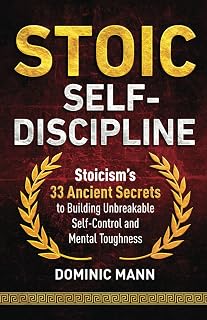
A fantastic resource for this is Stoic Self-Discipline: Stoicism’s 33 Ancient Secrets to Building Unbreakable Self-Control and Mental Toughness. It dives deep into the ancient philosophy and gives modern-day exercises.
Habit 6: The 5‑Second Rule — Interrupt Your Brain’s Procrastination Loop
Mel Robbins popularized the 5‑Second Rule: when you have an instinct to act on a goal, count backward from 5 to 1 and then move. If you don’t act within five seconds, your brain will come up with a dozen reasons to delay.
This technique is a game‑changer for self discipline skills because it bypasses the overthinking that leads to procrastination.
- You feel the urge to go to the gym? 5‑4‑3‑2‑1 — get up and go.
- You think about starting that report? 5‑4‑3‑2‑1 — open the document.
The counting interrupts your habitual patterns and switches your brain from “thinking” mode to “action” mode. It’s simple, but it works because it forces immediate action.
Combine this with the two‑minute rule for unstoppable momentum.
Habit 7: Recovery — The Forgotten Pillar of Self Discipline Skills
You can’t burn the candle at both ends. Trying to be disciplined 24/7 leads to burnout, guilt, and eventually giving up entirely.
High performers know that rest is part of the game. Sleep, nutrition, and downtime replenish your willpower reserves. Without them, your self-control plummets.
- Get 7–9 hours of sleep per night.
- Take one day off per week from work.
- Schedule fun and play — it’s not wasted time, it’s maintenance.
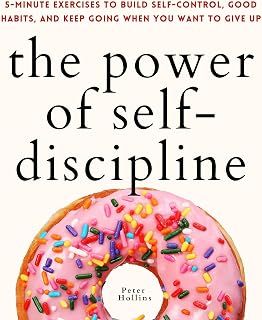
The book The Power of Self-Discipline: 5‑Minute Exercises to Build Self-Control, Good Habits, and Keep Going When You Want to Give Up emphasizes short, daily practices that strengthen discipline without overwhelming you. The title itself hints at sustainability.
Comparison of Top Self-Discipline Books
To help you choose the right resource, here’s a comparison of the most popular books for building self discipline skills.
| Product | Price | Rating | Key Focus | Buy at Amazon |
|---|---|---|---|---|
|
$8.66 | 4.7 | Personal responsibility, goal achievement | Buy on Amazon |
|
$0.00 (audiobook) | 4.8 | Small habits, system design, environment | Buy on Amazon |
|
$12.93 | 4.7 | Mental toughness, daily rituals | Buy on Amazon |
|
$19.99 | 4.7 | Stoic philosophy, unbreakable self-control | Buy on Amazon |
|
$0.00 (audiobook) | 4.4 | Short daily exercises, habit building | Buy on Amazon |
How to Combine These Habits for Maximum Impact
Don’t try to implement all seven at once. That’s a recipe for overwhelm. Pick one or two that resonate with you and practice them for two weeks.
For example, start with the two-minute rule and environment design. Once those become automatic, add the “no excuses” mindset. Layer them slowly.
The goal is to make self discipline skills feel effortless. When you consistently apply these habits, willpower stops being a struggle. It becomes a natural part of who you are.
Frequently Asked Questions
What is the difference between self-discipline and motivation?
Motivation is the feeling that pushes you to start. Self-discipline is the skill that keeps you going when the feeling fades. Motivation is temporary. Self-discipline is a sustainable system.
Can self-discipline be learned?
Absolutely. Like any skill, it improves with practice. The habits in this article are evidence-based methods to strengthen your willpower over time.
Why do I lack self-discipline?
Often it’s not a character flaw but a lack of systems. You might be relying too much on motivation, not sleeping enough, or surrounded by temptations. Fix those and your self-discipline will grow.
How long does it take to build self-discipline?
It varies. Some studies suggest that a new habit takes about 66 days on average. But you’ll notice improvements in willpower within the first week of consistent practice.
What is the best book for self-discipline?
It depends on your style. For a comprehensive guide, start with No Excuses! by Brian Tracy. For habit systems, Atomic Habits by James Clear is unmatched. For mental toughness, Discipline Equals Freedom by Jocko Willink.
Your Next Step
Stop waiting for the perfect moment. Stop hoping motivation will arrive. Start with two minutes. Design your environment. Own your choices.
Building self discipline skills is not about being perfect. It’s about being better than yesterday. And you already have everything you need to begin.
So pick one habit. Try it today. And watch how your world changes.