
You know that feeling. You sit down to study, open your laptop, and somehow end up watching YouTube for an hour. Your exam is next week, your notes are scattered, and your brain feels foggy. The problem isn't your intelligence. It's a lack of self discipline rules for students that actually work.
Most students confuse motivation with discipline. Motivation fades after the first burst of enthusiasm. Discipline stays. The good news is that discipline is a skill you can build, one daily rule at a time. Whether you're in high school, college, or grad school, these proven self discipline rules for students will sharpen your focus, boost your grades, and make studying feel less like a battlefield.
Let's dive into the rules that separate top performers from the procrastinators.
Table of Contents
Why Self Discipline Rules for Students Matter More Than Talent
Talent gives you a head start. Discipline gives you the finish line.
Research shows that self-discipline predicts academic success better than IQ. Students who follow consistent daily rules earn higher grades, report less stress, and actually enjoy learning more. The reason is simple: self discipline rules for students automate good decisions. You don't have to think about whether to study or scroll Instagram. Your rules decide for you.
The earlier you build these habits, the easier your student life becomes. And the best part? You don't need superhuman willpower. You just need a system.
Rule #1: Own Your Morning with a Non-Negotiable Wake-Up
The first test of discipline happens before breakfast.
Successful students wake up at the same time every day, even on weekends. This isn't about being a morning person. It's about training your brain to follow through on commitments. When you control your morning, you control your day.
Start with a simple rule: get up within five minutes of your alarm. No snooze. No phone scrolling. Get up, make your bed, and drink a glass of water. Admiral William McRaven, author of Make Your Bed: Little Things That Can Change Your Life, argues that making your bed every morning gives you a small win that sets the tone for everything else. You can grab his book for just $6.95 and start seeing a shift in your daily discipline.

Morning routine checklist for students:
- Wake up same time (even on weekends)
- Make your bed immediately
- No phone for first 15 minutes
- Drink water, stretch, or do a short walk
- Review your top three study goals for the day
This one rule alone can cut morning indecision by half. You start the day feeling in charge, not reactive.
Rule #2: The Two Minute Rule for Starting Study Sessions
The hardest part of studying is starting that first page. Your brain sees a four hour study block and panics. So it reaches for the phone.
Self discipline rules for students that work don't rely on brute force. They rely on lowering the barrier to entry. The Two Minute Rule says: commit to studying for just two minutes. Open your book for two minutes. Write one sentence for two minutes. Once you start, momentum takes over.
This technique comes from James Clear's Atomic Habits, which has over 148,000 ratings and is free on Audible. It's one of the most practical books on habit formation. Check it out here:

How to apply the Two Minute Rule:
- Tell yourself: "I'll study for just two minutes"
- Set a timer. After two minutes, you can stop if you want
- Most of the time, you'll keep going
- Repeat this every time you feel resistance
This rule rewires your brain to associate studying with easy action, not dread.
Rule #3: Digital Self Discipline During Study Time
Your phone is your greatest distraction. Notifications, social media, and endless dopamine hits kill focus. The solution isn't leaving your phone in another room (though that helps). It's creating self discipline rules for students that govern your digital behavior.
One powerful rule: no phone during study blocks. Put it on airplane mode or use a focus app. If you need your laptop for notes, block distracting websites with software like Cold Turkey or Freedom.
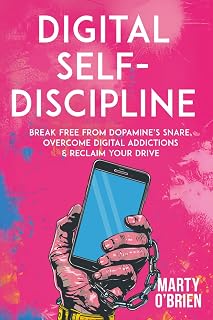
If you struggle with phone addiction, Digital Self-Discipline: Break Free from Dopamine’s Snare, Overcome Digital Addictions & Reclaim Your Drive is a must-read. It's rated 4.8 stars and costs $12.99. Here's the link:
Digital rules for students:
- Study blocks: phone in another room or face down
- Use website blockers during work hours
- Schedule social media time only after study goals are met
- Turn off all notifications except calls from family
These self discipline rules for students create a clean environment for deep work. Your brain stops craving the phone when it's not in sight.
Rule #4: The Pomodoro Technique with a Twist
You've probably heard of the Pomodoro Technique: 25 minutes of work, 5 minutes break. It's a classic productivity method. But the twist is this: during your 25 minute work block, zero distractions. No checking messages, no quick Google searches. Pure focus.
After four pomodoros, take a longer 15–30 minute break. This rhythm matches your brain's natural attention span. And it prevents burnout.
Why it works for students:
- Reduces procrastination (25 minutes feels doable)
- Forces regular breaks to recharge
- Builds focus stamina over time
- Gives you a clear stopping point
If you want to deepen your understanding of focus and discipline, check out Discipline Equals Freedom: Field Manual Mk1-MOD1 by Jocko Willink. It's a field manual for mental toughness. Priced at $12.93 with a 4.7 rating, it's a practical companion for any student.

Rule #5: Use a Daily Self Discipline Checklist
Want to know the secret weapon of disciplined students? A checklist.
Every morning, write down the top three study tasks you must complete. Then check them off one by one. This simple act creates a visual record of your progress. It also keeps you accountable.
A good daily checklist for students includes:
- Study sessions (with time blocks)
- Review of past material (spaced repetition)
- Physical activity (20 minutes minimum)
- No digital distractions during study time
- Evening reflection (what worked, what didn't)
To go deeper into building this kind of structure, read The Power of Discipline: How to Use Self Control and Mental Toughness to Achieve Your Goals. It's packed with actionable strategies. Available for $16.83 with a 4.6 rating.

Rule #6: Build Mental Toughness with Stoic Self Discipline Rules
Stoicism isn't just ancient philosophy. It's a toolkit for modern students. The Stoics believed that discipline is the foundation of freedom. They practiced voluntary discomfort, delayed gratification, and focused only on what they could control.
One simple self discipline rule for students from Stoicism: focus on the process, not the outcome. You can't control the grade you get, but you can control how much you study. When you detach from results, the anxiety fades and the work becomes easier.
Stoic Self-Discipline: Stoicism’s 33 Ancient Secrets to Building Unbreakable Self-Control and Mental Toughness is a great resource. It's rated 4.7 and costs $19.99.

Rule #7: Say No to Distractions (The Discipline of Saying No)
Every time you say yes to a distraction, you say no to your goals. Disciplined students have a high quality filter for how they spend their time. They don't attend every party, respond to every message, or click every interesting link.
Learning to say no is a discipline. It's also a superpower. The book Yes to You, No to Them: The Discipline of Saying No and the Freedom that Follows is a recent release with a perfect 5 star rating. It's $18.63 and worth every penny.

Practical ways to say no as a student:
- Decline social plans that clash with study blocks
- Unsubscribe from unnecessary email newsletters
- Mute group chats during study hours
- Politely say: "I have a study commitment right now, maybe later"
Rule #8: Reflect and Journal Daily
Discipline isn't just about doing. It's about reviewing what you did and adjusting. Every evening, spend five minutes journaling.
Three reflection questions:
- What did I accomplish today?
- What distracted me the most?
- What will I do differently tomorrow?
This habit turns mistakes into lessons. Over time, you'll notice patterns and eliminate them. 365 Days With Self-Discipline: 365 Life-Altering Thoughts on Self-Control, Mental Resilience, and Success offers daily reflections. It's free on Audible and has a 4.5 rating.

Real Data: Top Books to Master Self Discipline Rules for Students
Here are two excellent books that every student should consider. They complement each other: one focuses on the mindset, the other on daily tactics.
No Excuses!: The Power of Self-Discipline vs Discipline Equals Freedom
| Feature | No Excuses! (Brian Tracy) | Discipline Equals Freedom (Jocko Willink) |
|---|---|---|
| Price | $8.66 | $12.93 |
| Rating | 4.7 (3,800+ reviews) | 4.7 (8,800+ reviews) |
| Focus | Practical rules for every area of life | Military-style mental toughness & action |
| Best for | Students who want a broad framework | Students who need direct, no-nonsense motivation |
| Format | Paperback/Audiobook | Paperback/Audiobook |
| Buy at Amazon |  |
|
Both books will help you internalize self discipline rules for students and make them stick.
How to Implement These Self Discipline Rules for Students in 30 Days
You can't change everything overnight. But you can build momentum in 30 days. Here's a simple implementation plan:
Week 1: Focus on one morning rule
Wake up same time and make your bed. That's it. Don't add anything else.
Week 2: Add the Two Minute Rule
Before each study session, commit to just two minutes. Combine with Pomodoro if you want.
Week 3: Introduce digital discipline
No phone during study blocks. Use website blockers if needed.
Week 4: Add evening reflection
Five minutes journaling before bed. Review your day and plan tomorrow.
After 30 days, these self discipline rules for students will feel natural. Then you can add more advanced rules like saying no more often or practicing Stoic discomfort.
FAQ: Self Discipline Rules for Students
What are the most important self discipline rules for students?
The top rules are: wake up at a consistent time, use the Two Minute Rule to start studying, eliminate digital distractions during study blocks, follow a daily checklist, and reflect each evening. These five cover the core challenges students face.
How can I stay disciplined when I feel unmotivated?
Discipline isn't about motivation. Use the Two Minute Rule to bypass resistance. Also, remember that discipline is a muscle: it gets stronger with consistent use, even on bad days.
Why do I procrastinate even when I know I should study?
Procrastination is often a response to fear (of failure, of boredom). Break the task into tiny steps. The first step should be so easy that doing it feels silly to avoid.
How long does it take to build self discipline?
Habits form over 21 to 66 days depending on complexity. But you'll see improvements in focus within the first week of applying these self discipline rules for students.
What books do you recommend for student self discipline?
Start with No Excuses! by Brian Tracy or Discipline Equals Freedom by Jocko Willink. For digital habits, Digital Self-Discipline is excellent. And Atomic Habits is the gold standard for building systems.
Your student years are a training ground for the rest of your life. The self discipline rules for students you build today will carry into your career, your relationships, and your personal growth. Start small. Pick one rule. Apply it for a week. Then add another.
You don't need perfection. You need consistency. And you have everything it takes to build it.