
Have you ever set a goal, felt fired up for a day or two, then watched your motivation dissolve like a sandcastle at high tide? You are not lazy. You are not broken. You are simply running into the ancient architecture of your own brain.
Self discipline psychology is the study of why we do what we do, especially when we know better. It reveals the hidden tug of war between your prefrontal cortex (the rational CEO) and your limbic system (the impulsive toddler). Understanding this battle is the first step to winning it.
Most people think self discipline is about grinding through discomfort. In reality, it is about designing your environment and your mindset so that the right choice becomes the easy choice. Let us lift the hood on your brain and see what is really going on.
Table of Contents
What Is Self Discipline Psychology?
Self discipline psychology is the applied science of controlling your thoughts, emotions, and actions in pursuit of long term goals. It draws from cognitive neuroscience, behavioral psychology, and even a little stoicism.
At its core, this field asks: Why do we sometimes act against our own best interests, and how can we stop?
The answer lies in understanding two brain systems. The first is the hot system driven by dopamine, instant gratification, and survival instincts. The second is the cool system anchored in the prefrontal cortex, which handles planning, reasoning, and delayed gratification. Every moment of self discipline is a moment when your cool system overrides your hot system.

Brian Tracy’s No Excuses!: The Power of Self-Discipline is a classic that lays out the psychology behind taking responsibility for your life. It is a great starting point for anyone who wants to understand why some people push through and others stall.
Your Brain on Self Discipline: The Neuroscience
Let us take a quick tour of the neural real estate involved in self discipline.
The Prefrontal Cortex: Your Brain’s Control Tower
This region sits right behind your forehead. It is responsible for executive functions like decision making, impulse control, and goal setting. When you resist a second slice of cake or choose to study instead of scrolling social media, your prefrontal cortex is working overtime.
But here is the catch: the prefrontal cortex is energy hungry. It runs on glucose and gets tired like a muscle. After a long day of decisions, your willpower reserves run low. That is why you are more likely to binge Netflix at 10 PM than at 10 AM.
The Amygdala: The Panic Button
Your amygdala acts as the brain’s alarm system. When you face a difficult task, it can trigger a fight or flight response. Suddenly, that intimidating project feels like a threat, so you procrastinate to reduce the fear. This is not weakness. It is a survival mechanism that evolved to protect you from saber toothed tigers, not spreadsheets.
The Dopamine Reward Loop
Dopamine is the molecule of anticipation. It spikes when you expect a reward not necessarily when you get one. Your brain loves quick hits: a notification, a snack, a compliment. Self discipline psychology teaches you to hack this loop by attaching short term rewards to long term behaviors.

James Clear’s Atomic Habits explains how tiny changes, repeated daily, rewire the dopamine system so that good habits become automatic. It is one of the most practical books on self discipline psychology available.
Why Your Brain Fights Self Discipline (And How to Win)
The brain is wired for efficiency and survival, not for long term success in a modern world. Here are the main ways it sabotages you.
Ego Depletion: The Willpower Tax
After making a series of choices, your mental energy drops. This is called ego depletion. It is why you might skip the gym after a tough day at work. The solution is not to willpower harder. It is to reduce the number of decisions you make. Automate your morning routine. Meal prep. Set default choices.
The Habit Loop: Cue, Craving, Response, Reward
Your brain runs on habits. Charles Duhigg popularized this loop, and it is central to self discipline psychology. Every habit starts with a cue (like a notification), triggers a craving (curiosity), leads to a response (checking your phone), and delivers a reward (dopamine). To break a bad habit, you must change one element of the loop.
Temptation Bundling
A powerful strategy is linking a pleasurable activity with a necessary one. Listen to your favorite podcast only while exercising. Allow yourself a fancy coffee only after an hour of deep work. This works because you are pairing the hot system with the cool system.
How to Rewire Your Brain for Self Discipline
Neuroplasticity means your brain can change. You can strengthen your self discipline like a muscle. Here are evidence based techniques.
Implementation Intentions
The simplest psychological trick is to state exactly when and where you will act. “I will [behavior] at [time] in [location].” This bypasses hesitation because your brain treats it as a plan, not a choice.
Environment Design
Willpower alone is unreliable. Your environment shapes your behavior more than you think. If you want to eat healthier, put junk food out of sight. If you want to work more, keep your phone in another room. Self discipline psychology is 80 percent strategy and 20 percent grit.
Mindfulness and Self Awareness
Mindfulness trains you to notice impulses without acting on them. It strengthens the prefrontal cortex and weakens the amygdala’s knee jerk reactions. Even five minutes of daily meditation can improve self control.

Brianna Wiest’s The Mountain Is You dives deep into the psychology of self sabotage. It shows how to identify the inner fears that keep you stuck and transform them into self mastery.
The Role of Emotions in Self Discipline
Many people think discipline means suppressing emotions. That is a mistake. Emotions provide data. If you feel resistant to a task, ask yourself what fear is behind it. Often it is fear of failure, fear of judgment, or perfectionism.
Self discipline psychology is not about being robotic. It is about feeling the fear and doing it anyway. It is about using emotions as fuel, not as excuses.
The Allowance Technique
When you feel an urge to procrastinate, do not fight it. Instead, say to yourself, “I notice I want to check Instagram right now.” That simple act of labeling the urge reduces its power. This is called cognitive reappraisal, and it is a core tool in modern self discipline training.
Self Discipline Psychology in Action: Real World Examples
Let us see how this works in daily life.
Morning Routine
Your brain is most vulnerable right after waking. The prefrontal cortex is not fully online. That is why many successful people have a strict morning ritual: they do not decide what to do. They follow a script. This conserves willpower for later.
Procrastination on a Big Project
Break it down. The brain fears large tasks because the amygdala sees them as threats. By shrinking the first step to something absurdly easy (open the document, write one sentence), you bypass the fear and activate momentum. This is the psychology of “just the first five minutes.”
Dealing with Cravings
When a craving hits, it follows a wave pattern. It rises, peaks, and falls within about 15 minutes if you do not act on it. Use the 10 minute rule: wait ten minutes before giving in. By then, the dopamine spike has faded, and logic can reassert itself.
Top Books to Deepen Your Understanding
Here are some of the best resources on self discipline psychology. Each of these books provides a unique angle, from neuroscience to practical daily habits.

The Power of Discipline by Rylan Toor explains how to use mental toughness and self control to achieve your goals. It focuses on the psychological barriers that hold people back and offers concrete exercises to overcome them. Price $16.83, rating 4.6 stars.

The Psychology of Self-Discipline is a new release that gives twenty four proven strategies to rewire your brain for consistent action. It directly tackles the neuroscience behind willpower and impulse control. Price $17.99, rating 4.6 stars.

Jocko Willink’s Discipline Equals Freedom is a field manual that combines stoic philosophy with brutal honesty. It is less about theory and more about immediate action. Price $12.93, rating 4.7 stars.

Mindful Self-Discipline integrates meditation and mindfulness with goal achievement. It is perfect if you struggle with the emotional side of discipline. Available as audiobook (free with trial), rating 4.7 stars.
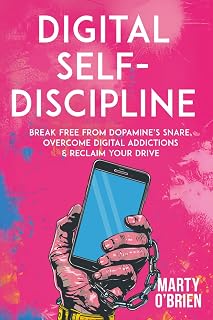
Digital Self-Discipline is a focused guide on overcoming digital addictions and reclaiming your drive. It explains how dopamine traps work and how to break free. Price $12.99, rating 4.8 stars.
Comparison Table
| Book | Price | Rating | Image | Buy at Amazon |
|---|---|---|---|---|
| The Power of Discipline | $16.83 | 4.6 | |
Buy |
| The Psychology of Self-Discipline | $17.99 | 4.6 | |
Buy |
| Discipline Equals Freedom | $12.93 | 4.7 | |
Buy |
| Mindful Self-Discipline | $0.00 (Audible trial) | 4.7 | |
Buy |
| Digital Self-Discipline | $12.99 | 4.8 | |
Buy |
Frequently Asked Questions
What is the main difference between self discipline and willpower?
Willpower is the momentary resistance to temptation. Self discipline is the entire system of habits, mindsets, and environments that make willpower less necessary. Willpower is a sprint; self discipline is a lifestyle.
Can self discipline psychology help with procrastination?
Yes. Procrastination is an emotional regulation problem, not a time management problem. Understanding the amygdala’s fear response and using techniques like implementation intentions or the 10 minute rule can dramatically reduce procrastination.
How long does it take to rewire the brain for better self discipline?
Neuroplastic changes require consistent repetition. Most habit formation studies suggest 18 to 254 days depending on the complexity. The key is consistency, not speed. Start small and build.
Is self discipline genetic?
There is a genetic component to impulsivity, but environment and learned behaviors have a much larger impact. Self discipline psychology is about training your brain, not changing your DNA. Anyone can improve.
What is the single most effective strategy from self discipline psychology?
Design your environment. Remove temptations and add friction to bad habits while making good habits effortless. This strategy works regardless of your willpower level.
Conclusion
Self discipline psychology is not about punishment. It is about partnership. Your brain has its own agenda, but you can learn to work with it instead of against it.
Start with one small change today. Use an implementation intention. Clean up your environment. Read one of the books above. Remember that every time you choose discipline, you are literally building new neural pathways. The brain you have today is not the brain you are stuck with.
You have more control than you think. Now go use it.

If you want daily reminders and psychological insights, 365 Days With Self-Discipline offers a thought for every day of the year. It is like having a coach in your pocket. Price free with Audible trial, rating 4.5 stars.