
Let’s be honest. Motivation is a flaky friend. One morning you wake up ready to conquer the world. The next day your bed feels like a magnet and your goals feel like a distant memory. That’s why self-discipline isn’t just helpful. It’s the difference between dreaming and doing.
This article breaks down the self discipline key points you need to stay consistent even when your inner fire fizzles out. No fluff. No empty motivation quotes. Just practical, battle-tested strategies that actually work.
Table of Contents
What Are the Self Discipline Key Points?
Self-discipline isn’t about punishment or rigid rules. It’s the ability to choose what you want most over what you want now. The 10 essentials we’re about to explore cover mindset, environment, habits, and recovery. Each one helps you build a system that runs on autopilot long after your initial spark fades.
Think of these as your personal operating manual for consistency. Let’s dive in.
Self Discipline Key Point #1: Know Your “Why” Inside Out
When motivation vanishes, your reason for starting must be strong enough to pull you forward. Not a vague “I want to get fit” but a vivid, emotional why.
Ask yourself: What will my life look like in five years if I quit? What will it look like if I keep going? Write it down. Read it daily.
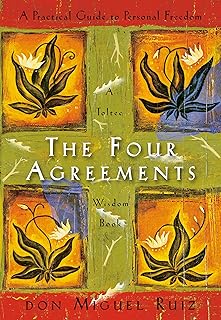
The Four Agreements: A Practical Guide to Personal Freedom by Don Miguel Ruiz offers a powerful framework for aligning your actions with your deepest values. At $7.05 with a 4.7 rating, it’s a cheap but profound investment in self-awareness.
Self Discipline Key Point #2: Build a Routine That Doesn’t Require Willpower
Willpower is a limited resource. The more you use it, the more it depletes. That’s why your environment and routine must do the heavy lifting.
Stack your new habit onto an existing one. For example, “After I pour my morning coffee, I will meditate for two minutes.” This is called habit stacking. It reduces the mental friction of deciding.
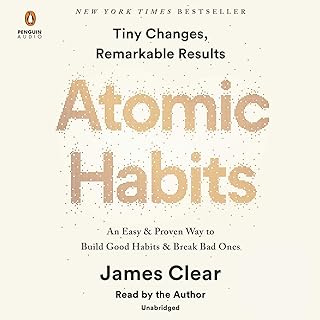
James Clear’s Atomic Habits (4.8 stars, free with Audible trial) is the gold standard for building systems that stick. The book teaches you how tiny changes lead to remarkable results.
Self Discipline Key Point #3: Embrace the 5-Minute Rule
When you don’t feel like doing something, commit to just five minutes. Anyone can do five minutes. Often, starting is the hardest part. Once you begin, momentum usually carries you further.
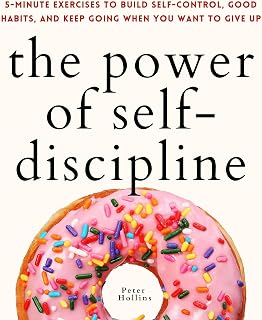
This is a core concept in The Power of Self-Discipline: 5-Minute Exercises to Build Self-Control, Good Habits, and Keep Going When You Want to Give Up. With a 4.4 rating and available for free (Audible), it’s a practical workbook for the reluctant starter.
Self Discipline Key Point #4: Remove Temptations Before They Call Your Name
You can’t out-willpower a smartphone sitting next to you with notifications buzzing. Make discipline easier by designing your environment for success.
Put the cookies in a high cabinet. Keep your phone in another room while working. Unsubscribe from distracting YouTube channels. This is the essence of digital self-discipline.

Digital Self-Discipline: Break Free from Dopamine’s Snare (4.8 stars) gives you specific tactics to reclaim your attention from screens and apps.
Self Discipline Key Point #5: Use Reflection, Not Punishment
When you slip up, don’t beat yourself up. That only drains more willpower. Instead, reflect: What went wrong? What can I adjust tomorrow?
Self-discipline is a skill, not a personality trait. You sharpen it through compassionate analysis, not self‑flagellation.
Self Discipline Key Point #6: Schedule “Decisive Moments” Daily
Every day has a handful of choice points that determine whether you stay on track. For example, hitting snooze, skipping the workout, or eating junk food after work.
Identify your decisive moments and pre‑plan a specific response. Write it down: “If I feel like skipping the gym, I will put on my shoes anyway and walk to the car.”
Self Discipline Key Point #7: Pair Discipline with Identity Change
Stop saying “I’m trying to become disciplined.” Instead say “I am a disciplined person.” When your identity aligns with your actions, consistency becomes natural.
Ask yourself: What would a disciplined person do right now? Then do that.
Self Discipline Key Point #8: Train Your Discipline Muscle in Small Doses
Think of self-discipline like a muscle. You can’t bench press 300 pounds on day one. Start with tiny acts of discipline: make your bed, do one push-up, read two pages.
Admiral William H. McRaven’s Make Your Bed: Little Things That Can Change Your Life…And Maybe the World (4.7 stars, $6.95) is a brilliant reminder that small daily disciplines compound into extraordinary results.

Self Discipline Key Point #9: Use Frameworks Like “30 Days to Self Discipline”
A structured challenge can jumpstart your consistency. Knowing you only have to stick with it for 30 days makes the commitment feel less overwhelming.
Self Discipline: 30 Days to Self Discipline: 30 Days to Greatness, Volume 2 (4.3 stars, free) provides a day-by-day plan to build your willpower gradually. Combine it with STOIC DISCIPLINE 30 DAYS TO UNBREAKABLE SELF-CONTROL AND FOCUS (4.8 stars, $13.99) for a double dose of ancient wisdom.


Self Discipline Key Point #10: Cultivate Self-Compassion as a Fuel Source
Here’s the twist: the most disciplined people aren’t the harshest on themselves. They forgive slip‑ups quickly and get back on track without drama.
Self-compassion reduces shame, which is a major reason people abandon goals. Read Note to Self: The Discipline of Preaching to Yourself (4.6 stars, $14.99) to learn how to talk to yourself in a way that builds resilience, not guilt.

Top Books on Self-Discipline: A Comparison
To master the self discipline key points, reading a few powerful books can accelerate your transformation. Here’s a comparison of five essential titles:
| Product (Click Image to Buy) | Title | Price | Rating | Key Focus |
|---|---|---|---|---|
|
Atomic Habits | $0.00 (Audible) | 4.8 | Systems and small changes |
 |
No Excuses!: The Power of Self-Discipline | $8.66 | 4.7 | Mental toughness & responsibility |
 |
Discipline Equals Freedom | $12.93 | 4.7 | Field manual for daily action |
 |
The Power of Discipline | $16.83 | 4.6 | Self-control & mental toughness |
 |
Discipline Is Destiny | $5.88 | 4.7 | Stoic virtue of self-control |
Each of these resources reinforces at least one of the ten essentials. Pick the one that resonates with your biggest challenge right now.
FAQ: Common Questions About Self-Discipline Key Points
1. Can self-discipline be learned, or are some people just born with it?
Absolutely learned. Research shows self-discipline is like a muscle. You strengthen it through consistent practice. Start small and increase gradually. Everyone can improve.
2. How do I stay disciplined when I’m exhausted?
Lower the bar. Do a micro‑version of your task. One minute of stretching instead of a full workout. Read one page instead of a chapter. The act of showing up reinforces the habit.
3. What’s the single most important self discipline key point?
Knowing your “why” is the foundation. Without a powerful reason, every obstacle looks like a reason to quit. Your why provides the emotional fuel when logic says “stop.”
4. How long does it take to build self-discipline?
There’s no magic number. Some people feel changes in two weeks. Others need a few months. Focus on consistency over speed. The 30‑day challenges mentioned earlier are great starting points.
5. Is self‑discipline the same as willpower?
Not exactly. Willpower is the momentary effort to resist temptation. Self‑discipline is the long‑term skill of aligning your actions with your values, using systems, habits, and mindset.
6. What should I do after a lapse in discipline?
Forgive yourself immediately. Analyze the trigger. Adjust your environment or routine to prevent it next time. Then take one small disciplined action to get back on track. Shame is the enemy of progress.
Final Thought: Discipline Is the Bridge Between Goals and Reality
Motivation gets you started. Self‑discipline keeps you going when the novelty wears off. These ten self discipline key points are not a checklist you complete once. They are practices you revisit daily, weekly, and yearly.
Choose one key point today and apply it for the next 48 hours. See how it feels. Then pick another. Over time, you’ll transform from someone who occasionally tries to someone who consistently delivers.
The life you want is on the other side of discipline. You have everything you need to get there. Start now.