
Most people think self-discipline is about waking up at 5 a.m., grinding through pain, and white‑knuckling temptation. And sure, that can work for a while. But Jordan Peterson offers something deeper. For him, self-discipline is not a checklist of habits. It’s a way of taking full responsibility for your life, facing the chaos inside and outside, and choosing meaning over immediate gratification. In short, self-discipline Jordan Peterson style is about voluntarily carrying the weight of your own existence.
This article unpacks exactly what that means. We’ll look at the psychological roots of Peterson’s ideas and then walk through a practical, step‑by‑step system you can use today. Along the way, we’ll highlight books and resources that can accelerate your growth, each chosen because they align with the same principles of personal responsibility and disciplined action.
So if you’re tired of quick‑fix advice and want a philosophy of self‑mastery that actually sticks, read on. This is the real deal.
Table of Contents
What does self-discipline mean according to Jordan Peterson?
Peterson does not see self‑discipline as a repressive force. Instead, he describes it as the ability to organise your life around a meaningful goal, even when it’s difficult. In his lectures and in 12 Rules for Life, he argues that human beings are wired for struggle. We thrive when we take on a burden that matters. Self‑discipline, then, is the voluntary acceptance of that burden.
Three core ideas sit at the heart of self-discipline Jordan Peterson:
| Core Idea | What it means for discipline |
|---|---|
| Responsibility | You are the only one who can fix your life. No one else will do it for you. |
| Order vs. Chaos | Discipline creates order in your internal and external world, but you must also learn to navigate chaos with courage. |
| Integration of the shadow | True strength comes from acknowledging your darker impulses and choosing to channel them constructively. |
Responsibility as the core of self-discipline
Tie your self‑discipline to something bigger than a count of reps or hours of work. Peterson often says: “Compare yourself to who you were yesterday, not to who someone else is today. ” That comparison only works if you take full ownership of your progress. Self‑discipline becomes a form of respect for your own potential.
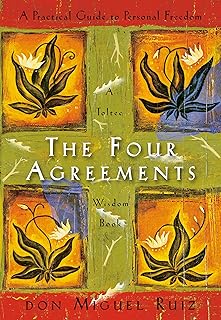
If you want to go deeper into why taking personal responsibility changes everything, The Four Agreements offers a complementary framework. It teaches you to be impeccable with your word and never make assumptions – two disciplines that Peterson would wholeheartedly endorse.
Order, chaos, and the integration of the shadow
Peterson explains that life is a constant dance between order (familiar structure) and chaos (the unknown). Self‑discipline requires you to confront the chaos voluntarily before it forces you to. That means cleaning your room, telling the truth, and doing the thing you’re most afraid of.
This is not easy. The shadow – the parts of yourself you don’t want to admit exist – will resist. Discipline is the force that integrates those parts, turning potential destruction into focused ambition.
How the concept of self-discipline Jordan Peterson differs from typical self-help
Mainstream self‑help often frames discipline as a system of rewards and punishments. “Do this, get that.” Peterson’s view is more philosophical: discipline is a moral imperative. You owe it to yourself, and to the people around you, to become the strongest version of yourself you can be.
Discipline is not just willpower but orientation
Willpower alone burns out. If you orient your life toward a meaningful goal – something that reduces suffering and brings order – discipline flows naturally. Peterson puts it bluntly: “If you cannot discipline yourself, you cannot be trusted. ” That trust includes trusting yourself.
This shift in perspective is exactly what Discipline Equals Freedom by Jocko Willink captures. Willink’s field manual is raw, practical, and echoes Peterson’s call to embrace struggle as the path to freedom.

Step-by-step application of self-discipline Jordan Peterson's principles
Enough theory. Here is a practical plan you can start today. Each step is drawn directly from Peterson’s teachings and adapted for daily use.
Step 1: Set your house in perfect order
Peterson famously says: “Clean your room. ” That is not a metaphor for a tidy desk. It means take responsibility for the small domain you can control. If you cannot manage your own bedroom, how can you manage your health, finances, or relationships?
Action: Spend 15 minutes today tidying one area of your life – your desk, your car, your kitchen. Notice how much clearer your mind feels. Start there.
Step 2: Confront the chaos voluntarily
Discipline means choosing to face what you avoid. For Peterson, voluntary confrontation builds courage and strength. Stop postponing the difficult conversation or the workout. Do it now.
Action: Identify one task you have been putting off. Do it first thing tomorrow. Use the principle from Make Your Bed – start with a small victory and build momentum.

Step 3: Speak the truth and negotiate with yourself
Self‑discipline requires radical honesty. Stop lying to yourself about why you didn’t follow through. If you feel resistance, negotiate. “I will work on this project for ten minutes, and then I can stop.” Often, ten minutes turns into an hour.
Action: The next time you feel an excuse rising, write it down and ask yourself: “Is this true?” Challenge your own story.
Step 4: Do the difficult thing first
Your willpower is highest in the morning. Peterson advises tackling your most important task as soon as possible. This aligns with what James Clear calls “atomic habits” – small, consistent actions that compound.
Deepen this habit with Atomic Habits, a book that shows exactly how to make discipline automatic through tiny changes.

Recommended resources to deepen your self-discipline journey
The products below are carefully chosen because they reinforce Peterson’s ideas of responsibility, order, and consistent action. Use them as tools – not as substitutes for the real work.
Books that align with self-discipline Jordan Peterson
| Book | Price | Rating | Key Takeaway | Buy at Amazon |
|---|---|---|---|---|
| The Four Agreements | $7.05 | 4.7 | Keep your word, avoid assumptions, be disciplined in your communication. | |
| Discipline Equals Freedom | $12.93 | 4.7 | Raw, tactical approach to building self‑discipline through mental toughness. | |
| Atomic Habits | $0.00 (audible) | 4.8 | Systems for building habits that stick, consistent with Peterson’s small‑step philosophy. | |
| No Excuses! | $8.66 | 4.7 | Brian Tracy’s classic on the power of self‑discipline – straightforward and motivating. |  |
| The Mountain Is You | $0.00 | 4.7 | Transform self‑sabotage into self‑mastery – a perfect companion for Peterson’s shadow work. |  |
Practical workbooks and guides
If you prefer exercises over theory, these resources will help you apply self-discipline Jordan Peterson concepts directly.
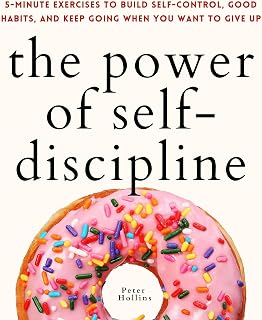
- The Power of Self-Discipline: 5-Minute Exercises – short daily drills to build consistency (Rating 4.4, $0.00).
- Stoic Self-Discipline – 33 ancient secrets aligned with Peterson’s views on managing chaos (Rating 4.7, $19.99).
- Digital Self-Discipline – break free from dopamine addiction, a modern chaos that Peterson warns about (Rating 4.8, $12.99).
Comparison of top self-discipline books
| Feature | No Excuses! | Discipline Is Destiny | The Science of Self-Discipline |
|---|---|---|---|
| Price | $8.66 | $5.88 | $0.00 |
| Rating | 4.7 (3,800 reviews) | 4.7 (5,800 reviews) | 4.5 (4,100 reviews) |
| Approach | Practical psychology with case studies | Stoic philosophy combined with modern examples | Neuroscience and mental toughness strategies |
| Best for | Quick, actionable tips | Long‑term mindset shifts | Understanding the biology of willpower |
| Buy | |
 |
 |
Common misconceptions about self-discipline Jordan Peterson
Even well‑intentioned people misunderstand Peterson’s message. Let’s clear a few up.
Misconception 1: Self‑discipline means being harsh with yourself.
Peterson never advocates cruelty. He says discipline is a form of self‑care. You accept the short‑term discomfort to avoid long‑term suffering.
Misconception 2: It’s all about productivity.
No. It’s about living a meaningful life. Some disciplined people do nothing that looks productive on the surface – but they are deeply engaged with their own development.
Misconception 3: You need to be perfect.
Imperfection is part of the journey. The goal is to progress, not to eliminate all weakness. Peterson jokes that even he struggles with discipline. The key is to “pick yourself up” again.
Frequently asked questions about self-discipline Jordan Peterson
Q: What is the core message of Jordan Peterson on self-discipline?
A: Self‑discipline is the voluntary acceptance of responsibility. It means organizing your life around a meaningful goal, confronting chaos, and telling the truth. It is not about punishment but about building a life you can respect.
Q: How can I start applying self-discipline Jordan Peterson’s ideas today?
A: Begin with the smallest act of order – clean your room, make your bed, do one thing you’ve been avoiding. Then gradually increase the challenge. Use the step‑by‑step guide above.
Q: Are there books that complement Peterson’s view on discipline?
A: Yes. Atomic Habits, Discipline Equals Freedom, and The Four Agreements all reinforce his principles.
Q: Is “self-discipline Jordan Peterson” different from regular self-discipline?
A: Yes, because it is rooted in existential responsibility and moral obligation, not just performance. It aims at reducing suffering and creating order, not just achieving goals.
Final thoughts
Self‑discipline, the Peterson way, is not a list of tips. It is a way of being. You stop waiting for someone to save you. You look at the mess in your life and you start cleaning it, one small corner at a time. You tell the truth, especially to yourself. You do the difficult thing now because you know the pain of regret is far worse than the pain of discipline.
Start today. Pick one rule from this page and apply it for 24 hours. Then do it again tomorrow. The strength you build will change everything – not just what you achieve, but who you become.
And if you ever need a push, return to these books and ideas. They have helped thousands of people before you. They can help you too.