
What if the toughest thing you could do for yourself wasn’t a punishing grind, but an act of deep kindness? Most of us think of self love as bubble baths, cheat days, or saying yes to every impulse. But real self love often looks like a 5 a.m. alarm, a skipped dessert, or a tough conversation you’ve been avoiding. That’s because self discipline is the highest form of self love. When you choose the hard thing today, you’re protecting your future self. You’re saying, “I care about you enough to make this uncomfortable choice now so you can thrive later.”
This idea flips the script on both discipline and self love. Discipline isn’t punishment—it’s a gift you give yourself. And self love isn’t indulgence—it’s the courage to do what’s right for you over the long haul. Let’s dig deep into why this truth matters, how it shows up in real life, and exactly how you can start practicing it today.
Table of Contents
Why Self Discipline Is the Highest Form of Self Love
It sounds counterintuitive. How can saying no to something you want be loving? Because self love is about honoring your whole self, not just your present-moment cravings. Your future self has goals, health, and dreams. Your current self has urges. True love chooses the long-term wellbeing of the person you’re becoming.
When you skip the workout, you might feel a moment of relief. But your future self pays for that decision with weaker health and regret. When you say yes to an extra hour of sleep instead of studying, your future self struggles with missed opportunities. Self discipline is the highest form of self love because it bridges the gap between who you are now and who you want to be.
Neuroscience backs this up. Your prefrontal cortex (the rational part of your brain) can override your limbic system (the emotional, impulsive part). Every time you practice self discipline, you strengthen those neural pathways. In his book The Power of Self-Discipline, Raza Imam explains that willpower is like a muscle—use it and it grows. This isn’t about deprivation; it’s about training yourself to choose what serves you best.

How Hard Choices Can Be a Kindness
Imagine you wake up at 5:30 a.m. to run. It hurts. Your bed is warm. But you do it anyway. That’s pure self love. You’re giving your future self energy, confidence, and a healthy heart. The kindness is in the sacrifice.
Consider the alternative. You sleep in, feel groggy, skip the workout, and later feel guilty. Which choice is more kind to you? The hard choice, every time.
The same applies to money. Saying no to a new gadget or a takeout meal feels restrictive. But that no is a yes to financial freedom. Self discipline is the highest form of self love because it protects you from the pain of debt, stress, and missed goals.
Even in relationships, discipline shows up as kindness. You choose to have an honest, uncomfortable conversation rather than bottle up resentment. You say no to a toxic friend because it’s better for your mental health. Hard? Yes. But deeply loving.
The Psychology Behind Self Discipline as Self Love
Psychologists call this “delay discounting” or “temporal discounting.” We tend to overvalue immediate pleasure and undervalue future rewards. Self discipline corrects that bias. It rebalances your decision-making so your future matters as much as your present.
A famous study by Walter Mischel (the marshmallow test) showed that children who could delay gratification did better in life. They earned higher test scores, had better relationships, and were healthier. Their self discipline wasn’t cruelty—it was a form of self care.
Dr. Angela Duckworth, author of Grit, found that perseverance and passion for long-term goals trump talent. She calls self discipline “a kind of self-respect.” When you keep promises to yourself, you trust yourself more. That trust builds a foundation for confidence and achievement.
For a deeper dive into the psychology of self discipline, check out The Psychology of Self-Discipline: Twenty-Four Proven Strategies to Rewire Your Brain for Consistent Action. It offers research-backed methods to reprogram your habits.

Real Life Examples: Self Discipline Is the Highest Form of Self Love
Let’s make this concrete. Here are everyday scenarios where discipline equals self love.
Health and Fitness
- Hard choice: Exercise when tired; meal prep on Sunday.
- Kindness to self: Stronger body, better mood, longer life.
- Pleasure trap: Binge-watching Netflix, eating junk.
Finances
- Hard choice: Automate savings; skip impulse buys.
- Kindness to self: Emergency fund, retirement security, peace of mind.
- Pleasure trap: Retail therapy, dining out constantly.
Career and Growth
- Hard choice: Study after work; take a course; network.
- Kindness to self: Promotions, skill mastery, more options.
- Pleasure trap: Scrolling social media, procrastinating.
Relationships
- Hard choice: Apologize first; set boundaries; forgive.
- Kindness to self: Deeper connections, less drama, more respect.
- Pleasure trap: Avoiding conflict, ghosting, people-pleasing.
In every case, self discipline is the highest form of self love because it builds the life you truly want.
Stoic Wisdom and Modern Self Discipline
The ancient Stoics understood this perfectly. Seneca said, “He who indulges his desires, indulges his enemy.” Epictetus taught that discipline is the path to freedom. This isn’t about crushing your spirit—it’s about aligning your actions with your values.
Ryan Holiday’s Discipline Is Destiny: The Power of Self-Control expands on this. He argues that self mastery is the key to a good life. Without it, you’re a slave to impulse. With it, you’re free to become your best self.

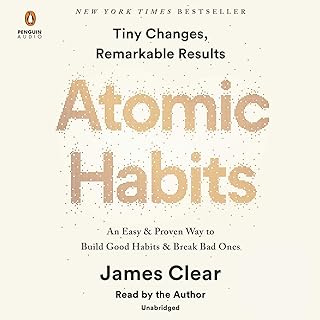
Modern authors build on this. James Clear’s Atomic Habits shows that small, consistent actions rewire your identity. “You do not rise to the level of your goals,” he writes. “You fall to the level of your systems.” Self discipline becomes automatic when your environment supports it.
Another powerful read is The Mountain Is You: Transforming Self-Sabotage into Self-Mastery. Brianna Wiest explains that self sabotage is often misplaced self love—your brain trying to protect you from failure. True self love means reprogramming those patterns.

Practical Steps to Practice Self Discipline as Self Love
You don’t need to overhaul your life overnight. Start small. Here’s how:
-
Define your future self. Who do you want to be in one year? Five years? Write it down. Every time you face a choice, ask: “What would my future self want me to do?”
-
Create friction for bad habits. Make it harder to choose the easy path. Delete the food delivery app. Keep your phone in another room while working. Put your gym clothes next to your bed.
-
Use the 10-minute rule. When you feel a strong urge to give in, tell yourself you’ll wait 10 minutes. Usually the craving passes. This builds willpower.
-
Celebrate small wins. Every disciplined choice is a victory. Don’t wait for big milestones. Acknowledge that you honored yourself today.
-
Forgive failures. Self discipline isn’t perfection. It’s getting back up. When you slip, treat it like a stumble, not a fall. Ask what you learned, then move on.
-
Surround yourself with accountability. Share your goals with a friend, join a group, or use an app. External support reinforces internal discipline.
For a structured 30-day program, consider 365 Days With Self-Discipline by Martin Meadows. It delivers daily mental challenges to strengthen your resolve.

Comparison of Top Self Discipline Books
To help you choose the best resource for your journey, here’s a comparison of some highly rated books on this topic.
| Product | Price | Rating | Key Focus | Buy at Amazon |
|---|---|---|---|---|
 |
$8.66 | 4.7 | Practical self discipline strategies | Buy Now |
|
$0.00 (Audible) | 4.8 | Habit building through small changes | Buy Now |
|
$5.88 | 4.7 | Stoic approach to self control | Buy Now |
|
$0.00 (Audible) | 4.7 | Overcoming self sabotage | Buy Now |
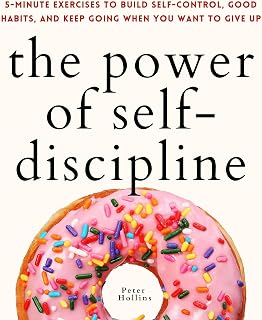 |
$0.00 (Audible) | 4.4 | 5-minute exercises for self control | Buy Now |
 |
$12.99 | 4.8 | Breaking digital addictions | Buy Now |
Each of these books reinforces the core truth: self discipline is the highest form of self love. They offer different angles—some focus on habits, others on mindset, and some on ancient philosophy. Pick the one that resonates most with your current challenges.
The Four Agreements and Self Discipline
Don Miguel Ángel Ruiz’s The Four Agreements is a classic guide to personal freedom. Its principles—be impeccable with your word, don’t take anything personally, don’t make assumptions, always do your best—are essentially about self discipline. Keeping your word to yourself is the ultimate act of self love.
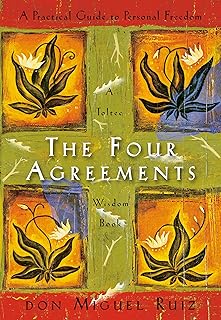
When you follow these agreements, you stop betraying yourself. You stop making excuses. You start living with integrity. That’s the highest form of love.
Common Myths About Self Discipline
Let’s clear up some misconceptions.
Myth 1: Self discipline means being harsh with yourself.
Truth: It’s about being compassionate for your future self. You choose the hard thing now because you care.
Myth 2: Self discipline takes away joy.
Truth: It amplifies joy by removing guilt and regret. You enjoy your rest more when you’ve earned it.
Myth 3: Some people are naturally disciplined.
Truth: Self discipline is a skill anyone can learn. It’s like a muscle—start light, build gradually.
Myth 4: Self discipline is the same as motivation.
Truth: Motivation fades. Discipline is what carrys you through when motivation is gone.
How to Keep Going When It Gets Hard
Even after you understand why self discipline is the highest form of self love, you’ll still struggle. That’s normal. Tough days will come. Here’s how to stay consistent:
- Remind yourself of the “why” behind your discipline. Write it on a sticky note.
- Use the phrase “I get to do this” instead of “I have to.” Reframes the hard choice as a privilege.
- Track your progress. Seeing a streak of disciplined days is motivating.
- Pair hard tasks with something enjoyable. Listen to a podcast while cleaning, or reward a workout with a healthy smoothie.
- Rest deliberately. Self discipline includes knowing when to recover. Burnout helps no one.
Remember that every hard choice is a vote for the person you want to become. As Jocko Willink says in Discipline Equals Freedom, “Discipline is not the enemy. Comfort is the enemy.”

FAQ: Self Discipline Is the Highest Form of Self Love
Q: What does “self discipline is the highest form of self love” mean?
A: It means that the most caring thing you can do for yourself is to make choices that serve your long-term wellbeing, even if they are difficult in the moment. Discipline protects you from future regret and builds the life you truly want.
Q: How is discipline a form of self kindness?
A: Kindness isn’t just giving yourself what feels good now. Real kindness considers your future. Setting boundaries, working hard, and staying healthy are acts of deep respect and compassion for yourself.
Q: Can self discipline be unhealthy?
A: Yes, if taken to extremes—like overworking to burnout or rigid perfectionism. Healthy self discipline is balanced with rest and flexibility. It comes from a place of self care, not self punishment.
Q: How do I start building self discipline if I have none?
A: Start tiny. Pick one small thing—like making your bed each morning, or drinking water before coffee. Do it for a week. Then add another. Small wins build momentum and confidence.
Q: What books should I read on self discipline?
A: Some top recommendations are Atomic Habits by James Clear, No Excuses! by Brian Tracy, Discipline Is Destiny by Ryan Holiday, and The Mountain Is You by Brianna Wiest. They each offer actionable strategies.
Q: Is self discipline the same as willpower?
A: Not exactly. Willpower is the mental energy to resist temptation. Self discipline is the broader skill of consistently aligning your actions with your goals, even when willpower runs low. Systems and habits make discipline sustainable.
Final Thoughts: Your Future Self Is Counting on You
You now understand why self discipline is the highest form of self love. It’s not about being a drill sergeant to yourself. It’s about being the kind of friend who tells you the hard truth because they care too much to let you settle.
Every time you make a tough choice, you’re building a bridge to a better version of you. You’re saying, “I believe in you enough to do the work today, so you can enjoy the life you deserve tomorrow.”
Start where you are. Choose one hard thing today. Do it with kindness, not cruelty. Then watch how your life transforms. Because the deepest love isn’t always the easiest—it’s the one that sticks with you through the hard times and carries you to the good ones.