
You’ve been hitting the gym every morning. You’ve finally stuck to that savings plan. Your to-do list? Crushed. But one day you catch yourself thinking: “How do I even talk about this in Spanish?” Whether you’re learning the language, dating a native speaker, or working with a Spanish-speaking team, knowing how to express self discipline in Spanish unlocks a whole new level of connection and growth.
Let’s be real: discipline isn’t just about gritting your teeth and pushing through pain. It’s about showing up for yourself day after day. And if you can articulate that in another language, you’re not just building willpower — you’re building a bilingual mindset that strengthens your identity.
In this guide, we’ll cover the exact phrases, the cultural nuances, and the most natural ways to talk about self discipline in Spanish. You’ll also discover top books (yes, some in English but packed with universal wisdom) to fuel your journey. Ready? Vamos.
Table of Contents
What Does Self Discipline in Spanish Really Mean?
First, the direct translation. Self discipline in Spanish is autodisciplina. It’s a straightforward compound word: auto (self) + disciplina (discipline). You’ll hear it used in academic, professional, and personal contexts.
But Spanish, like any rich language, has layers. People also say:
- Disciplina personal – personal discipline
- Fuerza de voluntad – willpower (literally “strength of will”)
- Dominio propio – self-control / self-mastery (often used in moral or spiritual contexts)
- Control personal – personal control
Each phrase carries a slightly different shade. Autodisciplina is the most common and neutral. Dominio propio leans into the idea of mastering your impulses – think of it as the Spanish cousin of “self-mastery.” Fuerza de voluntad is the raw, gritty willpower you summon when the alarm goes off at 5 a.m.
Understanding these nuances helps you sound natural, not like a walking dictionary. When a Mexican friend says, “Necesito más autodisciplina para dejar el azúcar,” you know exactly what they mean.
How to Say Self Discipline in Spanish Naturally (Key Phrases)
Knowing the vocabulary is step one. Using it in real sentences is where the magic happens. Here are the most natural phrases for self discipline in Spanish, with examples you can steal.
1. Tener autodisciplina (to have self-discipline)
Ella tiene mucha autodisciplina para estudiar todos los días.
(She has a lot of self-discipline to study every day.)
2. Practicar la autodisciplina (to practice self-discipline)
Practicar la autodisciplina es clave para alcanzar tus metas.
(Practicing self-discipline is key to reaching your goals.)
3. Desarrollar autodisciplina (to develop self-discipline)
Quiero desarrollar más autodisciplina para dejar de procrastinar.
(I want to develop more self-discipline to stop procrastinating.)
4. Tener dominio propio (to have self-control)
El dominio propio es la base de la libertad financiera.
(Self-control is the foundation of financial freedom.)
5. Usar la fuerza de voluntad (to use willpower)
Usé toda mi fuerza de voluntad para no revisar el celular mientras trabajaba.
(I used all my willpower not to check my phone while working.)
6. Mantener la disciplina (to maintain discipline)
Mantener la disciplina en los hábitos diarios es difícil pero vale la pena.
(Maintaining discipline in daily habits is hard but worth it.)
Pro tip: In casual conversation, Spanish speakers often drop the “auto” and just say disciplina. “Necesito disciplina para ahorrar” sounds perfectly natural.
The Cultural Perspective on Self Discipline in Spanish-Speaking Countries
Discipline isn’t a cold, rigid concept in Latin American or Spanish culture. It’s often wrapped in warmth and resilience. The phrase “echarle ganas” (to put effort into something) captures the spirit better than any textbook definition. When someone says, “Échale ganas a tu dieta,” they’re not ordering you — they’re cheering you on.
Another cultural gem: “La disciplina es el puente entre metas y logros” – Discipline is the bridge between goals and accomplishments. This saying pops up in motivational posters, family advice, and even telenovelas.
In many Spanish-speaking households, discipline is taught through consejos (advice) and ejemplo (example). It’s less about punishment and more about building character. So when you talk about self discipline in Spanish, remember you’re tapping into a tradition of perseverancia and sacrificio that runs deep.
Why Learning Self Discipline in Spanish Matters for Your Growth
You might wonder: “Why bother translating this concept? I already know discipline in English.” Fair question. But here’s the thing — your brain processes goals differently in a second language.
Research shows that thinking about willpower in a foreign language can reduce emotional bias and improve decision-making. When you say “Voy a mantener la disciplina” instead of “I will maintain discipline,” you activate different neural pathways. You become more deliberate.
Also, if you’re learning Spanish, internalizing self discipline in Spanish helps you speak more authentically. You’ll stop translating word-for-word and start thinking in the language. That’s a huge leap toward fluency.
And let’s not forget practical benefits: you can now set goals with Spanish-speaking partners, read books on discipline in their original language (or translations), and even coach yourself using bilingual affirmations.
Books to Deepen Your Understanding of Self Discipline
Reading about discipline is one of the best ways to build it. Here are powerful books that cover self discipline in Spanish (or the universal principles behind it). I’ve included a mix of English originals available in Spanish translations, plus a few pure gems.
No Excuses!: The Power of Self-Discipline by Brian Tracy

Price: $8.66 | Rating: 4.7 / 5
A classic that cuts through excuses and gives you a no-nonsense framework for self-discipline. Tracy covers everything from time management to personal responsibility. Available in Spanish as ¡Sin Excusas!.
Atomic Habits by James Clear

Price: $0.00 (audible) | Rating: 4.8 / 5
Not specifically about discipline, but its habit-building system is discipline in action. The Spanish version is Hábitos Atómicos.
Discipline Is Destiny: The Power of Self-Control by Ryan Holiday

Price: $5.88 | Rating: 4.7 / 5
Holiday’s Stoic approach to self-control is gold. He shows how discipline leads to freedom. Spanish translation: El Destino de la Disciplina.
The Power of Self-Discipline: 5-Minute Exercises by Peter Hollins
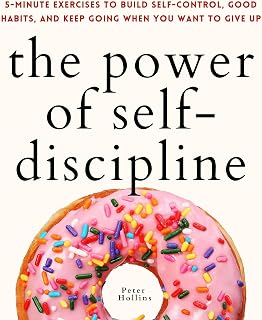
Price: $0.00 (audible) | Rating: 4.4 / 5
Perfect for busy people. Short, actionable exercises you can do in five minutes.
The Science of Self-Discipline by Peter Hollins

Price: $0.00 (audible) | Rating: 4.5 / 5
Dives into the psychology and neuroscience behind willpower. Great for understanding why you struggle.
Comparison Table: Top Self-Discipline Books
| Product | Image | Price | Rating | Buy at Amazon |
|---|---|---|---|---|
| No Excuses! | |
$8.66 | 4.7 | Buy Now |
| Atomic Habits | |
$0.00 | 4.8 | Buy Now |
| Discipline Is Destiny | |
$5.88 | 4.7 | Buy Now |
| The Power of Self-Discipline | |
$0.00 | 4.4 | Buy Now |
| The Science of Self-Discipline | |
$0.00 | 4.5 | Buy Now |
Reading any of these will supercharge your understanding of self discipline in Spanish — whether you read them in English or find the translated versions.
Practical Exercises to Build Self Discipline in Spanish
You don’t just learn discipline by reading. You build it through action. Here are exercises that combine language learning with willpower training.
Exercise 1: Daily Affirmations in Spanish
Write three affirmations using self discipline in Spanish phrases. Example:
Hoy elijo la autodisciplina sobre la comodidad.
(Today I choose self-discipline over comfort.)
Say them out loud every morning. Your brain will start associating Spanish with determination.
Exercise 2: Keep a Spanish Discipline Journal
Each evening, write one sentence about how you practiced discipline that day. Use vocabulary like:
- Hoy mantuve el enfoque (Today I stayed focused)
- Usé mi fuerza de voluntad (I used my willpower)
- No cedí a la tentación (I didn’t give in to temptation)
Over time, you’ll build a powerful record of your growth.
Exercise 3: Set Metas (Goals) in Spanish
Instead of writing your goals in English, write them in Spanish. For example:
Meta: Leer 20 páginas de un libro de autodisciplina cada día.
(Goal: Read 20 pages of a self-discipline book each day.)
This forces you to think in Spanish and reinforces the habit.
Exercise 4: Find a Spanish Accountability Partner
Tell a friend or language partner: “Necesito que me ayudes a mantener la disciplina.” Ask them to check in on you using Spanish phrases. You’ll learn together.
Common Mistakes When Saying Self Discipline in Spanish
Even advanced Spanish speakers slip up. Here are pitfalls to avoid.
Mistake 1: Literal translation of “self-control”
“Auto-control” is understood but sounds robotic. Use dominio propio or autocontrol (one word) instead. “Self-control” as two words doesn’t exist.
Mistake 2: Overusing “autodisciplina” when “disciplina” works
In many contexts, just say disciplina. For example, “Necesito disciplina para estudiar” sounds more natural than always adding auto. Save autodisciplina for when you really want to emphasize self-regulation.
Mistake 3: Confusing “disciplina” with “castigo”
In Spanish, disciplina can also mean punishment (like “disciplinar a un niño”). But in self-improvement contexts, it’s never negative. Just be aware of the dual meaning.
Mistake 4: Mispronouncing “fuerza de voluntad”
It’s “FWER-sah deh vo-lun-TAD,” not “foo-er-zah.” Practice saying it until it rolls off your tongue.
Frequently Asked Questions About Self Discipline in Spanish
Q: What is the most common way to say self discipline in Spanish?
A: The most common term is autodisciplina. It’s used in both formal and casual speech.
Q: How do you say “I need more self-discipline” in Spanish?
A: “Necesito más autodisciplina” or “Necesito más disciplina personal.”
Q: What’s the difference between autodisciplina and fuerza de voluntad?
A: Autodisciplina is the habit of self-regulation over time. Fuerza de voluntad is the momentary willpower you use to resist a temptation.
Q: Can I use disciplina alone to mean self-discipline?
A: Yes, often the “auto” is implied. For example, “Tengo buena disciplina” means “I have good self-discipline.”
Q: Is there a Spanish equivalent of “no excuses” for self-discipline?
A: “Sin excusas” is the direct translation. It’s used in motivational contexts, just like No Excuses! by Brian Tracy.
Q: How do you say “discipline is the key to success” in Spanish?
A: “La disciplina es la clave del éxito.”
Q: Are there any Spanish idioms related to self-discipline?
A: Yes: “El que algo quiere, algo le cuesta” (If you want something, you have to pay a price) and “Aplicar la disciplina” (to apply discipline).
Your Next Step: Make Discipline Your Second Language
You now have the words, the phrases, and the mindset to talk about self discipline in Spanish like a native. But knowing isn’t enough — you have to live it.
Start small. Pick one phrase from this article and use it today. Say it out loud. Write it on a sticky note. Tell a friend. The more you use that language, the more discipline becomes part of your identity.
And if you want a deep dive into the principles that fuel real change, grab one of the books we covered. No Excuses! is a fantastic starting point — it’s cheap, short, and brutally honest.
Remember: La disciplina no es lo que haces cuando te sientes motivado. Es lo que haces cuando no te sientes motivado. (Discipline isn’t what you do when you feel motivated. It’s what you do when you don’t.)
Ahora te toca a ti. Adelante.