
You want your child to grow up with grit, focus, and the ability to finish what they start. But let’s be honest: telling a kid to “have more self-discipline” is about as effective as telling a goldfish to climb a tree. The real trick? Self discipline for kids activities that feel like play, not punishment. When you pair purposeful games with the right mindset, your child develops patience, persistence, and follow-through without a single lecture.
In this deep dive, you’ll discover exactly which games work, why they build real self-control, and how to weave them into your daily routine. We’ll also explore the science behind willpower, practical implementation tips, and powerful resources you can use right now. Ready to turn playtime into a training ground for life? Let’s go.
Table of Contents
Why Self Discipline for Kids Activities Matters More Than Report Cards
Self-discipline is the single best predictor of long-term success, according to decades of research. The famous Stanford marshmallow experiment showed that children who could delay gratification scored higher on SATs, had better health, and earned more money decades later. But here’s the catch: self-control isn’t something kids are born with. It’s a skill that must be built, just like a muscle.
Self discipline for kids activities provides that workout. Through structured play, children learn to:
- Wait their turn without exploding
- Push through frustration when a task feels hard
- Stick with a plan even when a more exciting option appears
This isn’t about turning your living room into a boot camp. It’s about choosing games that naturally teach these skills while your child laughs, thinks, and tries again.
The Science Behind the Play: How Games Wire the Brain for Self Control
Every time a child plays a game that requires waiting, planning, or managing impulses, their prefrontal cortex gets a workout. That’s the part of the brain responsible for decision-making, emotional regulation, and goal-setting. Neuroscientists call this “executive function,” and it’s the foundation of self-discipline.
When you use self discipline for kids activities, you’re literally helping your child’s brain grow stronger neural pathways for self-regulation. And the best part? Kids don’t need to understand neuroscience to benefit. They just need to have fun.
What Happens During a Game of “Freeze Dance”?
- Inhibition control: The child must stop moving the instant the music stops.
- Attention shifting: They must listen for the cue and change behavior immediately.
- Emotional regulation: They resist the urge to wiggle or laugh (harder than it sounds!).
These micro-moments of self-control add up. Over time, your child becomes better at managing impulses in real-life situations, like waiting for a turn on the swing or finishing homework before screen time.
Best Self Discipline for Kids Activities by Skill Type
Not all games target the same skill. To build a well-rounded foundation, choose activities that focus on patience, persistence, and follow-through. Below, you’ll find specific games for each category, complete with how to play and why they work.
Games That Build Patience
Patience is the ability to tolerate delay without frustration. These games teach kids that good things come to those who wait, and waiting doesn’t have to be boring.
1. The Patience Jar (Ages 3–8)
Fill a jar with small treats or marbles. Each day your child waits calmly for something (like a snack or TV time), they earn one item. When the jar is full, they get a bigger reward. This makes waiting visible and rewarding.
Why it works: The visual progress creates a sense of achievement, and the act of waiting becomes a game itself.
2. Slow-Motion Racing (Ages 5–12)
Instead of racing to finish, kids race to be the slowest. Set a start and finish line about 10 feet apart. The last one to cross wins. They must move in extreme slow motion without stopping.
Why it works: It forces intentional movement and self-control. Kids quickly realize that rushing equals losing, which teaches them to regulate their speed.
Games That Build Persistence
Persistence means sticking with a challenge even when you want to quit. These activities help kids experience the satisfaction of overcoming difficulty.
3. The Tower Challenge (Ages 4–10)
Give your child a set of blocks or cups and challenge them to build the tallest tower possible. The twist? They must use only one hand, or build on an uneven surface (like a cushion). When the tower falls, they must start over without complaining.
Why it works: Failure is built into the game. Each collapse is a chance to practice resilience. You can model persistence by saying, “That fell again. Let’s see if we can make it even taller this time!”
4. The “Not Yet” Puzzle (Ages 6–12)
Choose a puzzle that is slightly too hard for your child. Instead of helping them, say, “You haven’t solved it yet.” Encourage them to try three different strategies before asking for help. Celebrate the effort, not just the finish.
Why it works: It teaches a growth mindset. The word “yet” shifts the focus from failure to progress.
Games That Build Follow-Through
Follow-through is the ability to complete a task from start to finish. These games develop planning, sequencing, and commitment.
5. The Mission Map (Ages 5–10)
Draw a simple map of your house or yard with 5–7 “missions” (e.g., “Put this toy in the bin,” “Close the door,” “Water the plant”). Give your child the map and ask them to complete each mission in order without being reminded.
Why it works: It mimics real-world task management. Kids practice memory, sequencing, and following through on a multi-step plan.
6. Story Circle (Ages 4–8)
Sit in a circle and start a story with one sentence. Each person adds one sentence, but they must continue the same plot. If someone breaks the story (adds something unrelated), they must do a silly penalty like hopping on one foot for 10 seconds.
Why it works: It requires active listening and commitment to the group’s shared goal. Follow-through means keeping the story alive.
How to Introduce Self Discipline for Kids Activities Without Resistance
The biggest mistake parents make is turning these games into chores. If your child senses you’re “teaching” them something, they’ll resist. Instead, follow these rules:
- Join the fun: Play alongside your child. Your enthusiasm is contagious.
- Keep it short: 5–10 minutes per game is enough for young kids. Longer sessions can lead to burnout.
- Celebrate effort, not outcome: Say “I noticed you waited really patiently for your turn” instead of “You won!”
- Let them fail: Don’t rescue your child from frustration. Let them sit with it for a few seconds before stepping in.
A Sample Weekly Schedule for Self Discipline for Kids Activities
| Day | Activity | Skill Targeted | Time |
|---|---|---|---|
| Monday | Freeze Dance | Patience (inhibition) | 5 min |
| Tuesday | Tower Challenge | Persistence | 8 min |
| Wednesday | Mission Map | Follow-through | 10 min |
| Thursday | Slow-Motion Race | Patience (delay) | 5 min |
| Friday | Story Circle | Follow-through | 7 min |
| Saturday | “Not Yet” Puzzle | Persistence | 15 min |
| Sunday | Free play: choose any | Review | 10 min |
This schedule is a guide. Adjust based on your child’s age and attention span. The key is consistency, not intensity.
Real-World Challenges: What to Do When Your Child Refuses to Play
Even the best self discipline for kids activities can flop. Here are common obstacles and how to handle them with humor and grace.
“This is boring!”
Response: “You’re right, it is boring. Boring things build patience because we have to stick with them anyway. Let’s see if we can make it through three minutes and then do something exciting.”
You can also add a timer and challenge them to beat their previous record. Gamify the boring part.
“I don’t want to lose!”
Response: “Losing is part of the game. Remember when you fell learning to ride a bike? Now you’re great at it. Every time you lose, you get stronger.”
Avoid making games too competitive. Emphasize personal improvement over winning.
“I already did this yesterday!”
Response: “Yes! And today we’ll see if you can do it faster or with a new rule. Let’s add a twist, like closing your eyes for the first step.”
Variety prevents boredom without abandoning the skill-building structure.
Books and Resources That Deepen Self Discipline for Kids Activities
If you want to go beyond games and give your child (and yourself) a stronger foundation in self-discipline, these books are excellent companions. Each one offers unique insights into willpower, habits, and mental toughness.

Atomic Habits by James Clear – Not specifically for kids, but the principles of tiny habit stacking can be adapted for children. The 1% improvement philosophy is perfect for building small daily discipline routines.

Discipline Equals Freedom by Jocko Willink – A no-excuses field manual that teaches the warrior mindset. Great for older kids (10+) and parents who want to model extreme ownership.

Make Your Bed by Admiral William H. McRaven – This short book uses a simple daily task to teach discipline. Perfect for reading together and then applying the “make your bed” habit at home.

No Excuses! by Brian Tracy – Focuses on personal responsibility and goal setting. You can adapt the exercises for teenagers who need self-discipline for schoolwork and sports.
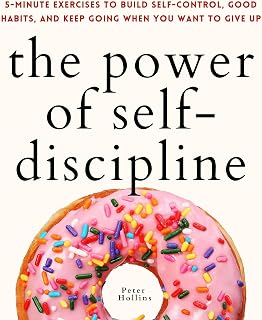
The Power of Self-Discipline: 5-Minute Exercises – Perfect for busy parents. Each exercise takes five minutes, which aligns perfectly with the short game sessions you’ll use with your child.
Comparison Table of Top Self-Discipline Books
| Product | Price | Rating | Key Focus | Buy at Amazon |
|---|---|---|---|---|
|
$0.00 (Audible) | 4.8 | Habit formation, small changes | Buy Now |
|
$12.93 | 4.7 | Mental toughness, ownership | Buy Now |
|
$6.95 | 4.7 | Daily rituals, starting small | Buy Now |
|
$8.66 | 4.7 | Personal responsibility, goal setting | Buy Now |
|
$0.00 (Audible) | 4.4 | 5-minute exercises, quick habits | Buy Now |
These books aren’t just for you. Read them aloud during family time or use the exercises as conversation starters. The Atomic Habits framework, for example, can be explained as: “Every day you practice waiting, you get a little better. After a hundred days, you’ll be a patience expert.”
How to Make Self Discipline for Kids Activities a Family Tradition
The most powerful way to embed self-discipline in your child’s life is to live it yourself. When you model patience, persistence, and follow-through, your child will mirror those behaviors. Combine these games with regular family discussions:
- During dinner: “What was one thing today that was hard for you to finish? How did you handle it?”
- Before bed: “What game did you play that required waiting? How did it feel when you finally got your turn?”
- Weekend check-in: “Let’s set one small goal for next week. It could be finishing a puzzle without help or waiting five minutes for a snack.”
These conversations reinforce the lessons from self discipline for kids activities in a low-pressure way.
Frequently Asked Questions About Self Discipline for Kids Activities
Q: At what age should I start these games?
A: From age 3 onward. Simple games like “Freeze Dance” work for toddlers. Adjust complexity as they grow.
Q: My child has ADHD. Will these games help?
A: Yes, many games for inhibition and focus are beneficial. Keep sessions very short (3–5 minutes) and use high-interest themes like dinosaurs or superheroes.
Q: How often should we play?
A: Daily is ideal, but even 3–4 times a week yields noticeable improvement. Consistency matters more than duration.
Q: Can these games be used in a classroom?
A: Absolutely. Teachers use similar activities to improve classroom behavior. Adapt them for group settings by using teams.
Q: What if my child has a tantrum during a game?
A: Pause the activity. Validate their feelings: “I see you’re frustrated.” Then offer a choice: “We can take a break and try again in two minutes, or we can do a different game.” The key is not to reward the tantrum with screen time or treats.
Q: Are digital games effective for building self-discipline?
A: Some apps and video games can teach delayed gratification and problem-solving, but they often stimulate dopamine rather than regulate it. Physical, real-world games are generally more effective for impulse control.
Final Thought: The Game Never Ends
Self-discipline isn’t a destination. It’s a continuous practice, for both you and your child. Every time you choose a self discipline for kids activity over passive entertainment, you’re investing in a future of resilience. The patience your child learns by waiting for a treat becomes the patience they need when studying for a tough exam. The persistence they develop rebuilding a fallen tower becomes the grit they need to start a business or finish a degree.
Start today. Pick one game from this list. Play it with a smile. Watch your child’s self-control grow, one laugh, one pause, one “I can do this” at a time. You’ve got this. And more importantly, they do too.