
What does the Bible actually say about self-discipline? If you’ve ever felt guilty for wanting to control your impulses, thinking it sounds too “secular” or prideful, you’re not alone. Many believers wrestle with the idea of self‑discipline, wondering if it’s a worldly concept or a godly virtue. The truth is, self‑discipline biblical meaning runs deep through Scripture—it’s not about white‑knuckling your way to holiness, but about cooperating with the Holy Spirit to live a life that honors God.
In this guide, we’ll unpack what self‑discipline really means from a biblical perspective, why it matters for your faith and daily life, and how you can actually practice it without burning out. We’ll also look at practical resources—including some excellent books—that can help you grow in this area.
Table of Contents
What Is Self‑Discipline According to the Bible?
The Bible doesn’t use the exact phrase “self‑discipline” as a compound word, but the concept appears repeatedly. The Greek word most often associated with it is egkrateia, which means “self‑control” or “mastery over one’s desires.” It’s listed as one of the fruits of the Spirit in Galatians 5:23: “gentleness, self‑control; against such things there is no law.”
So the self‑discipline biblical meaning is not about mere human willpower. It’s the ability—empowered by God’s Spirit—to say “yes” to what is good and “no” to what is harmful, even when your feelings pull you the other way.
| Biblical Term | Greek Word | Meaning |
|---|---|---|
| Self‑control | egkrateia | Inner mastery, temperance |
| Discipline | paideia | Training, instruction, correction |
| Training | gymnazo | Exercise, practice (as in 1 Timothy 4:7) |
Notice the pattern: self‑discipline in the Bible is active training, not passive restraint. It’s something you develop over time, like a muscle.
Why Self‑Discipline Matters for Your Faith
If you’re a Christian, you’ve likely heard sermons on grace, love, and faith. But self‑discipline? It can feel like the “uncomfortable” topic—the one that sounds like legalism or works‑based righteousness. However, Scripture is clear: self‑discipline is essential for spiritual growth.
It Protects You from Sin
Proverbs 25:28 says, “Like a city whose walls are broken through is a person who lacks self‑control.” Without self‑discipline, your emotional and moral defenses are down. You’re vulnerable to temptation, impulsive decisions, and regret. Self‑discipline builds those walls back up.
It Trains You for Godliness
1 Timothy 4:7‑8 tells us to “discipline yourself for the purpose of godliness.” Paul isn’t advocating self‑effort apart from grace—he’s saying that growing in holiness requires intentional practice. The self‑discipline biblical meaning here is about aligning your daily habits with your identity in Christ.
It Prepares You for Greater Responsibility
In Luke 16:10, Jesus says, “One who is faithful in a very little is also faithful in much.” Self‑discipline in small things—like getting up on time, managing your money, or controlling your tongue—opens the door for God to entrust you with more.
Biblical Examples of Self‑Discipline
Sometimes the best way to understand a concept is to see it lived out. Here are three powerful biblical examples of self‑discipline.
Jesus in the Wilderness
Before His public ministry, Jesus fasted for forty days (Matthew 4:1‑11). He had the power to turn stones into bread, but He chose restraint. His “no” to immediate comfort was a “yes” to His Father’s plan. That’s the heart of self‑discipline biblical meaning: choosing long‑term obedience over short‑term gratification.
Paul’s Athletic Metaphor
Paul frequently used athletic imagery. In 1 Corinthians 9:24‑27, he writes, “Everyone who competes in the games exercises self‑control in all things. … I discipline my body and make it my slave.” Paul wasn’t a slave to his appetites; he made his body serve his mission. That’s a high‑standard but motivating picture.
Daniel’s Dietary Resolve
In Daniel 1, Daniel “purposed in his heart that he would not defile himself with the king’s food.” He showed self‑discipline in a culturally pressured situation. His resolve honored God and led to supernatural favor and wisdom. This story reminds us that self‑discipline often starts with a firm decision.
How to Practice Self‑Discipline the Biblical Way
Knowing the self‑discipline biblical meaning is helpful, but how do you actually do it? Here are practical, grace‑filled steps you can start today.
1. Renew Your Mind with Scripture
Self‑discipline begins in the mind. Romans 12:2 says, “Be transformed by the renewing of your mind.” When you fill your thoughts with God’s Word, your desires start to align with His will. Discipline becomes less of a battle and more of a natural outflow.
2. Identify Your Weak Spots
Be honest: where do you struggle most? Is it with your phone? Food? Anger? Laziness? Write down one or two areas where you want to grow. The self‑discipline biblical meaning is not about being perfect everywhere at once—it’s about steady progress.
3. Build Small, Consistent Habits
James Clear, author of Atomic Habits, famously says that habits are the compound interest of self‑improvement. The same principle applies spiritually. Want to pray more? Start with two minutes a day. Want to read the Bible consistently? Read one chapter. Small wins create momentum.

4. Lean on the Holy Spirit, Not Just Willpower
Here’s the key difference between secular self‑discipline and the biblical version: you don’t have to do it alone. Galatians 5:16 says, “Walk by the Spirit, and you will not gratify the desires of the flesh.” Ask God for help. Pray for self‑control. The self‑discipline biblical meaning includes divine partnership.
5. Use Practical Tools and Books
Sometimes you need wisdom from others who have walked the path. The following resources can help you deepen your understanding and practice of self‑discipline.
Top Books on Self‑Discipline (With a Biblical Lens)
You don’t have to reinvent the wheel. Many authors—both Christian and secular—have written powerful books on self‑discipline that align with biblical principles. Below are some of the best, with links to Amazon (prices and ratings as of writing).
Comparison Table: Best Self‑Discipline Books
| Book & Image | Price | Rating | Key Focus | Buy at Amazon |
|---|---|---|---|---|
 |
$12.93 | 4.7 | Mental toughness, daily mindset | Buy Now |
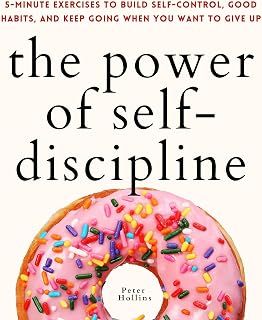 |
$0.00 (Kindle) | 4.4 | 5‑minute exercises, habit‑building | Buy Now |
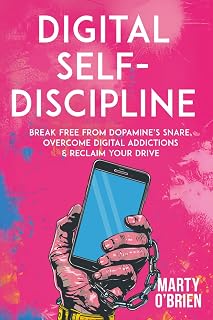 |
$12.99 | 4.8 | Overcoming screen addiction | Buy Now |
 |
$8.66 | 4.7 | Practical strategies, career & life | Buy Now |
 |
$0.00 (Kindle) | 4.7 | Self‑sabotage, emotional mastery | Buy Now |
Deeper Dive into a Few Favorites
Discipline Equals Freedom by Jocko Willink is a raw, no‑excuses field manual. It’s not explicitly Christian, but its core message—you are in control of your choices—echoes biblical themes of personal responsibility. Willink’s mantra “Discipline equals freedom” is a modern echo of Proverbs 12:24: “The hand of the diligent will rule.”
Digital Self‑Discipline by someone? The title alone speaks to a huge modern struggle: our phones. This book offers practical strategies to break free from dopamine loops and reclaim your focus. For believers, this is crucial—our time belongs to God (Ephesians 5:16).
No Excuses! by Brian Tracy is a classic. Tracy’s 21 principles align well with biblical wisdom about work, goal‑setting, and perseverance. At $8.66, it’s a steal.
Common Questions About Self‑Discipline in the Bible
Let’s tackle some frequently asked questions to deepen your understanding of self‑discipline biblical meaning.
Is self‑discipline the same as legalism?
No. Legalism tries to earn God’s favor through rule‑keeping. Biblical self‑discipline is a response to God’s grace—you discipline yourself because you are already loved, not to become loved. It’s a fruit, not a root.
Can self‑discipline become an idol?
Anything can become an idol if it takes God’s place in your heart. The goal is not to worship discipline, but to use it as a tool for love (1 Corinthians 13:3). Keep your eyes on Christ, not on your habit tracker.
How do I start when I’ve failed many times?
Grace. Remember that spiritual growth is a marathon, not a sprint. The self‑discipline biblical meaning includes repentance and starting again. Lamentations 3:22‑23 says God’s mercies are new every morning. Use each fresh start as fuel.
Practical Steps to Apply Today
Enough theory. Here’s a simple action plan to put the self‑discipline biblical meaning into practice.
- Pick one area (e.g., screen time, prayer, eating) and set a tiny goal.
- Remove temptation for that goal (delete distracting apps, prep healthy snacks).
- Track your progress for seven days. Use a journal or a free app.
- Pray daily for self‑control, thanking God for His power in you.
- Read a chapter from a book like No Excuses! each week.
Remember: self‑discipline isn’t about being perfect. It’s about being faithful in the little things. And when you fall, you get back up—stronger and wiser.
FAQ: Self‑Discipline Biblical Meaning
What is the biblical definition of self‑discipline?
Biblically, self‑discipline (or self‑control) is the ability to master your own desires and actions through the power of the Holy Spirit, for the purpose of godliness. It’s not mere willpower but a fruit of the Spirit (Galatians 5:22‑23).
How is self‑discipline different from self‑reliance?
Self‑reliance trusts in your own strength; biblical self‑discipline depends on God. You train yourself, but you also pray, read Scripture, and lean on the Spirit. It’s “I can do all things through Him who strengthens me” (Philippians 4:13).
Why does God require self‑discipline if we are saved by grace?
Grace saves us, but it also teaches us to say “no” to ungodliness (Titus 2:11‑12). Self‑discipline is the practical outworking of salvation—it shapes our character and makes us more like Jesus.
Can self‑discipline help with anxiety or depression?
While not a substitute for medical help, self‑discipline in areas like sleep, prayer, exercise, and thought patterns can significantly improve mental health. The Bible promises that “God has not given us a spirit of fear, but of power and of love and of a sound mind” (2 Timothy 1:7).
How do I teach self‑discipline to my children?
Model it, and start small. Give age‑appropriate responsibilities (making their bed, a short devotion). Praise effort, not perfection. Use books like Make Your Bed (Admiral McRaven) to inspire them.
Your Next Step Toward a Disciplined Life
The self‑discipline biblical meaning is more than a definition—it’s a call to action. God invites you to partner with Him in shaping your life. You don’t have to be enslaved to your impulses, your phone, or your fears. Freedom comes through disciplined choices, made day by day, with God’s help.
Pick one small thing today. Pray over it. Act on it. And watch how God uses your faithful self‑discipline to grow you into the person He created you to be.
If you want to go deeper, grab a copy of Discipline Equals Freedom or The Power of Self‑Discipline—both are excellent companions on this journey.
Don’t wait for the perfect moment. Start now. The life you want is on the other side of discipline.