
If you have ever tried to wake up earlier, say no to a second slice of cake, or stick with a hard project when every part of you wanted to quit, you already know the struggle. Self-discipline is the bridge between your goals and your reality. But what does the Bible actually have to say about it? A thorough self discipline bible study reveals that Scripture is not silent on this subject. In fact, the pages of the Old and New Testaments are filled with wisdom about self-control, endurance, and the kind of consistency that builds a life of purpose.
Whether you are a seasoned believer or just curious about how ancient wisdom applies to modern success, this deep dive will equip you with timeless principles and practical tools. You will leave with a clearer understanding of what the Bible teaches and how you can apply those truths today.
To get started, you might want a guide that breaks down the psychology of discipline.  Brian Tracy’s No Excuses! is a modern classic that pairs well with biblical principles—and it is available for just $8.66 with a stellar 4.7 rating.
Table of Contents
Why Self-Discipline Matters in the Christian Life
Many people mistakenly think that self-discipline is about rigid rule‑keeping or legalism. But Scripture presents it as freedom. Proverbs 25:28 puts it bluntly: “A man without self-control is like a city broken into and left without walls.” Without discipline, you are vulnerable to every impulse, distraction, and temptation that comes your way.
In the New Testament, Paul uses athletic metaphors to drive the point home. In 1 Corinthians 9:24–27 he writes, “Every athlete exercises self‑control in all things… I discipline my body and keep it under control, lest after preaching to others I myself should be disqualified.” Self-discipline is not optional for the serious disciple—it is training for the race of life.
A self discipline bible study will show you that control, endurance, and consistency are not just good habits; they are spiritual muscles. The fruit of the Spirit includes “self‑control” (Galatians 5:22‑23). That means discipline is not something you conjure up on your own—it is a gift cultivated by the Holy Spirit working in you. But you still have to cooperate. You have to say yes to the Spirit and no to the flesh.
What Scripture Teaches About Control
The Heart of Self‑Control
Control starts in the mind. Proverbs 4:23 says, “Keep your heart with all vigilance, for from it flow the springs of life.” The word “heart” in Hebrew includes your thoughts, emotions, and will. Self-control is not about suppressing desires; it is about steering them in the right direction.
Think of it this way: you cannot stop a river from flowing, but you can build a channel. The Bible gives you the blueprint for that channel. When Joseph fled from Potiphar’s wife (Genesis 39), he exercised powerful control by recognizing what was at stake and refusing to compromise. He didn’t wait until temptation hit—he had already decided in advance.
Practical Steps from Scripture
- Renew your mind. Romans 12:2 urges you to be transformed by the renewal of your mind. Your habits follow your thoughts. Spend time in Scripture daily to rewire your default responses.
- Set boundaries. Proverbs 22:3 says the prudent sees danger and hides himself. If you struggle with social media, alcohol, or overspending, create physical or digital barriers. That is wisdom, not weakness.
- Pray for strength. Jesus told his disciples in the Garden of Gethsemane, “Watch and pray that you may not enter into temptation” (Matthew 26:41). Prayer aligns your will with God’s power.
Control is the front line of self discipline bible study. Without it, endurance and consistency will crumble. But with it, you build a foundation that can weather any storm.
A Deeper Look: The Fruit of the Spirit
Galatians 5:22‑23 lists nine fruits, and “self‑control” is the final one. That is intentional. It often feels like the hardest to cultivate. But remember: the fruit is produced by the Spirit, not by sheer willpower. Your job is to abide in Christ (John 15), and the fruit will grow naturally.
| Fruit of the Spirit | How Self‑Control Shows Up |
|---|---|
| Love | Restrains anger, speaks kind words |
| Joy | Refuses to complain, chooses gratitude |
| Peace | Stays calm under pressure |
| Patience | Waits without resentment |
| Kindness | Returns good for evil |
| Goodness | Does the right thing when no one watches |
| Faithfulness | Keeps promises despite inconvenience |
| Gentleness | Responds softly to provocation |
| Self‑Control | Masters appetites, impulses, emotions |
Notice that self‑control is mentioned last, but it underpins every other fruit. You cannot be consistently loving or patient without controlling your natural selfish reactions.
What Scripture Teaches About Endurance
The Call to Persevere
Endurance is the ability to keep going when the road gets rough. The Bible calls it “steadfastness” or “patience” in suffering. James 1:12 declares, “Blessed is the man who remains steadfast under trial, for when he has stood the test he will receive the crown of life.”
This is not passive waiting; it is active staying power. The Greek word hypomonē means “to remain under” a load without collapsing. Think of a weightlifter holding a barbell for one more rep. That is endurance.
Running the Race with Perseverance
Hebrews 12:1‑2 gives one of the most powerful images of endurance: “Let us run with endurance the race that is set before us, looking to Jesus, the founder and perfecter of our faith.” Notice two things:
-
Strip off every weight. Sin and distractions slow you down. An honest self discipline bible study will ask: what are you carrying that you should lay down? Unforgiveness, procrastination, fear, approval‑seeking?
-
Focus on Jesus. You cannot endure on your own. The author of Hebrews points you to the One who “for the joy that was set before him endured the cross.” Jesus modeled perfect endurance.
Biblical Examples of Endurance
- Job lost everything yet did not curse God. He endured with honesty and faith, and God restored him.
- Paul faced shipwrecks, beatings, and imprisonment. Yet he wrote, “I can do all things through him who strengthens me” (Philippians 4:13). That verse is about contentment and endurance, not winning a football game.
- Abraham waited 25 years for Isaac. He “in hope believed against hope” (Romans 4:18). Endurance is trusting God’s timing even when it feels like He is late.
How to Build Endurance
- Embrace trials as training. James 1:2‑4 says to count it all joy when you meet trials, because the testing of your faith produces steadfastness. Instead of complaining, ask: what is God teaching me here?
- Stay in community. Ecclesiastes 4:12 reminds you that a threefold cord is not quickly broken. Share your struggles with trusted friends or a small group.
- Remember the reward. Revelation 2:10 promises the crown of life to those who are faithful unto death. Endurance has an eternal payoff.
Endurance is not about suffering for suffering’s sake. It is about becoming the kind of person who does not quit when things get hard. That is massive for your career, relationships, and spiritual life.
What Scripture Teaches About Consistency
The Power of Daily Faithfulness
Consistency is the secret ingredient of long‑term success. You do not need giant leaps; you need small, repeated actions over time. Jesus told a parable about a mustard seed—tiny but consistent in its growth (Matthew 13:31‑32). Consistency is like a drip of water that eventually wears down stone.
Proverbs 24:16 says, “The righteous falls seven times and rises again.” Notice it says falls, not fails. Consistency is not about perfection; it is about getting back up every time. A self discipline bible study will reveal that God values daily obedience over occasional heroics.
The Discipline of Daily Habits
Daniel is the poster child for consistency. He prayed three times a day, even when a law banned it (Daniel 6:10). He did not change his routine because of pressure. His consistency made him trustworthy and effective in a pagan empire.
Ask yourself: what habits do you need to make non‑negotiable? For Daniel, it was prayer. For you, it might be morning Bible reading, exercise, a nightly screen cutoff, or a weekly review of goals.
Consistency and Grace
One trap is to think that one slip‑up ruins everything. That is not biblical. 1 John 1:9 assures us that if we confess our sins, God is faithful to forgive. You can start again tomorrow. Consistency is a rhythm, not a straight line.
Psalm 92:12‑14 paints a picture of the righteous “flourishing like the palm tree” and “still bearing fruit in old age.” That is consistency over a lifetime. It is not about a sprint; it is about marathon faithfulness.
Practical Strategies for Consistent Self‑Discipline
- Start small. Jesus said the one who is faithful in little is also faithful in much (Luke 16:10). Pick one area and master it before adding another.
- Build accountability. Share your goals with someone who will check in on you. Ecclesiastes 4:9‑10 says two are better than one.
- Use visual reminders. Place a verse like Colossians 3:23 (“Whatever you do, work heartily as for the Lord”) where you will see it daily.
- Celebrate progress. When you hit a milestone, thank God and treat yourself to something healthy. Consistency should bring joy, not drudgery.
Recommended Books for Your Self Discipline Bible Study
To deepen your understanding, consider these excellent resources. They blend biblical principles with practical action steps. Each has been carefully chosen to support your journey.
Product Deep Dives
No Excuses!: The Power of Self‑Discipline by Brian Tracy
Brian Tracy’s book is a straightforward manual on why self‑discipline is the key to success in every area of life. He covers personal discipline, business discipline, financial discipline, and more. Priced at $8.66 with a 4.7 rating from over 3,800 reviews, it is a budget‑friendly powerhouse.
Atomic Habits by James Clear
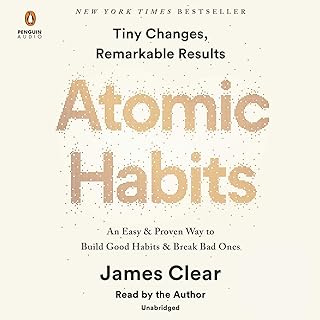
James Clear’s Atomic Habits is the best‑selling guide to building systems that make discipline automatic. The audiobook is free with a trial, and the print version is widely available. It has a 4.8 rating from over 148,000 reviews. While not explicitly Christian, its principles align perfectly with the biblical concept of faithful small steps.
Discipline Is Destiny by Ryan Holiday

Ryan Holiday’s Stoic approach to self‑control resonates with many Christians who appreciate the call to master oneself. For $5.88 and a 4.7 rating, this book offers deep insight into the virtue of discipline across history. It pairs well with a self discipline bible study because it emphasizes character over comfort.
The Mountain Is You by Brianna Wiest

This book tackles the inner obstacles—self‑sabotage, fear, limiting beliefs—that block discipline. It is a free audiobook with a 4.7 rating. Wiest’s psychology‑infused writing is compatible with biblical teaching on renewing the mind.
Comparison Table of Top Self‑Discipline Books
| Product | Price | Rating | Key Focus | Buy at Amazon |
|---|---|---|---|---|
| No Excuses! | $8.66 | 4.7 | Universal self‑discipline principles | |
| Atomic Habits | $0.00 (audio) | 4.8 | Habit systems & small changes | |
| Discipline Is Destiny | $5.88 | 4.7 | Stoic self‑control & character | |
| The Mountain Is You | $0.00 (audio) | 4.7 | Overcoming self‑sabotage | |
How to Use These Books in Your Bible Study
Do not just read; apply. For each book, pick one chapter and ask:
- What does Scripture say about this topic?
- How can I integrate this principle with my faith?
- What is one action step I can take today?
For example, Atomic Habits teaches that you should design your environment for success. Compare that to Proverbs 22:3 about hiding from danger. Create a workspace that minimizes distractions and maximizes focus. That is biblical wisdom in action.
Frequently Asked Questions About a Self Discipline Bible Study
What does the Bible say about self‑discipline?
The Bible speaks extensively about self‑discipline through terms like “self‑control,” “temperance,” “discipline,” and “steadfastness.” Key verses include Proverbs 25:28, 1 Corinthians 9:27, Galatians 5:22‑23, and 2 Timothy 1:7. Scripture presents self‑discipline as essential for spiritual growth and fruitful living.
How can I develop self‑discipline according to the Bible?
Start by renewing your mind daily (Romans 12:2). Pray for the fruit of the Spirit, especially self‑control (Galatians 5:22‑23). Set wise boundaries (Proverbs 22:3). Practice small acts of faithfulness (Luke 16:10). Join an accountability group (Ecclesiastes 4:9‑12). Above all, rely on the Holy Spirit, not just your willpower.
What are the best scriptures for self‑control?
- Proverbs 25:28 – describes the danger of lacking self‑control.
- 1 Corinthians 9:24‑27 – Paul’s athletic analogy.
- Galatians 5:22‑23 – lists self‑control as a fruit of the Spirit.
- Titus 2:11‑12 – teaches that grace trains us to live self‑controlled lives.
- 2 Peter 1:5‑7 – includes self‑control in the staircase of virtues.
Can a self discipline bible study help with procrastination?
Absolutely. Procrastination is often rooted in fear, laziness, or lack of purpose. Scripture addresses all three. Proverbs 6:6‑11 warns against laziness by pointing to the ant. Colossians 3:23 calls you to work heartily for the Lord. A focused study can uncover the spiritual roots of delay and provide God‑centered antidotes.
Is self‑discipline the same as legalism?
No. Legalism tries to earn salvation through rule‑keeping. Self‑discipline is a response to grace and a tool for spiritual growth. The difference is motivation: legalism says “I must” to be accepted; discipline says “I get to” because I am already accepted in Christ. A healthy self discipline bible study always centers on grace, not performance.
Putting It All Together: Your Next Steps
You now have a solid foundation for a self discipline bible study that covers control, endurance, and consistency. But knowledge without action is like a car without fuel. Here is a simple action plan:
- Pick one area where you lack discipline (e.g., screen time, spending, prayer life).
- Find three Bible verses related to that area. Write them on cards.
- Choose one book from the recommendations above to read over the next 30 days.
- Commit to one daily habit that moves the needle—even if it takes only five minutes.
- Pray daily for the Spirit’s power to sustain you.
Remember: self‑discipline is not about being perfect. It is about progress. God honors your small, consistent steps more than your flashy, temporary leaps. As you dig into Scripture and apply its truths, you will find that the life you want is not out of reach. It is built one faithful choice at a time.
“For God gave us a spirit not of fear but of power and love and self‑control.” — 2 Timothy 1:7
Now go and live it.