
You’ve tried white-knuckling your way through a diet. You’ve sworn you’ll wake up at 5 a.m. starting Monday. You’ve repeated the mantra “I just need more willpower.” Yet somehow, by Wednesday, the chocolate bar wins and the snooze button gets a workout.
Here’s the uncomfortable truth: willpower alone is a terrible long‑term strategy. It’s not that you’re weak. It’s that you’ve been relying on a limited resource that science says runs out. The real game‑changer? Self discipline and its importance goes far beyond momentary grit. It’s about building a system that makes the right choice the easy choice, day after day.
In this deep‑dive, we’ll explore why willpower fails, what actually builds unshakable self‑discipline, and how to rewire your brain so that consistency becomes your superpower. Let’s get started.
Table of Contents
What Is Self Discipline? (And Why It’s Not What You Think)
Self‑discipline is often misunderstood as sheer force of will. It feels heroic: muscles clenched, teeth gritted, fighting temptation. But real self‑discipline is quieter. It’s the ability to align your actions with your values, even when motivation is nowhere to be found.
Think of it as a muscle that grows stronger with the right training, not by being constantly strained. The self discipline and its importance lies in its ability to convert intention into habit. Without it, goals remain dreams. With it, dreams become daily routines.
Why Willpower Isn’t Enough: The Science of Depletion
Psychologist Roy Baumeister’s famous experiments on ego depletion showed that willpower is a finite resource. When you resist one temptation, you have less energy to resist the next. This is why you’re more likely to binge‑watch Netflix after a draining day at work.
Common signs you’re over‑relying on willpower:
- You feel exhausted by the end of the day and give in to cravings.
- You make “deal with it tomorrow” promises that never get kept.
- You start strong but fade after a few weeks.
- You beat yourself up for lacking discipline, which only drains more energy.
Willpower alone is like trying to run a marathon on an empty tank. You might sprint a mile, but you’ll crash before the finish line. Self‑discipline, on the other hand, is about designing a race you can actually win.
What Actually Works: The Real Foundations of Self Discipline
If willpower isn’t the answer, what is? Research and real‑world success stories point to four pillars:
1. Habits and Systems (Not Goals)
James Clear’s Atomic Habits (4.8 stars, free on Audible) nails this. Focus on tiny, daily improvements rather than huge, intimidating goals. Your identity shifts from “I’m trying to be disciplined” to “I am a disciplined person.”
How to build a habit stick:
- Make it obvious (place your running shoes by the door).
- Make it attractive (pair it with a podcast you love).
- Make it easy (start with just two minutes).
- Make it satisfying (track your streak).
2. Environment Design
You can’t out‑muscle a bad environment. If your phone is always in sight, you will check it. If junk food fills your pantry, you will eat it. Self discipline and its importance are amplified when you remove friction for good behaviors and add friction for bad ones.
Quick wins:
- Keep your phone in another room while working.
- Prep healthy snacks in advance.
- Use website blockers during deep work.
3. Identity Shifts
Brian Tracy’s classic No Excuses!: The Power of Self‑Discipline ($8.66, 4.7 stars) argues that discipline starts with your self‑image. When you see yourself as someone who follows through, you stop negotiating with yourself.
Try this: Instead of saying “I can’t eat sugar,” say “I don’t eat sugar.” The first feels like deprivation; the second reinforces your identity.
4. Accountability and Support
You don’t have to do this alone. Share your goals with a friend, join a group, or use a coach. Accountability raises the stakes and keeps you honest. Even the most disciplined people need external structure sometimes.
The Role of Emotional Regulation
We often think discipline is about fighting urges. But the truth is, urges are messengers. Feeling the urge to procrastinate usually signals anxiety or overwhelm. Instead of suppressing it, you can learn to acknowledge it and choose a different action.
Mindful Self‑Discipline by Giovanni Dienstmann (free on Audible, 4.7 stars) teaches that discipline isn’t about ignoring feelings; it’s about feeling them and still moving toward your values. That’s the deeper meaning of self discipline and its importance – it’s a skill of emotional intelligence, not just rule‑following.
Real Examples: Discipline in Action
Case study A: The writer who wrote one sentence a day
He wanted to finish a novel. Instead of forcing three hours of writing (and failing), he committed to one sentence. That single sentence often led to a paragraph, then a page. The book came out a year later.
Case study B: The entrepreneur who unplugged
She realized social media was eating her morning focus. So she put her phone in a drawer until noon. The first week was hard; by week three, her focus soared. No willpower needed – just a physical barrier.
Top Books to Deepen Your Self Discipline Library
These titles offer actionable, research‑backed strategies for building lasting discipline. Each one reinforces self discipline and its importance from a different angle.
| Book | Price | Rating | Key Benefit | Buy at Amazon |
|---|---|---|---|---|
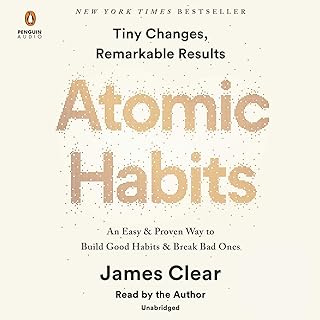 |
$0.00 (Audible) | 4.8 | Habit‑based system for tiny changes | Buy |
 |
$8.66 | 4.7 | Mindset and practical techniques | Buy |
 |
$12.93 | 4.7 | No‑nonsense field manual from Jocko Willink | Buy |
 |
$16.83 | 4.6 | Neuroscience‑backed strategies | Buy |
 |
$17.99 | 4.6 | 24 proven strategies to rewire your brain | Buy |
These books range from free (with an Audible trial) to under $20. Each offers a unique take on self discipline and its importance. If you can only pick one, start with Atomic Habits for the system or No Excuses! for the mindset shift.
Common Myths About Self Discipline
Myth 1: You either have it or you don’t.
Reality: Self‑discipline is a learnable skill, not a fixed trait. Everyone can improve with practice.
Myth 2: Discipline means being harsh with yourself.
Reality: True discipline comes from self‑compassion and consistent routines, not self‑flagellation.
Myth 3: It’s about suppressing all desires.
Reality: It’s about choosing which desires to follow. The goal is freedom, not imprisonment.
Myth 4: Once you build it, it stays forever.
Reality: Like any skill, it needs maintenance. Life changes, and your systems must adapt.
How to Start Building Self Discipline Today
Ready to move beyond willpower? Here is a step‑by‑step plan that works:
- Pick one small habit. Choose something that takes less than two minutes. For example, make your bed immediately after waking up. Admiral William H. McRaven’s book Make Your Bed ($6.95, 4.7 stars) shows how this tiny discipline transforms your day.
- Remove one distraction. Identify your biggest time‑sink and block it. Use a physical lockbox or app timer.
- Create a morning routine. Even a 10‑minute sequence (drink water, stretch, review goals) sets a disciplined tone.
- Set a non‑negotiable. Choose one task daily that you will do no matter what. No excuses.
- Track your progress. Use a simple calendar or app. Seeing your streak gives momentum.
Pro tip: Read 365 Days With Self‑Discipline (free on Audible, 4.5 stars) for daily prompts that keep you on track for a full year. The compounding effect is real.
The Deeper Truth: Self Discipline and Its Importance in a Distracted World
We live in an age of infinite temptation. Your phone buzzes, your inbox floods, and streaming services never sleep. Without a strong foundation, you’ll bounce from one dopamine hit to the next.
Self discipline and its importance isn’t just about achieving goals. It’s about reclaiming your autonomy. It’s the ability to say no to the urgent so you can say yes to the important. It’s the difference between being a puppet of your impulses and the author of your life.
When you master self‑discipline, you gain mental clarity, greater confidence, and a sense of peace. You stop fighting yourself. You start flowing.
FAQ: Your Questions About Self Discipline Answered
Q1: Is self discipline the same as willpower?
No. Willpower is a temporary energy burst. Self‑discipline is a set of structures and habits that make good actions automatic.
Q2: How long does it take to build self discipline?
It varies, but research suggests around 66 days for a new habit to become automatic. Consistency matters more than speed.
Q3: Can you have too much self discipline?
Yes. Rigid discipline without flexibility can lead to burnout. Balance it with rest and self‑compassion. The goal is sustainable, not extreme.
Q4: What about motivation? Is it useless?
Motivation is helpful but unreliable. Use it to start, but don’t depend on it. Systems work when motivation fades.
Q5: What if I keep failing?
Failure is feedback. Adjust your approach. Maybe your goal is too big, your environment too tempting, or your accountability missing. Tweak and try again.
Final Thoughts: Discipline Is Freedom
Jocko Willink, author of Discipline Equals Freedom, says it best: “Discipline equals freedom.” When you control your actions, you free yourself from regret, mediocrity, and the chaos of impulse.
Self discipline and its importance cannot be overstated. It is the bridge between where you are and where you want to be. It is not a punishment; it is a gift you give to your future self.
Start small. Be patient. And remember: every time you choose discipline over a shortcut, you become a little more free. The mountain is you – and you have what it takes to climb.
For deeper exploration, grab a copy of The Mountain Is You (free on Audible, 4.7 stars) to understand how to transform self‑sabotage into self‑mastery.