
You sit down to work, open YouTube, and immediately fall into a rabbit hole of cat videos, drama reactions, and “one more recommended video.” Your to-do list stares back at you, untouched. Sound familiar?
The problem isn’t that you lack willpower. It’s that your environment is fighting against you. Your brain craves dopamine hits, and YouTube is a dopamine factory. But here’s the twist: the same platform that distracts you can become your greatest ally for self-control. Welcome to the world of self-control Youtube music – curated playlists and sound cues designed to lock your brain into deep focus mode.
Self-control isn’t about fighting temptation forever. It’s about designing your surroundings so discipline becomes the easier path. And one of the most powerful environmental hacks is the music you choose to play while you work. In this guide, we’ll explore how to use YouTube music as a tool for self-discipline, which playlists actually work, and the science behind sound cues that keep you focused.
Table of Contents
What Is Self-Control Youtube Music and Why Does It Matter?
Self-control Youtube music refers to any audio content on YouTube deliberately selected to enhance concentration, reduce distractions, and support your self-discipline goals. It includes lo-fi hip hop, binaural beats, white noise, nature sounds, classical music, and even silence with timed intervals.
The key insight is that your brain processes music differently depending on its tempo, harmony, and repetition. Music with a steady beat around 60-80 BPM can entrain your brainwaves into an alpha state – the relaxed but alert zone perfect for focused work. When you deliberately choose this music over your usual playlist of high-energy pop or talk-heavy podcasts, you’re exercising self-control in real time.
Studies show that background music with no lyrics significantly improves performance on tasks that require sustained attention. Lyrics compete for verbal processing resources in your brain, making it harder to read, write, or code. That’s why instrumental playlists are the foundation of any self-control Youtube music strategy.
The Best YouTube Playlists for Self-Control and Focus
Not all focus playlists are created equal. Some are designed to be background ambience, others actively guide your brain into a productive state. Here are the top categories and specific playlists you should try.
Lo-Fi Hip Hop: The Gold Standard
Lo-fi hip hop has taken over the study community for good reason. Its relaxed beats, subtle imperfections, and lack of lyrics create a warm auditory blanket that signals safety and calmness to your brain. The repetitive nature prevents your mind from latching onto novel stimuli.
- Lofi Girl 24/7 Study Stream – The most famous livestream on YouTube. Over 10 million subscribers join daily for the animated girl studying at her desk. It’s become a cultural phenomenon because it works.
- Chillhop Music – Curated playlists with mellow jazz-infused beats. Perfect for deep work or reading.
- Tommy’s Study Beats – Shorter compilations (2-3 hours) with a variety of lo-fi tracks.
Binaural Beats and Isochronic Tones
These use specific frequencies to entrain your brainwaves. For focus, you want beta waves (14-30 Hz) or alpha waves (8-14 Hz). Binaural beats require headphones, while isochronic tones work through speakers too.
- Focus Music for Concentration with Binaural Beats by Jason Lewis – Combines 12 Hz alpha waves with ambient music.
- Study Music: 40 Hz Gamma Binaural Beats – Gamma waves are associated with high-level information processing and memory.
Nature Sounds and White Noise
For people who find any music distracting, nature sounds provide a non-invasive backdrop that masks sudden noises without demanding attention.
- Rain Sounds for Sleeping and Focus – 10-hour videos of steady rain. The randomness is natural, so your brain doesn’t try to predict patterns.
- Cafe Ambience with Soft Jazz – The gentle chatter of a coffee shop without the actual people. Great for simulating a work environment.
Classical Music and Instrumental Soundtracks
Baroque music (Bach, Vivaldi) at 60 BPM is particularly effective for studying. Video game soundtracks are also designed to keep you in the zone without pulling attention away.
- Classical Music for Studying: Mozart, Beethoven, Bach – Curated albums with focus-friendly pieces.
- Hans Zimmer Playlist for Work – Epic instrumentals that make even data entry feel like a mission.
How Sound Cues Train Your Brain for Self-Discipline
Your brain is a pattern-matching machine. When you consistently play the same self-control Youtube music before starting work, your brain begins to associate that sound with the state of focused effort. This is called a conditioned stimulus – like Pavlov’s bell, but for productivity.
Here’s how to create a powerful sound cue ritual:
- Choose one playlist or track – Pick something you won’t get tired of. Lo-fi or nature sounds work best for repeated use.
- Only play it when you work – Do not listen to this music while driving, cooking, or relaxing. It must remain exclusive to focus sessions.
- Hit play and start within 60 seconds – Use the music as a trigger to begin your most important task immediately.
- Keep it consistent – Over 2-3 weeks, your brain will automatically shift into work mode when that music starts. You’ll feel less resistance to starting hard tasks.
Jocko Willink, author of  Discipline Equals Freedom, advocates for building small routines that stack into unstoppable momentum. Your focus playlist is exactly that kind of routine.
The Science Behind Music and Self-Control
Why does music affect your ability to resist distractions? It comes down to two brain systems: the default mode network (DMN) and the task-positive network.
When you’re unfocused, your DMN is active – it’s the network responsible for mind-wandering, self-referential thoughts, and daydreaming. When you’re focused, your task-positive network takes over. Music acts as a “pacemaker” that helps your brain switch from DMN to task-positive mode faster.
Research also shows that moderate noise levels (around 70 dB) boost creativity for simple tasks, while silence or very loud noise impairs performance. That’s why a coffee shop ambience (which is around 70 dB) often feels more productive than absolute silence.
For self-discipline, the most important factor is reducing decision fatigue. Every time you switch songs, skip tracks, or adjust volume, you use small amounts of willpower. A fixed playlist eliminates those micro-decisions and preserves your cognitive resources for what actually matters.
Setting Up Your Ideal Focus Session on YouTube
To get the most out of self-control Youtube music, you need to remove the distractions within YouTube itself. Here’s a step-by-step setup:
- Use an ad blocker – YouTube ads are designed to grab your attention. An ad blocker prevents them from breaking your flow.
- Hide recommended videos – The sidebar is a temptation zone. Either use YouTube’s “focus mode” (press T on desktop) or minimize the browser.
- Create a playlist – Save 3-5 focus videos you trust. Loop that playlist instead of relying on autoplay, which often drifts into unrelated content.
- Turn off notifications – Disable all sounds and banners from your browser or app. You want only your selected audio.
- Use a timer – Play your music for a set block (e.g., 90 minutes). When the playlist ends, it’s a natural cue to take a break.
Why Lyrics Destroy Focus (and What to Use Instead)
If you’ve ever tried to write an email while listening to a song with words, you know the struggle. Your brain unconsciously processes the lyrics, creating a verbal interference that slows reading comprehension and writing speed.
Here’s a simple rule: if there are words you can understand, it’s not focus music. This includes:
- Pop songs with vocals
- Podcasts or audiobooks
- Rap or spoken word
- Even instrumental music with strong melodic hooks that your brain starts to “sing along” to
Instead, stick to:
- Ambient drone music (Brian Eno, Stars of the Lid)
- Lo-fi hip hop (vocals are heavily filtered or non-existent)
- Classical minimalism (Philip Glass, Steve Reich)
- Nature sounds (rain, ocean waves, wind)
- White noise or brown noise (brown noise has a deeper rumble than white noise and many find it more pleasant for focus)
Building Self-Discipline with Music: A Practical Framework
The goal isn’t just to play music. It’s to use music as a training tool for your willpower muscle. Here’s a framework that combines self-control Youtube music with proven self-discipline strategies from books like 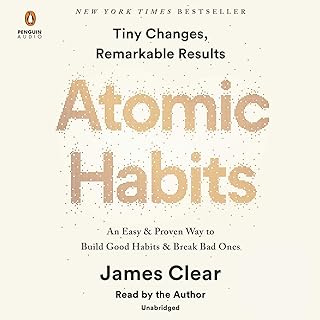 Atomic Habits by James Clear.
Step 1: Set Your Trigger
Your phone alarm goes off at 9 AM. You open YouTube, play your designated focus playlist, and put on headphones. This is your cue.
Step 2: Pre-commit
Before the music starts, decide exactly what task you’ll work on. It should be one specific action: “Write 500 words for the report” or “Complete three math problems.” Pre-commitment reduces the chance you’ll use the music but still procrastinate.
Step 3: Work for One Block
Listen to the entire playlist without pausing or skipping. If after 25 minutes you feel like quitting, remind yourself: “I can stop when the playlist ends.” Often, the urge to quit passes before the music stops.
Step 4: Review and Adjust
After each session, ask: Did the music help me focus? Do I need a different track? This reflection builds self-awareness, a cornerstone of self-discipline.
Overcoming Common Pitfalls with Focus Music
Even with the best playlist, you might run into issues. Here’s how to fix them.
Problem: The music becomes boring or annoying.
Solution: Rotate between 2-3 playlists but keep them in the same genre. Your brain needs novelty, but not radical change.
Problem: You start daydreaming to the music.
Solution: Choose music with less structure. Ambient drones or white noise are less likely to trigger imaginative narratives.
Problem: You’re still distracted by external noises.
Solution: Layer two sounds. For example, combine white noise (to cover irregular sounds) with low-volume lo-fi (for rhythm). This is called sound masking.
Problem: You’re tempted to check comments or your YouTube feed.
Solution: Use a browser extension like “DF Tube” (Distraction Free for YouTube) to hide all elements except the video player.
Deeper Reading: Books That Amplify Your Self-Control Journey
Combining self-control Youtube music with reading about self-discipline creates a powerful feedback loop. Here are some of the highest-rated books on the topic, available on Amazon.
 Discipline Is Destiny by Ryan Holiday explores how self-control shaped the lives of great leaders. It’s a Stoic perspective that pairs beautifully with the structured routine of focus music.
 The Science of Self-Discipline breaks down the neuroscience of willpower. Understanding why your brain craves distraction makes it easier to override those impulses.
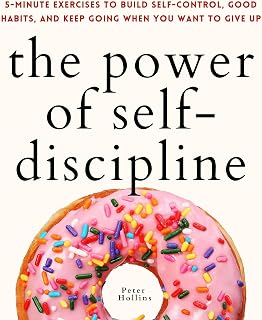 The Power of Self-Discipline offers 5-minute exercises you can do before or after your music-based focus sessions to strengthen your resolve.
 Digital Self-Discipline is directly relevant because it addresses the very problem you’re solving – using digital tools without being consumed by them. It’s a companion guide to using YouTube mindfully.
 The Mountain Is You helps you understand why you self-sabotage. When you can’t seem to stick to a focus routine, this book reveals the inner barriers.
| Book | Price | Rating | Key Takeaway | Buy at Amazon |
|---|---|---|---|---|
| Discipline Is Destiny | $5.88 | 4.7 | Self-control is the path to freedom | |
| The Science of Self-Discipline | $0.00 (audible) | 4.5 | Willpower is a biological resource you can strengthen | |
| The Power of Self-Discipline | $0.00 (audible) | 4.4 | Daily exercises build your discipline muscle | |
| Digital Self-Discipline | $12.99 | 4.8 | Break free from digital addiction | |
| The Mountain Is You | $0.00 (audible) | 4.7 | Transform self-sabotage into self-mastery | |
Advanced Techniques for Power Users
Once you’ve mastered basic focus playlists, try these advanced strategies.
Sound Layering
Combine a binaural beat track (low volume) with a lo-fi hip hop stream (medium volume) and a nature sound (very quiet). The result is a rich audio environment that completely occupies your auditory system, leaving no room for intrusive thoughts.
Tempo Matching
Match the BPM of your music to the pace of your task. For creative brainstorming, 90-120 BPM works well. For repetitive tasks like data entry, 120-140 BPM can boost speed. For deep analytical work, stick to 60-80 BPM.
The Pomodoro Playlist
Create a playlist where each track is exactly 25 minutes long, with a 5-minute “break” sound (like birds chirping) between tracks. This turns your music into a Pomodoro timer without needing an app.
Habit Stacking
Hook your focus music to an existing habit. For example, you always make coffee before work. Stack the action: “After I pour my coffee, I’ll play my self-control YouTube music and start my first task.” This eliminates the decision of when to start.
Frequently Asked Questions
Can I use YouTube Music instead of regular YouTube?
Yes, YouTube Music (the app) offers ad-free listening and background play on mobile. However, its algorithm still recommends new music. Stick to your saved playlists to avoid distraction.
What if I prefer silence?
Silence is fine for some tasks, but for most people it magnifies the impact of sudden noises (doorbell, traffic). A very quiet white noise or brown noise is usually better than absolute silence.
How long should I listen?
Sessions of 60-90 minutes are optimal. Your brain can sustain intense focus for about 90 minutes before needing a break. Match your playlist length to your work blocks.
Does this work for ADHD?
Many people with ADHD report that self-control Youtube music with consistent, repetitive beats helps them regulate attention. Binaural beats and brown noise are particularly helpful. However, individual responses vary.
Can I listen to focus music while reading?
Yes, but only if the music is instrumental and low in dynamic range. Avoid pieces with loud crescendos or sudden changes. Classical music from the Baroque period is excellent for reading.
Will I build a dependency on music?
You might become reliant on it for focus, but that’s not bad. Think of it as a tool, not a crutch. If you need to work without headphones, your brain can adapt. The music simply makes it easier to enter a focused state.
The Bottom Line
Self-control Youtube music is not a magic bullet, but it’s one of the easiest environmental changes you can make to support your discipline. When you deliberately choose a focus playlist, you’re practicing self-control before you even start your task. You’re telling your brain: “This is work time. This is important.”
The best part is that it costs nothing. No subscriptions, no equipment beyond headphones. Just a few clicks and a willingness to stick with the same playlist for a few weeks. Give it a real try – five consecutive days of using the same focus music for your toughest task. You might be surprised how much easier it is to say no to YouTube’s distractions when YouTube itself becomes your concentration ally.
Now close this article, open YouTube, and search for “lo-fi hip hop study.” Hit play. Your future focused self is waiting.