
You’ve felt it. That burst of inspiration hits you at 11 p.m. You scribble goals, download a habit tracker, and swear tomorrow will be different. By 10 a.m., the fire is gone. Motivation, for all its sparkle, is unreliable. It shows up when it feels like it and leaves without warning.
Self-discipline is the opposite. It doesn’t care how you feel. It shows up anyway. If you’ve ever wondered what self-discipline really is and why it consistently outperforms motivation, you’re in the right place.
Let’s explain self discipline once and for all, so you can stop chasing butterflies and start building something solid.
Table of Contents
What Is Self-Discipline? (The Real Definition)
Self-discipline is the ability to push yourself to take action regardless of your emotional state. It’s choosing what you want most over what you want now.
It’s not about punishing yourself or being rigid. It’s about aligning your daily actions with your long-term values. When you have self-discipline, you don’t wait for the “right mood.” You create the mood through action.
Think of it as your internal steering wheel. Motivation is the fuel, but you don’t need a full tank to drive. Self-discipline is what turns the ignition when the tank reads empty.
This is why we need to explain self discipline differently than most people do. It’s not a personality trait you’re born with. It’s a skill you build, one small win at a time.
Why Self-Discipline Works Better Than Motivation
Motivation feels amazing. It gives you a dopamine hit, a sense of possibility, and a rush of energy. But here’s the problem: motivation is tied to emotion, and emotions are temporary.
Self-discipline, on the other hand, is a system. It doesn’t rely on how you feel about your workout at 5 a.m. It relies on the rule you set yesterday.
Let’s break down the key reasons self-discipline beats motivation every time.
1. Motivation Is Reactive; Discipline Is Proactive
Motivation waits for a trigger. You see a video, read a quote, or have a moment of clarity. Discipline creates the trigger. You schedule the action before the feeling arrives.
| Motivation | Self-Discipline |
|---|---|
| Depends on external inspiration | Creates internal structure |
| Inconsistent | Reliable |
| Feels good in the moment | Feels good after the action |
| Fades with resistance | Strengthens through resistance |
2. Discipline Compounds; Motivation Fades
One disciplined workout changes your biology slightly. Two changes it more. A hundred workouts change your identity. Motivation doesn’t compound. It spikes and crashes.
When you rely on motivation alone, you’re gambling with your future. When you build self-discipline, you invest in a skill that pays interest every day.
3. Discipline Builds Mental Toughness
Every time you choose discipline over comfort, you send a signal to your brain: “I’m the kind of person who follows through.” That signal rewires your neural pathways. Over time, the hard thing becomes the default thing.

Brian Tracy’s book No Excuses! captures this perfectly. He argues that self-discipline is the master key to success because it unlocks every other quality you need.
4. Motivation Is Fleeting; Discipline Endures
Think about the last time you felt highly motivated to go to the gym. If you went, great. But what happened the next day when you felt tired, sore, and uninspired? Motivation vanished. Discipline would have carried you through.
That’s why explaining self discipline to someone who only chases motivation is like explaining gravity to a bird. It’s invisible, but it holds everything together.
The Science Behind Self-Discipline
Self-discipline isn’t just a feel-good concept. It’s backed by solid research.
Studies show that willpower behaves like a muscle. It can be strengthened with practice and fatigued with overuse. The key is to build habits that automate good decisions, so you don’t have to rely on willpower alone.
James Clear, author of the bestseller Atomic Habits, explains that habits are the compound interest of self-improvement. When you make discipline automatic, you conserve mental energy for bigger challenges.

Clear’s framework shows that tiny changes, repeated consistently, lead to remarkable results. Motivation might get you started, but discipline keeps you going long enough to see the payoff.
The Prefrontal Cortex Connection
Your brain’s prefrontal cortex is the command center for self-control. Every time you resist a temptation or follow through on a commitment, you strengthen that neural highway. Over time, discipline becomes easier.
But there’s a catch: your prefrontal cortex also tires out. That’s why decision fatigue hits after a long day. The fix is to reduce the number of decisions you make. Pre-decide what you’ll do. When 5 a.m. comes, you don’t decide to work out. You just do it.
This is the essence of what self-discipline means in practice. It’s not fighting temptation every minute. It’s designing a life where temptation has less power.
How to Explain Self Discipline to Someone Who Thinks They’re “Just Not Disciplined”
If you’ve ever told yourself, “I don’t have self-discipline,” you’re not alone. The good news is that self-discipline is a skill, not a fixed trait.
Think back to something you’re naturally good at. Maybe you can play a guitar, cook a great meal, or code a website. You didn’t come out of the womb doing it. You practiced. Self-discipline works the same way.
Here are the core components that make up self-discipline:
- Focus: The ability to concentrate on one task without distraction.
- Willpower: The mental energy to resist short-term impulses.
- Consistency: Showing up even when you don’t see immediate results.
- Patience: Trusting the process before the rewards arrive.
When you put these together, you get a person who can achieve almost anything they set their mind to. That’s the power of self-discipline.
Real-Life Examples of Self-Discipline in Action
Let’s make this practical. Here are three scenarios where self-discipline trumps motivation.
The Early Morning Runner
Sarah wants to run a marathon. Motivation says: “I’ll run tomorrow when I feel more awake.” Discipline says: “I set my alarm for 5 a.m. I put my running shoes by the door. I run before my brain has time to negotiate.”
Sarah doesn’t rely on feeling motivated. She relies on the system she built the night before.
The Writer Who Publishes Daily
Tom wants to write a book. Motivation says: “I need a perfect environment, a full cup of coffee, and a burst of inspiration.” Discipline says: “I write 500 words every morning, no excuses.”
Tom finishes his draft in three months. Motivation would have taken three years, if ever.
The Entrepreneur Who Learns a New Skill
Maria wants to learn digital marketing. Motivation says: “I’ll sign up for a course next month when I have more time.” Discipline says: “I’ll study for 30 minutes each night after work, even when I’m tired.”
A year later, Maria has a thriving online business. Motivation never arrived. Discipline showed up every day.
How to Build Self-Discipline (Step by Step)
Now that we’ve explained self discipline and why it matters, let’s get into the how.
Step 1: Start With Five Minutes
Don’t try to overhaul your life overnight. Pick one small thing you can do consistently for five minutes. Meditate for five minutes. Write for five minutes. Exercise for five minutes.
Success builds momentum. Once five minutes feels easy, bump it to ten. You’re not building a habit of the activity itself. You’re building a habit of showing up.
Step 2: Remove Friction
If you want to read more, put a book on your pillow. If you want to work out, sleep in your gym clothes. If you want to eat healthier, prep your meals in advance.
Make the disciplined choice the path of least resistance.
Step 3: Use the Two-Minute Rule
When a task feels overwhelming, scale it down to two minutes. “Write a chapter” becomes “write one sentence.” “Clean the garage” becomes “put away one item.”
Once you start, you often keep going. The hardest part is the first two minutes of action.
Step 4: Track Your Streaks
There’s a reason habit trackers work. Seeing a chain of checkmarks creates a psychological incentive to maintain the streak. “I can’t break the chain today.”
This taps into your brain’s natural reward system. It makes discipline feel like a game.
Step 5: Forgive Yourself When You Slip
Perfection is the enemy of discipline. If you miss a day, don’t double down on guilt. Just get back on track the next day. One slip doesn’t erase your progress.
Consistency over time matters more than never messing up.
Top Books to Deepen Your Self-Discipline
If you want to go deeper, these resources are gold. They all focus on practical strategies to build self-control, mental toughness, and lasting habits.

The Mountain Is You by Brianna Wiest explores how self-sabotage keeps you stuck and how self-mastery sets you free. It’s a must-read for understanding the inner resistance that blocks discipline.

Ryan Holiday’s Discipline Is Destiny draws on Stoic philosophy to show how self-control leads to a meaningful life. He argues that discipline isn’t about restriction—it’s about freedom.

Peter Hollins breaks down the neuroscience of willpower in The Science of Self-Discipline. This book gives you practical tools to rewire your brain for consistent action.

Jocko Willink’s Discipline Equals Freedom is a field manual for anyone who wants to take control of their life. It’s blunt, motivating, and packed with actionable advice.
Comparison Table: Top Self-Discipline Books
| Product | Price | Rating | Key Focus | Buy at Amazon |
|---|---|---|---|---|
|
$8.66 | 4.7 | Universal principles of self-discipline | Buy Now |
|
$0.00 (audio) | 4.8 | Building tiny habits that stick | Buy Now |
 |
$5.88 | 4.7 | Stoic self-control for modern life | Buy Now |
 |
$0.00 (audio) | 4.7 | Overcoming self-sabotage | Buy Now |
|
$0.00 (audio) | 4.5 | Neuroscience-based willpower | Buy Now |
Why Self-Discipline Creates More Freedom (Not Less)
A common myth is that self-discipline makes life boring. The opposite is true. Self-discipline gives you the ability to choose your hard.
You can either have the hard work of discipline now, or the hard regret of missed opportunities later.
When you master self-discipline, you stop being a slave to your impulses. You get to decide what you do with your time, your energy, and your life. That’s real freedom.
Think about it. The person who wakes up early, eats well, and exercises regularly isn’t living a restricted life. They’re living a life where their future self thanks their current self.
Common Questions About Self-Discipline
Is self-discipline the same as willpower?
Willpower is a component of self-discipline, but they’re not identical. Willpower is the momentary resistance to temptation. Self-discipline is the broader system of habits, routines, and mindsets that make willpower less necessary.
Can self-discipline be learned?
Absolutely. Just like a muscle, it strengthens with use. Start small, be consistent, and watch your capacity grow over time.
Why do I struggle with discipline even though I want to change?
You’re probably trying to rely on motivation and willpower alone without building supporting structures. Remove obstacles, create cues, and focus on process over outcome.
How long does it take to build self-discipline?
There’s no magic number. Some people feel a shift in weeks. Others need months. The key is to stop counting days and start focusing on the quality of your repetitions.
Additional Recommended Reads
If you want to explore more, check these out:
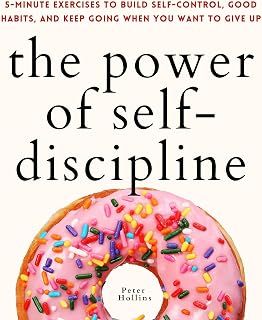
- The Power of Self-Discipline by David DeLuca – 5-minute exercises for busy people.
- Digital Self-Discipline by George H. Brunt – breaking free from dopamine addiction.
- The Four Agreements by Don Miguel Ruiz – a practical guide to personal freedom through discipline of the mind.
- 365 Days With Self-Discipline by Martin Meadows – daily thoughts to build resilience.
Each book offers a slightly different angle on the same truth: self-discipline is the foundation of a meaningful life.
Your Next Step
You don’t need another motivational quote. You need a system that works even when you don’t feel like it.
Here’s your challenge: Pick one area of your life where you’ve been relying on motivation. Commit to a small, daily action for seven days. No excuses.
That’s self-discipline in its simplest form. Not a grand overhaul, but a faithful, boring, powerful repetition.
Explain self discipline to a friend today. Tell them it’s not about being perfect. It’s about being present, one choice at a time.
Frequently Asked Questions
Q: What is the best way to explain self discipline to a beginner?
A: Self-discipline is the choice to do what you know you should do, even when you don’t want to do it. It’s the gap between intention and action.
Q: Can self-discipline replace motivation entirely?
A: Not entirely. Motivation can give you a helpful spark. But you can’t rely on it for long-term results. Self-discipline carries you through the valleys.
Q: How does self-discipline relate to habits?
A: Habits are the building blocks of discipline. When a behavior becomes automatic, you no longer need conscious willpower to do it. That’s when discipline becomes effortless.
Q: Is self-discipline genetic?
A: Some people may have a slight genetic edge, but research shows environment and practice matter far more. Anyone can build discipline with the right strategies.
Q: What if I fail after trying to be disciplined?
A: Failure is part of the process. The most disciplined people in the world have failed more times than you’ve tried. The key is to restart as soon as possible.