
Most people assume self-discipline is something you’re born with. Either you have it, or you don’t. That belief keeps countless ambitious individuals stuck, convinced they’ll never be “the disciplined type.”
But here’s the truth: self-discipline is a skill. And like any skill, it can be learned, practiced, and mastered.
This isn’t just motivational fluff. It’s backed by research in psychology and neuroscience. When you understand that every example of self discipline is actually a trained behavior, not a fixed personality trait, you unlock the ability to build it intentionally.
Below are ten everyday scenarios that show exactly how self-discipline works as a skill. Each one includes practical strategies and resources to help you develop it yourself.
Table of Contents
Why Most People Confuse Self-Discipline with Personality
We’ve all heard someone say, “I’m just not disciplined.” But that statement is as inaccurate as saying “I’m just not good at math” without ever practicing.
Personality is about preferences. Self-discipline is about repeated choices under pressure.
The difference becomes clear when you look at real-life situations. Someone who resists a doughnut at work isn’t blessed with saintly willpower. They’ve practiced a specific skill: overriding short-term cravings for long-term gains.

In his book No Excuses!: The Power of Self-Discipline, Brian Tracy argues that self-discipline is the master key to success. He shows that anyone can develop it through deliberate practice.
Now let’s examine ten concrete examples.
1. Waking Up Early When Your Bed Feels Like Heaven
Your alarm goes off at 5:30 AM. It’s dark, cold, and your pillow offers a convincing argument to stay put.
The undisciplined response: Hit snooze. Repeat twice. Rush through the morning.
The disciplined response: Swing your legs out of bed immediately, even if your brain protests.
This isn’t a personality trait. It’s a learned behavior called “implementation intention.” You pre-decide that when the alarm sounds, you’ll stand up. No negotiation.
How to build this skill:
- Place your alarm across the room.
- Set an intention the night before: “When the alarm goes off, I will stand up and walk to the bathroom.”
- Reward yourself with a few minutes of quiet coffee time.
Books like Atomic Habits: An Easy & Proven Way to Build Good Habits & Break Bad Ones by James Clear teach that small, repeated actions rewire your brain. Each morning you follow through, you strengthen the neural pathway of self-discipline.
2. Resisting a Doughnut in the Break Room
You’re at work, stressed, and someone brought in fresh glazed doughnuts. Your brain screams for sugar. Your health goals whisper “no.”
This classic example of self discipline shows how skill, not character, determines your choice.
What’s happening biologically: Your prefrontal cortex (the rational brain) is fighting your limbic system (the emotional brain). The more you practice overriding the impulse, the stronger your prefrontal cortex becomes.
Actionable tactics:
- Create a 10-minute rule: Wait ten minutes before eating the doughnut. The craving often fades.
- Visualize the long-term cost: Imagine how you’ll feel after the sugar crash.
- Keep healthier options within arm’s reach.

In The Science of Self-Discipline, Peter Hollins explains that willpower works like a muscle. It gets tired when overused, but with consistent training, it grows stronger.
3. Sticking to Your Workout Routine on a Rainy Day
You planned to go to the gym after work. Then the rain started. Your couch called your name.
The skill at play: Delayed gratification. You choose the future benefit (fitness, energy, health) over immediate comfort.
How to train this skill:
- Use “temptation bundling”: Only listen to your favorite podcast while exercising.
- Commit publicly: Tell a friend you’ll text them after your workout.
- Start with the smallest possible step: Just put on your workout clothes. Then your shoes. Then step outside.

Ryan Holiday’s Discipline Is Destiny draws on Stoic philosophy to show that discipline is a choice we make in every moment. The rain isn’t a barrier. It’s a training opportunity.
4. Saving Money Instead of Impulse Buying
That new gadget, the pair of shoes, the flashy gadget. You want it now. But your savings goal matters more.
The scenario: You’re browsing online and see a limited-time offer. Your finger hovers over “Buy Now.”
The disciplined skill: Precommitment. You remove friction from good choices and add friction to bad ones.
Practical steps:
- Unsubscribe from marketing emails.
- Delete saved payment info from shopping sites.
- Enforce a 48-hour waiting period for any non-essential purchase.
- Automate transfers to your savings account on payday.

Daniel Walter’s The Power of Discipline emphasizes that self-control isn’t about resisting every temptation. It’s about designing your environment so temptations are harder to reach.
5. Completing Work Before Checking Social Media
You sit down to write a report. Your phone buzzes. Your brain whispers, “Just check for a second.”
Why this is an example of self discipline skill: The urge is automatic. The resistance is learned. Every time you ignore the notification and stay focused, you strengthen your ability to concentrate.
Techniques that work:
- Use the Pomodoro method: 25 minutes work, 5 minutes break. During work, zero distractions.
- Keep your phone in another room.
- Use website blockers for distracting sites.

Admiral William H. McRaven’s Make Your Bed highlights how small daily disciplines create a ripple effect. Making your bed each morning sets the tone for a day of focused action.
6. Not Checking Your Phone During a Conversation
You’re having coffee with a friend. A notification pops up. Your hand instinctively reaches for your phone.
The skill: Social discipline. The ability to stay present despite digital temptations.
How to practice:
- Place your phone face down on the table.
- Turn off all non-essential notifications.
- Set an intention before the meeting: “For the next hour, I will give this person my full attention.”
- When you feel the urge, take a deep breath and refocus on the conversation.
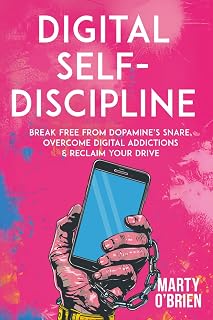
The book Digital Self-Discipline (highly rated at 4.8 stars) offers practical strategies to break free from the dopamine loops that hijack our attention. It shows that self-discipline with screens is a skill you can rebuild.
7. Studying for an Exam When You’d Rather Sleep
Your exam is in two weeks. You’re exhausted. The bed calls. But you have a chapter to review.
The mental battle: Your brain perceives studying as painful. It’s wired to avoid discomfort.
The disciplined skill: Deliberate discomfort exposure. You intentionally do the hard thing, knowing it builds resilience.
Proven tactics:
- Break the study session into 20-minute chunks with clear goals.
- Create a study schedule and treat it like a non-negotiable appointment.
- Reward yourself after each session with something you enjoy.
- Remember that tiredness often passes after 10 minutes of starting.

This book by Michael Wilson provides 24 evidence-based strategies to rewire your brain for consistent action. It’s a practical roadmap for turning study discipline into a habit.
8. Choosing Long-Term Health Over Short-Term Pleasure
You’re offered a cigarette, another drink, or a second slice of cake. You know the long-term cost, but the short-term reward is tempting.
The scenario: This is where self-discipline truly shines. It’s not about never indulging. It’s about making conscious choices aligned with your values.
How to strengthen this skill:
- Connect the decision to your identity: “I’m someone who values health, so I choose the apple.”
- Practice saying no graciously: “No thanks, I’m good.”
- Rehearse the scenario mentally before it happens.
- Remind yourself of your deeper “why” for being healthy.

Brianna Wiest’s The Mountain Is You explores how self-sabotage happens when we let short-term impulses override long-term wisdom. Transforming self-sabotage into self-mastery is the ultimate exercise in skill-building.
9. Practicing Patience in Traffic
You’re stuck in gridlock. You’re already late. Your blood pressure rises.
The disciplined response: Breathe, accept what you cannot change, and use the time productively (listen to an audiobook, reflect, plan your day).
Why this is an example of self discipline: Emotional regulation is a learned skill. You can train yourself to pause before reacting.
Exercises to practice:
- Practice “mindful waiting” for 5 minutes each day (stand in line without checking your phone).
- When you feel anger rising, name the emotion: “I am feeling frustration.”
- Use the situation as a chance to practice stoic acceptance.

Don Miguel Ruiz’s classic The Four Agreements offers a powerful framework: “Don’t take anything personally” and “Always do your best.” Traffic isn’t personal. It’s a chance to practice discipline.
10. Saying No to Social Events to Focus on Your Goals
Your friends invite you out. You genuinely want to go. But you have an early morning commitment to your side project.
The skill: Boundary setting. This is one of the hardest forms of self-discipline because it involves social pressure.
How to build this skill:
- Prepare a simple script: “I’d love to, but I have an early start tomorrow. Rain check?”
- Remember that every yes to something is a no to something else.
- Prioritize your long-term goals over short-term social approval.
- Understand that real friends will respect your discipline.

This new release (rated 5 stars) dives deep into the discipline of saying no. The freedom that follows is immense. When you master this skill, you reclaim your time and energy.
A Closer Look: Recommended Resources
To help you develop self-discipline as a skill, here are some of the most highly rated books on the topic. Each one offers unique insights and practical exercises.
| Product | Price | Rating | Image | Buy at Amazon |
|---|---|---|---|---|
| No Excuses!: The Power of Self-Discipline | $8.66 | 4.7 | |
Buy Now |
| Atomic Habits | $0.00 (audio) | 4.8 |  |
Buy Now |
| Make Your Bed | $6.95 | 4.7 |  |
Buy Now |
| Discipline Is Destiny | $5.88 | 4.7 |  |
Buy Now |
| The Science of Self-Discipline | $0.00 (audio) | 4.5 |  |
Buy Now |
| The Power of Discipline | $16.83 | 4.6 |  |
Buy Now |
Each of these resources treats self-discipline as a trainable skill. Pick one that resonates with your current challenge and start practicing the techniques.
How to Start Treating Self-Discipline as a Skill Today
If you’ve read this far, you already understand the core message. But knowing isn’t enough. You need to act.
Here’s a simple three-step framework to begin:
- Pick one scenario from this article that you struggle with most. Maybe it’s waking up early, or resisting junk food, or saying no to distractions.
- Identify the specific skill you need to practice. For waking up, it’s implementation intention. For resisting food, it’s the 10-minute rule.
- Practice for 21 days with the smallest possible action. Don’t try to overhaul your entire life. Just focus on that one example of self discipline and repeat it daily.
After three weeks, you’ll notice the action starts feeling easier. That’s the skill becoming ingrained.
Frequently Asked Questions
Can self-discipline really be learned, or are some people just born with it?
Yes, it is absolutely learnable. Studies in neuroplasticity show that the brain changes with repeated behavior. Every time you resist a temptation or follow through on a commitment, you strengthen the neural pathways associated with self-control. Brian Tracy’s No Excuses! and James Clear’s Atomic Habits both provide frameworks for building this skill systematically.
How long does it take to build self-discipline?
There is no fixed timeline, but most people notice significant improvement within 30 to 60 days of consistent practice. The key is starting with micro-habits. For example, if you want to wake up earlier, start by waking up just 10 minutes earlier for a week, then gradually increase.
What’s the fastest way to improve self-discipline?
The fastest way is to remove temptations from your environment. If you want to eat healthier, don’t keep junk food in the house. If you want to work more, put your phone in another room. Environmental design works faster than willpower alone. Combine that with accountability (telling someone your goal) for even quicker results.
Is self-discipline the same as willpower?
Not exactly. Willpower is the moment-to-moment resource you use to resist urges. Self-discipline is the larger skill of consistently making choices aligned with your long-term goals. Willpower can be depleted, but self-discipline, as a skill, becomes more robust with practice. The Science of Self-Discipline by Peter Hollins explains this distinction in detail.
Can I build self-discipline if I’ve failed many times before?
Absolutely. Failure is part of the learning process. Every time you slip, you gain data: what triggered the slip, what you can change. Treat each setback as a lesson, not a verdict on your character. The Mountain Is You by Brianna Wiest specifically addresses how to move past self-sabotage and build mastery.
What if I have ADHD or other attention challenges?
Self-discipline may require extra strategies, but it is still a skill you can develop. Focus on environmental modifications (reduce distractions, use timers, break tasks into tiny steps). Many people with ADHD thrive using body doubling (working alongside someone else) or gamification. Digital Self-Discipline offers tactics specifically for breaking free from dopamine traps.
The Bottom Line
Self-discipline is not a personality trait you’re stuck with. It is a skill forged through repeated practice. Each day presents tiny experiments: the alarm clock, the doughnut, the phone notification, the comfy couch.
Every time you choose the harder, wiser action, you sharpen the skill.
Start with one example of self discipline from this article today. Apply the technique. Repeat tomorrow. By the end of the month, you’ll have proof that the most disciplined people aren’t born that way. They simply practiced longer.
And now it’s your turn to practice.