
You know the feeling. You set a goal, feel fired up for a week, then slowly slide back into old patterns. Your willpower fades, distractions pull you away, and that mountain of unfinished projects grows taller. It’s frustrating because you know you have the desire. What you lack is a system.
That’s exactly why the book the Science of Self Discipline has become a must-read for anyone serious about changing their life. Written by Peter Hollins, this book cuts through the fluff and gets straight to the research. It doesn’t just tell you to try harder. It shows you how your brain works, why you give in to temptation, and what you can do to build lasting self-control.
Let’s dive into what the best science says about self-discipline, habits, focus, and control — and how you can apply it starting today.

Table of Contents
What Is Self-Discipline, Really?
Self-discipline isn’t about punishing yourself or living like a robot. It’s the ability to align your actions with your values, especially when you don’t feel like it. Research shows that self-discipline is a stronger predictor of success than IQ, talent, or even socioeconomic background.
The book the Science of Self Discipline explains this from a neurological perspective. Your prefrontal cortex — the part of your brain responsible for decision-making and impulse control — can be strengthened like a muscle. But it also gets tired. The key is knowing how to manage that limited resource and build habits that make good behavior automatic.
The Three Pillars of Self-Discipline
- Willpower: Your capacity to resist short-term temptations for long-term rewards. It depletes with use, but can be trained.
- Mental Toughness: The ability to push through discomfort, pain, and setbacks without quitting.
- Self-Control: Keeping your emotions, impulses, and actions in check even under pressure.
These three pillars support one another. The book the Science of Self Discipline dedicates entire chapters to each, blending neuroscience, psychology, and real-world examples.
What Does the Best Research Say About Building Habits?
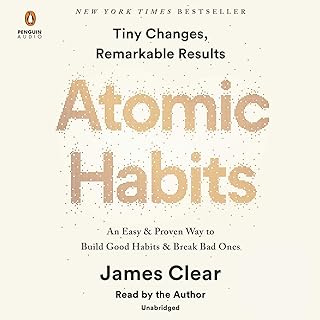
If you want to master self-discipline, you need to understand how habits work. The most famous model comes from Charles Duhigg’s “The Power of Habit” and James Clear’s “Atomic Habits,” but the book the Science of Self Discipline adds its own research-backed twist.
The Habit Loop: Cue, Routine, Reward
Your brain creates automatic routines to save energy. Every habit follows a loop:
- Cue: A trigger (e.g., time of day, emotion, location).
- Routine: The behavior itself.
- Reward: The payoff that reinforces the loop.
To change a habit, you can’t just kill it. You have to keep the same cue and reward but swap the routine. The book the Science of Self Discipline calls this “reprogramming your autopilot.”
Why Willpower Runs Out
Research by Roy Baumeister showed that willpower is a finite resource. After you resist a cookie, your next challenge becomes harder. That’s called ego depletion. But newer studies suggest it’s more about mindset — if you believe willpower isn’t limited, you may not experience depletion.
The book the Science of Self Discipline combines both views. It gives you practical strategies to conserve willpower (like reducing decision fatigue) and also to cultivate a growth mindset that fuels your motivation.
The Best Books on Self-Discipline and Control (Including the Book the Science of Self Discipline)
You don’t have to rely on one source. The field is rich with incredible books that reinforce the same core principles. Below are some of the top-rated, research-backed titles. Each one can help you sharpen your focus and build unbreakable habits.
Comparison of Top Self-Discipline Books
| Title & Author | Focus | Price | Rating | Best For | Buy at Amazon |
|---|---|---|---|---|---|
| Peter Hollins |
Science, willpower, mental toughness | $0.00 (free with Audible) | 4.5 | Deep research & practical tactics | Buy on Amazon |
| James Clear |
Habit building, small changes | $0.00 (free with Audible) | 4.8 | Anyone wanting to build lasting habits | Buy on Amazon |
 Brian Tracy Brian Tracy |
Motivation, time management | $8.66 | 4.7 | Practical daily discipline | Buy on Amazon |
 Ryan Holiday Ryan Holiday |
Stoic philosophy, self-control | $5.88 | 4.7 | Combining ancient wisdom with modern life | Buy on Amazon |
 Brianna Wiest Brianna Wiest |
Self-sabotage, emotional mastery | $0.00 | 4.7 | Understanding why you hold yourself back | Buy on Amazon |
 Daniel Walter Daniel Walter |
Mental toughness, exercises | $16.83 | 4.6 | Actionable 30-day programs | Buy on Amazon |
Each of these books complements the book the Science of Self Discipline. Together they give you a 360-degree view of how to take control of your life.
Actionable Strategies From the Best Self-Discipline Research
Reading is useless without application. Here are the most powerful techniques drawn from the book the Science of Self Discipline and other top resources.
1. Use the 10-Minute Rule
When you feel like quitting or giving in to a distraction, tell yourself: “I’ll do this for 10 minutes, then I can stop.” Usually the hardest part is starting. After 10 minutes your momentum carries you forward.
2. Design Your Environment for Success
Willpower works best when you don’t have to use it. Remove temptations from your immediate surroundings. If you want to eat healthy, keep junk food out of the house. If you want to focus, put your phone in another room. The book the Science of Self Discipline calls this “precommitment.”
3. Practice Delayed Gratification Daily
The famous Stanford Marshmallow Experiment showed that kids who could wait for two marshmallows ended up with better life outcomes. You can train this skill by taking small daily challenges. Skip your morning coffee for 30 minutes. Resist checking social media until after lunch. Each small win builds your self-control muscle.
4. Build a “Don’t Break the Chain” Habit
Jerry Seinfeld used a simple method: put a big X on your calendar every day you complete your habit. The visual chain motivates you to keep going. This works because it turns discipline into a game and leverages the power of consistency.
5. Reframe Your Inner Voice
Instead of saying “I can’t eat that donut” say “I don’t eat donuts.” Research from The Journal of Consumer Research found that people using “I don’t” language felt more empowered and had greater self-discipline. It’s a subtle shift that changes your identity.
Frequently Asked Questions About Self-Discipline
What is the difference between self-discipline and willpower?
Willpower is the moment-to-moment ability to resist temptation. Self-discipline is the broader skill of consistently aligning your actions with your goals, often through habits and routines. Self-discipline includes willpower but goes beyond it.
Can self-discipline be learned, or is it innate?
It can absolutely be learned. The brain is plastic — it changes with practice. The book the Science of Self Discipline explains that just as you can strengthen a muscle through exercise, you can strengthen your prefrontal cortex through specific strategies like meditation, goal setting, and delayed gratification.
How long does it take to build a new habit?
The old myth of 21 days is not supported by research. A study by Phillippa Lally found it takes anywhere from 18 to 254 days, with an average of 66 days. The book the Science of Self Discipline recommends focusing on consistency, not speed.
Why do I keep sabotaging myself when I want to succeed?
Self-sabotage often comes from fear of failure, fear of success, or deeply held limiting beliefs. The book the Science of Self Discipline and books like The Mountain Is You address this directly. You need to uncover the emotional payoff behind the sabotage and replace it with healthier coping mechanisms.
Is it better to go cold turkey or gradually cut back on bad habits?
It depends on the habit and your personality. For addiction-level behaviors (like nicotine), cold turkey may be necessary. For less intense habits (like snacking), gradual reduction often works better because it trains your brain to adjust without triggering rebellion. Experiment and see what sticks.
Your Next Step: Choose One Book and Take Action
You now have a clear map of what the research says and which resources will help you most. The book the Science of Self Discipline is an excellent starting point because it condenses decades of psychology into an actionable framework. Pair it with Atomic Habits for habit design or No Excuses! for a motivational kick.
But reading alone won’t change your life. You have to apply what you learn.
Pick one small practice from this article and do it today. Maybe it’s the 10-minute rule. Maybe it’s rearranging your desk. Every small win compounds into unstoppable momentum.
Self-discipline isn’t about being perfect. It’s about being better than you were yesterday. And the best part? Science says you absolutely can get there. Start now.