
You want a life that runs smoother, stronger, and more intentionally. You have probably tried writing a list of good habits before, only to abandon it after a few weeks. That is not a sign of weak willpower. It is a sign that your approach needs a smarter foundation.
Building a list of good habits that actually last is not about motivation. It is about understanding how your brain encodes automatic behaviors. When you combine behavioral science with the right physical fuel—like a high‑quality protein powder to support energy and recovery—you create an environment where habits thrive.
This article will show you exactly how to design a list of good habits using proven scientific principles. You will learn why most habit lists fail, how to rewrite your internal systems, and what nutritional support (yes, including real product examples) can help you stay consistent.
Table of Contents
Why Most Lists of Good Habits Fail (and How to Fix It)
The average list of good habits is packed with vague resolutions: “exercise more,” “eat healthier,” “sleep better.” These are not habits. They are outcomes. Without a concrete trigger and a clear reward, your brain has no reason to automate them.
Habits fail for three main reasons:
- The list is too long. Trying to build ten habits at once overwhelms your prefrontal cortex.
- The cues are invisible. You cannot rely on memory alone; you need environmental triggers.
- The reward is delayed. Positive outcomes (like weight loss) take weeks, but your brain needs immediate gratification.
The fix is to shrink your list, anchor each habit to an existing routine, and attach a small, satisfying reward. And yes, that morning protein shake can become both a cue and a reward.
The Science of Habit Formation – Cue, Routine, Reward
Every habit follows a three‑step loop, first described by MIT researchers and popularized by Charles Duhigg.
The Cue
The cue is the trigger that tells your brain to go into automatic mode. It can be a time of day, a location, an emotional state, or a preceding action.
The Routine
The routine is the behavior itself—the action you want to turn into a habit.
The Reward
The reward is the positive feeling or outcome your brain craves. It reinforces the loop.
To create a list of good habits that sticks, you need to deliberately design each part of this loop. For example:
- Cue: Place your running shoes next to your bed.
- Routine: Jog for 20 minutes.
- Reward: A delicious vanilla protein shake that you only drink after a run.
The key is to make the reward immediate. Over time, the craving for the reward will drive the habit.
How to Build Your List of Good Habits That Actually Stick
Now that you understand the loop, here is a step‑by‑step framework to create your personalized list of good habits.
Start with Identity-Based Habits
Ask yourself: Who do I want to become? A fit person, a focused student, a calm parent. Then list habits that reinforce that identity.
- Instead of “I will lose 10 pounds,” write “I am someone who moves every day.”
- Instead of “I will read more,” write “I am a reader who finishes one chapter each morning.”
Your list of good habits becomes a reflection of your chosen identity, not a chore list.
Use Habit Stacking
Habit stacking, introduced by James Clear, couples a new habit with an existing one. The formula is:
After [current habit], I will [new habit].
Examples:
- After I pour my morning coffee, I will write three things I am grateful for.
- After I brush my teeth at night, I will set out my workout clothes.
This technique reduces the need for motivation because the existing habit serves as a natural cue.
Make It Easy and Frictionless
Your brain prefers the path of least resistance. To make a habit stick, reduce the friction to start.
- Want to floss? Keep floss next to your toothbrush, not in the drawer.
- Want to meditate? Leave a cushion in the middle of your room.
- Want to drink a protein shake after a workout? Pre‑portion your Optimum Nutrition Gold Standard Whey powder in a shaker cup the night before.
Lowering the barrier to entry is more effective than relying on willpower.
The Role of Nutrition in Supporting Good Habits
Your brain and body need consistent fuel to form and maintain habits. Protein plays a critical role in neurotransmitter production, muscle recovery, and stable blood sugar. Without adequate protein, your energy levels dip and your willpower reserves run dry.
That is where protein powder becomes more than a fitness supplement—it becomes a habit‑enabler. A quick, high‑quality shake can:
- Provide a post‑workout reward that reinforces your exercise habit.
- Serve as a breakfast anchor for a morning routine.
- Keep you full and focused during a study session or work block.
When you have a reliable source of protein, you remove the “what should I eat?” decision. That frees mental energy for your list of good habits.
For more ideas on structuring your mornings, see The Ultimate List of Good Habits for a Productive Morning.
Sample List of Good Habits for Different Areas of Life
Here is a curated list of good habits you can steal and adapt. Focus on two or three maximum to start.
Morning Habits (Identity: Early Riser)
- Wake up at the same time every day (cue: alarm).
- Drink a full glass of water (routine).
- Consume 20–30g of protein within 30 minutes (reward: energy).
- Write one priority for the day.
Work/Study Habits (Identity: Focused Achiever)
- Use the Pomodoro technique (25 minutes work, 5 minutes break).
- Block distractions with a website blocker.
- Review a to‑do list each morning.
Health Habits (Identity: Active Person)
- Walk for 10 minutes after dinner.
- Stretch for 5 minutes before bed.
- Prepare a protein shake immediately after a workout.
Relationship Habits (Identity: Connected Partner)
- Ask one open‑ended question at dinner.
- Send a thoughtful text before noon.
For a deeper dive into student‑specific habits, check out List of Good Habits for Students: Boost Focus and Grades.
How to Track and Reinforce Your Habits
Tracking creates accountability and provides immediate visual feedback. Simple methods:
- Habit tracker app (e.g., Habitica, Streaks).
- Paper calendar with X marks.
- Journal entry at the end of the day.
Never miss twice. If you skip a day, get back on track the next. One slip does not erase progress.
Also, celebrate small wins. Finished your morning shake? Give yourself a mental high‑five. The dopamine boost makes the habit more attractive.
Overcoming Common Obstacles
- “I don’t have time.” Combine habits (e.g., listen to an audiobook while walking).
- “I forgot.” Use visual cues (e.g., leave your shaker cup on the counter).
- “I lost motivation.” Reconnect with your identity. Remind yourself why you started.
- “The reward isn’t working.” Swap it. Maybe your shake needs a different flavor. Try Premier Protein Chocolate Milkshake for a dessert‑like treat.
FAQ: Building a List of Good Habits That Stick
Q: How many habits should I try to build at once?
A: Start with one or two. Master them before adding more. Research suggests it takes 18–254 days to automate a habit.
Q: What is the best time of day to start a new habit?
A: Morning, because willpower is highest. But any consistent time works if you anchor it to an existing routine.
Q: Can protein powder really help with habit formation?
A: Yes. It provides immediate reward, stabilizes energy, and supports brain health. Choose a clean, well‑rated product like Orgain Organic Vegan Protein for a plant‑based option.
Q: What if my list of good habits feels overwhelming?
A: Simplify. Strip down to the single most impactful habit. Success breeds momentum.
Q: Should I use a habit tracker?
A: Absolutely. Tracking increases the likelihood of sticking by 30–50%. Use whatever method is simplest for you.
Top Protein Powders to Fuel Your Habit System
Now that you have a science‑backed list of good habits, choosing the right protein powder can make your morning routine effortless. Below are the most popular and highly rated options, each linked directly to Amazon for easy purchase.
All prices and ratings are current as of the data provided.
| Product | Flavor | Price | Rating | Link |
|---|---|---|---|---|
| Optimum Nutrition Gold Standard 100% Whey, Double Rich Chocolate 1.98lb | Double Rich Chocolate | $44.99 | 4.6 |  |
| Optimum Nutrition Gold Standard 100% Whey, Vanilla Ice Cream 5lb | Vanilla Ice Cream | $79.99 | 4.7 |  |
| Optimum Nutrition Gold Standard 100% Whey, Vanilla Ice Cream 2lb | Vanilla Ice Cream | $44.99 | 4.7 | 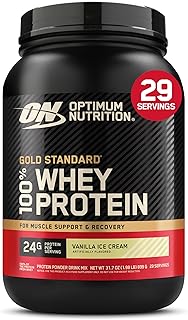 |
| Premier Protein Powder, Chocolate Milkshake 29 Servings | Chocolate Milkshake | $25.97 | 4.6 |  |
| Orgain Organic Vegan Protein Powder, Vanilla Bean 2.03lb | Vanilla Bean | $31.52 | 4.5 |  |
| Dymatize ISO 100 Whey Protein Powder, Vanilla 5lb | Vanilla | $108.99 | 4.7 |  |
| Premier Protein Powder, Vanilla Milkshake 17 Servings | Vanilla Milkshake | $31.60 | 4.6 |  |
| Transparent Labs Grass‑Fed Whey Protein Isolate, French Vanilla 30 Servings | French Vanilla | $59.99 | 4.5 |  |
| Body Fortress Super Advanced Whey, Vanilla 3.9lb | Vanilla | $45.28 | 4.6 |  |
| Six Star Whey Protein Plus, Triple Chocolate 1.82lb | Triple Chocolate | $24.97 | 4.5 |  |
| Isopure Zero Carb Whey Isolate, Unflavored 3lb | Unflavored | $89.95 | 4.4 |  |
| Dymatize Elite 100% Whey, Rich Chocolate 5lb | Rich Chocolate | $76.18 | 4.6 |  |
| Orgain Organic Vegan Protein + 50 Superfoods, Vanilla Bean 2.02lb | Vanilla Bean | $34.15 | 4.6 | 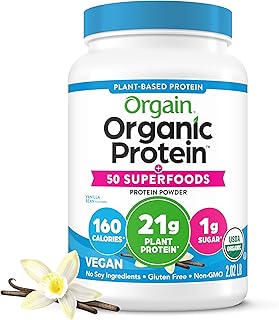 |
| Dymatize x Fruity Pebbles ISO100 Whey, 20 Servings | Fruity Pebbles | $42.48 | 4.6 |  |
| Dymatize Super Mass Gainer, Gourmet Vanilla 8 Servings | Gourmet Vanilla | $39.98 | 4.5 |  |
| Levels Grass Fed Whey Protein, Pure Chocolate 2lb | Pure Chocolate | $44.99 | 4.5 |  |
| Vital Proteins Collagen Peptides, Unflavored 9.33oz | Unflavored | $18.65 | 4.6 |  |
| NAKED Whey Vanilla Protein Powder 24 Servings | Vanilla | $44.99 | 4.1 |  |
| Nutricost Whey Protein Concentrate, Chocolate 5lb | Chocolate | $74.95 | 4.5 |  |
| Orgain Organic Unflavored Vegan Protein 1.59lb | Unflavored Unsweetened | $26.99 | 4.3 |  |
Your list of good habits does not need to be perfect. It needs to be smart, simple, and supported. Start with one habit today. Use the cue‑routine‑reward loop. Fuel your body with the right protein, and watch your consistency compound into lasting change.
You have everything you need to begin. Take the first step.