
Every year, the same cycle repeats: holiday shopping, summer vacations, back-to-school supplies, and annual insurance premiums. These seasonal expenses and one-time projects often catch us off guard, forcing us to dip into emergency funds or rely on credit. The fix isn’t earning more—it’s automating your savings for these predictable costs.
Year-over-year (YoY) goal setting transforms scattered one-off spending into a manageable, systematic process. By aligning your savings with past spending patterns, you can smooth out cash flow and never face a surprise bill again. This article explores how to automate savings for seasonal and project-based expenses, and highlights physical tools that make the habit stick.
Table of Contents
Why Year-over-Year Goals Matter for Seasonal Spending
Most people budget monthly, but seasonal costs don’t fit neatly into a 30-day window. A year-over-year approach lets you analyze what you spent last January on holiday decorations or last August on school supplies, then set a savings target for the same period next year.
Key benefits of YoY goal setting:
- Eliminates last-minute scrambling for cash
- Builds a forward-looking, not reactive, savings habit
- Allows you to adjust for inflation or changing needs
- Turns irregular expenses into a predictable monthly transfer
With automation, you can move money into a dedicated savings account or a physical cash vault before the expense even arrives. This frees mental energy and ensures funds are ready when you need them.
How to Automate Your Savings for One-Off Projects
One-time projects—home renovations, a wedding, a dream vacation—require a different savings strategy. You calculate the total cost and divide it by the number of months until the deadline. The trick is to treat that monthly contribution as a fixed bill.
Steps to automate any project goal:
- Determine the total target amount and deadline.
- Divide by months available to find the monthly savings.
- Set up a recurring transfer from your checking to a separate savings account.
- Use a visual tracker, like a wooden savings box or envelope binder, to stay motivated.
This approach works for both annual events (property taxes, holiday gifts) and multi-year projects (a big trip in 18 months). The key is consistency—and having a tool that makes the progress visible.
Top Tools to Keep You on Track
Physical savings aids add accountability and satisfaction that digital accounts sometimes lack. Here are three standout products that complement an automated savings plan.
1. Wooden Money Saving Box for $10,000 Goals

This elegant Wooden Money Saving Box (ASIN B0D73QJDM2) lets you target sums like $10,000, $5,000, $3,000, or $800. It includes a dry-erase pen and savings trackers, making it reusable year after year. Simply mark your progress and drop cash or coins inside.
Features that support YoY automation:
- Reusable for multiple goal cycles
- Clear counter shows remaining amount
- Rubber band lock for security
At $16.99 (rating 4.6), it’s an affordable way to visualize your year-over-year savings for seasonal projects like holiday travel or a home upgrade.
2. 100 Envelopes Money Saving Challenge Binder

The 100 Envelopes Challenge Binder (ASIN B0CL1QGB94) systematically helps you save $5,050. Each envelope is numbered, so you start small and gradually increase contributions. This method aligns perfectly with year-over-year goals—complete one binder per seasonal target.
Why it works for automation:
- Pre-numbered structure removes guesswork
- Binder keeps all cash organized
- Motivational progress tracker included
Priced at just $8.99 (rating 4.7), it’s an excellent companion for automating recurring expenses like quarterly insurance payments.
3. SKYDUE Budget Binder with Zipper Cash Envelopes
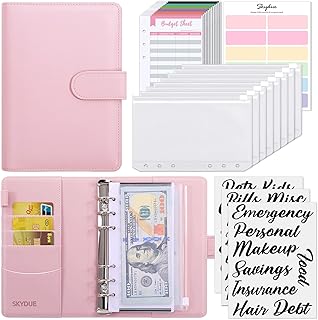
For those who prefer a multi-category system, the SKYDUE Budget Binder (ASIN B097ZQ7GH4) offers zippered envelopes and expense sheets. It’s ideal for managing several YoY goals simultaneously—one envelope for holiday gifts, another for summer camp.
Highlights:
- Cash envelopes prevent overspending
- Expense sheets track monthly progress
- Durable zipper closure and binder design
At $8.98 (rating 4.7), this binder helps you automate multiple seasonal spending categories with a hands-on approach.
Additional Options
- 10,000 Kakeibo Wooden Money Saving Box – $7.99, rating 4.4, offers 10 different amount targets.
- NICOOTH 100 Envelopes Savings Book – $6.48, rating 4.7, another great envelope challenge option.
- KYODOLED Cash Box with Key Lock – $22.99, rating 4.7, perfect for securing larger cash savings.
Comparing Methods: Envelope Systems vs. Digital Automation
| Feature | Physical Envelope/Binder | Digital Automated Transfer |
|---|---|---|
| Tactile motivation | High – you see cash grow | Low – balance is abstract |
| Security | Subject to loss/theft | Bank-protected |
| Flexibility | Requires manual deposits | Set-and-forget |
| Best for | Short-term (1 year or less) | Long-term (multiple years) |
A hybrid approach works best: use digital transfers to fund a dedicated account, then withdraw cash to place in a physical savings box or envelope binder. This combines the discipline of automation with the satisfaction of watching your goal fill up.
Tips for Setting Up a Year-over-Year Savings Plan
- Review last year’s bank statements. Identify recurring large expenses (property tax, holiday shopping, car insurance) and note their months.
- Create a “future expenses” calendar. Mark each seasonal charge and the target savings deadline.
- Set up a separate savings account. Name it “Seasonal Expenses” to avoid mingling with emergency funds.
- Use a physical tracker for each goal. The Wooden Money Saving Box or a 100-envelope binder makes progress visible.
- Adjust annually. Inflation or lifestyle changes may shift amounts—recalculate each January.
Example: If you spent $1,200 on holiday gifts last December, start saving $100 monthly from January onward. Place that cash in your 100 Envelopes Money Saving Challenge binder, marking each envelope as completed. By November, you’ll have the full $1,200 ready.
Conclusion
Automating savings for seasonal expenses and one-time projects doesn't have to be complicated. By adopting a year-over-year mindset and pairing digital transfers with tangible tools like reusable savings boxes or envelope binders, you’ll build a system that anticipates costs before they arise.
Start small: pick one upcoming seasonal expense, calculate the monthly contribution, and choose a Wooden Money Saving Box or an Envelope Challenge Binder to track your progress. Over months and years, this habit will transform your relationship with money—and ensure you’re always prepared for life’s recurring events.
FAQ
Q: How often should I adjust my year-over-year savings goals?
A: Review your goals annually, ideally at the start of the year. Compare actual spending to your targets and adjust for inflation or new expenses.
Q: Can I use a physical savings box for multiple goals at once?
A: Yes. Use separate boxes or a multi-envelope binder like the SKYDUE Budget Binder to allocate funds for different seasonal projects.
Q: Is cash-based saving safer than digital?
A: Cash can be lost or stolen. For security, keep large sums in a bank account and use physical tools as visual motivators with small amounts. The KYODOLED Cash Box adds a lock for extra protection.
Q: What if I miss a month of saving?
A: Don’t stress. Double up the following month or extend your timeline. The key is consistency, not perfection.
Q: How do I ensure I don’t overspend from my seasonal fund?
A: Keep the funds separate from everyday spending accounts. With envelope systems, once the cash is allocated to a specific category, don’t move it elsewhere.