
Do you feel like your monthly expense tracking is working against you? Upload errors and missing data can derail your budget, making it harder to save money. But fixing those mistakes is simpler than you think. With the right tools, like the Wooden Money Saving Box, you can get your finances back on track and watch your savings grow.

Table of Contents
Why Accurate Expense Tracking Matters for Saving Money
Every dollar you fail to record is a dollar you can’t manage. When your tracking has gaps or mistakes, you lose visibility into where your money goes. This leads to overspending, missed savings opportunities, and budget frustration. Correcting upload mistakes and filling data gaps is essential for anyone serious about building wealth.
Saving money isn’t just about cutting expenses—it’s about knowing exactly what you’re spending. Accurate data lets you identify wasteful subscriptions, surprise fees, and recurring costs you can reduce. It also helps you celebrate wins when you undercut your budget.
Common Upload Mistakes and How to Spot Them
Even the best tracking systems run into errors. Here are the most frequent upload mistakes and their telltale signs:
- Duplicate transactions: Two identical entries for the same purchase. Check for exact amounts and dates.
- Categorization errors: A grocery charge labeled as “entertainment.” Review your category mappings monthly.
- Missing receipts: Digital or paper receipts that never got attached. Always reconcile within 48 hours.
- Incorrect amounts: Manual entry typos or auto-import rounding errors. Cross‑reference with bank statements.
- Timing mismatches: A purchase posted on the 1st but recorded on the 30th. Use transaction dates, not posting dates.
The quickest way to catch these mistakes is a weekly 10‑minute audit. Compare your tracking tool to your bank feed and flag any discrepancies.
Data Gaps: The Hidden Savings Killer
Data gaps occur when transactions are missing entirely. This often happens with cash payments, small subscriptions, or forgotten one‑time buys. A single missing $5 coffee run won’t break the bank—but ten of them will. Gaps create a false sense of remaining budget, which can lead to overspending before the month ends.
- Cash spending: Hard to track because there’s no digital trail. Immediately log cash withdrawals and assign them a category.
- Auto‑pay subscriptions: Often charged on different dates. Set calendar alerts for each renewal.
- Shared expenses: Splitting bills with roommates or partners can leave half the cost unrecorded. Use a shared app or spreadsheet.
Filling these gaps helps you build a complete picture of your outflows, uncovering hidden savings opportunities.
Step‑by‑Step: Correcting Upload Mistakes
Follow this process to clean up your monthly data:
- Run a bank statement reconciliation – Pull your statement and compare each line to your tracker. Highlight any mismatches.
- Delete duplicates first – They inflate totals and mess up averages. Remove the extra entry and keep the original.
- Recategorize wrong labels – Move transactions to the correct category (e.g., from “Gifts” to “Dining Out”).
- Adjust amounts – Correct any manual entry errors. If your bank shows $45.67 but you typed $45.76, fix it.
- Add missing transactions – For cash expenses, create a new entry with the date, amount, and category. Attach a photo of the receipt if possible.
After making corrections, run a final comparison. Your total should match your bank account activity for the period.
Tools That Make Tracking Easier (and Help You Save)
Sometimes the best fix is a physical system that reinforces good habits. These savings tools double as a visual motivator and a record of your progress.
Wooden Money Saving Box – Track Savings Without an App
This reusable cash vault lets you set a goal—$500, $1,000, or up to $10,000—and track your progress with a dry‑erase pen. Use it to save for a specific expense while keeping your expense tracker honest. Whenever you add cash, log it in your digital tracker for full visibility.
100 Envelopes Challenge Binder – Build a Savings Habit

The envelope method is a classic way to track cash spending. This binder pre‑numbers 100 envelopes for a $5,050 goal. Each week you add cash, and the envelope system prevents overspending in categories like food or entertainment. Pair it with an expense app to close data gaps.
Budget Binder with Zipper Envelopes
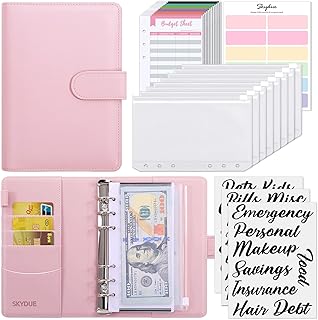
This all‑in‑one binder includes cash envelopes, expense sheets, and a zipper closure. Use it to record every cash transaction immediately, then reconcile with your digital tracker at the end of the week. It’s especially helpful for households that rely on cash for variable expenses.
2PCS Savings Challenge Set – For Shared Goals

When saving as a couple or family, tracking gets complicated. This set of two envelope binders (pink and black) lets each person manage their own savings while logging contributions in a shared tracker. No more missing half the savings.
Best Practices to Prevent Future Data Gaps
Adopt these habits to keep your expense tracking clean month after month:
| Practice | Why It Works |
|---|---|
| Log expenses daily | Prevents memory lapses and backlog. |
| Use automated import | Reduces manual entry errors. Many apps sync with bank feeds. |
| Set a weekly review time | Sunday evening: 15 minutes to catch mistakes. |
| Keep receipts for 30 days | Allows easy verification if a discrepancy arises. |
| Round up cash expenses | Log $5 for a $4.50 coffee to create a small buffer. |
Also, consider a physical savings challenge box like the Wooden Money Saving Box for a tangible reminder of your progress. Seeing cash accumulate reinforces your commitment to accurate tracking.
How Correcting Mistakes Boosts Your Savings
Every error you fix brings you closer to a truthful budget. When your numbers are accurate, you can confidently:
- Set realistic savings goals (e.g., 20% of income).
- Identify high‑spending categories to cut.
- Spot subscriptions you no longer use.
- Measure progress toward a $1,000 or $10,000 target.
The envelope challenge binders reviewed above complement digital tracking by forcing you to handle physical cash. That physical act reduces impulse spending and makes each transaction memorable, reducing the chance of omission.
Frequently Asked Questions
Q: How often should I reconcile my expense tracker?
A: Weekly is ideal. Monthly reconciliation can allow too many errors to pile up. A 15‑minute weekly check saves hours at month’s end.
Q: What’s the best way to track cash expenses?
A: Use a dedicated cash envelope system or a physical savings box. Record the withdrawal as one transaction, then note specific purchases in your tracker.
Q: My app imported a duplicate transaction. What do I do?
A: Delete the duplicate entry. Most apps have a “merge” option if the duplicate has slight differences (e.g., different dates). Keep the version that matches your bank statement.
Q: I keep forgetting to log small purchases. How can I stop?
A: Set a reminder on your phone to log expenses at lunch and before bed. Also, keep a small notebook or use a budgeting app with a quick‑add widget.
Q: Are physical savings boxes better than digital tracking?
A: They work well together. Physical boxes like the Wooden Money Saving Box provide visual motivation, while digital tracking gives you analytics and long‑term records.
Start Fixing Your Tracking Today
Don’t let upload mistakes and data gaps hide your savings potential. Correcting them is the fastest way to gain control of your finances. Pair your digital reconciliation with a proven savings tool like the 100 Envelopes Challenge Binder to stay on track.
Take 15 minutes tonight to review your last week of transactions. You’ll be amazed at how many errors you find—and how much more you can save once the data is clean.