
Tracking your expenses is the foundation of any solid money-saving plan. But should you check your spending every seven days or wait for the monthly statement? The answer is both. Weekly and monthly reviews serve different but complementary purposes.
A weekly review catches small leaks before they become floods. A monthly review gives you the big-picture perspective needed to adjust budgets and set goals. Combining both transforms your monthly expense tracking from a passive log into an engine for real savings.
Table of Contents
The Case for Weekly Spending Reviews
Weekly reviews act as your early warning system. When you check your spending every week, you spot overspending in categories like dining out or groceries before your budget is blown for the month. This allows you to course-correct immediately.
Key Benefits of Weekly Tracking
- Catch overspending early: Adjust your spending in the remaining weeks to stay on track.
- Build awareness: Frequent check-ins make you more conscious of each purchase.
- Reduce stress: Small corrections are easier than a painful month-end reckoning.
- Improve accuracy: You remember transactions better when you review them weekly.
Set aside 15 minutes each Sunday or Monday. Review your bank account, credit card transactions, and cash spending. Compare what you spent against your weekly budget targets for each category.
The Case for Monthly Spending Reviews
Monthly reviews give you the context that weekly snapshots miss. A single week might show unusually high expenses due to a birthday dinner or car repair. Only a full month reveals true spending patterns and trends.
Key Benefits of Monthly Reviews
- Identify recurring costs: Subscriptions, memberships, and regular bills become visible.
- Measure progress: See if you hit your monthly savings goals and overall budget targets.
- Plan ahead: Use monthly data to forecast seasonal expenses and adjust future budgets.
- Refine categories: Spot categories where your budget allocation was unrealistic.
A monthly review takes 30–60 minutes. Go through every transaction from the past month, categorize it correctly, and compare your actual spending against your planned budget.
Weekly vs. Monthly: A Side-by-Side Comparison
| Aspect | Weekly Review | Monthly Review |
|---|---|---|
| Frequency | Every 7 days | Once a month |
| Time needed | 10–20 minutes | 30–60 minutes |
| Best for | Catching overspending, staying on track | Pattern analysis, budget planning |
| Focus | Short-term corrections | Long-term trends |
| Tools needed | Bank app or simple tracker | Spreadsheet or budgeting software |
| Savings impact | Immediate adjustments | Strategic improvements |
Neither approach is superior. They are two gears in the same machine. Weekly reviews keep you driving straight; monthly reviews ensure you are on the right road.
How to Combine Both for Superior Expense Tracking
The best system uses weekly reviews for micro-adjustments and monthly reviews for macro-strategy. Here is a proven workflow that integrates both into your monthly expense tracking routine.
Week 1–3: Execute Weekly Check-Ins
At the end of each week, log into your bank account or budgeting app. Scan for any transactions that surprise you. Ask yourself: Did I stay within my weekly target? If no, identify the category and plan a reduction for the coming week.
Use a simple tracker like the SKYDUE Budget Binder to record weekly totals. This binder includes cash envelopes and expense sheets that make weekly reviews tactile and effective.

Week 4: Conduct a Deep Monthly Review
At month-end, pull your weekly totals into a single summary. Compare your actual monthly spending against your budget. Look for patterns: Did you overspend on takeout every week? Did an irregular expense throw off your numbers? Document these insights and adjust next month's budget accordingly.
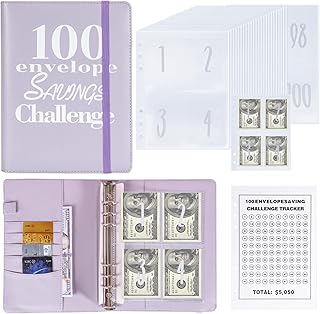
For added motivation, use the Sooez 100 Envelopes Money Saving Challenge to set aside savings alongside your monthly review. This binder helps you save $5,050 in a structured, trackable way.

Tools and Systems to Support Your Reviews
Paper-based tracking systems work exceptionally well for both weekly and monthly reviews. The physical act of writing or sorting cash reinforces your spending awareness in ways that apps cannot match.
Recommended Tools
| Tool | Price | Rating | Best For |
|---|---|---|---|
| Wooden Money Saving Box | $16.99 | 4.6 | Visual savings progress |
| NICOOTH 100 Envelopes Binder | $6.48 | 4.7 | Structured weekly saving |
| KYODOLED Cash Box | $22.99 | 4.7 | Secure cash storage |
The Wooden Money Saving Box features a dry-erase tracker and multiple savings targets. Use it during your weekly review to visually mark progress toward your next savings milestone.

The NICOOTH 100 Envelopes Money Saving Binder includes pre-numbered envelopes that correspond to $1–$100 increments. Each week, pick an envelope and deposit that amount. This gamifies the saving process while keeping your monthly expense tracking on point.
Practical Steps to Implement This System Today
You do not need a complicated setup. Follow these steps to start reviewing your spending weekly and monthly.
- Choose your tools. Pick a tracking method you will actually use — like the SKYDUE Budget Binder or a simple spreadsheet.
- Set a weekly review time. Block 15 minutes every Sunday. No exceptions.
- Set a monthly review time. Block one hour on the last day of each month.
- Create a weekly checklist. List categories to check: groceries, dining, transport, entertainment.
- Create a monthly checklist. Include: total spending vs. budget, savings progress, and category adjustments.
- Use the 50/30/20 rule as a baseline. Allocate 50% to needs, 30% to wants, and 20% to savings and debt repayment.
- Track cash separately. Withdraw a fixed amount weekly and log it in your tracker.
- Reward consistency. After three months of combined reviews, treat yourself to a small reward from your savings.
Common Mistakes to Avoid
Reviewing without categorizing is useless. If you only glance at totals, you will miss where the money is going. Always tag each transaction to a category during both weekly and monthly reviews.
Waiting too long to correct course. A monthly review alone may reveal a problem three weeks too late. Combine weekly check-ins to make mid-month adjustments.
Ignoring irregular expenses. Annual subscriptions, medical bills, and car repairs skew monthly totals. Create a separate sinking fund category to smooth these out. The KYODOLED Cash Box works well for storing cash allocated to unexpected expenses.

Overcomplicating the system. The goal is consistency, not perfection. A simple notebook and the NICOOTH 100 Envelopes Money Saving Binder can outperform a complex app that you never open.
FAQ: Weekly vs. Monthly Expense Tracking Reviews
Should I start with weekly or monthly reviews?
Start with weekly reviews. They build the habit of checking your finances regularly. Once you are comfortable, add monthly reviews for deeper analysis.
How long does it take to see savings from this approach?
Most people notice a 10–15% reduction in discretionary spending within the first two months. The combination of weekly awareness and monthly strategy drives consistent improvement.
Can I use a budgeting app instead of paper tools?
Yes. However, paper tools like the Wooden Money Saving Box provide a tangible connection to your money that apps lack. Many people find physical tracking more motivating.
What if I miss a weekly review?
Do not panic. Simply pick up with the next week. Missing one review is fine; missing three in a row erodes the habit. Set a recurring phone alarm to stay on track.
How often should I adjust my budget categories?
Adjust categories during your monthly review. If you consistently overspend on groceries by $50, increase that category and reduce a less important one. Do not change categories weekly or you will lose consistency.
Is a monthly review enough if my finances are simple?
Even with simple finances, monthly reviews provide valuable insight into spending patterns and savings growth. A monthly review alone works, but adding weekly check-ins doubles your awareness.