
Imagine a child who melts down every time the pencil breaks. Or an adult who snaps at their partner after a stressful meeting. These reactions aren’t about being “bad” or “weak.” They’re about a brain that has lost its balance. Self regulation occupational therapy is the science and practice of helping people regain that balance. It teaches the skills to calm down, pay attention, and cope with life’s curveballs.
But here’s the secret many people miss: self regulation and self-discipline are two sides of the same coin. You can’t have one without the other. When you learn to regulate your nervous system, you build the foundation for self-discipline. And when you strengthen your self-discipline, you get better at regulating your emotions and impulses.
In this deep dive, we’ll explore everything you need to know about self regulation occupational therapy. You’ll get evidence-based activities, practical strategies, and even some book recommendations that will help you or your child build calm, focus, and coping skills. Let’s start with the basics.
Want to supercharge your self-discipline journey? Check out No Excuses!: The Power of Self-Discipline by Brian Tracy – a classic that pairs perfectly with OT strategies.
Table of Contents
What Is Self Regulation Occupational Therapy?
At its core, self regulation occupational therapy (OT) uses purposeful activities to help people manage their emotional and sensory states. Occupational therapists work with children, teens, and adults who struggle with:
- Emotional outbursts or mood swings
- Difficulty focusing or sitting still
- Poor impulse control
- Sensory over- or under-reactivity
- Anxiety that interferes with daily life
The goal isn’t to “fix” someone. It’s to give them tools so they can participate fully in life – school, work, relationships, and play.
How Is It Different From Regular Therapy?
Traditional talk therapy focuses on understanding why you feel a certain way. Occupational therapy focuses on what you do about it. The therapist might have you push a wall, breathe in a pattern, or chew crunchy foods. These aren’t random. They target the sensory and motor systems that regulate your nervous system.
Think of it as training wheels for your brain. You practice the skills until they become automatic. Over time, you don’t need the therapist. You become your own regulator.
The Connection to Self-Discipline
Self-discipline is the ability to do what you know you should do, even when you don’t feel like it. That requires emotional regulation – the skill of calming yourself down when you’re upset, or energizing yourself when you’re sluggish. Without regulation, discipline feels impossible. You can’t force yourself to work when your nervous system is screaming “fight or flight.”
That’s why self regulation occupational therapy is the missing piece for many people who struggle with self-discipline. It’s not about willpower. It’s about rewiring your brain to respond, not react.

Jocko Willink’s Discipline Equals Freedom is a great companion read. It’s a field manual for building mental toughness – the kind that regulation supports.
The Science Behind Self Regulation OT
Your brain has a built-in alarm system called the autonomic nervous system. It has two main branches:
- Sympathetic – the gas pedal (fight or flight)
- Parasympathetic – the brake (rest and digest)
When these systems are balanced, you feel calm, focused, and able to handle challenges. When they’re out of whack, you either go into overdrive (anxiety, anger) or shut down (zoning out, fatigue).
Occupational therapists use activities that stimulate the proprioceptive and vestibular systems – the senses that tell you where your body is in space and how it’s moving. These systems have a direct line to the calming parts of your brain.
The Zones of Regulation
A popular framework used in OT is Leah Kuypers’ Zones of Regulation. It divides emotional states into four colored zones:
| Zone | State | What It Feels Like |
|---|---|---|
| Blue | Sad, tired, slow | Low energy, bored, depressed |
| Green | Calm, happy, focused | Ready to learn or work |
| Yellow | Anxious, frustrated, wiggly | Elevated but not out of control |
| Red | Angry, terrified, out of control | Extreme emotions, unable to think clearly |
The goal is to stay in the green zone as much as possible, and to have strategies to move from blue, yellow, or red back to green.
Evidence-Based Self Regulation Occupational Therapy Activities
Now we get to the practical part. These activities are backed by research in sensory integration, mindfulness, and neurobiology. They work for both children and adults. Try them yourself or with someone you care for.
1. Heavy Work (Proprioceptive Input)
Heavy work involves pushing, pulling, lifting, or carrying. It activates the muscles and joints, which calms the nervous system.
- Push a wall for 10 seconds
- Carry a stack of books across the room
- Do wall pushups or chair pushups
- Squeeze a stress ball or therapy putty
- Pull a weighted wagon or push a cart
Why it works: Proprioceptive input releases serotonin, a neurotransmitter that promotes calmness and well-being.
2. Deep Breathing With a Twist
Deep breathing is common, but OT makes it sensory-friendly.
- Lazy 8 Breathing: Trace a figure eight in the air while breathing in on one loop and out on the other.
- Pizza Breathing: Pretend you’re smelling a hot pizza (inhale), then blowing to cool it (exhale slowly).
- Feather or Pinwheel Breathing: Hold a feather or pinwheel and blow to make it move. This adds a visual reward.
3. The Valsalva Maneuver (Bear Hug)
This is a quick reset. Take a deep breath, then bear down as if you’re trying to have a bowel movement. Hold for a few seconds, then release. It activates the vagus nerve and shifts you toward the parasympathetic state.
Caution: Don’t do this if you have high blood pressure or heart issues.
4. Sensory Breaks With a Timer
Set a timer for every 30 minutes. When it goes off, do one of these for 2-3 minutes:
- Jumping jacks
- Wall pushes
- Walk backwards
- Rub your hands together vigorously then place them on your cheeks
The break resets your attention span and keeps your nervous system from getting overwhelmed.
5. Mindfulness With Body Scan
Body scan meditation is well-researched for emotional regulation. In OT, it’s often done with a prop like a small ball or stuffed animal. Place it on your belly and watch it rise and fall as you breathe. This grounded, sensory focus prevents your mind from wandering.
6. Oral Motor Activities
Chewing, sucking, and blowing are powerful regulators. They stimulate the cranial nerves that connect to the calm center of the brain.
- Chew crunchy foods (carrots, apples, ice)
- Drink through a thick smoothie using a straw
- Blow bubbles or a whistle
- Use a chewy tube or necklace
7. The 5-4-3-2-1 Grounding Technique
This classic coping tool uses all five senses:
- See 5 things around you
- Touch 4 things
- Hear 3 sounds
- Smell 2 scents
- Taste 1 thing
It pulls your brain out of the yellow or red zone and back into the present moment.
8. Yoga Poses for Regulation
Certain yoga poses are almost like reset buttons for the nervous system.
- Child’s pose – gentle forward fold, calming
- Tree pose – improves focus and balance
- Downward dog – increases blood flow to the brain
- Legs up the wall – activates parasympathetic system
9. Sensory Diet
A sensory diet is a planned schedule of sensory activities throughout the day, designed to keep you in the green zone. It’s prescribed by an occupational therapist and might include:
| Time | Activity | Sensory System |
|---|---|---|
| Morning | Jump on a trampoline for 5 min | Vestibular |
| Before school | Chew gum | Oral motor |
| Mid-morning | Wall pushups | Proprioceptive |
| After lunch | Quiet reading with weighted lap pad | Tactile/Deep pressure |
| Afternoon | Blow bubbles | Oral motor/Visual |
| Evening | Warm bath with pillow squeeze | Temperature/Proprioception |
How Self-Discipline Enhances Self Regulation Occupational Therapy
You might be thinking, “Okay, these activities sound nice, but I still need to actually do them.” That’s where self-discipline steps in.
Self-discipline is the habit of choosing the long-term benefit over the short-term comfort. When your child is melting down, the easy thing is to give in or yell. The disciplined thing is to calmly guide them through a heavy work activity or deep breathing.
For adults, self-discipline means sticking to your sensory diet even when you’re busy. It means pausing to do the Valsalva maneuver before you snap at a coworker.
This is why books on self-discipline are so valuable. They give you the mental framework to follow through on what you know works.

James Clear’s Atomic Habits is a must-read for anyone trying to build sustainable regulation habits. His “habit stacking” method works perfectly with a sensory diet.
The Feedback Loop
Here’s the beauty of combining OT and self-discipline:
- You do a regulation activity (e.g., heavy work).
- Your nervous system calms.
- You have more mental clarity.
- You make better decisions.
- You feel more in control.
- That feeling reinforces the discipline to do it again.
Over time, regulation becomes easier and discipline becomes stronger. It’s an upward spiral.
Practical Strategies for Different Settings
For Parents of Children With Sensory Challenges
- Create a “calm down corner” with a beanbag, weighted blanket, fidgets, and headphones.
- Use a visual schedule to show when sensory breaks happen.
- Model regulation yourself. Say, “Mommy feels frustrated. I’m going to take three deep breaths.”
- Read books together like The Four Agreements (adapted for kids) to teach self-awareness.
For Teachers and Classrooms
- Offer flexible seating: wobble stools, balance cushions, standing desks.
- Incorporate movement breaks before transitions.
- Use noise-canceling headphones for sensitive students.
- Teach the Zones of Regulation as a whole-class lesson.
For Adults Overwhelmed at Work
- Set an alarm every hour for a 90-second sensory reset.
- Keep a stress ball or fidget at your desk.
- Use a breathing app like Breathe2Relax.
- Go outside for 5 minutes (look at nature, feel the wind).
For Athletes and Performers
Regulation is key for peak performance. Before a big game or presentation:
- Do 10 wall pushups
- Use the Valsalva maneuver
- Spray or sniff a calming scent (lavender)
Recommended Books to Build Self-Discipline Alongside Self Regulation Occupational Therapy
Reading about self-discipline reinforces the habits you’re building through OT. Below are top-rated books that pair perfectly with this approach.
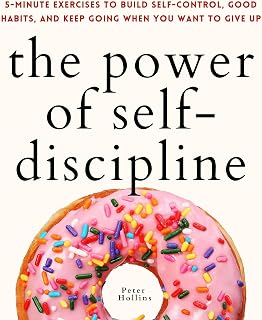
This book, The Power of Self-Discipline: 5-Minute Exercises, offers quick practices that mirror the short duration of OT activities.

Mindful Self-Discipline combines mindfulness (a core OT tool) with actionable discipline strategies.
Comparison Table: Top Self-Discipline Books for Regulation
| Book | Price | Rating | Key Focus | Buy at Amazon |
|---|---|---|---|---|
| No Excuses!: The Power of Self-Discipline | $8.66 | 4.7 | Practical mindset shift |  |
| Atomic Habits | $0.00 (audible) | 4.8 | Habit building & small changes | |
| Discipline Equals Freedom | $12.93 | 4.7 | Mental toughness & action | |
| The Power of Self-Discipline: 5-Minute Exercises | $0.00 (audible) | 4.4 | Quick exercises for daily use | |
| Mindful Self-Discipline | $0.00 (audible) | 4.7 | Mindfulness + goal achievement | |
| The Mountain Is You | $0.00 (audible) | 4.7 | Transforming self-sabotage |  |
| Discipline Is Destiny | $5.88 | 4.7 | Stoic self-control |  |
| The Four Agreements | $7.05 | 4.7 | Personal freedom & self-agreement |  |
| The Power of Discipline | $16.83 | 4.6 | Self-control & mental toughness |  |
| Digital Self-Discipline | $12.99 | 4.8 | Breaking digital addictions |  |
Frequently Asked Questions About Self Regulation Occupational Therapy
What age groups benefit from self regulation occupational therapy?
All ages. Children as young as 2 can start with simple sensory activities. Teens and adults also benefit, especially those with anxiety, ADHD, autism, or trauma history. The activities are adapted to the person’s developmental level.
Do I need a prescription to see an occupational therapist for self regulation?
In most countries, you need a referral from a doctor to get insurance coverage. However, many OTs offer private consultations without a prescription. You can also use the activities in this article as a starting point.
How long does it take to see results from self regulation OT?
Some people feel calmer immediately after an activity. For lasting changes in the nervous system, consistent practice for 4-8 weeks is typical. It’s like going to the gym for your brain.
Can self regulation OT help with adult ADHD?
Absolutely. Adults with ADHD often have poor sensory processing and difficulty regulating attention. OT activities like heavy work, deep breathing, and sensory diets can improve focus and reduce impulsivity.
What is a sensory diet and how do I create one?
A sensory diet is a personalized schedule of activities that provide the input your nervous system needs to stay regulated. Work with an OT to create one, or start by noticing when you feel most dysregulated and which activities calm you.
How does self-discipline relate to occupational therapy?
Self-discipline is the skill of consistently doing the regulation activities even when you don’t feel like it. Without discipline, the OT tools are useless. That’s why reading books like The Science of Self-Discipline can complement your therapy.
Are there any risks with heavy work activities?
Heavy work is generally safe, but people with heart conditions, hernia, or recent surgeries should avoid heavy lifting or straining. Always consult a doctor or OT before starting a new program.
Can I use self regulation techniques at work without looking weird?
Yes. Wall pushes can be done in a bathroom stall. Deep breathing can be done at your desk. Chewing gum or using a fidget are socially acceptable. The key is to be subtle but consistent.
What if the activities don’t work for my child?
Every nervous system is unique. It may take trial and error to find the right combination. Also, timing matters. Do the activity before the meltdown, not during. If nothing works, see an occupational therapist for a full evaluation.
Is self regulation OT covered by insurance?
Many insurance plans cover occupational therapy when it’s medically necessary. Check with your provider. Often a diagnosis like autism, ADHD, or sensory processing disorder is required.
Putting It All Together: Your Path to Calm, Focus, and Coping
Self regulation occupational therapy is not a quick fix. It’s a skill you build over time, like learning to play an instrument. Each time you practice a heavy work activity, a breathing exercise, or a sensory break, you’re strengthening the neural pathways that lead to calm and focus.
And when you pair these activities with the discipline to do them consistently, you unlock a superpower. You stop being a victim of your emotions. You become the pilot of your own nervous system.
Start small. Pick one activity from this article and do it every day for a week. Then add another. Notice how you feel. Notice how your reactions change. You might be surprised at the difference.
The resources below can support your journey. Grab a book that speaks to you, and start building the discipline to regulate.

Admiral William McRaven’s Make Your Bed is a brilliant reminder that small, disciplined actions change everything.
You’ve got the evidence. You’ve got the tools. Now it’s time to act. Your calm, focused, coping self is waiting.