
You want to be more consistent. You know self discipline is the key, but every time you try to start a new system it feels like you’re building a rocket ship when all you need is a bicycle. The self discipline notebook is that bicycle. It’s a simple, daily writing practice that keeps you accountable, focused, and moving forward. No apps, no complicated trackers, no guilt trips. Just a notebook and a pen.
The best part? You can start today with zero setup. And if you want to turbocharge the process, books like Atomic Habits and Discipline Equals Freedom will show you the science and the mindset behind the habit. But first, let’s get your notebook ready.
Table of Contents
What Is a Self Discipline Notebook?
A self discipline notebook is your personal command center for building consistency. It’s a dedicated notebook where you write a short daily entry focused on your priorities, your struggles, and your wins. Think of it as a mirror for your willpower. You write what you intend to do, what you actually did, and what you learned along the way.
The goal is not to write long essays. The goal is to create a feedback loop that keeps you honest. When you write down your commitments, you’re 42% more likely to follow through (according to a study by Dr. Gail Matthews). That’s the power of the self discipline notebook.
Why a Self Discipline Notebook Beats Apps and Trackers
Apps can be great, but they also distract you. Notifications, badges, and shiny designs often steal your focus instead of building it. A notebook has zero notifications. It’s analogue, boring, and that’s exactly why it works.
| App | Self Discipline Notebook |
|---|---|
| Distractions from notifications | Pure focus, just you and your pen |
| Requires charging & logins | Works anytime, anywhere |
| Can feel gamified and shallow | Forces deep reflection |
| Often gets abandoned after a week | Builds a personal archive of growth |
Your self discipline notebook is also more forgiving. You can doodle in it, rip out pages, or write in the margins. It’s yours. No algorithm will judge you.
What to Write in Your Self Discipline Notebook Daily
Here are the core entries that will transform a blank page into a discipline machine. Keep each section short. The whole process should take no more than five minutes.
1. Your Non-Negotiable Priorities
List the three things you absolutely must do today. These are the tasks that move the needle on your biggest goal. For example:
- Write 500 words of the book
- Do a 20-minute workout
- Read 10 pages of a self discipline book
Write them before you start your day. This simple act shifts your brain from passive to active mode.
2. The Three Wins from Yesterday
Gratitude and reflection work best when they focus on effort, not results. Ask yourself: What did I do yesterday that I’m proud of? It could be small, like “I chose water instead of soda” or “I finished the report I was dreading.”
This trains your brain to look for progress, not perfection. Over time, you’ll start to see your self discipline muscle growing stronger.
3. One Thing You Must Do Today
Out of your three non-negotiables, pick the one that you would most likely procrastinate on. Write it down as a single sentence. Then block a specific time for it in your day.
This is your “non-negotiable non-negotiable.” If you only accomplish this thing, you’ve still won the day.
4. The Temptation You Need to Resist
Be honest. What will try to sidetrack you today? Is it scrolling social media? Snacking? Skipping your workout? Write it down.
When you name the enemy, you take away its power. This entry helps you stay aware and prepared. You can even write a simple plan: “If I feel the urge to check Instagram, I’ll walk around the block first.”
5. A Short Reflection on Your ‘Why’
Why are you doing this? Not the surface answer, but the deep one. For example: “I want to be disciplined so I can be present for my kids when I’m old” or “I want to prove to myself that I can finish what I start.”
Write one sentence. It will remind you that discipline is not punishment; it’s a form of self love.
6. A Commitment Statement
End your entry with a powerful declaration. Something like: “I am someone who keeps their word to myself” or “Today I will do what is hard now so that life is easier later.”
Say it out loud after you write it. The combination of writing and speaking amplifies the signal to your brain.
7. A Score for Your Self Discipline
At the end of the day, rate your self discipline on a scale of 1–10. No judging. Just a number. Over weeks, you’ll see patterns. Maybe Fridays are weak, or mornings are stronger. This data is gold.
Sample Daily Self Discipline Notebook Entry
Here’s what a full entry looks like in practice:
Date: October 5, 2025
Non-negotiables:
- Finish the proposal draft
- 30-minute run
- Call mom
Yesterday’s wins: Finished the book chapter, skipped dessert, woke up at 5:30 a.m.
One must-do: Start the proposal draft before 9 a.m.
Temptation to resist: Binge watching Netflix after work
Why I’m doing this: To prove to myself I can build a life I’m proud of
Commitment statement: I am not a quitter.
Score: 7/10
Short. Honest. Done. Now repeat tomorrow.
Best Books to Supercharge Your Self Discipline Notebook
Your notebook is the practice. But reading the right books gives you the theory and motivation to keep going. Here are some of the best resources to pair with your daily writing habit.

Atomic Habits by James Clear (Rating: 4.8) – The ultimate guide to building small habits that stick. Perfect for filling your notebook with actionable strategies.

Discipline Equals Freedom by Jocko Willink (Rating: 4.7) – A no-excuses field manual with short, punchy chapters you can reflect on in your journal.

The Power of Discipline by Daniel Walter (Rating: 4.6) – A step-by-step guide to using self control and mental toughness to hit your goals.
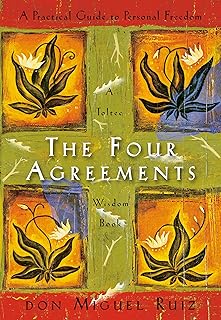
The Four Agreements by Don Miguel Ruiz (Rating: 4.7) – Not directly about discipline, but the principles of being impeccable with your word and not taking things personally are golden for daily reflection.

No Excuses! The Power of Self Discipline by Brian Tracy (Rating: 4.7) – Classic advice on how to master self discipline in every area of life.

The Mountain Is You by Brianna Wiest (Rating: 4.7) – A modern classic on transforming self sabotage into self mastery. Perfect for deeper journaling prompts.

Stoic Self Discipline (Rating: 4.7) – Ancient wisdom boiled down into modern techniques. Great for morning pages.
Comparison Table: Best Self Discipline Books to Use with Your Notebook
| Book | Rating | Price | Buy at Amazon |
|---|---|---|---|
|
4.8 | $0.00 (audible) | Buy Now |
|
4.7 | $12.93 | Buy Now |
|
4.6 | $16.83 | Buy Now |
|
4.7 | $7.05 | Buy Now |
|
4.7 | $8.66 | Buy Now |
|
4.7 | $0.00 (audible) | Buy Now |
|
4.7 | $19.99 | Buy Now |
Common Mistakes When Using a Self Discipline Notebook
Even a simple tool can be misused. Avoid these pitfalls:
- Writing too much. Your self discipline notebook is a tool, not a diary. Keep entries under 5 minutes.
- Skipping days. Missing one day is okay. Missing three days becomes a new habit. Use the “don’t break the chain” method.
- Focusing on failure. The notebook should highlight wins more than losses. If you only write about what went wrong, you’ll feel discouraged.
- Not reviewing past entries. Revisit last week’s notes every Sunday. You’ll spot patterns and feel motivated by your progress.
- Using a fancy notebook that feels intimidating. Grab any spiral notebook. Perfection is the enemy of consistency.
How to Build the Habit of Writing in Your Notebook Daily
You know what to write. Now you need to actually do it. Here’s a proven system:
- Tie it to an existing habit. Write in your notebook right after you brush your teeth in the morning. This is called habit stacking.
- Keep the notebook visible. Place it on your desk or pillow. Out of sight, out of mind is real.
- Set a timer. Give yourself three minutes. When the timer goes off, stop. This removes the pressure to write “enough.”
- Don’t judge the content. Some days you’ll write three sentences, some days you’ll write one. Both count.
- Celebrate the streak. After seven days of consistent writing, reward yourself with a walk or a coffee. Your brain loves immediate rewards.
If you feel like you’re falling off, grab a copy of The Power of Self Discipline: 5 Minute Exercises to rewire your brain in small daily doses. That book is literally designed for your notebook practice.
The Bottom Line on Your Self Discipline Notebook
Consistency doesn’t come from a grand plan. It comes from small, repeated actions that align with your values. Your self discipline notebook is the simplest way to make those actions visible, trackable, and repeatable.
You don’t need to overthink it. Grab any notebook. Write the seven items listed above. Do it tomorrow morning. Then do it again the next day. After 30 days, look back at your entries and see how far you’ve come.
Discipline is not a mountain you climb once. It’s a path you walk every day. Your notebook is the compass that keeps you on that path.
Frequently Asked Questions
Q: Can I use a digital self discipline notebook instead?
A: Yes, but the physical act of writing helps with memory and intention. If you prefer digital, use a minimalist app like Notion or Day One. Just avoid apps with distracting features.
Q: How long should I spend on my self discipline notebook each day?
A: Aim for three to five minutes. The goal is consistency, not depth. You can always write more on weekends.
Q: What if I miss a day? Should I catch up?
A: No. Just start fresh the next day. Catching up creates a backlog that leads to quitting. Focus on making today’s entry.
Q: Do I need to buy a special notebook?
A: Not at all. Any notebook works. However, a dedicated notebook (not your work notes or grocery list) creates a ritual. If you want a small investment, a simple lined journal is perfect.
Q: Can this help with specific goals like weight loss or quitting a bad habit?
A: Absolutely. Your self discipline notebook works for any goal because it builds the underlying skill of self control. Pair it with a book like Digital Self Discipline if you’re fighting screen addiction, or Mindful Self Discipline if you need a gentler approach.
Q: What’s the one change I should make right now?
A: Write down your top priority for tomorrow in a notebook before you go to bed tonight. That small act will start the momentum.