
You know the feeling. You set a big goal on Monday, crush it for three days, then Friday hits and you’re ordering pizza and skipping the gym. Sound familiar? You’re not broken. You’re just trying to build self-discipline alone, and that’s like trying to start a campfire with wet matches. The missing piece isn’t more willpower. It’s a self discipline group activity that turns your struggle into shared momentum. Accountability circles are that activity, and they work because humans are wired to follow through when others expect something from us.
In this guide, you’ll learn exactly how to start and run an accountability circle that actually sticks. We’ll cover the psychology behind it, step-by-step instructions, real examples, and even the best books to deepen your self-discipline journey. By the end, you’ll have everything you need to stop going it alone and start making serious progress.
Table of Contents
Why a Self Discipline Group Activity Beats Going Solo
Willpower is like a muscle. It gets tired. But when you add social accountability, you tap into a different fuel source. A self discipline group activity leverages peer pressure in the best possible way. You show up not just for yourself, but for people who are counting on you.
Research shows that people who share their goals with a specific group are 65% more likely to complete them. When you add regular check-ins with an accountability partner, that number jumps even higher. Why? Because the pain of letting others down often outweighs the pain of doing the work.
“Accountability is the glue that ties commitment to the result.” – Bob Proctor
That’s the core of it. You can have all the discipline books in the world, but without a system that forces you to act, knowledge stays as just good intentions.
What Is an Accountability Circle?
An accountability circle is a small group of people who meet regularly to share goals, track progress, and hold each other responsible. It’s a formalized self discipline group activity where each member commits to specific actions between meetings and reports back.
Typical circle size: 3–5 people. Larger groups lose intimacy. Smaller groups lose energy. The ideal sweet spot is 4 people.
What Makes It Different from a Mastermind?
| Aspect | Accountability Circle | Mastermind Group |
|---|---|---|
| Focus | Specific goal progress | Problem-solving and strategy |
| Meeting Structure | Quick check-ins on commitments | Longer brainstorming sessions |
| Primary Tool | Shared accountability | Collective wisdom |
| Time Commitment | 15–30 minutes per week | 60–90 minutes per week |
An accountability circle is leaner and more action-oriented. It’s designed to keep you moving, not to debate theories.
How to Start Your Own Self Discipline Group Activity
Ready to build your circle? Follow these steps.
Step 1: Find the Right People
You want people who are serious about growth, but not necessarily at the same life stage. A friend who’s training for a marathon, a coworker who’s saving for a house, and a cousin who’s learning to code. Different goals work fine. What matters is mutual respect and a shared commitment to showing up.
Where to find them:
- Existing friend groups with similar ambitions
- Online communities (Reddit, Facebook groups, Discord)
- Local meetups or co-working spaces
- Work colleagues who want to level up
Step 2: Set a Clear Agreement
Don’t wing it. A good circle has rules. Write them down.
Elements to agree on:
- Meeting frequency (weekly is best)
- Day and time (same slot every week)
- Length (20–30 minutes max)
- How you’ll communicate between meetings (WhatsApp, Slack, etc.)
- Consequences for missing check-ins (e.g., buy coffee for the group)
Step 3: Use a Simple Check-In Format
Keep the meeting tight. No rambling. A proven format is:
- Win of the week (30 seconds each) – Share one small victory.
- Goal commitment report (2 minutes each) – Did you hit last week’s target? Yes or no, explain briefly.
- Next week’s goal (1 minute each) – What will you achieve in the next 7 days?
- Support request (30 seconds each) – What help do you need from the group?
That’s it. Ten to fifteen minutes total. Done right, you’ll leave feeling energized and clear.
Step 4: Track Progress Publicly
Use a shared document or a simple app. Everyone updates their goal completion each week. This transparency creates gentle pressure and also celebrates wins.
Tools you can use:
- Google Sheets
- Notion
- Trello
- Paper and pen (seriously, it works)
Step 5: Keep It Positive and Constructive
Accountability isn’t about shaming. It’s about honesty. If someone misses a goal, ask “What got in the way?” not “Why did you fail?” The goal is to solve problems, not assign blame.
Real Example: How One Circle Changed Everything
Meet Sarah. She wanted to write a book but kept finding excuses. She joined an accountability circle with three other writers. They agreed to write 500 words daily and report every Monday.
Week one: She wrote 300 words on Monday, then nothing until Sunday. She had to admit she wrote only 1,200 words for the week. The group didn’t judge. They asked what distracted her. She said social media. Next week, she put her phone in another room. She hit 3,500 words.
Six months later, Sarah had a full manuscript. She attributes 80% of her success to the circle. The self discipline group activity turned her abstract dream into a weekly habit.
Best Books to Strengthen Your Self-Discipline
Reading alone won’t build discipline, but the right books give you the mental framework to sustain it. Pair these with your accountability circle for maximum impact.
Atomic Habits by James Clear

This book is the holy grail of habit formation. James Clear shows how tiny changes lead to remarkable results. Use the “habit stacking” and “environment design” strategies inside your accountability circle.
The Power of Self-Discipline: 5-Minute Exercises
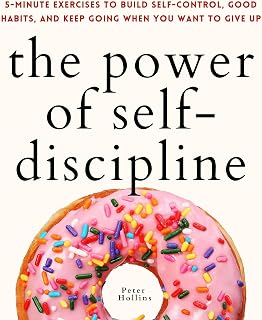
A practical workbook that gives you daily micro-exercises. Perfect for sharing with your circle as weekly challenges.
Discipline Equals Freedom by Jocko Willink

Jocko’s no-excuses philosophy will light a fire under your group. Read a page each week and discuss how to apply it.
No Excuses! The Power of Self-Discipline by Brian Tracy

Brian Tracy breaks down self-discipline into 21 practical strategies. Use them as weekly topics for your circle.
The Mountain Is You by Brianna Wiest

This book tackles self-sabotage head-on. Perfect for those in your circle who struggle with inner resistance.
Digital Self-Discipline by ?

If your circle battles phone addiction, this book offers actionable steps to reclaim focus.
Self Discipline Group Activity: Comparison of Top Books
To help you choose which books to read together, here’s a comparison of six highly rated resources. Use them as weekly reading assignments in your accountability circle.
| Book | Price | Rating | Best For | Buy at Amazon |
|---|---|---|---|---|
| Atomic Habits |
$0.00 (audiobook) | 4.8 / 5 | Building systems for lasting change | Buy Now |
| Power of Self-Discipline |
$0.00 (audiobook) | 4.4 / 5 | Quick daily discipline exercises | Buy Now |
| Discipline Equals Freedom |
$12.93 | 4.7 / 5 | Raw motivation and mindset shift | Buy Now |
| No Excuses! |
$8.66 | 4.7 / 5 | 21 practical strategies for discipline | Buy Now |
| The Mountain Is You |
$0.00 (audiobook) | 4.7 / 5 | Overcoming self-sabotage | Buy Now |
| Digital Self-Discipline |
$12.99 | 4.8 / 5 | Breaking digital addiction | Buy Now |
Common Pitfalls and How to Avoid Them
Even the best self discipline group activity can fail if you don’t watch for these traps.
Pitfall 1: Vague Goals
“I’ll exercise more” is not a goal. “I will run 3 times this week for 20 minutes” is. Make every goal specific, measurable, and time-bound. Your circle should call you out on fuzziness.
Pitfall 2: Skipping Meetings
Once you start missing, the momentum dies. Treat the weekly check-in as non-negotiable. If you must miss, send your update in advance. No excuses.
Pitfall 3: Becoming a Venting Session
It’s easy to turn the 30-minute check-in into a complaint hour. Keep the focus on commitments, not life drama. If someone needs emotional support, schedule a separate coffee chat.
Pitfall 4: No Consequences
Without a small penalty, accountability loses its teeth. Decide together: a fine of $5 for each missed goal, or buying coffee for the group. Make it real enough to sting a little.
Frequently Asked Questions
How long should an accountability circle last?
Most circles run for 8–12 weeks. That’s enough time to build new habits without dragging. After that, re-evaluate members and goals. Some groups run indefinitely with rotating commitments.
Can I do a self discipline group activity online?
Absolutely. Video calls work just as well as in-person meetings. Use Zoom or Google Meet. The key is showing your face (cameras on) and having structured check-ins.
What if someone in my circle stops showing up?
Have a candid conversation. They might be overwhelmed or losing interest. If they don’t recommit, replace them with someone hungry. The group’s energy is more important than one person’s comfort.
How do I choose the right book for my circle?
Start with Atomic Habits if you’re building habits from scratch. Pick Discipline Equals Freedom if you need a motivational kick. For deep self-reflection, The Mountain Is You is golden. Let the group vote.
What is the single most important rule for success?
Show up every time and be brutally honest about your progress. The moment you lie to your circle, the system breaks. Honesty + consistency = unstoppable.
Your Next Step: Start Today
You don’t need perfect conditions to begin a self discipline group activity. You need one friend and one goal. That’s it.
Text three people today: “I’m starting a weekly accountability circle to stick to my goals. Want in?” See who says yes. Then set your first meeting.
The books and strategies in this article are tools, but the real power is in the shared commitment. You will be amazed at what you can accomplish when you’re not alone. The mountain you’re climbing feels a lot smaller when others are climbing it with you.
Now go start that circle. Your future self will thank you.