
You know that feeling. You sit down to work, and your phone buzzes. Ten minutes later, you’re deep in a rabbit hole of cat videos. Your inbox dings, and suddenly you’ve lost an hour to pointless scrolling. Sound familiar? That’s your brain on autopilot.
The self control 1 hour challenge is a powerful reset button for your focus. In just 60 minutes, you can retrain your brain to resist urges, push through distractions, and reclaim your mental energy. No complicated routines, no expensive apps. Just a simple structure that works.
This isn’t about white-knuckling through discomfort. It’s about building real, lasting self-discipline by proving to yourself that you can stay in control when it matters most. Ready to dive in? Let’s break it down.
Table of Contents
What Is Self Control 1 Hour? The Core Concept
The self control 1 hour challenge is exactly what it sounds like. You commit to one hour of focused, disciplined action without giving in to any distraction, urge, or temptation. During that hour, you pick a single task, remove all triggers, and train your willpower like a muscle.
Why one hour? Research shows that willpower works in short bursts. The human brain can sustain high levels of focus for about 50–90 minutes before needing a break. One hour is the sweet spot. It’s long enough to get meaningful work done, but short enough that you won’t burn out.
Think of it as a mental “interval training” session. Just as sprints build your cardiovascular endurance, these one-hour focus blocks build your self-discipline over time.
Why Self Control 1 Hour Works: The Science of Willpower and Focus
Your brain isn’t designed to resist temptation for hours. The prefrontal cortex, which handles willpower, gets tired like any other muscle. That’s why after a long day of decisions, you’re more likely to grab junk food or skip the gym.
The self control 1 hour challenge harnesses a key principle: decision fatigue. By removing all choices for just 60 minutes, you conserve mental energy and let your brain focus on deep work. No deciding what to do next. No debating whether to check Instagram. The decision is already made.
Dopamine plays a big role here. Every time you check your phone or open a new tab, your brain gets a tiny hit of dopamine. After a while, you crave those micro-rewards. The challenge starves that cycle and forces your brain to find satisfaction in the task itself.
This is also why the challenge works for resisting urges like snacking, procrastination, or even emotional impulses. When you practice saying “no” to one urge for 60 minutes, you build the mental muscle to say “no” to bigger temptations later.
The 5-Step Self Control 1 Hour Challenge
Let’s get practical. Here’s exactly how to run your own self control 1 hour session. Print this or bookmark it.
Step 1: Set Your Intent (5 minutes)
Decide one task you will complete during the hour. Not three tasks. Not “just catch up on emails.” One clear, specific outcome. For example: “Write 500 words of my report.” Or “Organize my budget spreadsheet.”
Write it down. Say it out loud. This verbal commitment activates your brain’s executive function.
Step 2: Remove All Temptations (5 minutes)
This is non-negotiable. Put your phone in another room. Close all browser tabs except the one you need. Turn off notifications. If you use apps, enable “Do Not Disturb” mode.
If you’re working on a laptop, unplug the charger and sit in a space where you can’t easily stand up and wander. Make the cost of distraction high.
Step 3: Anchor to a Single Task (45 minutes)
Start working. That’s it. No multitasking. If your mind wanders, gently bring it back. If an urge arises (to check email, grab a snack, or just sigh dramatically), acknowledge it and stay put.
Use a timer. Set it for 45 minutes of focused work, then a 15-minute break. During those 45 minutes, you do only your chosen task.
Step 4: Ride the Urge Wave (ongoing)
Urges come and go. They peak after 10–20 seconds and then fade. When you feel the pull to procrastinate, take three deep breaths. Tell yourself, “This is just an urge. It will pass.” Then return to your task.
Pro tip: If you absolutely must scratch the itch, write it down on a piece of paper. Promise yourself you’ll deal with it after the hour. Nine times out of ten, you won’t even care later.
Step 5: Reflect and Reset (5 minutes)
When the timer goes off, stop. Don’t rush to the next task. Spend five minutes asking yourself:
- Did I complete my goal?
- What urges did I resist?
- What made this hour feel hard or easy?
- What can I improve next time?
Write down your answers. This reflection cements the learning and builds self-awareness for future sessions.
The Best Self-Discipline Books to Support Your Self Control 1 Hour
While the challenge itself requires no equipment, reading about discipline can give you deeper strategies and motivation. Below are some of the most powerful books on self-discipline, self-control, and mental toughness. Each one can help you strengthen your ability to stay focused during your self control 1 hour sessions.
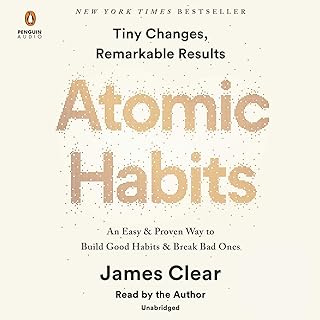
Atomic Habits by James Clear (Rating: 4.8) teaches you how small changes lead to remarkable results. Its focus on identity-based habits directly supports the mindset behind the challenge. Buy on Amazon

The Mountain Is You by Brianna Wiest (Rating: 4.7) explores why we self-sabotage and how to transform those patterns into self-mastery. Perfect for understanding the emotional roots of loss of focus. Buy on Amazon

Discipline Equals Freedom by Jocko Willink (Rating: 4.7) is a field manual for mental toughness. No fluff, just straight-to-the-point tactics for building self-control. Buy on Amazon

No Excuses! by Brian Tracy (Rating: 4.7) is a classic. It covers the power of self-discipline in every area of life and gives practical exercises. Buy on Amazon
Comparison of Top Self-Discipline Books
| Product | Price | Rating | Key Focus | Buy at Amazon |
|---|---|---|---|---|
|
$0.00 (Audible) / varies | 4.8 | Habit formation, small changes, identity | Buy Now |
|
$0.00 (Audible) | 4.7 | Self-sabotage, emotional triggers, self-mastery | Buy Now |
|
$12.93 | 4.7 | Mental toughness, daily routines, stoic mindset | Buy Now |
|
$8.66 | 4.7 | Comprehensive self-discipline in career, health, relationships | Buy Now |
Common Obstacles and How to Overcome Them
Even with the best plan, your brain will try to talk you out of finishing the self control 1 hour challenge. Here are the most common excuses and how to push through.
Obstacle 1: “I’m too tired.”
Solution: Start with a five-minute warm-up. Tell yourself you’ll do just five minutes of the task. After five minutes, the momentum usually carries you through the full hour. Also, consider doing the challenge earlier in the day when your willpower reserves are higher.
Obstacle 2: “This is boring.”
Solution: Boredom is a signal, not a barrier. Use it as part of the challenge. Sit with the boredom and notice it without reacting. This builds mental resilience. You can also add a slight challenge to the task like “I’ll finish this page before I even think about looking up.”
Obstacle 3: “I need to check my messages.”
Solution: Set a specific “message window” before or after the hour. Close all communication apps. If you fear missing something urgent, set an autoreply that says you’ll respond in an hour. Most people will survive.
Obstacle 4: “I don’t know where to start.”
Solution: Choose the smallest possible action. If the task is “write a blog post,” start by opening a blank document and writing one sentence. The act of starting overcomes inertia. Remember, the self control 1 hour challenge is about the process, not perfection.
How to Make Self Control 1 Hour a Daily Habit
Doing this once is good. Doing it every day builds a disciplined lifestyle. Here’s how to incorporate it into your routine.
- Pick a consistent time. Morning works best for most people because willpower is fresh. Do your self control 1 hour first thing after your morning coffee.
- Use a trigger. Attach the challenge to an existing habit. For example, “After I brush my teeth, I start my one-hour focus block.”
- Track your success. Use a simple journal or an app. Mark each day you complete the challenge. Seeing a streak motivates you to keep going.
- Reward yourself. After the hour, do something enjoyable that doesn’t break your momentum. A short walk, a stretch, or a healthy snack.
- Scale gradually. Start with 20 minutes if 60 feels too long. Build up to 30, then 45, then 60. The second week is always easier.
Books like The Power of Discipline ($16.83, Rating 4.6) and The Psychology of Self-Discipline ($17.99, Rating 4.6) offer additional 5-minute exercises and strategies that complement this daily practice.
Pro Tips to Ace Your Self Control 1 Hour
- Use the Pomodoro Technique. Work for 25 minutes, break for 5. Repeat. This breaks the hour into manageable chunks.
- Create a distraction-free zone. Keep your workspace clean. A cluttered desk leads to a cluttered mind.
- Hydrate and stretch. Dehydration and stiffness lower your focus. Drink water before you start.
- Listen to focus music. Instrumental or nature sounds can help you enter a flow state.
- Practice mindfulness. Before starting, take one minute to breathe and set an intention. This primes your brain.
- Keep a “distraction list” by your side. When an unrelated thought pops up, write it down and deal with it later.
Frequently Asked Questions About Self Control 1 Hour
Q: Can I do the challenge with a group?
Yes! Doing it with a partner or a virtual coworking session increases accountability. You can check in after the hour and share your wins.
Q: What if I fail halfway through?
Don’t beat yourself up. Notice what went wrong, learn from it, and try again tomorrow. Failure is data, not a verdict.
Q: Should I do the challenge in silence or with background noise?
It depends on your personality. High-stimulation people often benefit from background noise (like white noise or low-fi beats). Low-stimulation people need silence. Experiment.
Q: Can I use self-control 1 hour for creative work?
Absolutely. In fact, creatives often struggle most with “the gap” between idea and execution. The container of one hour forces you to start without waiting for inspiration.
Q: Is the challenge safe for people with ADHD?
Yes, but adjust the duration. Start with 15 minutes and build up. The structure can actually be very helpful for ADHD brains because it removes the need for constant decision-making.
Final Thoughts: Your 60-Minute Advantage
The self control 1 hour challenge isn’t about being perfect. It’s about proving to yourself that you can trust your own word. Every time you sit down, resist the urge, and finish the hour, you build a little more self-discipline.
You don’t need a guru or a five-year plan. You just need one hour, a clear goal, and the willingness to start.
So here’s your challenge: Close this article, open your timer, and do your first self control 1 hour right now. Your future self will thank you.