
You have tried again and again to stick with a new habit. Maybe it was waking up earlier, hitting the gym, or finally writing that book. You lasted a week, maybe two. Then life got loud, motivation faded, and you slipped back.
Here is the truth most people miss: self discipline skill is not something you are born with. It is not a magical gift that some people have and others don't. It is a trainable, buildable skill — just like a muscle. And the best part? You can start strengthening it today with simple, repeatable steps.
In this deep dive, you will learn exactly what self discipline skill is, why it matters more than motivation, and how to systematically build it using proven strategies from top experts. We will reference some of the best books on the topic so you can go deeper if you choose.
Ready to turn your willpower from a weak spot into your strongest asset? Let’s begin.
Table of Contents
What Is Self Discipline Skill?
Self discipline skill is the ability to make yourself do what you know you should do, even when you don’t feel like doing it. It is the bridge between your goals and your accomplishments. Unlike motivation, which fades when emotions shift, self discipline skill keeps you moving forward on the tough days.
Think of it as your internal compass. When distractions scream for attention, your self discipline skill quietly points you back toward what matters. It is not about being rigid or joyless. It is about being in control of your choices rather than letting impulses run the show.
People often confuse self discipline with punishment. But in reality, it is an act of self-respect. You choose the harder path now because you respect your future self enough to set them up for success.
Why Self Discipline Skill Matters for a Successful Life
Every area of your life benefits from stronger self discipline skill. Want better health? You need the discipline to choose the salad over the pizza, to lace up your shoes when the couch calls. Want financial freedom? That requires the discipline to save, invest, and say no to impulse purchases.
The numbers back it up. A famous Stanford marshmallow experiment showed that children who could delay gratification (a key part of self discipline) ended up with higher SAT scores, lower body mass index, and better life outcomes decades later.

In his book No Excuses!: The Power of Self-Discipline, Brian Tracy argues that self discipline is the single most important quality for success. He points out that virtually every high achiever — from athletes to entrepreneurs — credits disciplined habits, not raw talent, for their results.
The bottom line: if you want to achieve anything meaningful, you need to build your self discipline skill. It is the engine that powers every other good habit.
The Science Behind Building Self Discipline Skill
For a long time, researchers believed willpower was a finite resource that got used up during the day. That idea came from studies involving cookies and radishes, where people who resisted temptation later gave up faster on a difficult puzzle. The concept was called ego depletion.
But newer research suggests something more hopeful. Willpower behaves less like a limited tank of gas and more like a muscle that can be strengthened with the right training. When you consistently practice small acts of self control, your brain rewires itself to make discipline easier over time.

James Clear’s Atomic Habits is arguably the best modern guide on this subject. He explains that tiny, consistent improvements — what he calls atomic habits — compound into remarkable results. The key is not trying to become a disciplined person overnight, but making small, almost effortless changes that slowly reshape your identity.
Clear writes: “You do not rise to the level of your goals. You fall to the level of your systems.” That system for building self discipline skill is exactly what we are about to lay out.
The Muscle Analogy: How Self Discipline Skill Grows
Think about building bicep curls. You do not walk into the gym on day one and lift 100 pounds. You start light, maybe with 10 pounds. You do a few reps. You rest. The next day you do it again, maybe adding one more rep. Over weeks, your muscle fibers tear and rebuild stronger. Over months, you notice real growth.
Self discipline skill works the same way. You start with small, winnable challenges. You gradually increase the difficulty. You allow recovery (sleep, good food, stress management). And you stay consistent.
Three principles to follow:
- Progressive overload: Each week, push your comfort zone just slightly further. If you resisted checking your phone for 10 minutes yesterday, try 12 today.
- Consistency over intensity: A tiny discipline done daily beats a huge effort done once. Five minutes of meditation every morning is better than an hour every Sunday.
- Recovery matters: Your self discipline skill depletes when you are tired, hungry, or stressed. Taking care of your body and mind is not cheating — it is part of the training.
7 Simple, Repeatable Steps to Build Your Self Discipline Skill
Here are the exact steps you can start using today. They are simple not because they are easy, but because they are designed to be repeatable. Master the first step before moving to the next.
Step 1: Start with Micro-Habits
Do not try to overhaul your entire life in one week. Pick one tiny action that takes less than two minutes. Make your bed as soon as you wake up. Drink a glass of water before coffee. Write one sentence in a journal.

Admiral William H. McRaven’s book Make Your Bed demonstrates how a simple morning ritual creates a ripple effect of discipline throughout the day. When you start with a win, you set a standard for the hours ahead.
Step 2: Practice Delayed Gratification
Every day, you face dozens of small temptations: a snack, a scroll, a snooze button. Your self discipline skill grows every time you pause and choose the long-term reward over the instant pleasure.
Try the 10-minute rule. When you feel the urge to do something that derails your goals, tell yourself you can do it in ten minutes. Usually, the craving passes. If it doesn’t, at least you made a conscious choice.
Step 3: Eliminate Decision Fatigue
The more decisions you make, the weaker your self discipline skill becomes. Top performers reduce trivial choices by creating routines.
- Wear the same simple outfit every day.
- Meal prep on Sundays.
- Schedule your most important task for the same time each morning.
This frees up mental energy for the decisions that really matter.
Step 4: Use the Two-Minute Rule
When you don’t feel like doing something, commit to doing it for just two minutes. That is enough time to start, and starting is the hardest part.
- Want to exercise? Put on your shoes and do one push-up.
- Need to clean the kitchen? Wash just one dish.
Often, two minutes turns into twenty. Even if it doesn’t, you still built a tiny win for your self discipline skill.
Step 5: Design Your Environment
Your surroundings have a huge impact on your willpower. Make good choices easy and bad choices hard.
- Keep healthy snacks visible and junk food in a high cabinet.
- Put your phone in another room while working.
- Lay out your gym clothes the night before.

In The Power of Discipline, author Daniel Walter explains that environment design is one of the most underestimated tools for building self control. When you structure your space for success, you rely less on willpower and more on smart defaults.
Step 6: Track Your Progress
What gets measured gets managed. Keep a simple log of your daily discipline wins. It could be a check mark on a calendar or a note in an app. Seeing your streak grow provides powerful motivation.
The book 365 Days With Self-Discipline offers daily prompts to keep you consistent over a full year. Even if you only use it for a month, it helps build the tracking habit.

Step 7: Forgive Yourself and Bounce Back
Perfectionism is the enemy of discipline. You will have off days. You will miss a workout or eat the donut. That is normal.
The key is to get back on track immediately. A single slip does not erase your progress. What matters is what you do next. Self discipline skill is not about never failing; it is about how quickly you recover.
Common Barriers to Building Self Discipline Skill (And How to Beat Them)
Barrier 1: You Think You Need Motivation First
Motivation is a spark, not a fuel source. Stop waiting to feel ready. Action creates motivation, not the other way around. Start before you feel like it.
Barrier 2: You Try to Change Too Much at Once
That is like walking into the gym and trying to deadlift 400 pounds your first day. You will fail, get discouraged, and quit. Pick one habit. Master it. Then add another.
Barrier 3: You Underestimate Digital Distractions
Social media, notifications, and endless streams of content are designed to hijack your attention. Your self discipline skill is constantly fighting against them.
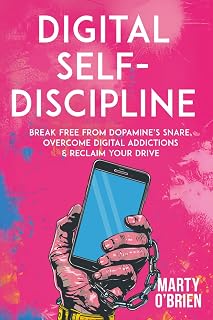
The book Digital Self-Discipline offers practical strategies to break free from dopamine addiction and regain control of your focus. It is a must-read if you feel glued to your screens.
Barrier 4: You Lack a Clear “Why”
When your reason is strong enough, discipline feels lighter. Write down exactly why you want to build this skill. Is it to be healthier for your kids? To start a business? To feel proud of yourself? Keep that reason visible.
Expert Insights: Stoicism and the Ancient Roots of Self Discipline
Stoic philosophers understood self discipline skill long before modern psychology gave it a name. They believed that mastering your desires and impulses was the path to freedom.

Ryan Holiday’s Discipline Is Destiny explores how historical figures like Marcus Aurelius and Ulysses S. Grant used self control to overcome enormous challenges. The book argues that discipline is not a limitation — it is the key to living a life of purpose and honor.
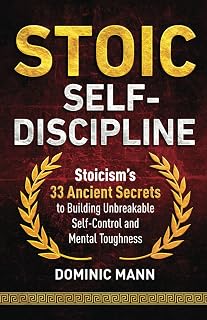
Another excellent resource is Stoic Self-Discipline, which lays out 33 ancient secrets that are just as relevant today.
The core stoic insight: you cannot control what happens to you, but you can control how you respond. That response is your self discipline skill in action.
Recommended Books to Deepen Your Self Discipline Skill
Here is a comparison of some of the best books available. Each one offers a unique angle on building self control, mental toughness, and consistent action.
| Book | Price | Rating | Author / Focus | Buy at Amazon |
|---|---|---|---|---|
 |
$0.00 (audible) | 4.8 | James Clear – Habit systems | Buy Now |
 |
$8.66 | 4.7 | Brian Tracy – Self-discipline fundamentals | Buy Now |
 |
$16.83 | 4.6 | Daniel Walter – Mental toughness | Buy Now |
|
$6.95 | 4.7 | Admiral McRaven – Small habits, big impact | Buy Now |
|
$5.88 | 4.7 | Ryan Holiday – Stoic approach | Buy Now |
 |
$0.00 (audible) | 4.7 | Brianna Wiest – Self-sabotage to mastery | Buy Now |
 |
$7.05 | 4.7 | Don Miguel Ruiz – Personal freedom | Buy Now |
 |
$12.93 | 4.7 | Jocko Willink – Field manual | Buy Now |
This table gives you a quick overview to choose based on your budget and specific needs. All are highly rated and packed with actionable advice.
FAQ: Your Most Common Questions About Self Discipline Skill Answered
1. Can self discipline skill really be learned, or are some people just born with it?
Absolutely it can be learned. While some people may have a slightly higher baseline, research shows that self discipline is a trainable skill. Like a muscle, it responds to consistent practice and smart training.
2. How long does it take to build strong self discipline skill?
There is no fixed timeline, but most people notice real improvement within 30 days of daily practice. The key is consistency, not perfection. After 66 days, a habit often becomes automatic, according to a study by University College London.
3. What if I keep failing after a few days?
Failure is part of the process. The mistake is giving up completely after one slip. Instead, treat it as data: what triggered the lapse? Adjust your environment or approach, and start again the next day. Progress, not perfection.
4. Is self discipline skill the same as willpower?
They are closely related, but not identical. Willpower is the immediate ability to resist temptation. Self discipline skill is the broader system of habits, routines, and mindset that makes willpower less necessary over time.
5. What is the best book for beginners?
If you are new to building self discipline, start with Atomic Habits by James Clear. It is incredibly practical and focuses on small changes that compound. For a more direct approach, No Excuses! by Brian Tracy is excellent.
6. How can I stay disciplined when I am tired or stressed?
That is when your self discipline skill is tested most. Prioritize sleep, nutrition, and stress management first. Then, lower the bar: do a miniature version of your habit. Recovering from a tough day is a win in itself.
Final Thoughts: Your Self Discipline Skill Is Waiting to Be Built
Self discipline skill is not a mysterious gift reserved for a lucky few. It is a practical, trainable ability that you can improve starting right now. The steps in this article are not theory — they are battle-tested strategies used by high achievers across every field.
Remember the muscle analogy. You would not expect to bench press 300 pounds without months of training. Do not expect to have iron discipline overnight. But with patience, consistency, and the right tools, you can build a level of self control that will transform your life.
Pick one small step from this article and do it today. Make your bed. Do two minutes of exercise. Write down one goal. Then do it again tomorrow.
That is how champions are made. That is how you build your self discipline skill, one rep at a time.
You have everything you need. Now go use it.